Commercial and Industrial Electrical Emergency Guide
How to Handle Electrical Emergencies in Commercial and Industrial Facilities
When the lights flicker in a 200,000 square foot warehouse or a production line grinds to a halt, people do not panic because of the dark. They panic because time is money. At Kord Electric, emergency response and electrical safety are not buzzwords tossed around in meetings. They are disciplines practiced daily by seasoned technicians who understand complex systems inside commercial towers, manufacturing plants, and major property buildings. Within the first few moments of a crisis, decisions matter. Therefore, this guide explains how facilities should respond, what steps to take, and how our expert service staff approach high risk situations with steady hands and calm authority.
Pull up a chair. Take a breath. Let us walk through this together.
Understanding the Nature of Electrical Emergencies in Large Facilities
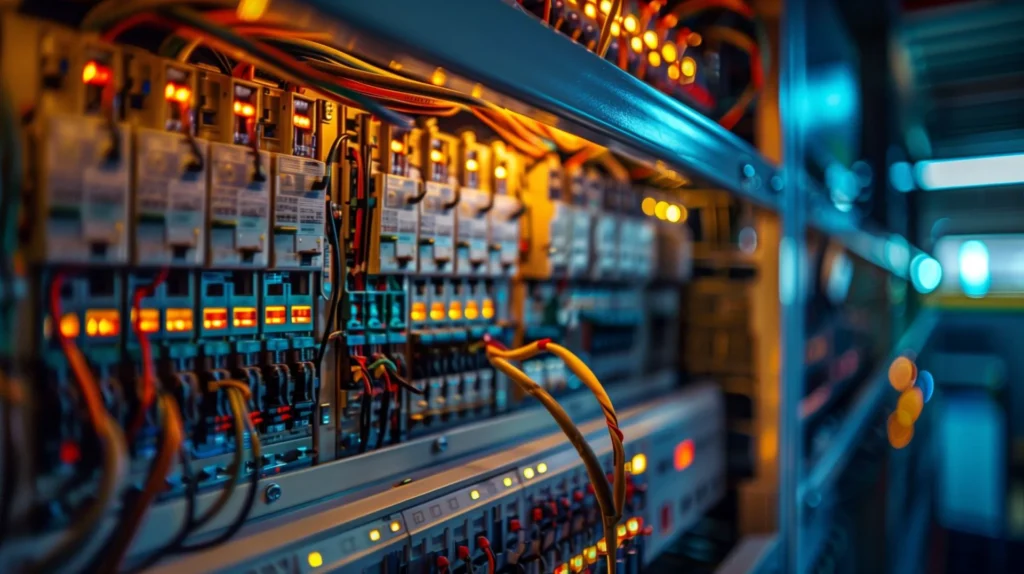
Electrical emergencies in commercial and industrial properties rarely look like they do in the movies. There are no dramatic sparks flying in slow motion while someone dives across the room. Instead, trouble often begins quietly. A breaker trips repeatedly. Equipment overheats. A panel hums louder than it should. Then, operations stall.
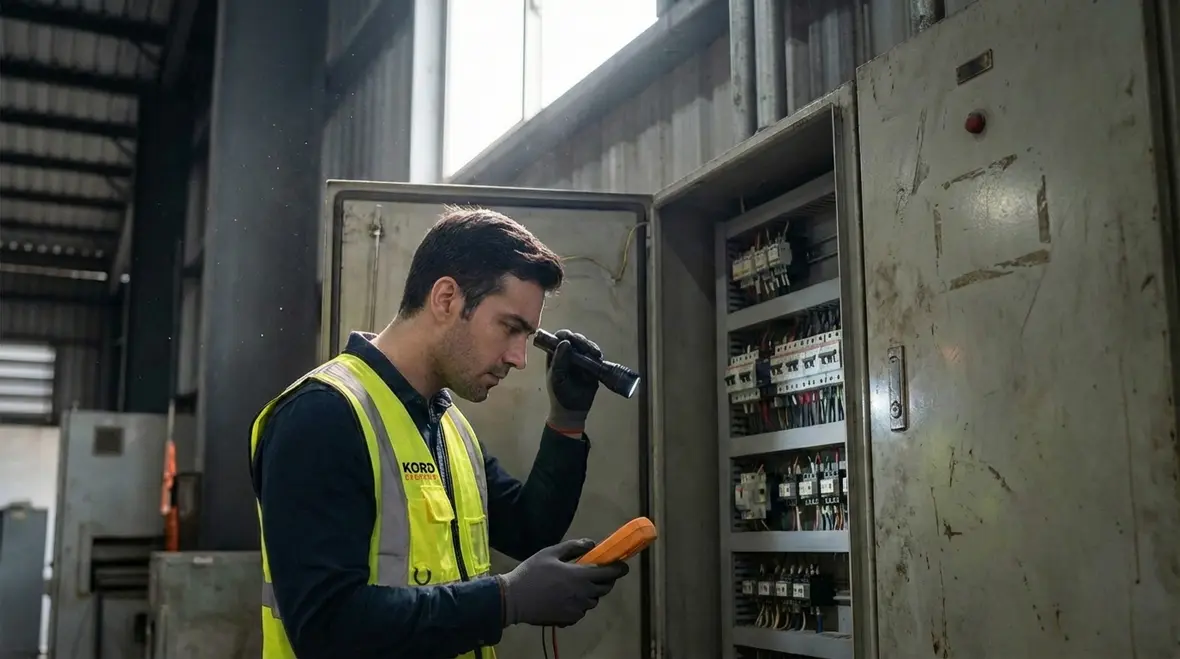
However, behind that silence can be overloaded circuits, arc flash risks, failing transformers, or compromised switchgear. In large scale environments, these systems are interconnected. Consequently, a failure in one section can ripple across entire floors or departments.
Kord Electric’s technicians explain that the first rule of electrical safety is recognizing that commercial systems carry significantly higher loads than residential setups. Therefore, risks scale up. So does the responsibility. Our service staff assess not only the visible issue but also upstream and downstream impacts, ensuring that every emergency response considers the full infrastructure.
Because in a facility with hundreds of employees, you are not just flipping a switch. You are protecting livelihoods.
If your building is already struggling with voltage swings, nuisance trips, or unexplained shutdowns, it is worth reviewing how unstable power behaves before the next crisis hits. Our deep dive into voltage fluctuations in commercial and industrial facilities connects everyday warning signs to the underlying infrastructure issues that often lead to full blown emergencies.
What Should a Facility Manager Do First During an Electrical Emergency?
That is the question typed into search bars at 2:13 in the morning when alarms start buzzing.
First, stay calm. Panic spreads faster than a power surge. A composed response keeps teams focused and safe.
Second, isolate the issue if it is safe to do so. That means shutting down affected equipment using proper lockout procedures. However, never attempt to open energized panels without qualified personnel. Our technicians stress this constantly. Curiosity may have saved the cat in cartoons. In real facilities, it can lead to severe injury.
Third, initiate your established emergency response protocol. Notify internal safety leads. Secure the area. Prevent unauthorized access. In industrial environments, arc flash hazards demand controlled boundaries.
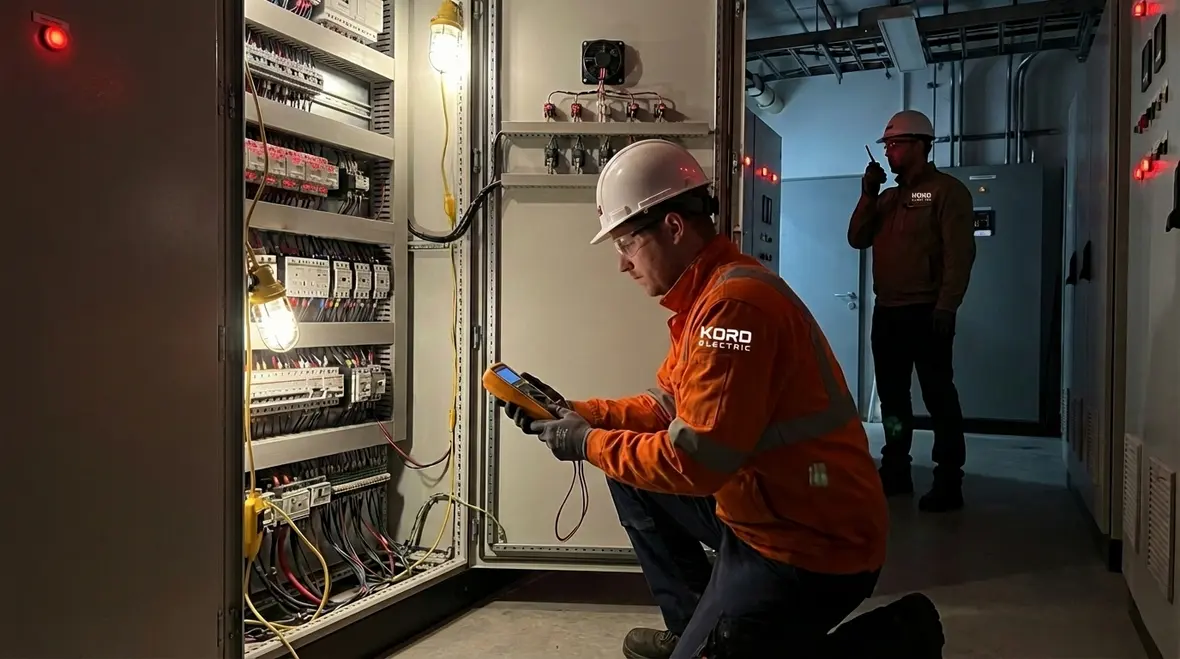
Finally, contact a professional commercial electrical team. At Kord Electric, our expert service staff respond with structured assessments. They arrive prepared with diagnostic tools, personal protective equipment, and the experience to interpret what the system is telling them.
Because electricity does speak. You just need someone fluent in its language.
For critical situations where safety and uptime are on the line, your fastest path to stabilization is a team built specifically for emergencies. Our licensed 24/7 specialists follow the same structured playbook described here in the field every day. If you need immediate help, explore our dedicated Emergency Electrical Services to understand how our rapid response process supports commercial and industrial facilities across Southern California.
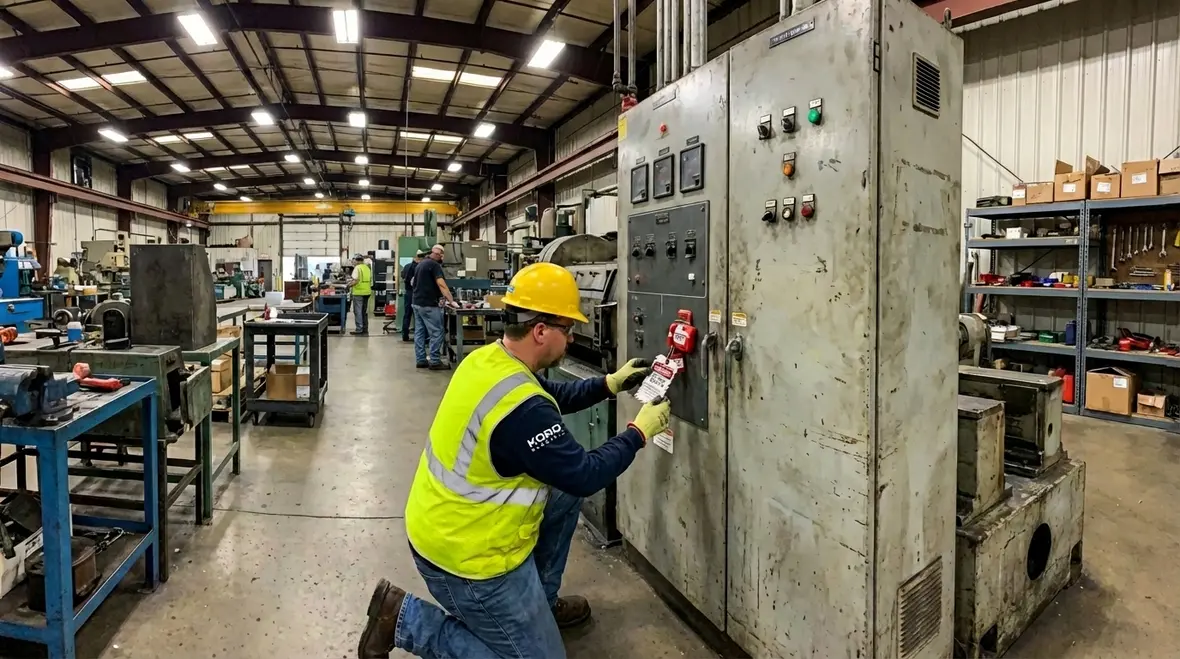
Immediate Actions That Protect People and Property
When seconds count, clarity matters. Therefore, facilities should focus on protecting personnel first and infrastructure second. The two goals often align, yet the sequence is critical.
Priority One: Life Safety
- Shut down affected equipment using approved procedures
- Evacuate non essential personnel from impacted zones
- Ensure emergency lighting functions properly
- Confirm that fire suppression systems remain active
Even though production downtime hurts, injuries hurt more. Strong electrical safety practices always place people first.
Priority Two: Containment and Damage Control
- Prevent water exposure to energized components
- Monitor for overheating smells or smoke
- Document unusual sounds or system behaviors
- Preserve logs from building management systems
Meanwhile, our technicians often remind property managers that documentation during an emergency response speeds up diagnostics. A short video of a malfunctioning panel or a timestamped note can shave hours off troubleshooting. And in commercial settings, hours matter.
Facilities that pair strong life safety procedures with disciplined documentation usually recover faster and with less disruption. If you want to layer in fire systems alongside electrical readiness, our sister company’s full coverage solutions for fire sprinklers, alarms, and extinguishers help ensure that when power issues overlap with fire risk, every system responds the way it should.
How Kord Electric Approaches Emergency Response in Complex Systems
Now, here is where experience takes center stage.
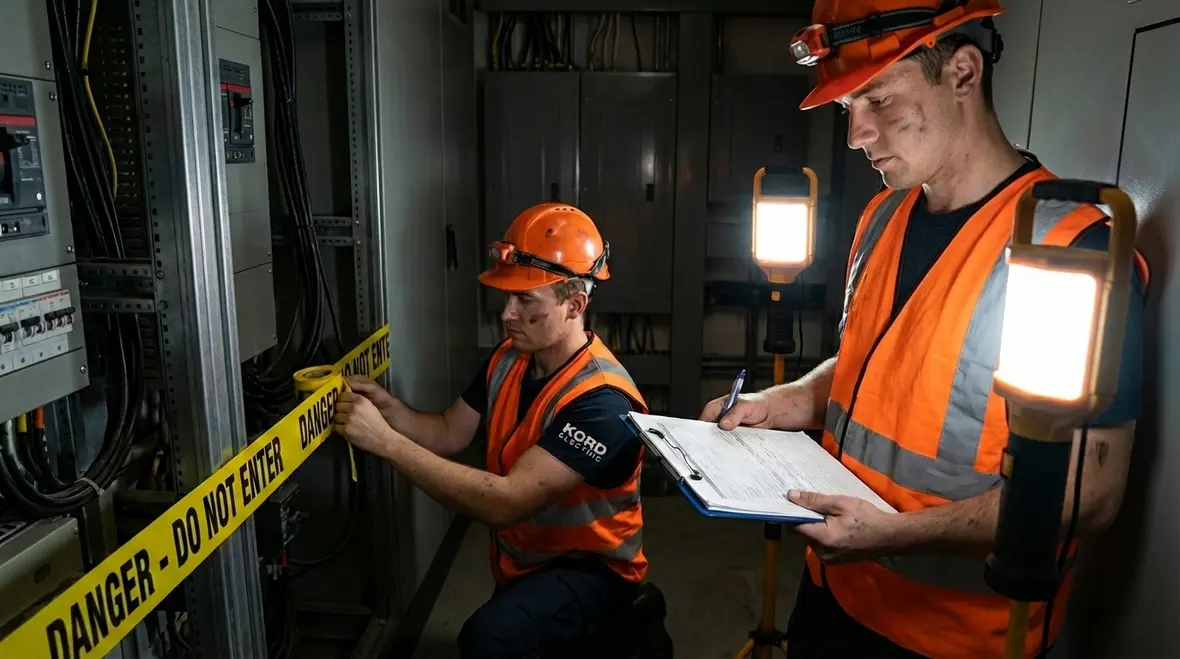
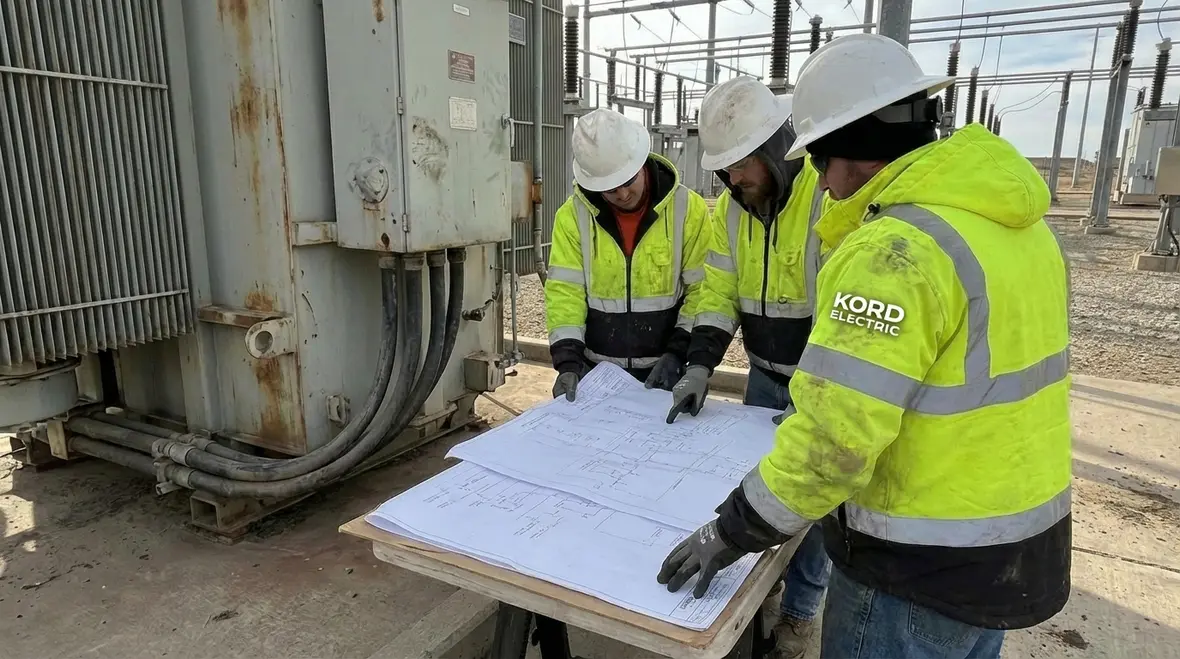
Kord Electric does not rush in swinging tools like an action hero. Instead, our expert service staff move methodically. They begin with a risk assessment. They review schematics. They verify load paths. Then, and only then, do they interact directly with energized systems.
Our technicians often explain to clients what they are seeing in plain language. If a distribution board failed due to thermal stress, we say so. If a transformer shows signs of insulation breakdown, we show the data. Transparency builds trust. It also helps facility leaders make informed decisions.
Furthermore, we approach every emergency response with containment in mind. Temporary solutions may restore partial power. However, we never treat a bandage as a cure. Instead, we identify root causes. Was it improper load balancing? Aging infrastructure? Environmental conditions inside the electrical room?
In other words, we do not just turn the lights back on. We make sure they stay on.
That methodical approach mirrors the structured processes we use for both emergencies and planned work. Whether we are stabilizing a failed panel at 3 a.m. or fine tuning a system during business hours, the same disciplined framework guides our decisions. You can see that philosophy in action in our overview of how our emergency electricians assess, repair, and test complex systems while protecting people, equipment, and compliance.
Common Causes of Electrical Emergencies in Industrial and Commercial Buildings
Although every facility is unique, patterns emerge over time. Our field experience across major properties reveals recurring triggers.
Infrastructure Related Causes
- Aging switchgear components
- Loose connections creating heat buildup
- Outdated panels unable to handle modern loads
- Insulation breakdown in high demand circuits
Operational Related Causes
- Unplanned equipment additions
- Improper load distribution
- Lack of routine thermal scanning
- Deferred maintenance schedules
Because industrial systems evolve, facilities often add machinery without upgrading supporting infrastructure. Consequently, strain builds quietly. Then one day, the system protests.
This is why proactive electrical safety audits matter. Kord Electric’s technicians evaluate load capacity, inspect connections, and assess environmental conditions. By doing so, they reduce the likelihood of midnight calls and frantic searches for circuit diagrams.
Preventive action may not feel exciting. However, neither is explaining downtime to stakeholders.
For many organizations, the missing link between “constant emergencies” and “predictable performance” is a consistent maintenance strategy. Our structured programs for electrical preventive maintenance combine infrared scanning, testing, and scheduled service to catch these root causes before they escalate into outages, equipment damage, or safety events.
Building a Strong Electrical Safety Culture Across Large Properties
Handling emergencies well is important. Preventing them is better.
In commercial and industrial environments, electrical safety must become part of daily operations. That means routine inspections, staff awareness training, and clear reporting channels. It also means leadership support. Safety protocols fail when they exist only in binders collecting dust.
Kord Electric encourages facility managers to conduct regular system reviews. Additionally, we recommend scheduled infrared scanning to detect heat anomalies before they escalate. Our expert service staff often walk teams through findings, explaining why a slightly warm connection today can become a major fault tomorrow.
Moreover, communication plays a powerful role. When maintenance teams report unusual sounds or minor outages immediately, small problems remain small. In contrast, ignored warning signs tend to grow teeth.
And while no one wants to think about worst case scenarios, a rehearsed emergency response plan ensures that when something does happen, everyone knows their role. Think of it as a fire drill for your power system. Not glamorous. Extremely effective.
If you want a practical next step after reading this guide, consider pairing your emergency planning with a documented inspection schedule and training plan. Our article on workplace lighting safety hazards shows how something as simple as poor illumination can erode both safety and productivity, reinforcing why culture and daily habits matter just as much as equipment.
The Role of Technology in Modern Emergency Management
Technology has changed the way facilities manage risk. Smart monitoring systems now track load levels, temperature changes, and fault activity in real time. Therefore, anomalies can trigger alerts before full failure occurs.
Kord Electric integrates diagnostic tools during service visits to gather data that supports long term reliability. Our technicians analyze trends rather than isolated incidents. Because data tells a story, and stories reveal patterns.
Additionally, remote monitoring allows facility leaders to make informed decisions quickly. Instead of guessing whether a shutdown is necessary, they rely on measurable insights. That confidence strengthens both operational stability and electrical safety.
Of course, technology does not replace trained professionals. It supports them. Just like a great soundtrack enhances a film, but a skilled narrator still brings the script to life.
Frequently Asked Questions
Conclusion: Steady Hands in Critical Moments
Electrical emergencies do not send invitations. They arrive unannounced and demand clarity, speed, and expertise. Kord Electric stands ready with structured emergency response, deep system knowledge, and a commitment to electrical safety across commercial and industrial properties. When your facility faces uncertainty, our technicians bring calm authority and proven solutions. Do not wait for warning signs to become shutdowns. Contact Kord Electric today and place your infrastructure in experienced, steady hands.
If you are responsible for a high demand facility, this is also the right time to connect your emergency planning with long term reliability work. Pairing a relationship with our Emergency Electrical Services team and a structured electrical preventive maintenance program gives you both rapid response when something fails and a roadmap to reduce how often emergencies happen in the first place.