Commercial Motion Lights and Sensor Install Guide
At Kord Electric, we believe great lighting should do more than shine. It should think. It should respond. It should protect your property, support your team, and quietly reduce your utility bill while no one is looking. That is where our motion lights and professional sensor install services step in. For commercial and industrial facilities, smart lighting is not a luxury. It is a strategy for security, compliance, and energy saving. In this guide, our technicians and expert service staff walk through what matters most, how it works, and why a thoughtful installation makes all the difference.
Why Commercial Buildings Are Switching to Motion Lights
Across warehouses, distribution centers, office towers, and manufacturing plants, facility managers face the same daily challenge. Lights stay on long after shifts end. Storage rooms glow for hours without a single boot print on the floor. Break rooms shine like Broadway at midnight. Consequently, energy bills climb without asking permission.
Motion lights solve this with quiet authority. They activate only when movement occurs. When the space empties, the lights power down. It sounds simple because it is. Yet the impact on large scale properties can be dramatic.
Moreover, automated lighting improves security. When lights activate in response to motion around loading docks or parking structures, visibility increases instantly. That alone can deter unwanted activity. In addition, insurance providers often look favorably on properties that demonstrate proactive risk reduction.
Our technicians explain it this way. Lighting should behave like a responsible employee. It shows up when needed. It clocks out when the job is done. No overtime required.
How Does a Professional Sensor Install Work in Industrial Facilities
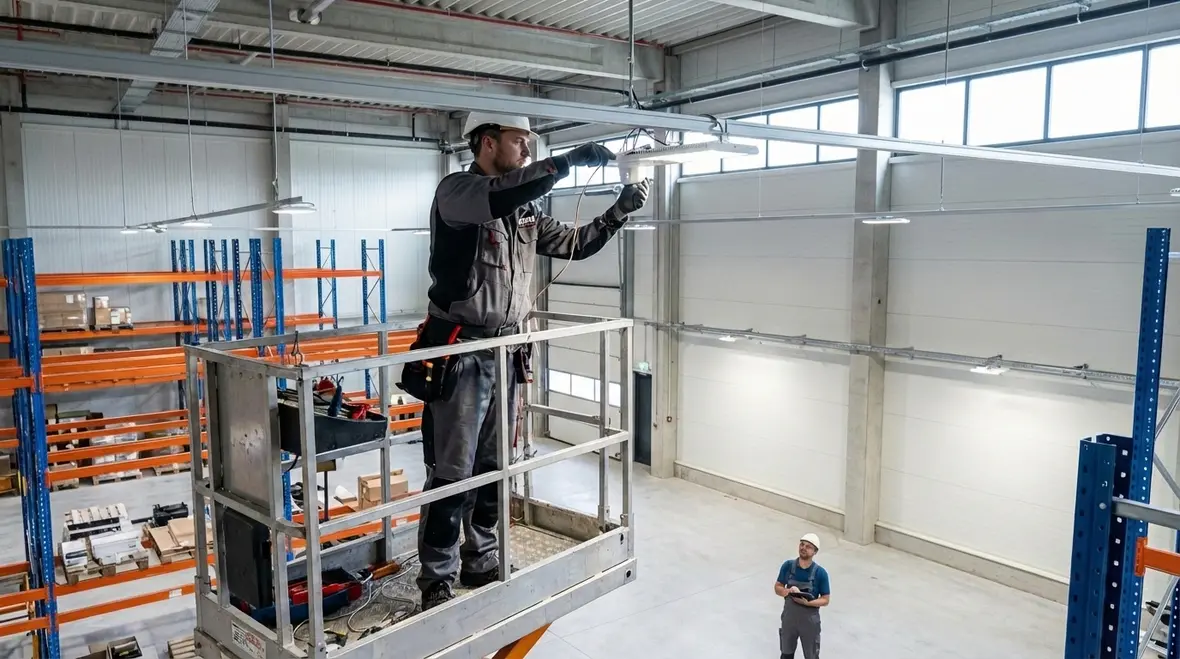
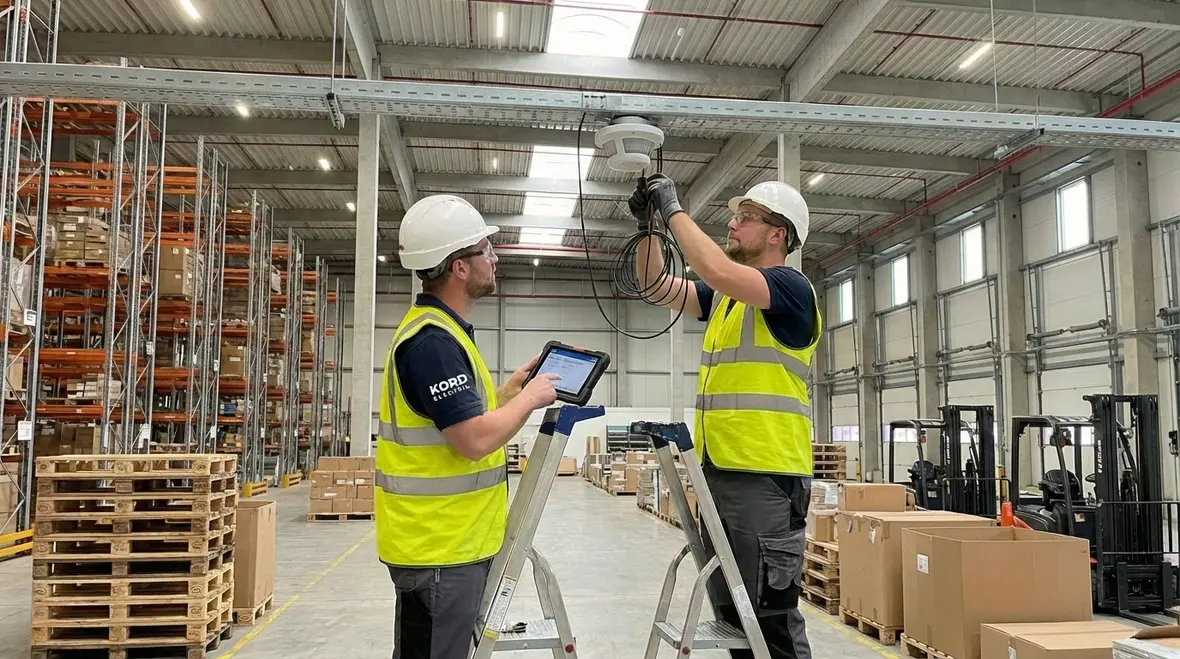
A proper sensor install in a commercial or industrial environment involves far more than mounting a device and flipping a breaker. Our expert service staff approach each project with deliberate planning.
First, they assess traffic patterns. In a manufacturing plant, movement may vary by shift. In a distribution center, forklifts travel predictable paths. Therefore, sensor placement must reflect real activity, not guesswork.
Next, they evaluate ceiling height and layout. High bay fixtures in warehouses require sensors with extended range and proper sensitivity settings. Meanwhile, offices and conference rooms need precise detection without triggering from hallway traffic.
After that, they configure timing controls. Some areas require lights to remain on for extended tasks. Others benefit from shorter delays to maximize energy efficiency. Our technicians calibrate these settings carefully so the system supports workflow instead of interrupting it.
Finally, integration takes place. Modern systems often tie into centralized building controls. This allows facility managers to monitor usage, adjust settings remotely, and collect data that supports long term energy saving strategies.
In short, a professional installation respects both the science of lighting and the rhythm of your operation.
For facilities planning broader upgrades, motion-based controls fit naturally into larger commercial lighting installation projects, where fixture selection, layout, and controls are designed to work together from day one.
Choosing the Right Motion Sensor Technology for Large Properties
Not all sensors operate the same way. Selecting the correct technology determines whether your system feels seamless or slightly confused, like it missed its morning coffee.
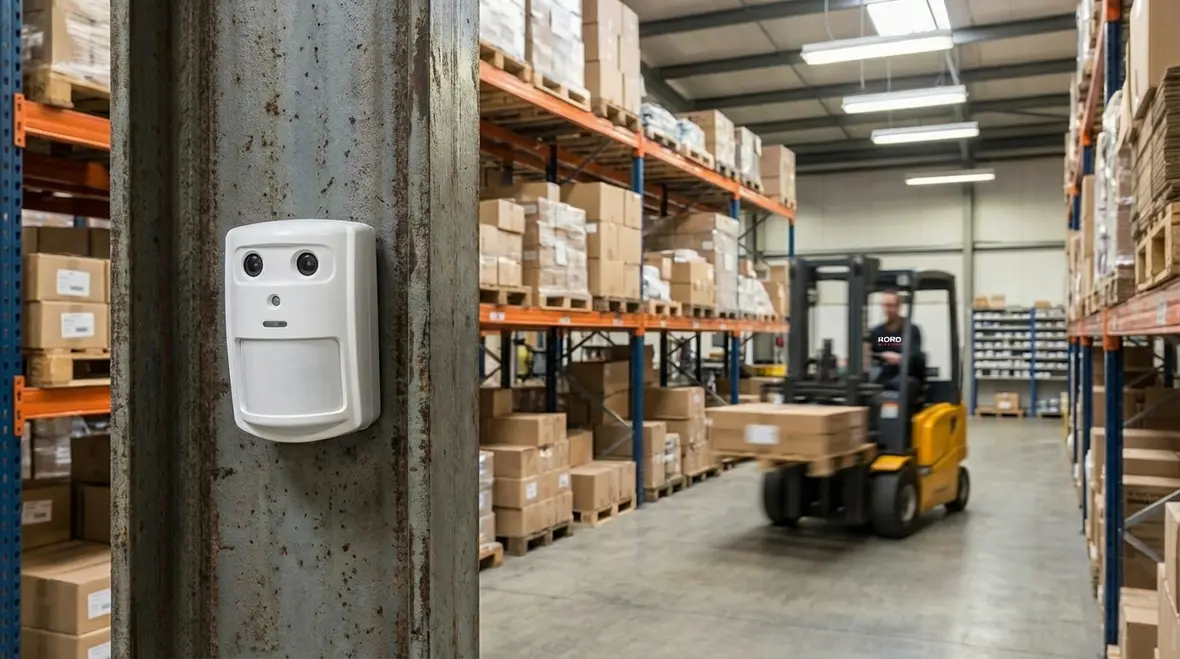
Passive Infrared Sensors detect heat signatures. They work well in enclosed spaces such as offices, storage rooms, and restrooms. However, they require a clear line of sight.
Ultrasonic Sensors emit sound waves and measure reflections. Because they detect movement around obstacles, they perform well in complex layouts with partitions or shelving.
Dual Technology Sensors combine both methods. These are often ideal in industrial environments where accuracy matters and false triggers must remain low.
Additionally, outdoor applications demand weather rated equipment with extended range capabilities. Parking structures, loading docks, and exterior walkways require durable components that handle temperature swings and moisture exposure.
Our technicians evaluate each facility and recommend solutions based on use case, compliance needs, and long term goals. They do not believe in one size fits all. After all, a high ceiling aircraft hangar should not be treated like a small conference room.
If you are already reviewing code requirements, pairing motion based controls with California Title 24 compliant layouts and controls can streamline inspections and compliance. For example, mandatory occupancy sensors in certain rooms and outdoor lighting timing rules align naturally with motion-lighting strategies and smart energy saving usage.
Linking Motion Sensors to Lighting Design
A thoughtful design considers fixture type, spacing, and sensor coverage as parts of the same plan. When sensors and fixtures are designed together, you avoid dark patches, nuisance shutoffs, and overlit zones that waste energy. This whole-system mindset is the same approach used in dedicated recessed lighting installations where performance, efficiency, and compliance must all align.
AI Prompt Style Guide: What Facility Managers Ask About Energy Saving
“How much energy saving can motion based lighting really deliver in a warehouse?”
In many commercial properties, lighting accounts for a significant portion of electricity use. By reducing runtime in low traffic areas, facilities often see noticeable reductions in lighting related consumption. The exact percentage depends on usage patterns. However, areas with intermittent occupancy typically show the greatest improvement.
“Will automated lighting disrupt production or workflow?”
When installed correctly, no. Our expert service staff set delay timers and sensitivity levels based on operational needs. Therefore, lights remain active during tasks and power down only when areas truly sit idle.
“Can motion lights integrate with existing building management systems?”
Yes. Many modern systems support integration. This enables centralized control, reporting, and performance tracking. Consequently, facility managers gain both visibility and flexibility.
These questions surface often because leaders want practical results, not gadgets. They want systems that quietly support productivity while trimming unnecessary expense.
Motion Lights, Safety, and Compliance
In practice, motion based lighting also plays directly into safety and code conversations. Well lit aisles, exits, and work zones reduce accidents and keep inspectors happy. When occupancy sensors and motion lights are deployed with code requirements in mind, they become tools for both energy saving and risk reduction, instead of just “smart” add-ons.
Planning a Motion Lighting Upgrade in Phases
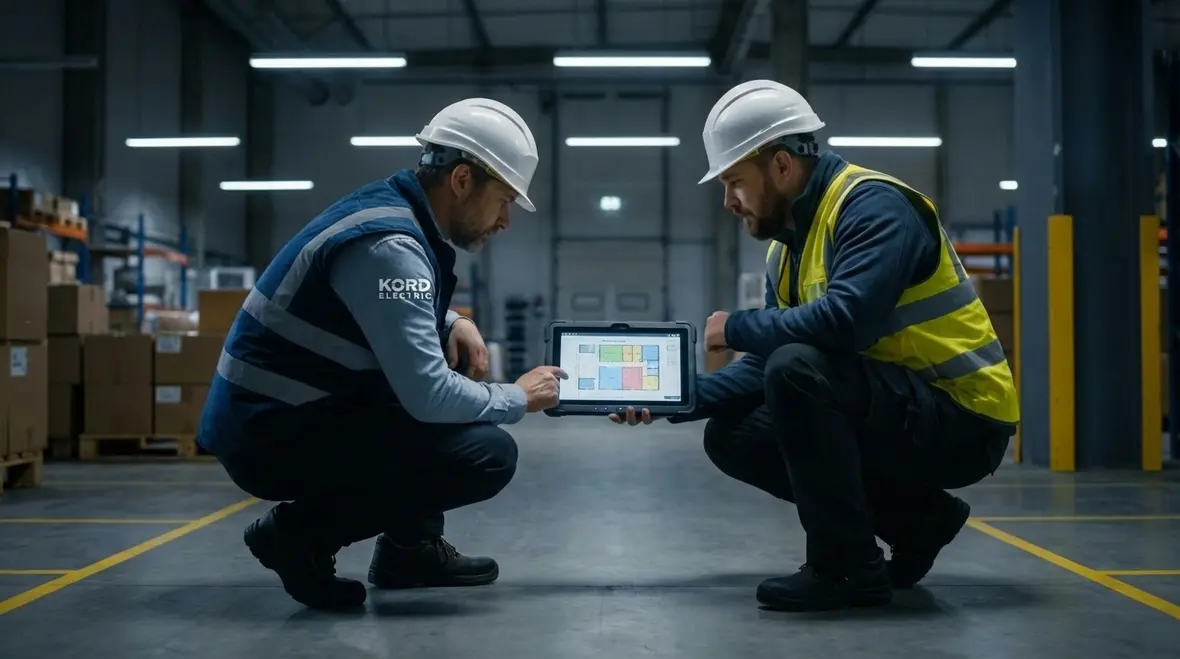
Large facilities rarely upgrade everything at once. Instead, they move in phases. That approach reduces disruption and spreads investment over time.
Our team often begins with high impact zones. Warehouses with inconsistent occupancy. Storage mezzanines. Maintenance corridors. After reviewing utility data, we identify areas where runtime exceeds actual use.
Then, we coordinate installation around operational schedules. For manufacturing plants running multiple shifts, work may occur during planned downtime. In office towers, projects may proceed floor by floor.
Furthermore, our technicians document settings and layout changes carefully. This ensures consistency as additional areas transition to automated control. Over time, the property evolves into a fully optimized lighting environment without chaos.
Think of it less as flipping a switch and more as conducting an orchestra. Each section joins at the right moment. The result is harmony, not noise.
Prioritizing High-Value Zones First
Good starting candidates often include stairwells, storage rooms, file rooms, back-of-house corridors, and parking areas. These zones see unpredictable occupancy but carry safety and security responsibilities. By pairing motion lights with well planned electrical preventive maintenance, you build a roadmap where lighting upgrades and electrical reliability reinforce each other over time.
Common Challenges in Commercial Sensor Install Projects
Even well designed systems face obstacles if installation lacks precision. Fortunately, experience solves most of them before they appear.
High Ceilings
Industrial spaces often feature ceilings exceeding thirty feet. Therefore, sensors must match coverage requirements. Our technicians select equipment designed for high bay fixtures and test detection zones thoroughly.
Environmental Interference
Large HVAC systems, heat generating equipment, or vibration can affect certain sensors. However, selecting the right technology and fine tuning sensitivity mitigates these issues.
Complex Layouts
Racking systems, machinery, and partitioned offices can create blind spots. Consequently, proper placement becomes critical. Our expert service staff map coverage carefully to avoid dark zones or unnecessary overlap.
User Education
Although automation simplifies operations, staff benefit from understanding how the system works. Therefore, we provide clear explanations to facility teams so expectations align with performance.
Challenges do not disappear by wishing them away. They disappear when skilled professionals handle them head on.
Keeping Systems Tuned Over Time
As layouts evolve, racking moves, and teams reconfigure work cells, sensor settings and locations should be reviewed periodically. Pairing sensor maintenance with scheduled electrical inspections helps ensure that your motion lighting system continues supporting safety, productivity, and energy saving goals instead of lagging a few remodels behind.
Where Motion Lights Deliver the Most Value
Certain locations within commercial and industrial properties reap outsized benefits from motion-activated lighting. These are the places where occupancy is unpredictable, safety expectations are high, and traditional on/off scheduling leaves too many lights on for too long.
Application Area Warehouses and distribution centers Manufacturing floors Parking garages Office corridors and conference rooms Loading docks |
Primary Benefit Reduced runtime in low traffic aisles Improved task visibility with controlled use Enhanced security and visibility Lower operating costs during off hours Instant illumination for safety and oversight |
Each of these areas shares one trait. Occupancy fluctuates. Therefore, fixed lighting schedules waste energy. Automated systems respond in real time, which supports both safety and operational efficiency.
Blending Motion Lights with Other Smart Controls
Motion lights become even more powerful when combined with daylight sensors, dimming controls, and time scheduling. For instance, a parking garage might rely on daylight harvesting near exterior walls, dimmed baseline lighting in the interior, and motion sensors that temporarily raise light levels when vehicles enter. The same logic applies inside, where motion lights can work alongside smart scheduling in conference rooms and back offices.
Compliance, Safety, and Long Term Performance
Commercial and industrial properties operate under strict codes and safety standards. Lighting plays a role in meeting those requirements. For example, adequate illumination levels must support safe movement and task performance.
During every sensor install, our technicians verify that light levels meet operational needs even when automation controls runtime. Emergency lighting circuits remain independent where required. Additionally, we ensure all components align with local electrical codes and industry standards.
Maintenance also matters. Over time, dust accumulation, layout changes, or equipment relocation can affect detection zones. Therefore, periodic reviews keep systems performing as intended. Our expert service staff offer inspections and recalibration services so your investment continues delivering energy saving benefits year after year.
Lighting should never become an afterthought. It should remain an active partner in your facility’s performance strategy.
Designing with Codes in Mind from Day One
Rather than treating occupancy sensors and motion controls as last minute add-ons, it pays to plan them into your next lighting installation or retrofit project from the start. Doing so helps ensure emergency egress, task zones, and control zones are laid out correctly on drawings and in the field, making inspections smoother and long term operation more predictable.
FAQ About Motion Sensor Lighting in Commercial Facilities
Partner with Kord Electric for Smarter Lighting
At Kord Electric, we approach every project with calm confidence and careful execution. Our technicians and expert service staff design systems that serve commercial and industrial properties with precision. If your facility is ready for intelligent lighting that strengthens security, supports compliance, and advances real energy saving goals, we are ready to help. Contact Kord Electric today and let us design a motion driven lighting strategy built for your scale, your standards, and your future.
If you are planning a broader upgrade that includes fixtures, controls, and layout changes, consider pairing your motion lighting project with dedicated lighting installation services for commercial and industrial facilities. For properties where emergency circuits, exit lighting, and reliability are top priorities, integrating motion controls into a larger electrical preventive maintenance program can keep your entire system performing at its best.