Commercial Solar Panel Electrical Integration Guide
In the world of commercial power, few upgrades carry the long term impact of solar integration. At Kord Electric, solar panel electrical integration is not a trend. It is a strategic move toward stronger infrastructure, smarter energy use, and measurable savings. When a facility adds renewable energy to its system, the process does not stop at installing panels on a roof. It continues through the electrical panel, distribution systems, monitoring equipment, and safety controls. Our technicians and expert service staff guide facility managers through every step, explaining what happens behind the walls and inside the switchgear. Because when renewable energy connects correctly, it does more than lower bills. It changes how a building thinks about power.
Solar Panel Electrical Integration Basics for Commercial and Industrial Facilities
Solar panel electrical integration begins with a simple idea. Panels generate direct current power. Buildings run on alternating current. Therefore, equipment must convert, distribute, and control that energy safely. However, the real work starts long before the first wire is pulled.
In large facilities, energy loads shift throughout the day. Manufacturing equipment cycles on and off. Elevators run peak hours. Data centers demand steady flow. Because of this, integrating renewable energy requires a full review of existing electrical infrastructure.
At Kord Electric, our team studies:
- Existing electrical panel capacity
- Transformer ratings and condition
- Main switchgear and distribution paths
- Peak demand patterns
- Utility interconnection requirements
Only then do we design the connection strategy. After all, solar panels are not decorative roof accessories. They are power plants. And power plants deserve respect.
Our expert service staff explain this clearly to property managers. They walk them through schematics, show where energy flows, and clarify how backfeed protection works. Consequently, decision makers understand the system instead of simply signing off on it.
How Does Solar Integration Connect to an Existing Electrical Panel?
This is the question most facility managers ask first. And rightly so.
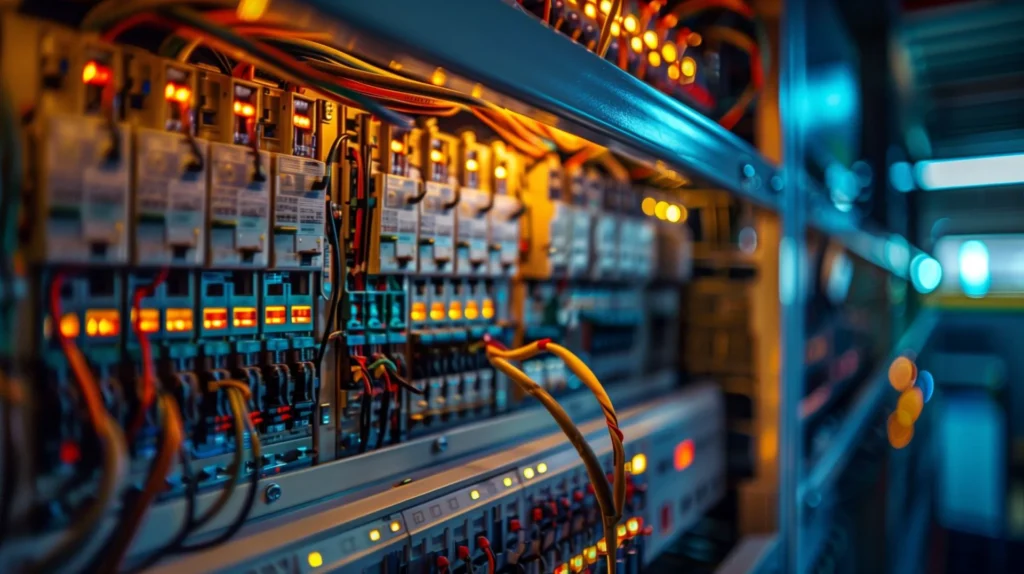
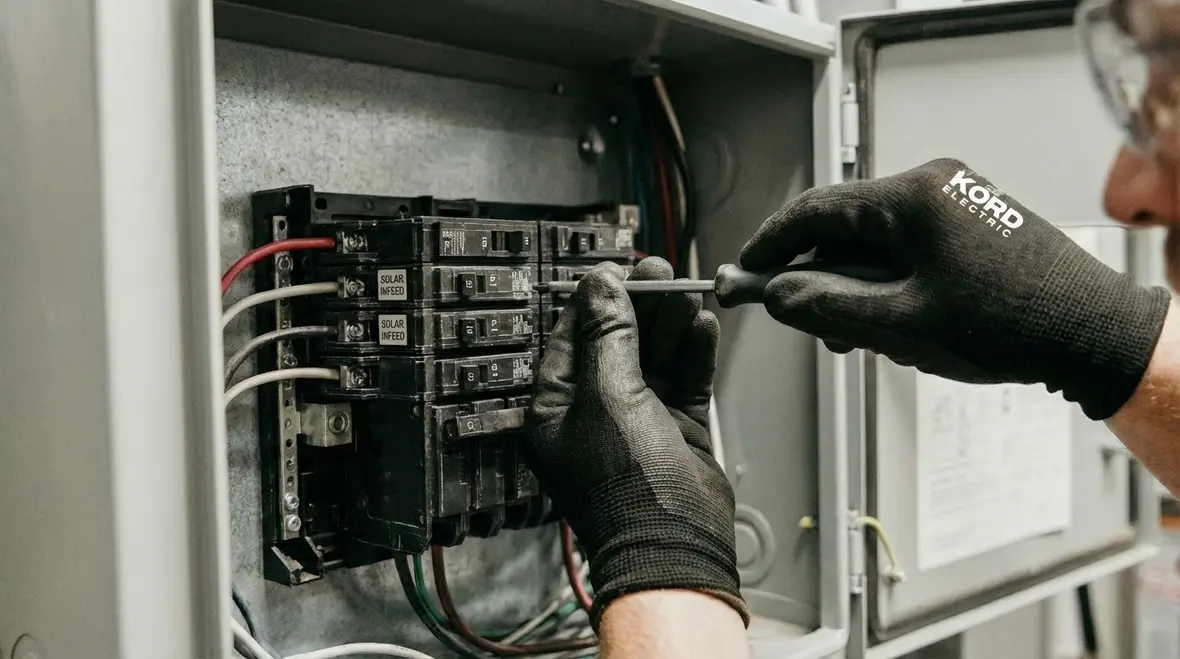
In commercial buildings, the electrical panel acts as the command center. It distributes power to lighting, HVAC, machinery, and tenant spaces. Therefore, when solar power enters the system, it must connect without overloading that panel.
There are several integration approaches:
- Load side connection
Power feeds into a breaker within the main panel. However, this requires strict adherence to capacity rules. - Line side tap
Energy connects upstream of the main breaker. This method often works when panel space is limited. - Dedicated solar distribution panel
In larger industrial facilities, a separate panel may handle renewable generation before feeding into main switchgear.
Each approach depends on calculated load balancing. Our technicians run precise load calculations and confirm that conductor sizing, breaker ratings, and grounding methods meet code. In addition, they evaluate arc fault and surge protection measures.
Because here is the truth. An overloaded panel does not politely complain. It fails. And in a commercial setting, failure means downtime. Downtime means cost. No one wants that phone call.
Therefore, we ensure that the integration respects the building’s existing backbone. Renewable energy must enhance performance, not stress it.
Load Calculations and Infrastructure Planning for Large Properties
Solar integration in commercial and industrial buildings requires deeper planning than residential systems. The scale changes everything.
First, we evaluate historical energy usage. However, we do not stop at monthly bills. We analyze interval data to see demand spikes. Then, we examine how those peaks align with sunlight hours. If a warehouse operates mostly at night, solar will offset daytime base load rather than peak consumption.
Next, we assess physical infrastructure:
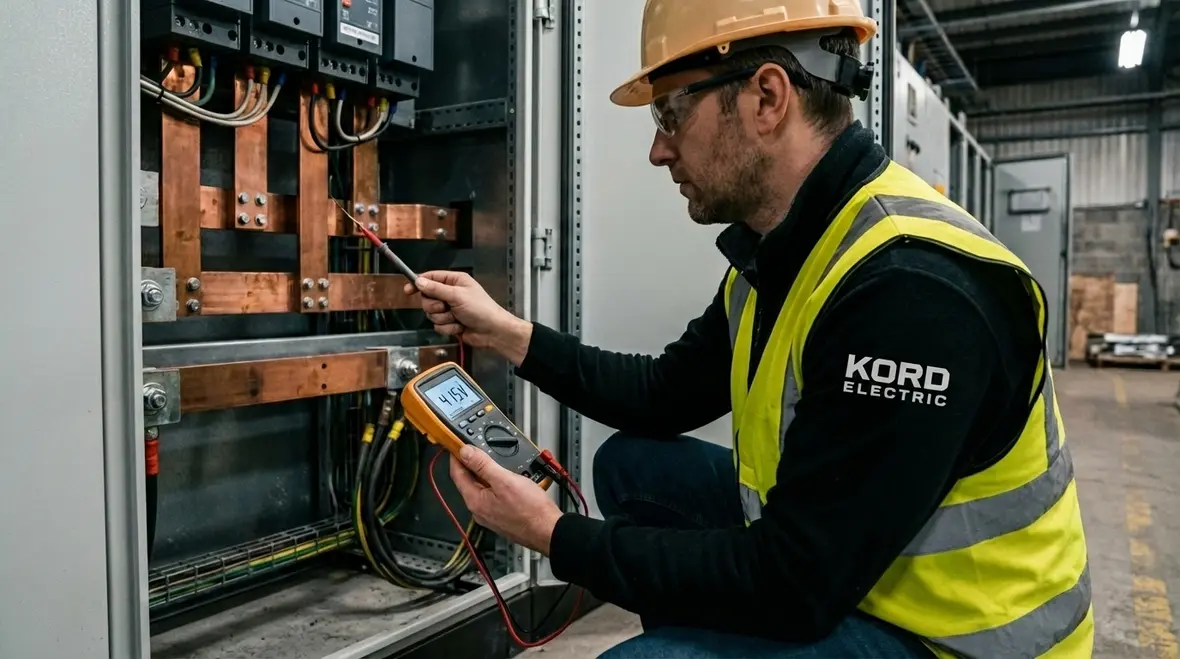
- Busbar ratings in switchgear
- Available breaker space
- Conductor insulation type and age
- Grounding electrode system condition
Meanwhile, our service staff explain these findings in plain language. They avoid jargon. They use diagrams. Sometimes they even use analogies. One technician likes to compare busbars to highway lanes. Add too many cars and traffic slows. Add too much current and heat builds. It is simple physics wearing a hard hat.
Because of careful planning, the renewable energy system blends into daily operations without disruption. Moreover, it supports future expansion. If a facility plans to add new machinery or tenant loads, we factor that into the integration design from the start.
Inverters, Protection Equipment, and Monitoring Systems
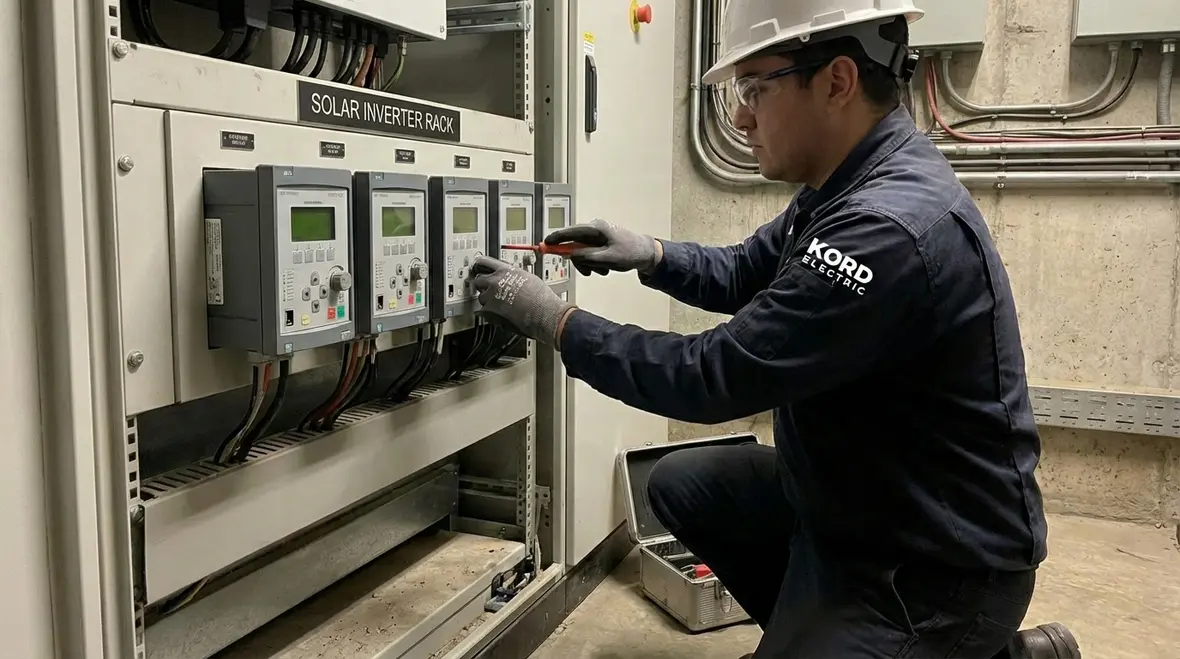
Panels may get the spotlight, but inverters do the heavy lifting. They convert direct current into usable alternating current. However, in commercial systems, inverters also handle grid synchronization, voltage regulation, and fault detection.
Modern inverters include smart controls. Therefore, they can communicate with building management systems. This connection allows facility operators to see real time production data alongside consumption metrics.
Protection systems play an equally critical role:
- Overcurrent protection devices
- Disconnect switches for maintenance access
- Ground fault detection
- Surge protection for sensitive equipment
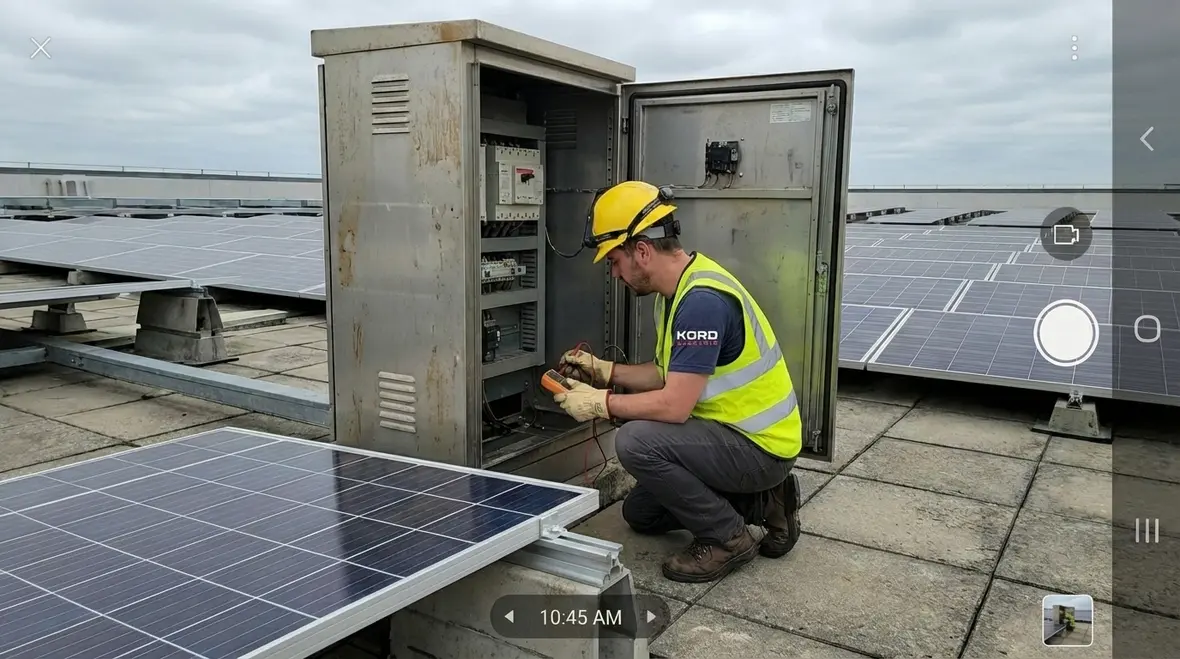
At Kord Electric, our technicians install and test each component thoroughly. Then, they demonstrate how shutdown procedures work. Because during inspections or service events, clarity saves time.
Additionally, monitoring platforms allow building owners to track performance trends. If production drops unexpectedly, alerts trigger investigation. In this way, renewable energy becomes a managed asset rather than a mystery on the roof.
And yes, sometimes the monitoring dashboard looks like something out of a sci fi film. However, behind those glowing graphs lies careful engineering, not movie magic.
Utility Interconnection and Compliance for Commercial Solar Projects
Connecting a commercial system to the utility grid involves more than flipping a switch. Utilities require documentation, protection settings, and inspections. Therefore, integration planning must align with local and national codes.
Our expert service staff coordinate with utility representatives from the early design stage. They prepare single line diagrams, protection studies, and load impact analyses. Because proactive communication prevents delays.
In addition, facilities must comply with electrical codes and safety standards. These include:
- Proper labeling of equipment
- Rapid shutdown provisions where required
- Lockout and tagout procedures
- Accessible disconnect locations
Compliance may not sound exciting. However, it protects property owners from liability and ensures safe operations for maintenance teams.
Moreover, by following structured interconnection steps, commercial properties maintain grid stability. Solar integration should support the broader energy network, not disrupt it. Our technicians understand these responsibilities and execute accordingly.
Two Column Overview of the Integration Process
System Evaluation
- Site load analysis
- Electrical panel inspection
- Infrastructure capacity review
- Utility coordination planning
- Risk assessment
Implementation Phase
- Detailed engineering drawings
- Inverter and equipment installation
- Breaker and conductor upgrades if required
- Utility inspection and approval
- Commissioning and performance testing
This structured process ensures nothing is rushed. Because in commercial environments, precision beats speed every time. As a result, systems operate reliably from day one.
Operational Benefits of Proper Solar Integration
When renewable energy integrates correctly into a commercial electrical system, benefits extend beyond utility savings.
First, facilities reduce exposure to energy price fluctuations. Since part of their demand comes from on site generation, they gain predictable cost control.
Second, distributed generation supports sustainability goals. Many industrial and large property owners now track carbon reduction metrics. Therefore, integrated solar becomes part of corporate reporting and compliance strategies.
Third, infrastructure upgrades often accompany the project. For example, replacing aging electrical panels or updating switchgear improves overall system reliability. Consequently, maintenance teams experience fewer unexpected disruptions.
Finally, visible renewable energy adoption enhances brand reputation. Clients, tenants, and partners notice commitment to responsible energy use. And in competitive markets, perception matters.
Our technicians frequently remind clients that integration is not about chasing trends. It is about building resilience. A commercial facility that controls part of its own energy supply stands on firmer ground. It is less reactive. More strategic. And perhaps just a little ahead of the curve.
Why Commercial Facilities Trust Kord Electric
Kord Electric focuses exclusively on commercial and industrial facilities and major property buildings. That focus shapes every integration decision.
Our expert service staff do more than install equipment. They educate. They walk clients through load calculations, demonstrate electrical panel layouts, and explain how renewable energy flows through the distribution network. Therefore, facility managers feel informed rather than overwhelmed.
Additionally, our technicians bring field experience from complex projects. They understand how to work around active operations. In manufacturing plants, downtime is not acceptable. In multi tenant buildings, coordination matters. Because of this, we schedule carefully and communicate clearly.
Furthermore, we prioritize long term service relationships. After commissioning, we remain available for inspections, upgrades, and troubleshooting. Integration does not end at startup. It continues through maintenance and performance optimization.
In short, we approach each project with calm confidence. No dramatic speeches. No flashy promises. Just steady expertise, delivered with clarity. Think less action movie hero, more seasoned guide who has walked this path before.
Frequently Asked Questions
Power the Future with Confidence
Solar integration is more than connecting panels to an electrical panel. It is a disciplined process that blends renewable energy with existing infrastructure in commercial and industrial facilities. Kord Electric designs, installs, and supports these systems with clarity and precision. Our technicians explain every step, ensuring confidence from planning through operation. When your property is ready to strengthen its energy strategy, we are ready to guide the way. Contact Kord Electric and move forward with purpose.
For facilities interested in broader life-safety and building resilience strategies alongside solar integration, explore how our sister company supports fire protection services for commercial properties. Coordinating electrical upgrades with fire alarm and suppression systems helps keep your entire building infrastructure aligned, safe, and ready for the future.
If you are planning a major electrical panel upgrade as part of solar integration or looking to phase in renewable energy usage across multiple sites, our team can help you stage the work, coordinate with utilities, and keep operations online. From initial feasibility conversations to long term service, we treat your facility like the mission critical asset it is.
Ready to talk about commercial solar panel electrical integration for your facility? Our specialists will review your existing electrical panel, discuss load profiles, and map out a practical path to on site renewable generation that supports your operational goals.