EV Charger Maintenance for Commercial Properties
EV Charger Maintenance Guide for Commercial and Industrial Properties
At Kord Electric, we treat EV charger maintenance as a long term investment, not a box to check. In the first 100 days after installation, charging stations work hard. In the first 1,000 days, they tell a story. That story is about load, weather, usage patterns, and how well the system is cared for. Our technicians see it every day across commercial facilities, industrial plants, distribution hubs, and major property buildings. When our expert service staff explains the importance of ongoing charger care, they do it with calm authority and a touch of humor. After all, a charging station is a lot like a coffee machine in an office. When it works, nobody says a word. When it fails, everyone notices.
This guide walks through how we approach charger upkeep for high demand environments. It explains what to inspect, what to measure, and what to prevent before problems shut down operations. Because in large scale facilities, downtime is not an inconvenience. It is a cost.
The Role of EV Infrastructure in Commercial and Industrial Facilities
Commercial and industrial properties operate on tight schedules and tighter margins. Distribution centers move fleets in and out on the clock. Office towers serve tenants who expect reliability. Manufacturing sites cannot afford electrical surprises. Therefore, charging infrastructure must perform with the same consistency as lighting, HVAC, and production equipment.
Our team at Kord Electric views every charger as part of a larger electrical ecosystem. It connects to switchgear, panels, transformers, and in many cases, energy management systems. Because of that, maintenance is not just about wiping down screens or checking cables. It involves understanding load balancing, demand charges, and thermal stress on components.
Moreover, commercial chargers often operate at higher amperage and longer duty cycles than residential units. Consequently, wear accumulates faster. Connectors endure repeated insertions. Cooling systems cycle constantly. Internal relays engage and disengage thousands of times. Without structured service, small issues grow quietly. And quiet problems in electrical systems are rarely friendly.
EV Charger Maintenance Guide: Core Components That Demand Attention
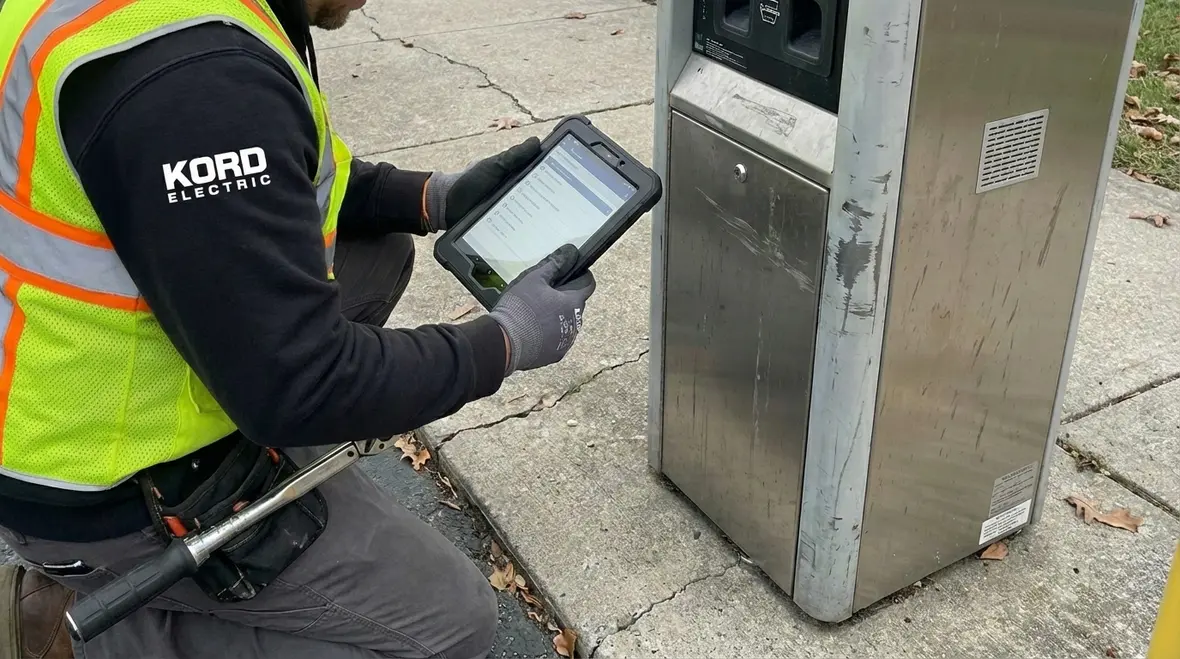
When our technicians perform routine inspections, they follow a methodical sequence. They do not guess. They measure. They do not assume. They verify. As one of our senior electricians likes to say, electricity does not care about opinions.
Below is a simplified breakdown of the core areas we evaluate in commercial settings.
Electrical Components
- Torque checks on terminals and lugs
- Inspection of contactors and relays
- Thermal imaging for hotspots
- Verification of grounding integrity
- Breaker condition assessment
Physical and Operational Elements
- Cable insulation and connector wear
- Enclosure seals and water intrusion checks
- Cooling fan operation and airflow
- Firmware updates and communication tests
- User interface functionality
First, our service staff confirms that all electrical terminations remain properly torqued. Over time, vibration and thermal cycling can loosen connections. Even a slightly loose lug can generate heat. Heat leads to resistance. Resistance leads to failure. Therefore, preventive tightening under manufacturer specifications protects both equipment and building infrastructure.
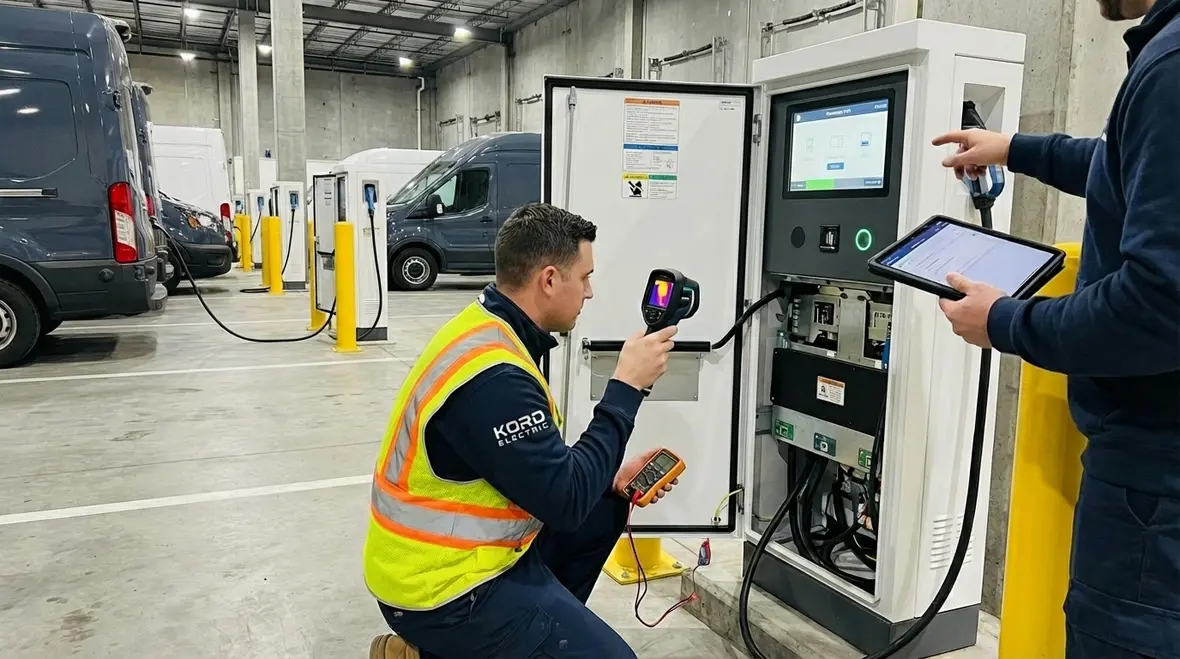
Next, we use thermal imaging to scan internal components while chargers operate under load. This step reveals abnormal temperature rise that the naked eye cannot see. If a breaker runs warmer than expected, we investigate. If a cable shows uneven heating, we address it. Early detection saves thousands in replacement costs.
Additionally, we inspect cables and connectors for physical stress. In high traffic parking areas, drivers move quickly. Sometimes they tug. Sometimes they drop connectors. While the charger may appear fine, micro damage accumulates. We replace worn components before they interrupt service.
How Often Should Commercial EV Chargers Be Serviced?
This is the one question we hear in nearly every consultation. The answer depends on usage, environment, and electrical load. However, for most commercial and industrial properties, we recommend scheduled inspections at least twice per year. In high demand fleet facilities, quarterly service often makes sense.
First, usage intensity drives maintenance frequency. A charger that operates ten hours a day requires more attention than one used occasionally by visitors. Second, environmental exposure matters. Units installed in loading docks or coastal areas face dust, moisture, and temperature swings. Consequently, seals and internal parts degrade faster.
Our technicians assess these factors during initial commissioning. Then, we create a tailored service plan. Rather than offering a one size fits all solution, we align inspection intervals with operational risk. Because in industrial environments, guessing is not strategy.
Furthermore, we track service data over time. By reviewing past findings, we identify trends. For example, if certain connectors show wear after a specific number of cycles, we schedule proactive replacement. This approach transforms maintenance from reactive repair into controlled asset management.
Load Management and System Performance Optimization
Maintaining chargers is not only about preventing breakdowns. It is also about performance optimization. In large buildings, multiple chargers draw power simultaneously. If unmanaged, they can increase peak demand charges. Therefore, part of our EV charger maintenance process includes reviewing load distribution and system communication.
We verify that load sharing algorithms function correctly. If software updates exist, we evaluate their relevance and implement them carefully. Additionally, we confirm that chargers communicate with building management systems when required. A charger operating out of sync with facility controls can distort energy data and billing accuracy.
Moreover, we examine upstream infrastructure. Transformers and panels must handle sustained load without overheating. Our team measures voltage stability under active charging. If we detect imbalance or drop, we investigate root causes. In some cases, redistributing circuits improves performance without major capital upgrades.
In this way, maintenance becomes strategic. It supports operational efficiency. It protects energy budgets. And it ensures that the charging network grows with the facility rather than straining it.
Environmental Factors That Impact Charger Longevity
Commercial and industrial properties present unique environmental challenges. Dust from warehouses, humidity in parking structures, temperature swings in outdoor installations, and chemical exposure in manufacturing areas all affect equipment lifespan.
Therefore, our service staff performs detailed enclosure inspections. We check gasket integrity and confirm that vents remain clear. If cooling pathways clog, internal temperatures rise. And as anyone who has watched a laptop overheat knows, electronics do not enjoy that experience.
Additionally, we evaluate corrosion risk. In coastal regions or facilities using deicing salts, metal components can degrade. We treat and protect exposed hardware when necessary. Proactive care in these environments extends equipment life significantly.
We also monitor UV exposure for outdoor units. Over time, sunlight can weaken cable jackets and plastic housings. While damage may appear cosmetic at first, it can evolve into safety concerns. Therefore, early replacement is often the wiser choice.
Safety Compliance and Documentation for Major Buildings
For property managers and facility directors, documentation matters. Inspections are not just technical exercises. They are part of compliance and risk management.
At Kord Electric, our technicians document every service visit. We record torque values, thermal readings, firmware versions, and corrective actions. This documentation supports insurance requirements and internal audits. Moreover, it provides a clear maintenance history for each charger.
We also verify that safety labeling remains visible and accurate. If standards evolve, we advise clients accordingly. In industrial settings, clear labeling prevents misuse and supports training programs.
Furthermore, we test safety features such as ground fault protection and emergency shutoff functionality. These systems exist for a reason. We confirm that they operate exactly as designed. Because in high power environments, safety cannot rely on assumption.
Training Facility Teams for Daily Oversight
While our expert service staff handles technical inspections, we believe in empowering on site teams. Therefore, we provide guidance for facility personnel who interact with chargers daily.
We show them how to perform simple visual checks. For example, they learn to spot frayed cables, cracked connectors, or unusual noises. We explain what normal operation looks and sounds like. Then, if something changes, they recognize it quickly.
Additionally, we advise on cleaning practices. Using the wrong chemicals can damage surfaces and seals. A gentle approach works best. As we sometimes joke, chargers prefer respect, not a pressure washer set to maximum.
By combining professional service with informed facility staff, we create layered oversight. Minor issues surface early. Communication improves. And downtime decreases.
Future Proofing Through Strategic EV Charger Maintenance
The electric vehicle landscape continues to evolve. Charging speeds increase. Fleet adoption grows. Buildings expand infrastructure. Consequently, maintenance must adapt as well.
Our approach includes forward planning. During inspections, we evaluate capacity for expansion. We assess whether existing panels can support additional units. We review conduit pathways and space allocation. In doing so, we help clients prepare for growth without disruption.
Moreover, we stay current with manufacturer updates and industry standards. When improvements enhance reliability or efficiency, we recommend them. This keeps commercial properties competitive and prepared.
Strategic EV charger maintenance also protects reputation. Tenants, fleet managers, and corporate partners expect reliable infrastructure. When chargers operate smoothly, confidence grows. And in business, confidence is currency.
To see how EV maintenance fits into a broader preventive strategy, many facilities pair charger care with structured electrical preventive maintenance programs that keep panels, switchgear, and distribution equipment running just as reliably.
Frequently Asked Questions
Partner With Kord Electric for Long Term Reliability
Commercial and industrial charging infrastructure deserves more than occasional attention. It demands expertise, structure, and foresight. At Kord Electric, we provide disciplined service backed by experienced technicians who explain every step clearly and calmly. We protect your electrical investment, reduce operational risk, and support future expansion. If your facility relies on charging infrastructure, let us maintain it with precision and care.
If you are planning new infrastructure or expanding your current network, explore our dedicated EV charger installation services to pair expert installation with ongoing EV charger maintenance for true long term reliability.
Contact Kord Electric today and keep your systems strong, steady, and ready for tomorrow.