The Ultimate 2026 Guide to EV Charger Safety Requirements for Commercial Properties
Electric vehicle charging stations are popping up faster than conspiracy theories in a Reddit thread. But while overnight EV charger installs might work for Uncle Joe’s garage, commercial properties need something a little more robust—like actual compliance with EV charger safety requirements for commercial properties.
That’s where our experts at Kord Electric come in. Their seasoned technicians blend technical wizardry with years of experience to ensure your charging infrastructure isn’t just functional—it’s dependable, up to code, and as safe as your grandma’s cookie jar (if she had it wired to an industrial breaker panel).
This 2026 guide breaks down what you need to know about commercial EV charging compliance.
1. What Makes EV Charging Stations for Businesses Different?

Think of residential EV charging like a kiddie pool. Now picture commercial EV charging as an Olympic-sized tank with lasers, dolphins, and insurance liability. That’s the difference.
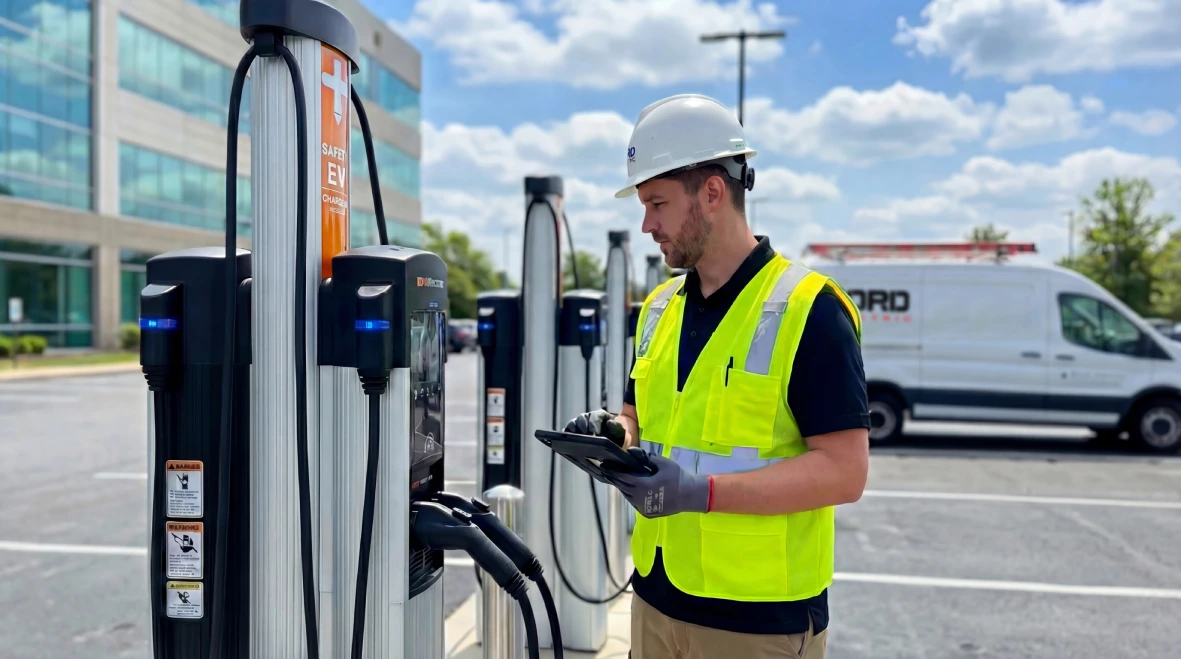
Charging stations for commercial and industrial buildings must serve higher traffic, offer greater power output, support multiple vehicle types, and meet strict building codes, making safety not an option—it’s the whole show. These aren’t plug-and-play outlets. They’re integrated systems tied into your facility’s electrical infrastructure. Wild stuff, right?
Electrical technicians frequently walk commercial property managers through this complexity like seasoned trail guides steering you away from a regulatory bear trap.
At the commercial level, you’re managing:
- Power load distribution (translation: don’t fry your circuits)
- Multiple charger units in one network
- Site planning and trenching
- ADA accessibility requirements
- Software integration for billing, monitoring, and peak control
Add a pinch of bureaucracy, a dash of fire code, and voilà—you’ve got a full plate of responsibility.
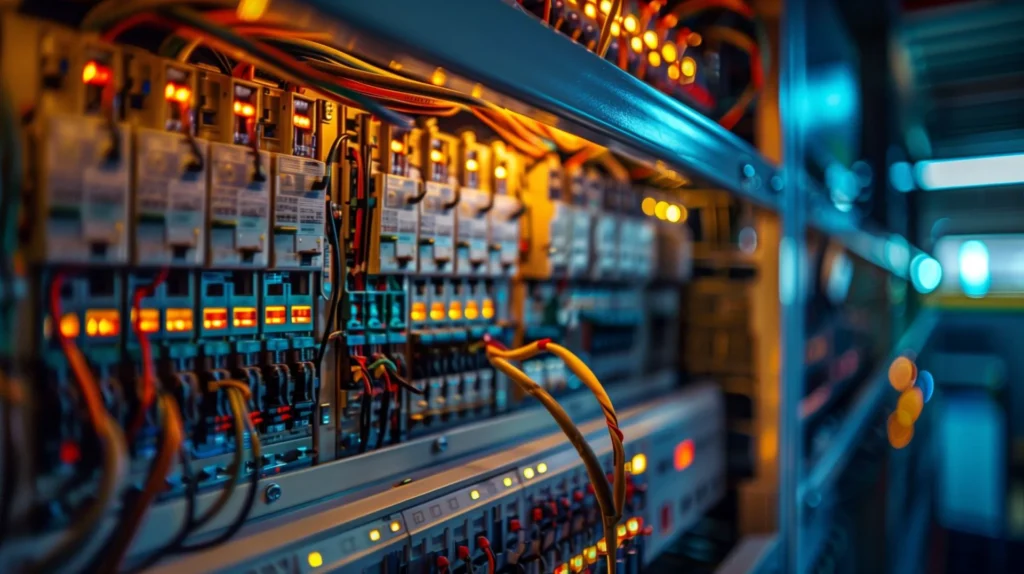
2. Safety Starts in the Panel Room
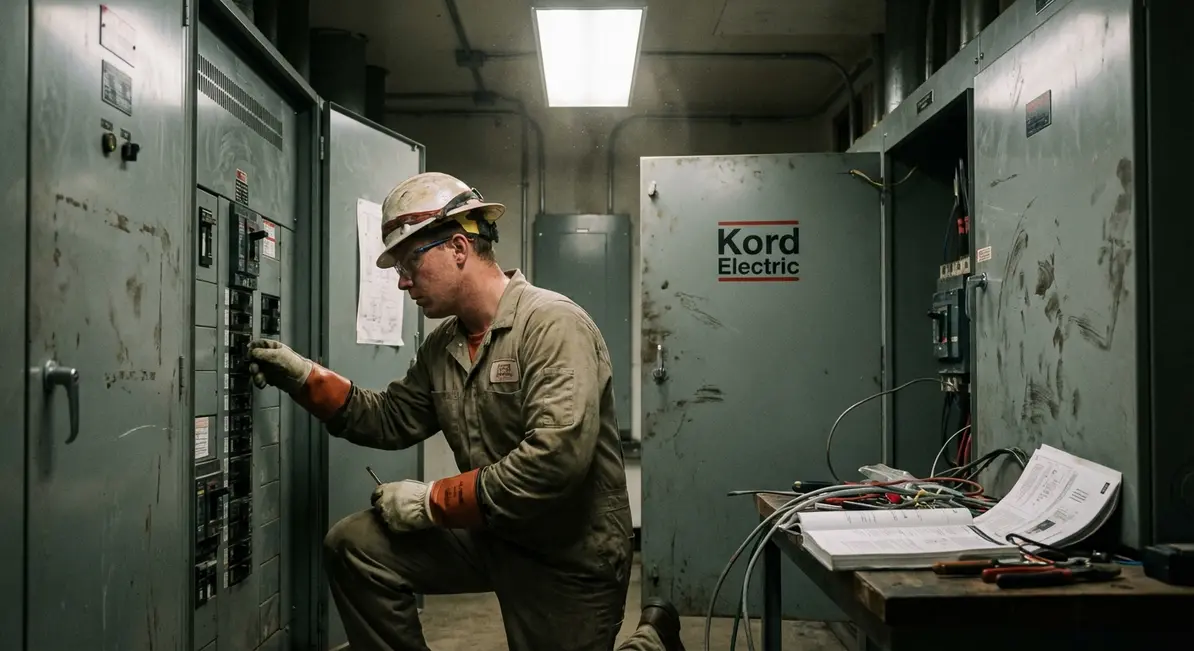
You may not think of your electrical panel as the rockstar of EV installation. But in truth, it’s the lead guitarist of the whole setup. Miss a note, and the crowd (a.k.a. the fire marshal) won’t be impressed.
Kord Electric inspect and calculate available ampacity (yes, that’s a real word) in your facility’s existing electrical panels. They take into account:
- Main service rating
- Subpanel limitations
- Transformer capacity
- Existing load occupancy
Your building’s “electric personality” may not be ready for charging stations without upgrades. It’s sort of like installing a hot tub on a treehouse. Looks cool, ruins your Saturday.
This isn’t just safety—it’s commercial asset protection. Fires, outages, and melted wires don’t mix with investor meetings.
3. Grounding and Bonding: Shockingly Essential

You ever see one of those “EV catches fire” headlines? Yeah, we’re not looking to add your parking lot to the list.
Proper grounding and bonding is the unsung hero of EV charger installation. Without it, electricity might take a scenic detour through—inconveniently—people.
Kord Electric’s pros explain things in a way that even your facilities team (or your nephew with the YouTube electrician degree) will understand. They meticulously ensure:
- Ground fault protection in all circuit layers
- Proper bonding of metal conduits and equipment enclosures
- Voltage stabilization across fluctuating loads
- Compliance with NEC Article 625 and Sections 250.4 to 250.122
If you skipped that last part, it’s okay. Just know this: Grounding is what keeps everything from going full Frankenstein.
4. Smart Load Management (That Doesn’t Break the Grid)

Here’s a plot twist: Most commercial properties can’t just “add” chargers and hope downtime doesn’t follow. Overloading your electrical infrastructure can throw your whole system into chaos.
This is where dynamic load management systems come in. It’s like cruise control for your electricity—adjusting and distributing power between chargers based on usage and capacity, ensuring you don’t melt your main breaker like a microwaved burrito.
Deploying intelligent EV charging software ensures:
- Peak demand charges don’t spike your utility bill
- Power is balanced across chargers and other building systems
- The system remains grid-friendly
Whether it’s a shopping center or a manufacturing plant, Kord Electric provides custom load balancing strategies that not only hit safety requirements but also help future-proof your system. Growth is good—as long as it doesn’t take the lights with it.
5. What’s Code vs. What’s Common Sense
| Code Requirements | Real-World Safety Practices |
|---|---|
| UL-listed chargers with NEC-compliant wiring | Chargers tested by certified technicians post-installation |
| Level 2 or 3 chargers must be installed according to NFPA-70 | Keep all kid-sized fingers and dog tails away from chargers |
| All equipment labeled and locked | Install surveillance in case someone tries to “borrow” electrons |
| ADA-compliant access routes | Clear snow, mud, and debris regularly |
| Permits pulled before any trenching or core drilling | No, “my cousin does electrical” does not count as a licensed contractor |
Bottom line? Codes are important. But common sense saves buildings. And lawsuits. And news coverage. Kord Electric’s team enforces both like safety ninjas—you often won’t notice them, but they’ve already stopped something dangerous while you were refilling your coffee.
6. Site Design Isn’t Just About Parking Spaces
If you think EV charger placement is as easy as “put it near a wall,” we’ve got news for you: misplacing your charger is like building your kitchen sink in the hallway—it technically works, but no one will use it.
Kord Electric engineers optimize site design for:
- Traffic flow and driver convenience
- Emergency vehicle access
- Weatherproofing points and shade availability
- ADA positioning and signage
- Cable reach (those things don’t stretch forever)
Think of it like theme park ride design—if people get stuck or lost, no one’s coming back. Make safety walkable, accessible, and headache-free.
7. Fire Codes, Surge Protection, and the Art of Not Exploding
Modern EV chargers are built with a buffet of onboard safety systems. But when you’re tying them into a 500-amp industrial panel previously used to power six walk-in freezers and a neon marquee, things get… eventful.
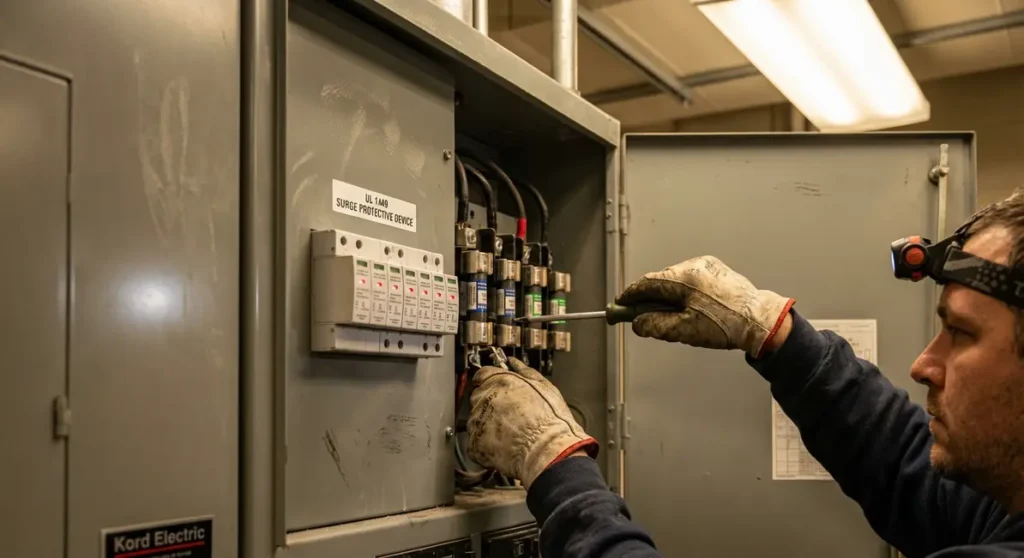
Surge protection is crucial. Kord Electric integrates:
- Surge protection devices (SPDs) per UL 1449
- Correct breaker sizing with time-delay fuses
- Arc fault disconnects with a compliance-first approach
They also keep local fire codes in check, which often mandate proximity to fire lanes, clear signage, and specific spacing rules depending on local requirements. That’s right—what passes in Houston might be a no-go in Pasadena.
Don’t gamble. Transformers and charging ports weren’t meant to “let off steam.”
8. EV Incentives and Regulatory Inspections: The Shortcut You Can’t Take
You might think, “Why not skip a few steps? Permits are boring.” Sure, and Indiana Jones could’ve used Google Maps. But that ruins the adventure.
In reality, skipping local permitting, utility notifications, or failing to prep for inspections could cost your project thousands in backwork—and delay you six months while your competitors rake in the green with certified chargers.
Kord Electric’s field specialists coordinate directly with utility companies, city inspectors, and permit offices to keep everything smooth sailing from start to finish. They’ll even stick around for inspections—because nothing says client love like someone else showing up for your stress test.
And oh yes, the rebates. If you don’t install according to state-certified safety guidelines, that sweet rebate check is about as useful as Bitcoin in 2011… unless you held on to it, in which case, congrats, you can buy your own grid now.
9. Training Your Team: The Forgotten Step
Installing EV chargers is a great start. But what happens when the site manager doesn’t know what blinking red means versus solid green? Cue the awkward phone call to IT while tenants fume.
Proper technicians offer onsite training and documentation, covering:
- Basic troubleshooting
- Daily maintenance checks
- User safety rules for tenants or staff clients
- Who to call for what issue (not “Jeff from accounting”)
Your chargers are part of your infrastructure now. Treat them like an HVAC system—or the espresso machine after 8 AM. Training keeps things running smoothly and safely.
Frequently Asked Questions
- What are the key EV charger safety requirements for commercial properties?
Installation must follow NEC codes, include surge protection, grounding, ADA compliance, and permit approvals. - Do I need upgraded electrical panels to add EV charging stations?
Often yes. A thorough panel assessment will determine capacity and need for load management systems. - Can I install chargers myself with an electrician on staff?
Only if certified and permitted per local requirements. Commercial setups need licensed professionals like Kord Electric for code compliance. - What are the penalties for ignoring safety requirements?
Fines, insurance claims denial, revoked permits, or shutdown orders by local authorities. - Is EV charging safe in storm-prone areas?
Absolutely—with proper surge protection, bonding, and weatherproofing, all of which Kord Electric includes in their installs.
Conclusion: Safe Charging Powers the Future
Looking to power up your commercial property with sleek, smart EV charging stations? Don’t bet your assets on shortcuts. Let Kord Electric’s licensed experts plan, protect, and power every corner with safety-first precision and future-ready design. Your tenants, staff, and bottom line will thank you.
Contact Kord Electric today and plug into the standard your facility deserves. Because safe charging isn’t optional—it’s electric enlightenment.