Common Commercial EV Charger Failures (And How to Prevent Them)
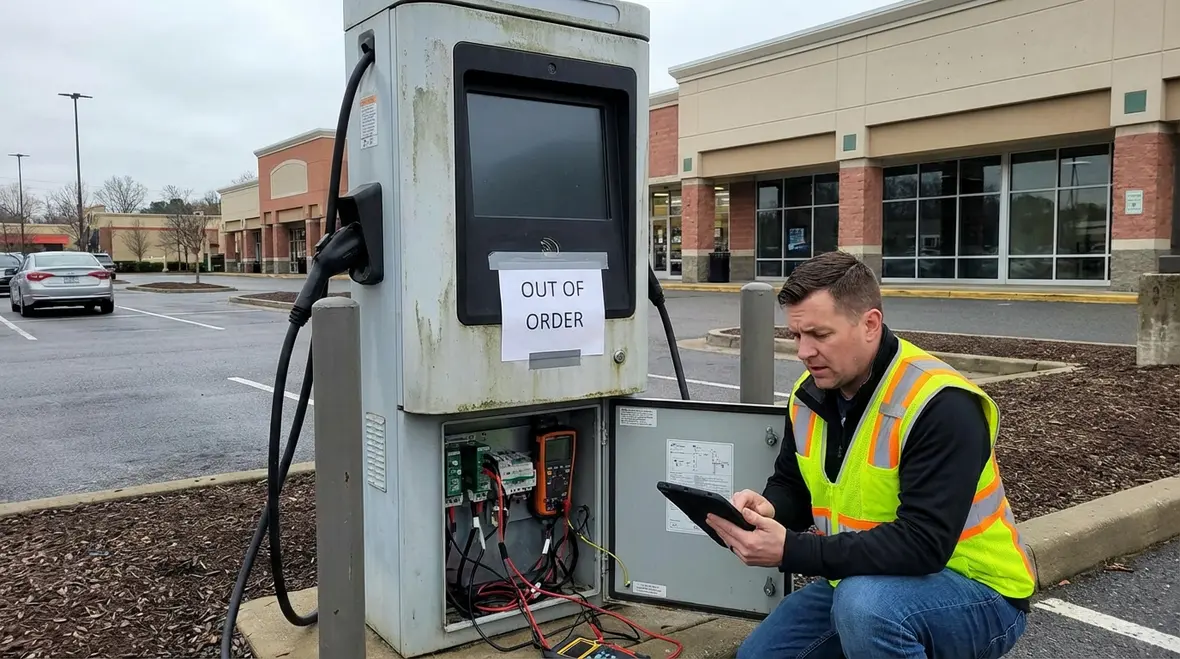
If you’ve ever watched your facility manager stare blankly at a non-responsive commercial EV charger like they were waiting for it to magically fix itself, you’re not alone. In the expanding world of electric vehicle infrastructure, one truth endures: downtime equals dollars lost. Fortunately, there are proven ways to prevent EV charger failures that plague commercial and industrial grade systems. And let’s be honest—who wants their property’s brand-new charging station becoming nothing more than a high-tech lawn ornament?
This isn’t just about plugs and volts; it’s about uptime, safety, and reputation. With insight from the deeply caffeinated and expertly trained technicians at Kord Electric, we’ll dig into the age-old question: “Why did this blinking box of lights just cost us another repair call?” Buckle up, because this won’t be your usual snooze-fest lineup of tech specs and vaguely threatening warranty clauses. This is EV charger reality, with a little humor, some heart, and a whole lotta know-how.
Why Commercial Chargers Break More Than a Politician’s Promise
Commercial EV chargers live rough lives. They deal with fluctuating voltage, heavy usage, grumpy drivers (we see you, Carl), and more weather than a Game of Thrones character. Over time, this leads to failures in key components like cables, connectors, firmware, and the power stack. But the real kicker? Many of these disasters are totally avoidable.
Kord Electric technicians point out that up to 75% of the service calls they respond to could have been prevented with just a smidge more planning and proactive maintenance. Their words, not ours—“Charger breakdowns are often less about bad luck and more about bad habits.” It’s like skipping oil changes and then wondering why your van sounds like an old blender.
What Happens When EV Chargers Are Installed Incorrectly

Let’s be real: installing a commercial EV charger isn’t like plugging in a toaster.
Poor installation is one of the most common causes of early charger failure. Misaligned conduits, improper grounding, and ignoring manufacturers’ specs can cause overheating, erratic charging, and permanent damage.
The expert crew at Kord Electric has seen it all—from power cables zip-tied like spaghetti to load balancing bypasses that looked straight out of a Frankenstein movie. According to Kord’s lead technician, “If someone says ‘close enough’ while wiring a 480-volt system… run.”
Best Practices:
- Always use a certified commercial installer
- Confirm site load capacity with utility coordination
- Ensure UL-listed materials and proper conduit spacing
How Faulty Power Supply Wrecks Charging Stations
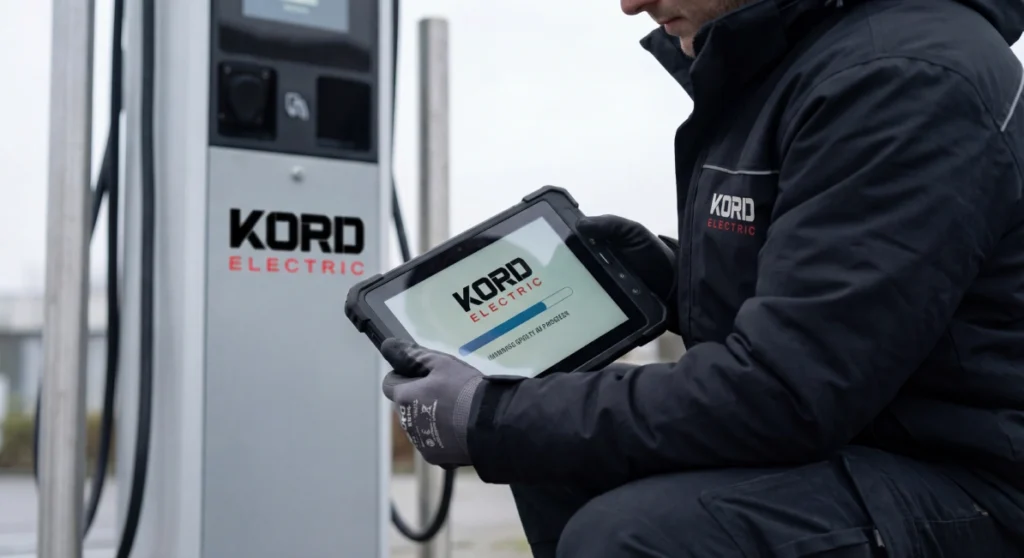
Have you ever tried to stream Netflix on hotel Wi-Fi? Now imagine your charger trying to pull 80 amps on an unstable three-phase line. Nightmare.
Large properties and industrial campuses may experience inconsistent voltage, brownouts, or surges. These amperage hiccups create heat stress and can fry components faster than you can say “replacement part backorder.”
Kord Electric technicians often recommend power quality audits before and after charger installation. Why? Because what you don’t know about your power supply can absolutely hurt your expensive infrastructure—especially during peak demand hours or weather events.
Simple Fixes:
- Install voltage regulators or surge filters
- Consider grid monitoring & breaker analytics
- Work with knowledgeable electricians familiar with industrial-scale supply
Firmware and Updates: The Unsung Heroes (or Villains)
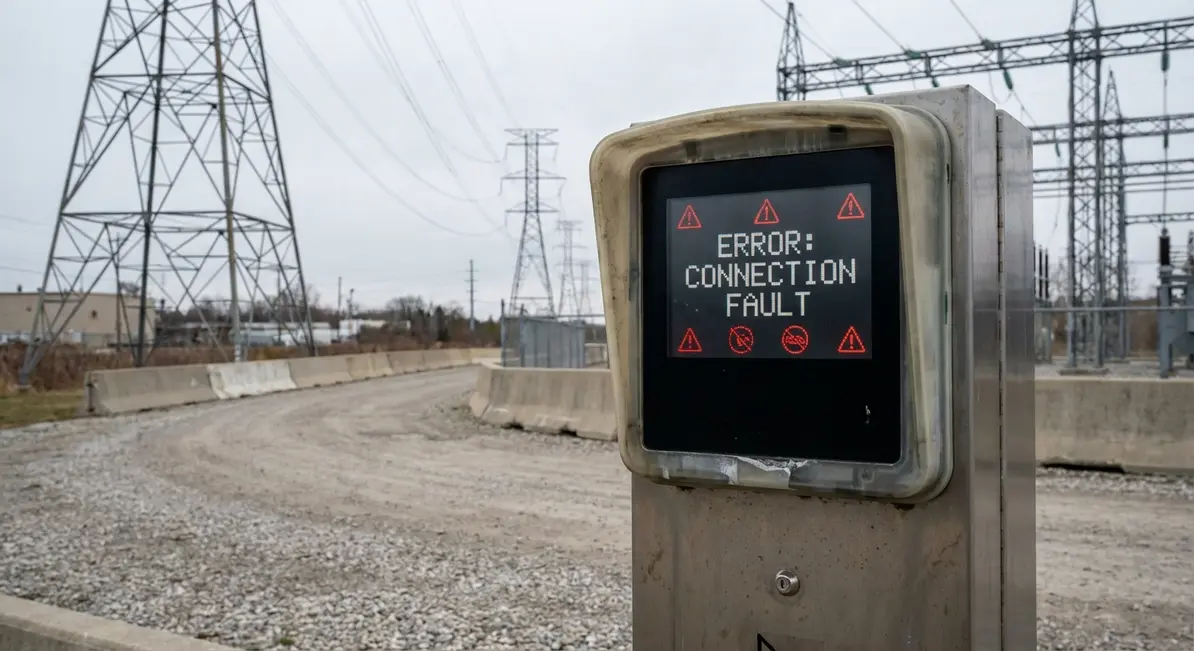
The software inside your charger is like the operating system of your phone: powerful, crucial…and occasionally annoying as heck.
Old or buggy firmware can cause connection dropouts, payment failures, and even complete shutdowns. In one cringeworthy example, Kord staff discovered a charger running on a 3-year-old firmware version. That’s like trying to run TikTok on a flip phone.
What You Can Do:
- Subscribe to your charger’s OTA (over-the-air) update services
- Schedule biannual tech inspections focused on firmware diagnostics
- Only work with vendors that maintain reliable CMS (Charging Management Systems)
As Kord Electric’s software specialist says, “Ignoring firmware updates is like ignoring your in-laws. It works right up until it doesn’t.”
Let’s Talk Dirty Chargers: Contamination and Environment Failures
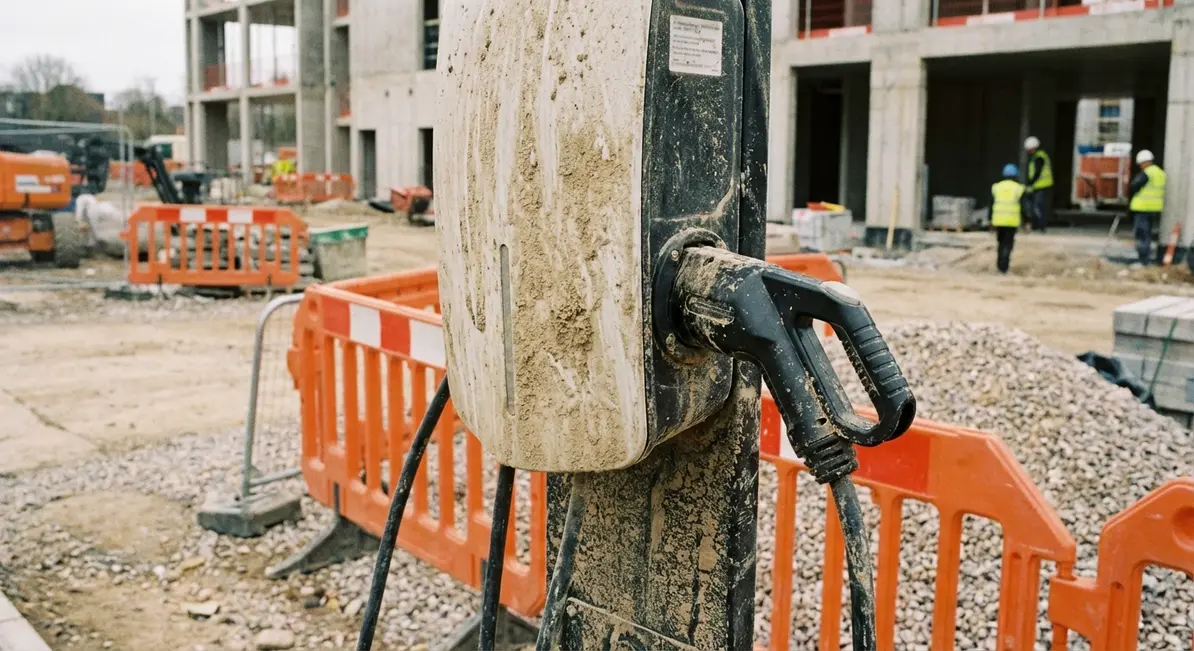
Commercial EV chargers aren’t typically built for white-glove conditions. They battle dust, humidity, bees (yes, bees), and the occasional latte spill from a distracted commuter.
Exposure to contaminants in parking structures, outdoor lots, and industrial work zones can short out connectors, corrode internal boards, and turn a $30,000 charger into a very fancy doorstop.
Key Sources of Contamination:
- Construction dust and silica particles
- Salt buildup in coastal zones
- Engine oils or chemical vapors in industrial areas
Kord Electric’s Recommendations:
- Use enclosures rated NEMA 4X or better
- Schedule monthly cleaning and inspection
- Add ventilation systems in enclosed garages
Remember, just because the charger doesn’t creep when you approach it doesn’t mean it’s not slowly dying inside from preventable build-up.
When User Error is the Real Villain
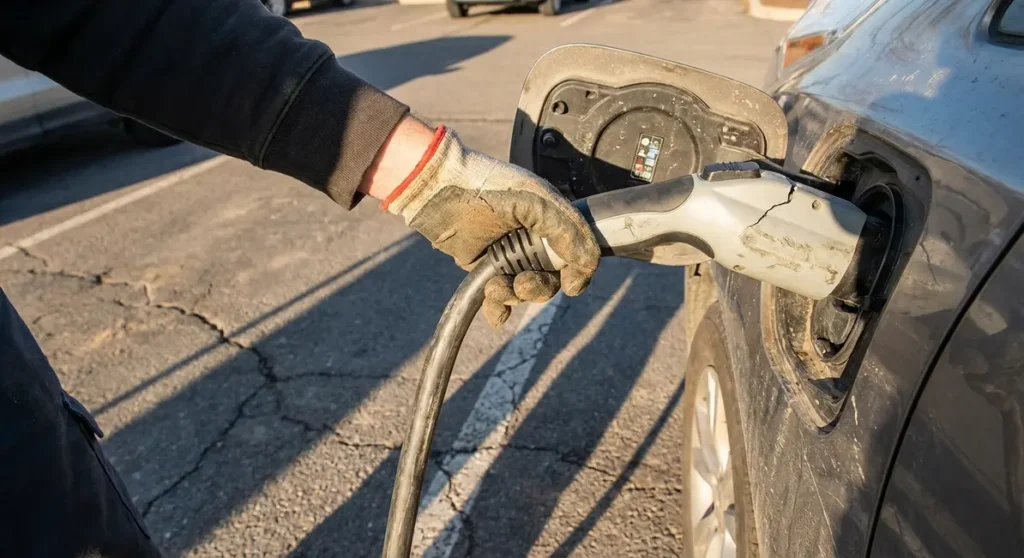
Sometimes the problem isn’t the charger at all. It’s Bob from accounting yanking the plug like it’s a stubborn lawn sprinkler. Misuse by employees, guests, or tenants can drastically shorten the life of connectors, cords, and terminals.
And while misuse might be unintentional, the consequences aren’t. From vehicles being plugged in at weird angles to aggressive unplugging during charge cycles, Kord Electric has seen it put chargers through the equivalent of EV sumo wrestling.
Preventative Measures Include:
- Employee and tenant training videos (yes, really—it works)
- Mount visual guides and charger usage cards on-site
- Install chargers with auto-retract cables or reinforced connectors
EV Charger Network Issues: Blame Skynet… or Your Wi-Fi
Cloud-based models are now the standard for commercial charging stations. Payment, user access, diagnostics—everything flows through network channels. So when chargers start acting like introverted teenagers (withdrawn, non-responsive), interrupted connectivity is often the reason.
Spotty Wi-Fi, firewall restrictions, or poor backend setups turn your high-end chargers into glorified pillars. Even worse? No access for Kord Electric techs to troubleshoot remotely. That’s like sending Batman to save Gotham but locking the Batcave.
Networking Tips:
- Opt for hardline Ethernet when possible
- Use commercial-grade routers with backup LTE sims
- Coordinate IT and facilities teams BEFORE rollout
Preventative Maintenance: The Most Boring Yet Crucial Part
Let’s face it. “Preventative maintenance” sounds about as exciting as a root canal livestream. But it’s also what keeps chargers humming year after year.
Kord Electric offers preventive maintenance plans tailored for commercial and industrial buildings that include thermal scans, torque testing, software fine-tuning, and replacement of high-wear parts. Think of it like a spa day for your charger. Minus the cucumber water.
Suggested PM Frequency:
- Quarterly for outdoor or high-use systems
- Biannually for low-traffic or controlled environments
It’s boring. It’s vital. And yes, your charger will thank you—by not breaking down every other month.
Predictive Analytics: The Future is Watching You (In a Good Way)
If Tony Stark built EV chargers, they’d come with built-in AI telling you when to replace parts before they break. Luckily, predictive tech is no longer just Avenger-level fantasy.
Modern commercial chargers from high-end brands support sensor data that tracks degradation of components, thermal buildup, and electrical anomalies. Hooked into smart dashboards, they can issue alerts before failure occurs.
Kord Electric works with properties to integrate predictive tools with their building management systems for a unified overview. Remember, folks—maintenance during business hours is still way cheaper than emergency calls at 2 a.m. on a Saturday.
FAQs
How often should commercial EV chargers be inspected?
Every 3 to 6 months, depending on usage and environmental conditions.
What causes most commercial EV charger failures?
Poor installation, power issues, outdated software, and user damage top the list.
Can EV chargers overheat?
Yes, especially if improperly installed or operating in harsh conditions.
Are commercial chargers weatherproof?
Most are, but enclosures vary—always check for proper NEMA ratings.
Does Kord Electric offer emergency repairs?
Yes, but they’d rather help you avoid the emergency entirely.
Final Thoughts: Turn Downtime Into Drive Time
Commercial EV charger failures don’t just inconvenience drivers. They cost buildings money, hurt tenant satisfaction, and damage reputations. By taking proactive steps—including partnering with commercial electrical experts like Kord Electric—you can eliminate chaos before it starts. If your property hosts EV infrastructure, it’s time to prevent EV charger failures and embrace a smarter standard of care.
Book a site assessment with Kord Electric today and turn your EV charging strategy from guesswork to greatness.