EV Infrastructure Planning for Commercial Properties Charging
EV Infrastructure Planning for Commercial Properties: the calm, smart path to charging
Kord Electric supports commercial and industrial facilities and major property buildings with EV Infrastructure Planning for Commercial Properties that fits real-world electrical capacity, parking layouts, and business timelines. We believe that good planning prevents headaches later, like discovering you bought the wrong adapter after the meeting starts. And yes, we have technicians who explain the process in plain language, so facility managers do not have to decode electrical drawings like they are a spy movie script.
In the sections ahead, we walk through how we plan, model, design, and phase EV charging so it works today and scales tomorrow. We also share how our expert service staff communicates with others on-site, including your electricians, property teams, and vendors, because coordination is where many projects succeed or stumble.
Understand your site load before you pick chargers
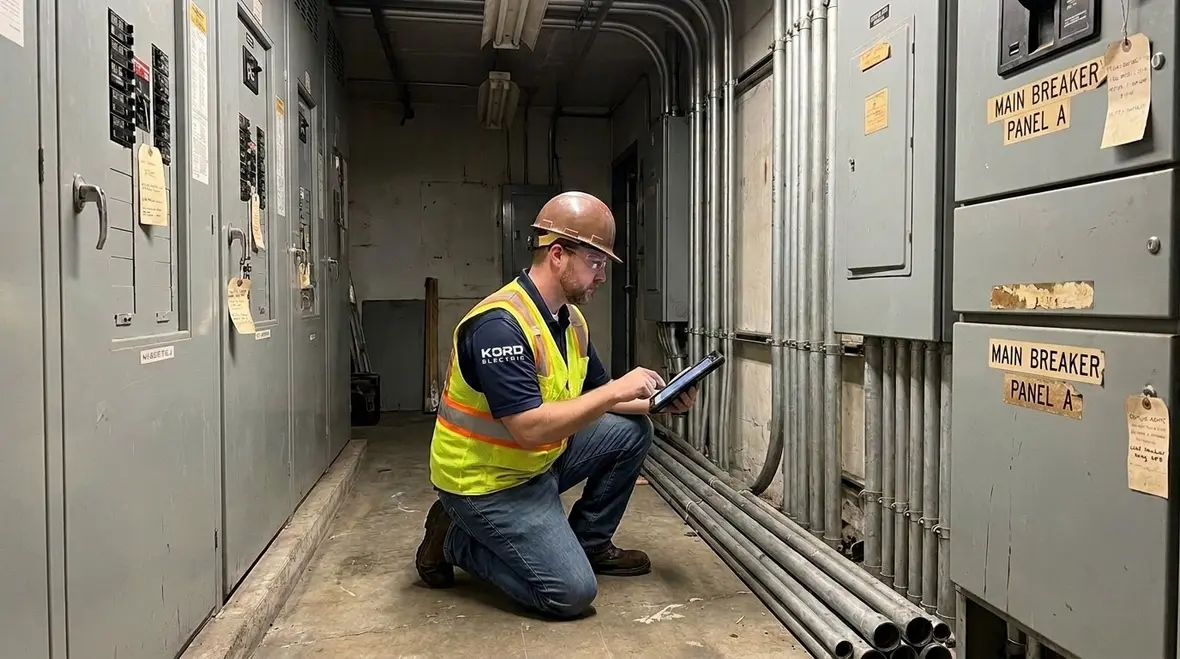
First, we look at what the building can handle, not just what the chargers can do. We review service size, utility limits, existing loads, and any planned upgrades. Then we map the likely future growth, including tenant mix, fleet plans, and after-hours usage. At this step, our technicians do not guess. They verify and document.
Next, we consider how charging changes your load profile. For instance, two chargers that look similar on paper can behave differently based on charging mode, vehicle types, and scheduling. Therefore, Kord Electric builds a plan that protects critical operations like HVAC, refrigeration, and production lines.
And if someone on the team says, “We will figure it out later,” we gently smile. Later has a habit of arriving with penalties, delays, and the kind of phone calls no one enjoys.
If your property is also facing broader electrical changes alongside EV upgrades, it can help to look at how electrical infrastructure planning and EV charging interact over time. Kord Electric’s broader electrical infrastructure upgrade planning guidance shows how panel capacity, switchgear, and distribution planning support long-term EV readiness instead of forcing emergency fixes down the road.
Balance demand, parking behavior, and future growth
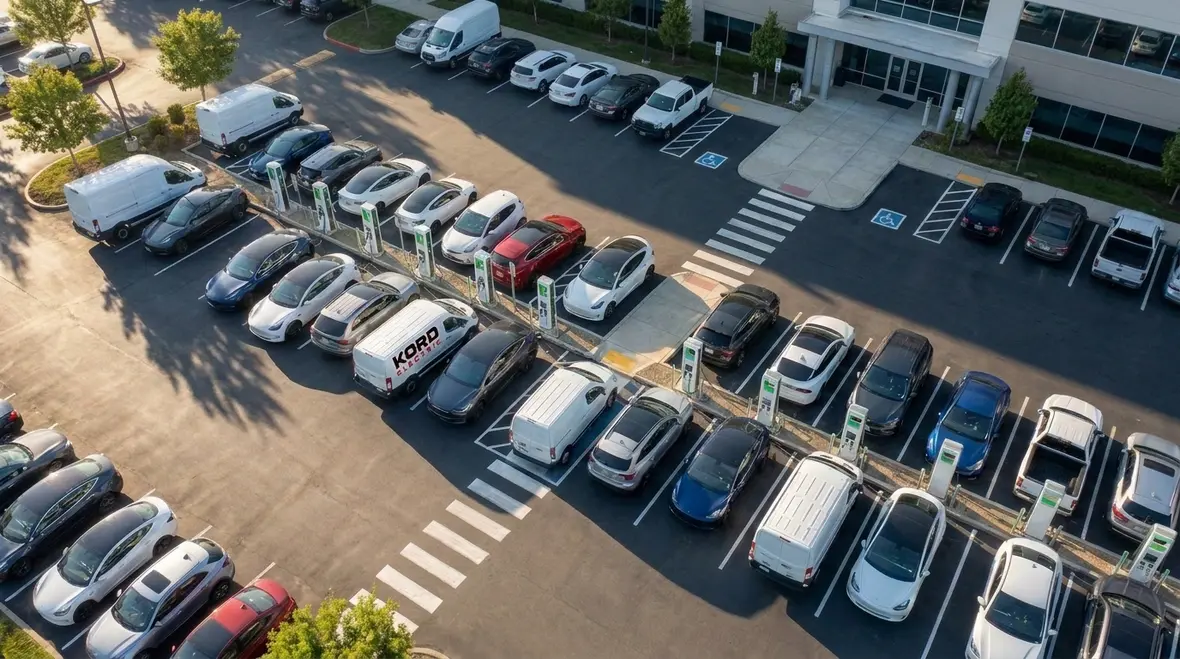
Then we analyze how people and fleets actually park. We ask practical questions such as charging dwell time, arrival patterns, and whether chargers serve customers, staff, or delivery routes. As a result, we can choose power levels and charger counts that match real use, not fantasy.
We also plan for expansion without ripping up everything. In commercial and industrial sites, electrical work can be expensive and disruptive, especially when downtime is hard to schedule. So we design pathways for additional circuits and, when appropriate, we plan for load management that allows more charging points without exceeding the service capacity.
Our approach stays steady and realistic. We do not chase maximum wattage for every bay. Instead, we match capacity to operations, and we phase upgrades so your site stays productive.
For teams mapping multi-year charging growth, Kord Electric’s EV charging infrastructure scalability planning for commercial sites pairs well with this step. It shows how to treat EV Infrastructure Planning for Commercial Properties as a staged roadmap, not a one-time guess, so your second and third phases feel easier than your first.
Electrical design must match code and real equipment
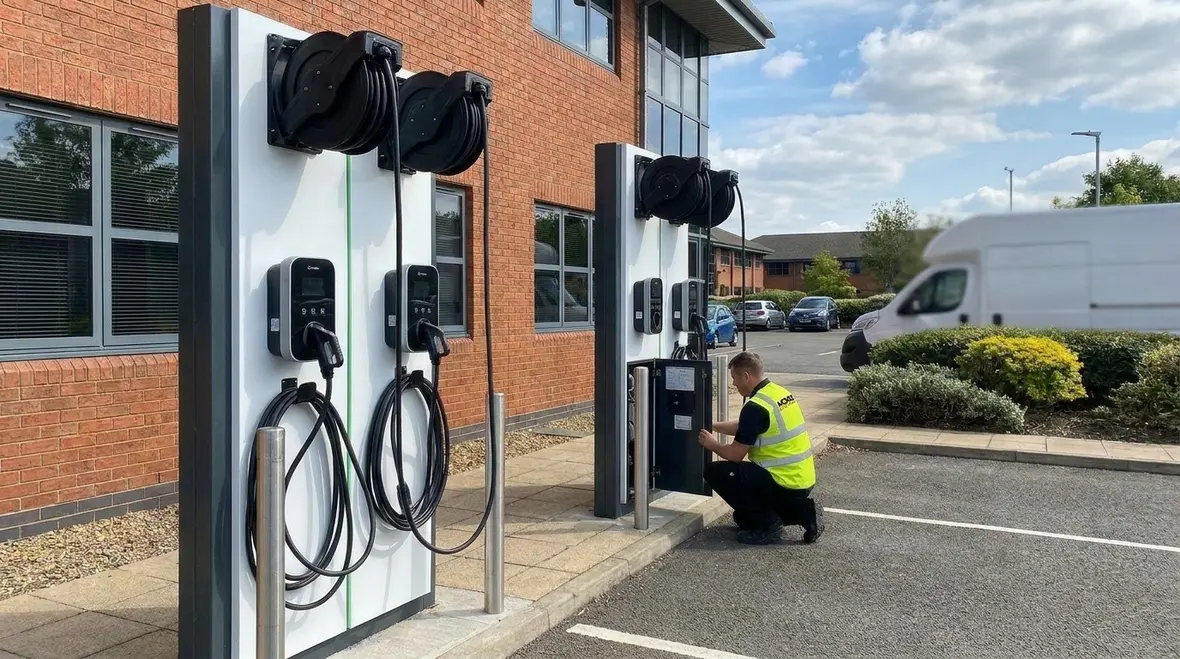
After the load study and usage model, we move into design details. We specify conduit routes, conductor sizing, panel upgrades, switchgear needs, grounding, and labeling. We also coordinate with your existing electrical infrastructure so everything integrates smoothly.
Next, we confirm that the design follows applicable standards and local requirements. Compliance matters, because electrical systems and permitting cannot run on vibes. Our expert service staff reviews the scope with your team and explains what changes mean for operations, timelines, and maintenance.
Additionally, we account for physical conditions. Weather exposure, parking lot drainage, and cable routing affect performance and durability. Therefore, we choose hardware that fits commercial and industrial duty cycles, not just showroom conditions.
For properties in high-demand regions, pairing this step with Kord Electric’s commercial EV charging infrastructure planning resources can help you see how electrical design, permitting, and long-term service form one continuous process rather than separate tasks handled in isolation.
Plan the layout for safety, access, and uptime

Designing the layout is where charging stations either become an asset or a recurring problem. We evaluate bay placement, cable management, traffic flow, and sight lines for staff and guests. Then we consider safe separation from pedestrians, turning radius needs, and accessibility for service vehicles.
We also plan for downtime. Even the best systems need inspection and occasional part replacement. So we plan clear access routes for technicians, proper mounting height, and space for equipment servicing. In other words, we make sure your chargers do not turn into “maintenance haunted houses.”
To keep things practical, we guide your stakeholders through decisions early, including signage needs and how to communicate charging policies. When people understand the rules, usage improves and conflicts drop.
If your facility managers want a deeper dive into everyday operations, Kord Electric’s commercial EV charger planning guides for facility teams expand on this layout thinking with checklists, duty cycle planning, and communication tips that keep parking lots calmer and safer.
Procurement and installation sequencing that avoids business disruption
Once the design is set, Kord Electric builds a sequencing plan that respects your schedule. We coordinate delivery timelines, staging locations, and installation windows. When we can, we install in phases so you gain value while construction continues.
Next, we coordinate with your electricians and on-site teams where needed. Our technicians explain the work scope step by step, and we confirm responsibilities before we begin. That reduces rework. It also prevents the classic scenario where one group thinks another group already handled a task, and everyone blames the “process.”
We also plan commissioning and testing. Systems must be verified for correct operation, safety functions, and proper communication. Therefore, we test before we hand over, and we document what was installed and how it should be maintained.
For properties that want a more detailed roadmap between early planning and final commissioning, Kord Electric’s Commercial EV Charging Infrastructure Planning resources connect these steps with practical timelines, checklists, and lessons learned from complex projects.
Smart management, monitoring, and service that actually helps
EV charging success does not end at installation. After commissioning, we recommend management settings that fit your site goals. For example, we can help configure load sharing so charging stays within electrical limits. Then we set monitoring so your team can see utilization, health status, and fault events.
Our expert service staff stays involved through ongoing support. We help you understand alerts and maintenance schedules in plain language. So when an issue appears, your team does not need to play “guess the problem” like it is a TV talent show.
In addition, we plan for growth. When demand increases, you should not start from zero. We design the system so upgrades can be added with less disruption, keeping your capital plan aligned with your business plan.
For operators planning fleet or multi-tenant charging, looking at Kord Electric’s commercial EV charging network setup and scalability guides can clarify how software, reporting, and remote diagnostics fit into EV Infrastructure Planning for Commercial Properties, not just afterthoughts tacked on later.
Quick comparison: planning options and what they mean
Some clients want a simple path. Others need deeper integration. Below is a practical way we discuss options during EV Infrastructure Planning for Commercial Properties projects, so teams can make confident decisions.
| Planning approach | Best fit for commercial sites | What Kord Electric focuses on |
| Phased build | Sites with tight operating windows | Circuit readiness, staged installation, minimal downtime |
| Load management | Facilities near electrical limits | Demand modeling, controlled power distribution, future expansion paths |
| Fleet and tenant scheduling | Properties with predictable arrivals | Charging profiles, user access rules, reporting and monitoring |
| Full system integration | Large multi-building properties | Central monitoring, standardized deployments, service routing |
If you are exploring which of these planning modes best fits your property, Kord Electric’s Commercial EV Charging Infrastructure Planning portfolio shows real-world examples of phased builds, integrated load management, and multi-building networks that grow calmly instead of chaotically.
FAQ: EV charging planning for commercial buildings
Final word: let’s plan your commercial EV charging like professionals
Kord Electric helps commercial and industrial facilities build EV charging that is safe, scalable, and aligned with your electrical capacity. We plan first, design next, and install with sequencing that respects your operations. Then we stay with you through commissioning and ongoing support, so your team is not left guessing when an alert pops up. If you are planning for a new installation or an upgrade, contact Kord Electric today to schedule a site assessment and receive a practical plan you can trust.
If your facility is in Southern California and you want EV charging to fit alongside panel upgrades, lighting, and other critical electrical work, Kord Electric’s Los Angeles County electrical services connect EV planning with broader commercial electrical support so your infrastructure strategy stays unified instead of scattered across multiple vendors.
To take the next step after EV Infrastructure Planning for Commercial Properties, many teams also explore Kord Electric’s focused EV charging infrastructure planning guides for commercial growth and scalability. Reading those resources alongside this planning approach turns a single project into a calm, long-term roadmap for your entire property portfolio.