GFCI Outlet California Commercial Compliance Guide
When it comes to GFCI outlet California requirements, commercial and industrial property managers cannot afford guesswork. At Kord Electric, we see it every week. A facility passes a casual glance inspection, yet fails a detailed safety review because a single ground fault circuit interrupter was missing, outdated, or incorrectly installed. In California, where codes evolve quickly and liability moves even faster, understanding the rules is not optional. It is essential. Our expert service staff explain these standards in plain language, walk teams through upgrades, and make sure large scale buildings stay compliant, safe, and operational without drama.
Now, let us take a steady, clear look at what these requirements mean for commercial and industrial facilities, and why they matter more than most people think.
Understanding GFCI Outlet California Code for Commercial Buildings
California follows the National Electrical Code, with state amendments layered on top. However, the way those codes apply to a distribution warehouse differs from how they apply to a single office suite. Therefore, facility directors need more than a general understanding. They need precision.
GFCI protection exists to prevent electrical shock. When a device senses an imbalance between hot and neutral conductors, it cuts power within milliseconds. In a commercial kitchen, maintenance bay, data room with utility sinks, or rooftop mechanical area, that response time can mean the difference between a safe workday and a workers compensation claim.
California code requires GFCI protection in commercial settings where outlets are installed in areas exposed to moisture, washdown procedures, outdoor environments, rooftops, and specific service locations. Moreover, newer code cycles have expanded protection requirements to include more 125 volt through 250 volt receptacles in certain commercial applications.
Our technicians often explain it this way. Electricity always looks for the fastest path to ground. Unfortunately, the human body is a very good conductor. So, the code steps in before nature does.
Where GFCI Protection Is Required in Large Facilities
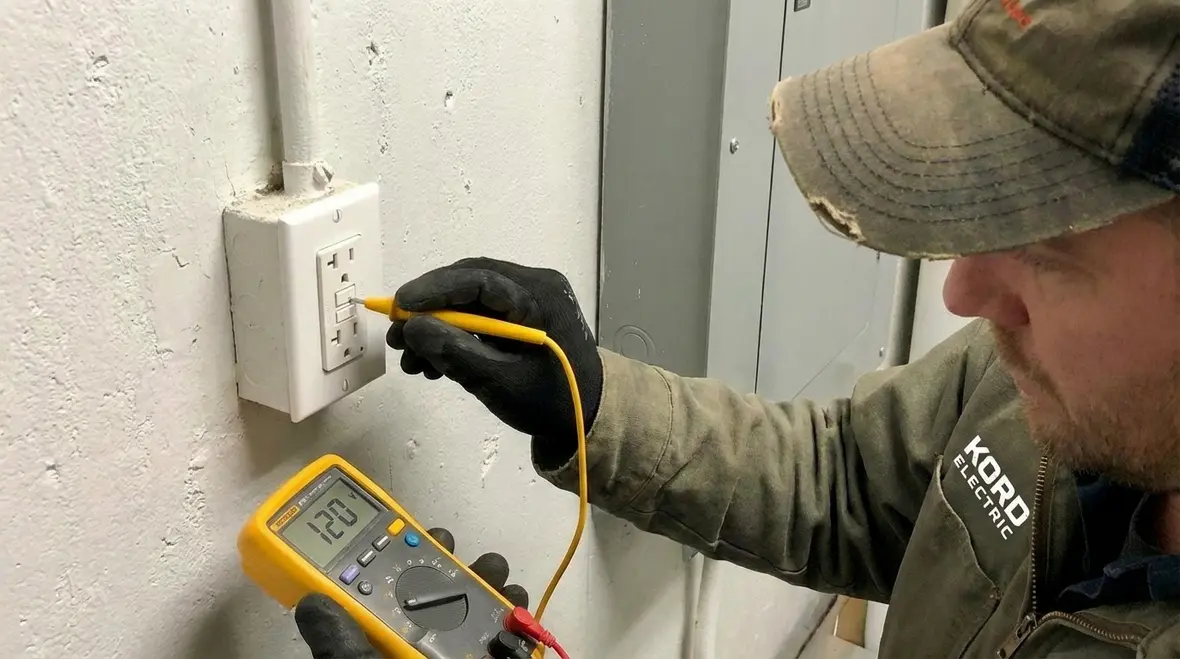
Property managers frequently ask where protection must be installed. The answer depends on the function of the space. However, several locations consistently trigger code requirements in California commercial buildings.
First, outdoor receptacles. Whether mounted along a loading dock, exterior wall, or rooftop HVAC platform, these outlets require GFCI protection. Rain does not ask permission, and neither does morning condensation.
Second, bathrooms and locker rooms in office towers, manufacturing plants, and distribution centers must include compliant protection. Additionally, janitorial closets with service sinks fall under the same category.
Third, commercial kitchens and food preparation areas demand strict adherence. Even in industrial campuses where food service is secondary, the presence of stainless steel surfaces and water lines increases risk.
Fourth, maintenance bays and service garages require GFCI protection for receptacles at or below a specified height. Because technicians frequently use portable equipment, these outlets see heavy use.
Finally, rooftops. California code now requires GFCI protection for receptacles servicing HVAC equipment. Our service staff routinely find outdated rooftop outlets that predate current standards. Bringing them into compliance not only meets inspection criteria but protects maintenance crews.
In other words, if water, weather, or grounded surfaces are nearby, protection likely belongs there.

How California Code Updates Impact Compliance
Electrical code does not stand still. Every three years, revisions introduce new requirements or expand existing ones. Consequently, what passed inspection a decade ago may not meet today’s expectations.
For example, recent updates broadened GFCI coverage to include higher voltage receptacles in certain commercial settings. That shift caught many facility managers off guard. After all, for years, protection focused mainly on standard 120 volt outlets. Now, some 208 and 240 volt receptacles in specific areas require similar safeguards.
Our expert technicians walk clients through these updates during scheduled assessments. Rather than overwhelming teams with code language, we translate the impact into practical steps. We show them which panels feed affected circuits, which receptacles require replacement, and how upgrades can be phased to avoid downtime.
Because large properties operate on tight schedules, compliance must align with operations. Therefore, we coordinate installations during planned maintenance windows or low occupancy hours. Code compliance should feel like a strategic move, not an emergency reaction.
For many organizations, folding GFCI upgrades into a broader electrical strategy is the most efficient route. Integrating protection into preventive maintenance efforts can reduce surprise deficiencies and keep inspections predictable.
Commercial and industrial properties that already invest in structured electrical preventive maintenance programs gain an advantage here. Pairing routine inspections with code-driven GFCI evaluations helps facilities stay ahead of changes instead of scrambling after a failed inspection. This is the same disciplined, long-view approach used in comprehensive electrical preventive maintenance services that protect critical systems and operations across commercial and industrial sites in California.
When GFCI upgrades are planned alongside broader system checks, load evaluations, and documentation, facilities end up with fewer surprises, tighter compliance, and better long-term reliability.

Common Compliance Mistakes in Commercial and Industrial Properties
Even well managed facilities make mistakes. However, most issues follow predictable patterns.
One common error involves assuming a breaker labeled GFCI protects every downstream receptacle. In reality, improper wiring can leave certain outlets unprotected. Therefore, testing and verification matter.
Another mistake appears during tenant improvements in large office buildings. A contractor installs new receptacles near a sink but forgets to add ground fault protection because the original circuit lacked it. Years later, during an audit, the oversight surfaces.
We also see mismatched devices. For instance, a standard receptacle replaces a failed GFCI unit without updating the upstream protection. It may look correct on the surface. However, internally, the safety layer has vanished.
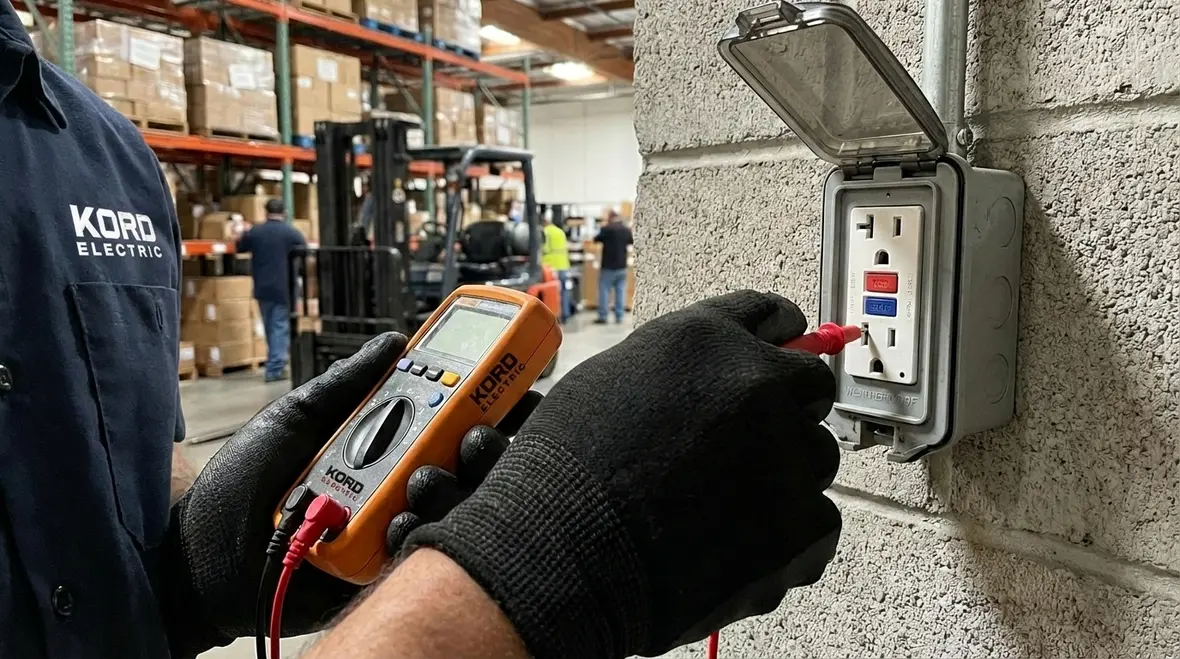
Then there is deferred maintenance. In high traffic facilities, GFCI devices wear out. Test and reset buttons fail. Internal components degrade. While the outlet still delivers power, it may no longer trip properly. Our technicians test devices with calibrated equipment, not just the built in buttons, to confirm real protection.
In short, compliance is not a one time event. It is an ongoing responsibility.
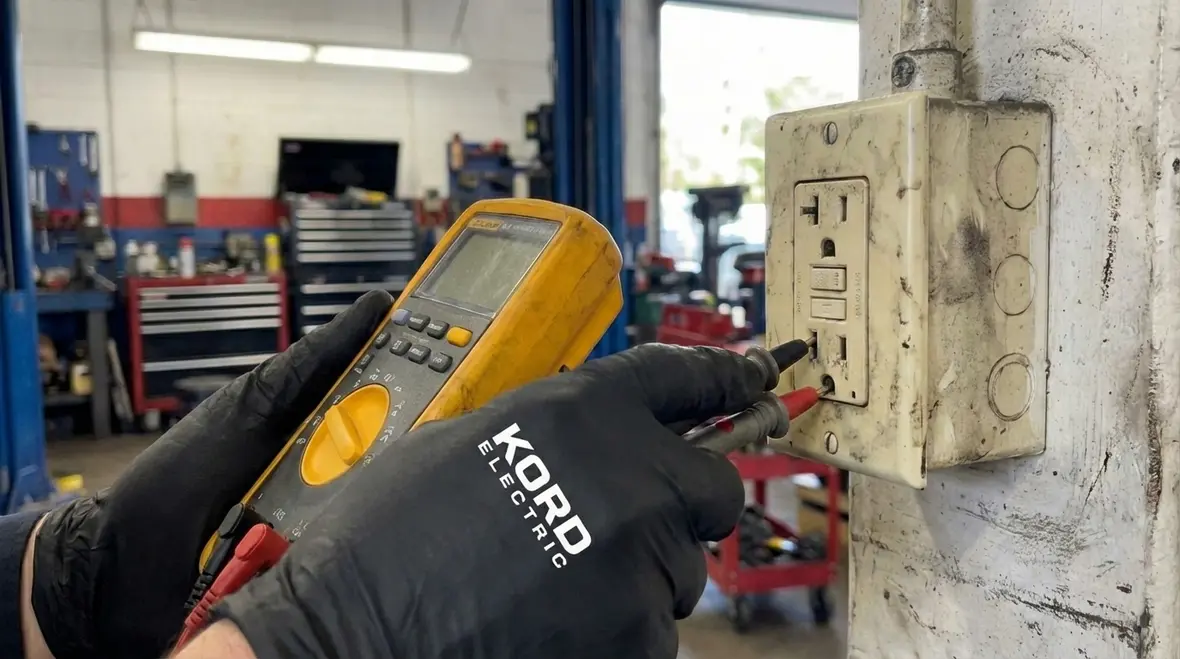
How Kord Electric Evaluates GFCI Outlet California Compliance
At Kord Electric, we approach compliance like a systems review, not a quick patch job. Large commercial and industrial properties operate as interconnected networks. Therefore, a single outlet ties back to panels, feeders, and load calculations.
Our process begins with a documented site survey. We identify all areas requiring protection under current California code. Next, we trace circuits to confirm proper wiring configuration. Then, we test each device under load conditions.
Because property managers need clarity, we provide organized reports detailing:
- Locations inspected
- Devices compliant with current standards
- Devices requiring upgrade or replacement
- Panel level observations affecting GFCI performance
- Recommended corrective actions with timelines
Moreover, our service staff take time to explain findings in person. We believe informed clients make stronger long term decisions. And yes, we do so without drowning anyone in electrical jargon. Nobody wants a lecture that sounds like a robot reciting a wiring diagram.
For facilities planning capital improvements, we integrate GFCI upgrades into broader electrical modernization efforts. That coordination reduces redundancy and saves labor costs.
Many commercial properties also benefit from pairing GFCI evaluations with structured electrical preventive maintenance programs that include panel inspections, infrared scans, emergency lighting checks, and annual compliance documentation. Treating GFCI work as part of a bigger reliability strategy helps protect occupants, equipment, and uptime, instead of chasing issues one outlet at a time.
Side by Side: Standard Receptacle vs GFCI Protection in Commercial Use
| Standard Commercial Receptacle | Commercial GFCI Protected Receptacle |
| Delivers power without monitoring current imbalance | Monitors current flow and trips instantly during imbalance |
| Lower upfront cost | Slightly higher upfront cost |
| Does not reduce shock risk in wet areas | Significantly reduces shock risk in wet or damp locations |
| May meet code in dry, low risk areas | Required by California code in designated locations |
| Minimal maintenance testing | Requires periodic testing and documentation |
Although the price difference may seem appealing at first glance, the liability exposure in a commercial facility quickly outweighs minor savings. In large properties, one preventable incident can cost more than an entire compliance upgrade project.
Why Proper Installation Matters More Than the Device Itself
Here is a truth our technicians repeat often. A GFCI device installed incorrectly offers a false sense of security. It is like locking your front door but leaving the windows wide open.
Line and load connections must be accurate. Upstream and downstream wiring must follow manufacturer instructions. Circuit labeling must reflect actual configuration. Additionally, shared neutrals in multi wire branch circuits require careful handling to avoid nuisance tripping or failure to trip.
In industrial environments, electrical noise and variable loads can also affect performance. Therefore, installation in these settings demands experience beyond residential practices. Our crews understand panel balancing, load characteristics, and coordination with existing protective devices.
Furthermore, documentation plays a vital role. Inspectors reviewing a commercial building expect traceable records. We provide documentation that supports compliance during audits, insurance reviews, and property transactions.
In a state as detail oriented as California, paperwork matters almost as much as wiring.
Do Commercial Buildings in California Need Regular GFCI Testing?
Yes. And not just occasionally.
While code outlines installation requirements, ongoing maintenance falls under broader safety obligations. Facility managers should implement scheduled testing programs, particularly in high use or high moisture areas.
Our expert service staff recommend documented quarterly or biannual testing depending on usage intensity. During these visits, we verify trip times, inspect physical condition, and confirm proper reset function.
Because industrial schedules rarely slow down, we coordinate testing around operational demands. After all, shutting down a production line unexpectedly is not anyone’s idea of a good afternoon.
Consistent testing not only supports safety but demonstrates due diligence. Should an incident ever occur, documented maintenance shows that the property owner acted responsibly.
FAQ About GFCI Requirements for Commercial Properties in California
Partner With Kord Electric for Commercial GFCI Compliance
Electrical safety in California commercial and industrial facilities demands more than guesswork. It requires planning, technical skill, and a steady hand. At Kord Electric, we help major properties meet GFCI outlet California standards with confidence and clarity. Our technicians evaluate, upgrade, document, and explain every step. If your facility needs expert guidance or a comprehensive compliance review, contact us today. Let us keep your building safe, compliant, and fully powered for what comes next.
If your property is also struggling with issues like voltage fluctuations, nuisance breaker trips, or unexplained equipment failures, those symptoms can point to deeper electrical problems that go beyond individual outlets. Addressing GFCI protection alongside broader electrical system stability ensures that your building is protected from both immediate shock hazards and long-term reliability risks.
From preventive maintenance programs to emergency electrical services, Kord Electric supports commercial and industrial properties across California with code-compliant solutions built for high-demand environments. When you are ready to align GFCI protection, power quality, and long-term reliability under one strategy, it pays to partner with a team that lives in this world every day.
Whether you are planning upgrades in a single facility or coordinating standards across multiple buildings, our licensed commercial electricians bring the same disciplined, documentation-driven approach used in complex lighting installation and large-scale maintenance projects. The result is straightforward: safer buildings, fewer surprises, and electrical systems ready for whatever comes next.
If your team is evaluating broader electrical upgrades, such as lighting retrofits or infrastructure improvements, this is the ideal time to include GFCI compliance in the scope. Combining GFCI upgrades with code-compliant lighting installation and other capital improvements helps you streamline projects, reduce downtime, and come out of construction with a cleaner, safer electrical system from panel to receptacle.
For properties that operate around the clock or support critical operations, aligning GFCI strategies with a comprehensive electrical preventive maintenance plan ensures that devices are not only installed correctly, but tested, documented, and kept current with each code cycle. That is the path to long-term safety, reliability, and peace of mind.