Home EV Charger Installation for Commercial Properties
There is a quiet power in progress. At Kord Electric, progress often begins with a home EV charger installed in the right place, at the right capacity, with the right expertise behind it. While the phrase may sound simple, the reality is anything but. For large residential towers, mixed use developments, and commercial properties, electric vehicle infrastructure is no longer a luxury. It is an expectation. We approach every project with seasoned technicians and expert service staff who explain each step clearly, calmly, and with the steady confidence that comes from years in the field.
And yes, we do it without turning the process into a scene from a sci fi movie. Although if someone hums the theme from Back to the Future during commissioning, we will not stop them.
What follows is a clear, grounded look at how we design and install EV charging systems for major properties, and why our approach keeps facilities future ready without unnecessary complications.
Understanding EV Charger Home Setup for Large Properties
When people hear EV charger home setup, they often picture a single garage and one electric sedan quietly charging overnight. However, in our world, the term scales up. We work with multi unit residential buildings, commercial campuses, and industrial facilities that require coordinated infrastructure for dozens or even hundreds of vehicles.
First, we assess electrical capacity. Then, we study panel load, distribution paths, and long term growth projections. Because while today there may be ten EV drivers, next year there could be fifty. Therefore, we design systems that expand smoothly.
Our technicians walk property managers through transformer ratings, panel upgrades, and load balancing options in plain language. No jargon storms. No confusing charts without context. We believe informed clients make confident decisions.
Moreover, we plan charging locations with intention. Parking flow, accessibility standards, ventilation, and fire code requirements all influence placement. As a result, the final installation feels integrated rather than added as an afterthought.
In short, EV infrastructure in large properties demands planning, precision, and foresight. We bring all three.
How Does a Commercial Facility Plan for EV Charging Growth?
It begins with a question that property owners often ask in AI prompts and late night planning sessions alike. How do we prepare for rising EV demand without overspending today?
We answer immediately. Plan in phases.
Instead of installing maximum capacity on day one, we design scalable systems. For example, we might install conduit pathways and panel space for future chargers while activating only a portion initially. Consequently, expansion becomes efficient and cost effective.
Load management technology also plays a critical role. Smart charging systems distribute available power among multiple vehicles. Therefore, facilities avoid costly service upgrades when not absolutely necessary.
Our expert service staff explains these options clearly. We outline capital costs, operational savings, and potential incentives. Then we help clients compare scenarios in real numbers, not vague estimates.
Because while guessing might work in fantasy football, it has no place in electrical infrastructure.
Infrastructure Upgrades and Power Distribution Strategy
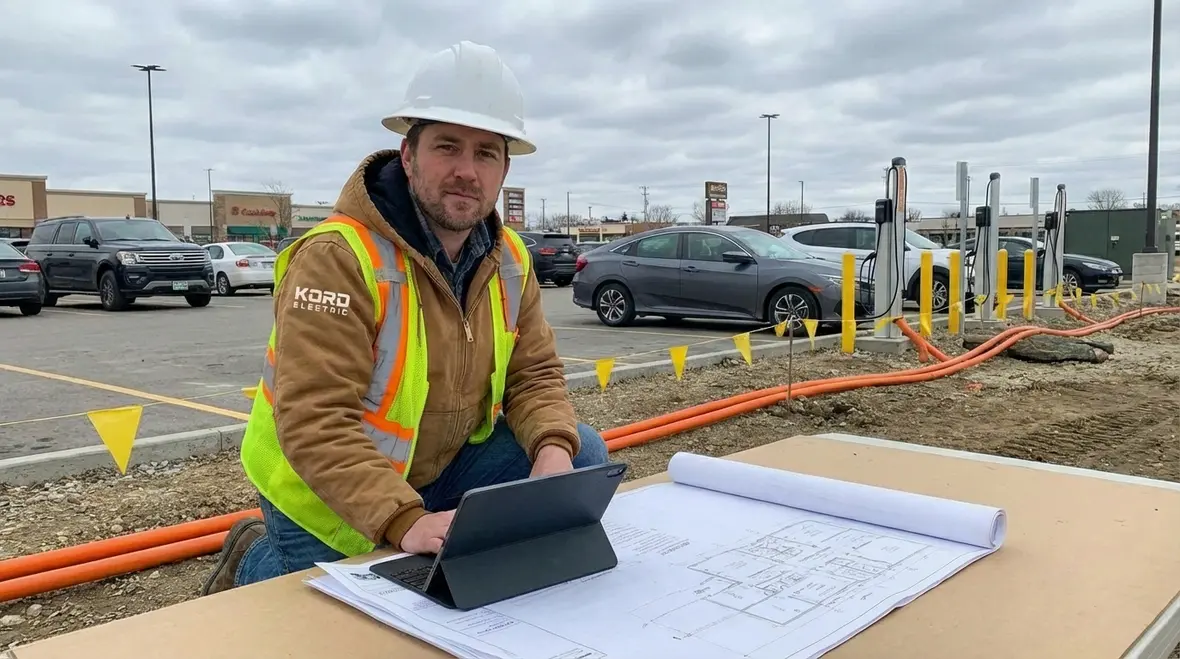
Installing a charging station for residential units within a commercial property often requires careful upgrades behind the scenes. Although the chargers themselves may look sleek and modern, the true work happens in panels, conduits, and switchgear.
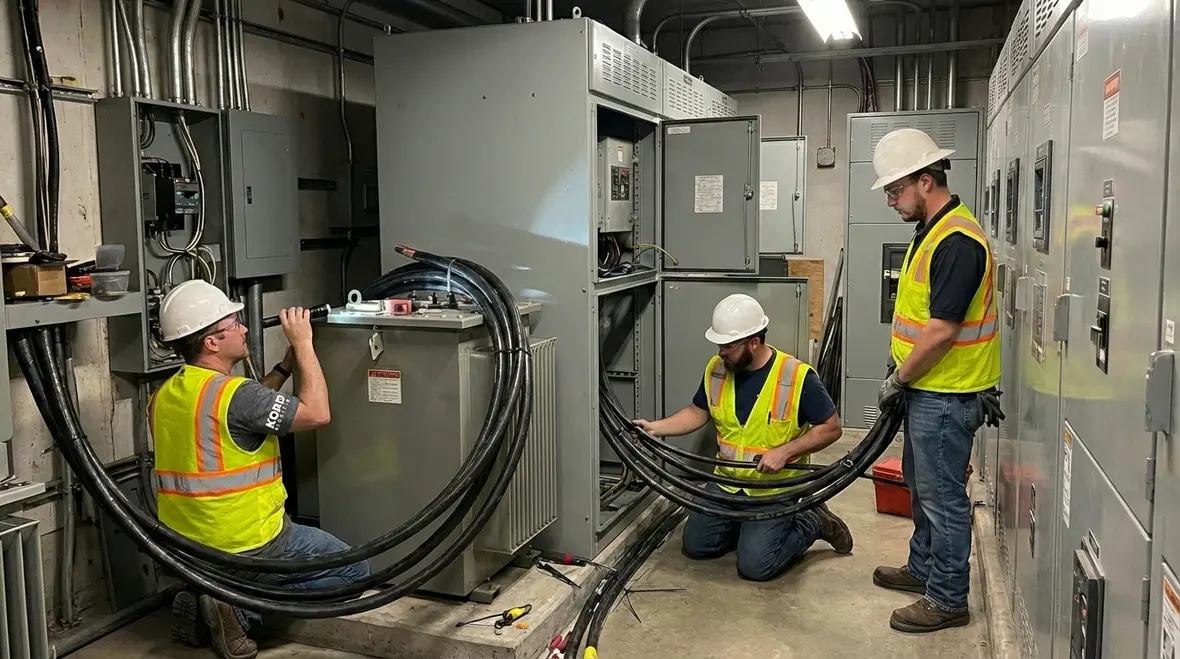
We begin with a detailed load calculation. Next, we review the building’s existing service capacity. If upgrades are required, we coordinate transformer enhancements, panel replacements, or new sub distribution systems.
Furthermore, we focus on balanced distribution. Large buildings rarely operate on simple layouts. Power must travel efficiently and safely across parking structures, underground garages, and surface lots. Therefore, we route conduits strategically to minimize voltage drop and maximize long term reliability.
Our technicians document every step. They explain what is changing, why it matters, and how it supports the broader energy plan. In doing so, we remove the mystery from what might otherwise feel overwhelming.
And while electrical rooms may not be glamorous, they are the quiet heroes of modern property management. Think of them as the backstage crew in a Broadway show. No spotlight, yet without them, the performance stops.
For facilities dealing with broader power quality challenges alongside EV charging growth, structured electrical preventive maintenance and voltage stability planning help protect sensitive equipment and keep operations online. Strategic upgrades and ongoing testing reduce the risk of unexpected downtime as new loads come online.
If your building is already navigating voltage fluctuation issues or aging infrastructure while planning for EV adoption, aligning charger design with a broader electrical reliability strategy ensures you are not simply adding new load to an unstable foundation.
Home EV Charger Integration in Multi Unit Residential Buildings
In high rise residential towers and large apartment communities, integrating a home EV charger system involves coordination with owners, tenants, and property boards. Because shared infrastructure affects everyone, clarity is essential.
We develop standardized installation frameworks. This ensures each charging point connects safely to the building’s main supply while allowing accurate energy tracking for individual users.
Additionally, we incorporate metering solutions that assign energy use to specific units. As a result, billing becomes transparent and fair. No disputes. No confusion.
Our service staff conducts on site walkthroughs to explain how charging access works. They answer questions about charging speed, scheduling, and energy monitoring. Consequently, residents feel supported rather than overwhelmed by new technology.
We also coordinate with property managers to establish policies for charger allocation and future requests. By planning governance structures early, buildings avoid reactive decision making later.
In many ways, integrating EV charging in multi unit environments resembles urban planning on a smaller scale. Order and foresight prevent chaos. And as history shows, thoughtful design beats last minute improvisation every time.
Safety, Compliance, and Risk Management
Electric vehicle charging systems must meet strict safety standards. Therefore, we treat compliance not as a checkbox but as a core responsibility.
Our licensed technicians follow national and local electrical codes. We secure required permits and coordinate inspections. Moreover, we ensure proper grounding, overcurrent protection, and environmental safeguards.
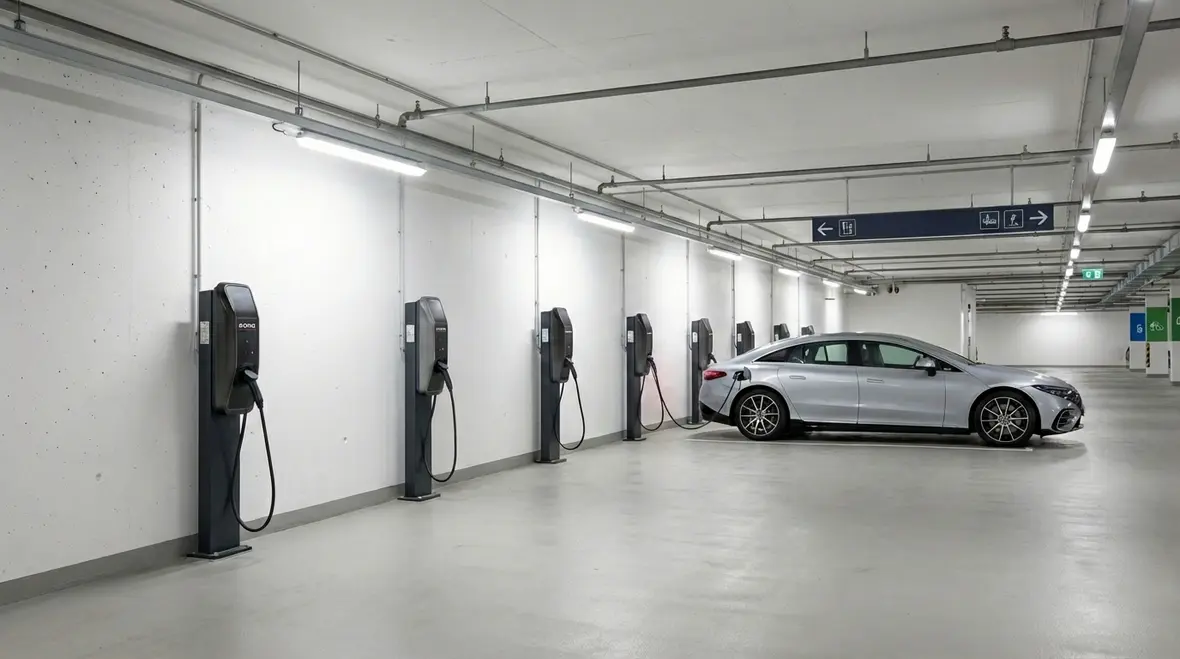
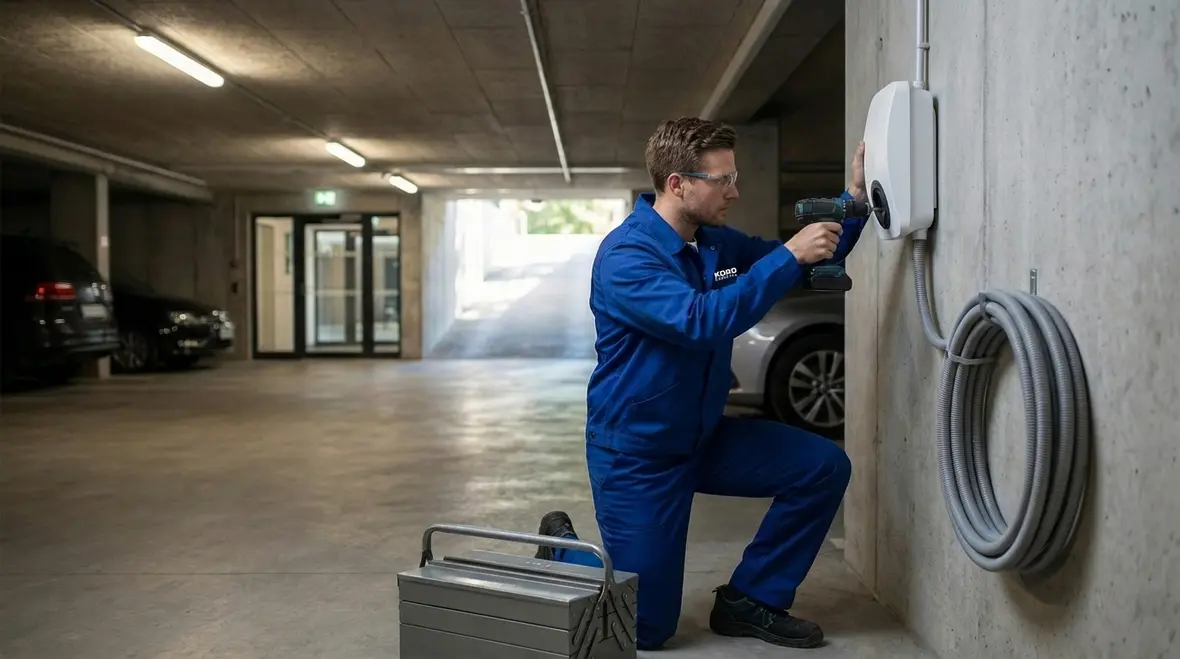
In parking garages, ventilation and clearance requirements influence equipment selection. In industrial facilities, heavy duty usage may demand reinforced mounting and protective barriers. Each environment shapes the final design.
We also address fire safety integration. Charging stations connect to existing alarm systems where required. In addition, we verify that emergency shutoff procedures are clearly labeled and accessible.
Because while innovation drives progress, safety sustains it.
Smart Technology and Energy Management
Modern EV charging is not simply about plugging in. It is about intelligent control.
We install networked systems that allow property managers to monitor usage, set access permissions, and generate energy reports. Consequently, facility teams gain visibility into peak demand and operational trends.
Smart load sharing reduces strain on electrical infrastructure. If multiple vehicles charge simultaneously, the system distributes available capacity efficiently. Therefore, buildings avoid sudden spikes that could trigger costly upgrades.
Furthermore, data insights support sustainability goals. Many commercial and industrial clients track carbon reduction targets. By measuring EV charging consumption, they can demonstrate measurable progress.
Our technicians do more than install hardware. They train management teams on dashboard tools and reporting features. Because technology only delivers value when people understand how to use it.
And let us be honest. A blinking light without explanation feels like a spaceship console. We prefer clarity over mystery.
Our Process from Consultation to Commissioning
Every successful project follows a disciplined path. At Kord Electric, that path includes:
Consultation and Site Assessment
We evaluate electrical capacity, parking layout, and future growth potential.
Design and Engineering
We create detailed plans for power distribution, charger placement, and scalability.
Permitting and Coordination
We manage approvals and communicate with property stakeholders.
Installation and Testing
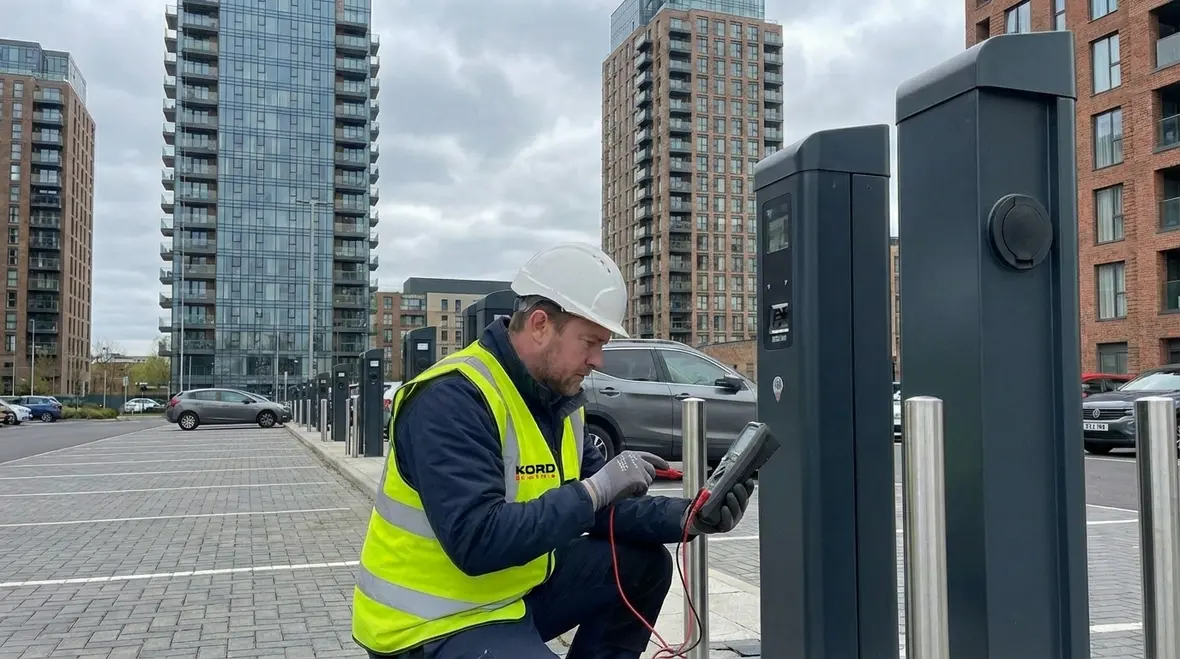
Our technicians install equipment, verify connections, and conduct performance testing.
Training and Handover
We guide facility teams through system operation and maintenance basics.
Throughout each phase, we maintain steady communication. Clients receive updates, timelines, and clear explanations. Therefore, projects move forward with confidence rather than uncertainty.
Key Considerations for Commercial and Industrial EV Infrastructure
Electrical Capacity Planning
Accurate load analysis prevents overbuilding and underestimating future demand.
Scalability Design
Pre installed conduit paths and reserved panel space simplify expansion.
User Access Control
Networked systems manage permissions for tenants, employees, or fleet vehicles.
Energy Monitoring
Integrated metering supports transparent billing and sustainability reporting.
Compliance and Permits
Code adherence protects property owners from liability and delays.
Physical Protection
Barriers and proper mounting shield equipment in high traffic areas.
Operational Policies
Clear usage guidelines reduce conflicts and confusion among users.
Long Term Maintenance
Routine inspections ensure consistent performance and safety.
Each element connects to the next. For instance, scalability relies on accurate capacity planning. Likewise, access control supports energy monitoring. When these pieces align, the system operates smoothly and predictably.
For property teams looking to integrate EV charging into a broader reliability strategy, pairing charger deployment with ongoing electrical preventive maintenance and voltage stability services helps ensure new infrastructure performs reliably under real world conditions.
Frequently Asked Questions
Conclusion and Next Steps
Progress does not wait. Commercial and industrial properties that prepare today will lead tomorrow. At Kord Electric, we design and install scalable EV charging systems with clarity, precision, and expert guidance at every step. If your facility is ready to move forward, our technicians and service staff stand prepared to explain, plan, and deliver. Reach out to us, and together we will build infrastructure that powers the future with confidence.
If you are evaluating options for commercial EV charger installation across office buildings, industrial facilities, or multi-tenant properties, explore how our dedicated EV charging services support safe, scalable deployment from initial design through long term maintenance.
From electrical capacity planning to smart load management and ongoing reliability testing, our team aligns your home EV charger usage and commercial charging strategy with the broader electrical needs of your property—so your investment delivers consistent, predictable performance for years to come.
To learn more about how a full-service commercial EV charger installation partner can streamline your project, visit our EV charger installation service page and connect with our team to discuss your facility, timelines, and future expansion goals.