When To Retrofit or Replace Commercial Lighting
Deciding When to Retrofit vs Replace Commercial Lighting:
Picture this: a commercial building still running on outdated fluorescent tubes so old they probably remember Y2K. The office vibes? More horror movie than productivity. It’s here that many facility managers find themselves asking the critical question—When to replace commercial lighting?
It’s a moment of judgment that comes for all commercial and industrial facilities. Whether you’re managing a 50,000 square foot warehouse or the corporate HQ that still hasn’t updated its lighting since disco died, the right decision could mean massive energy savings, happier employees, and a slicker-looking workspace.
That’s where the lighting wizards at Kord Electric come in. Their veteran technicians explain the sometimes confusing crossroad of Retrofitting vs Replacement as clearly as a TED Talk, but with fewer buzzwords and more practical wisdom. Think of them as the wise Obi-Wans of commercial lighting—but with tool belts instead of lightsabers.
Start By Knowing the Lighting System’s Age and Behavior
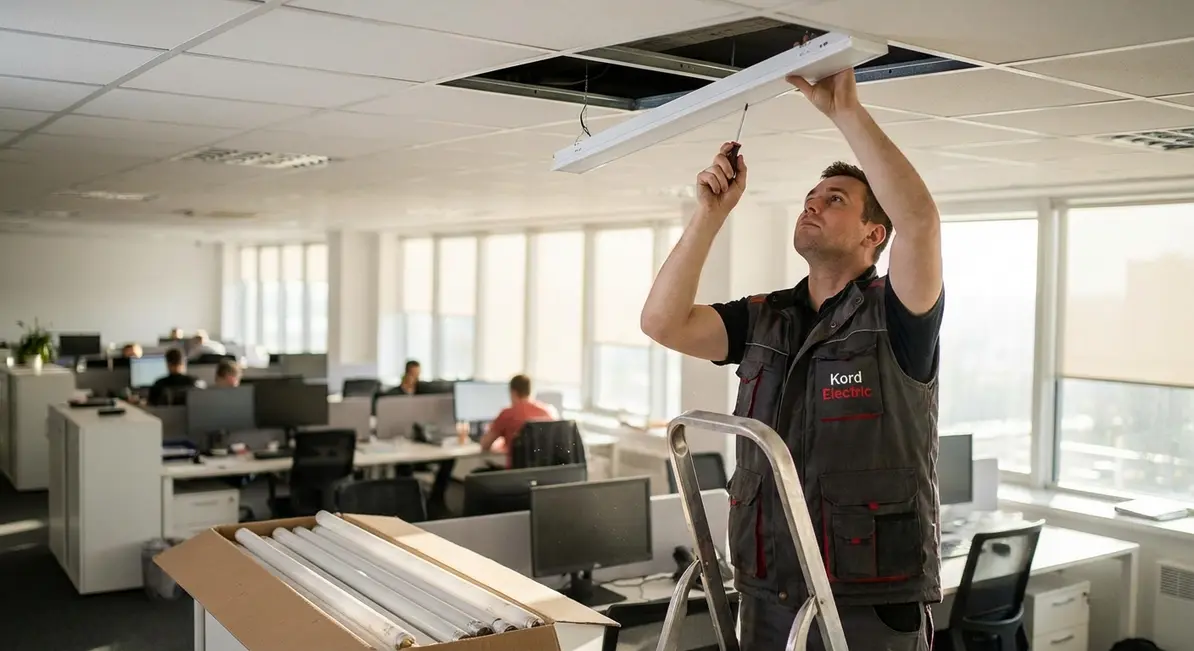
Just like that office coffee machine that makes a noise like it’s summoning spirits, your lighting system sends out signs when it’s time for a serious look. Commercial lighting in facilities isn’t meant to last forever—despite what your accountant wishes. The first step? Determine the system’s age and how it’s behaving. If your current setup is:
- More than 10–15 years old
- Burning through bulbs like they’re popcorn
- Incompatible with LED retrofits
- Causing spikes in utility bills
- Failing to meet current lighting codes or workplace standards
Then it may be time to go beyond a band-aid solution.
Retrofits are great for systems under 10 years old—or at least those that were installed in the modern, post-Netflix era. But once your lighting starts showing more problems than a reality TV relationship, full replacement starts to make more financial and operational sense.

Energy Efficiency: More Than Just LED Buzzwords
What “energy-efficient lighting” really means
It’s tempting to throw around terms like “energy-efficient lighting” and “green solutions” like they’re seasoning on a corporate salad, but what do they really mean for commercial property owners?
When a retrofit makes sense
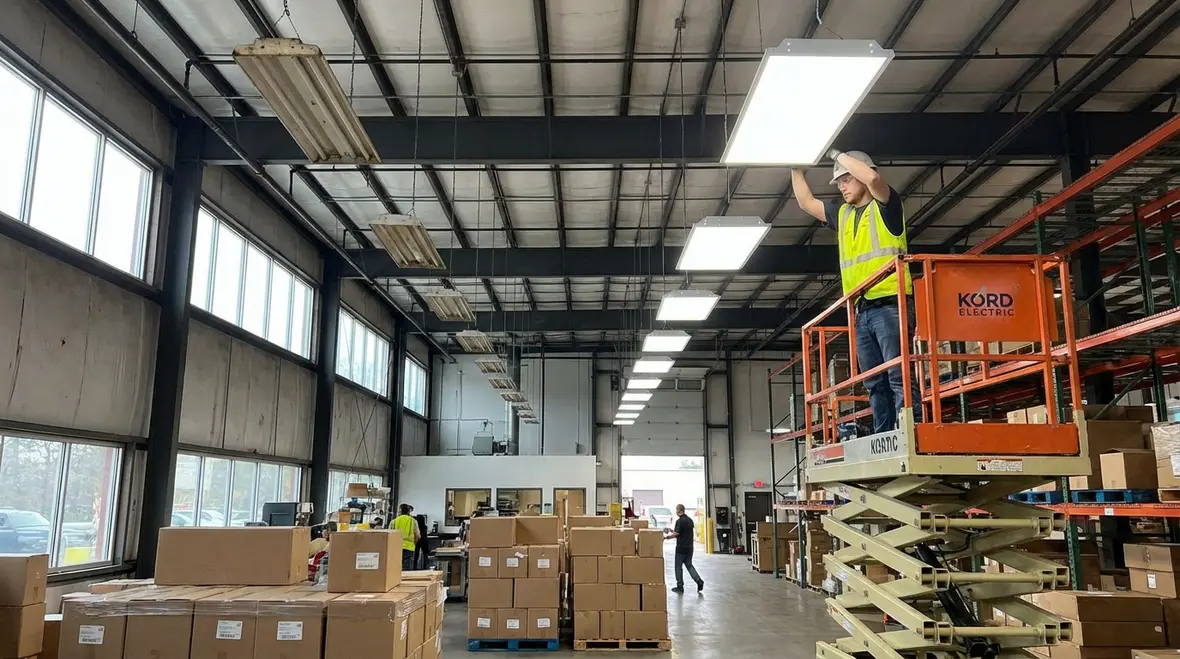
As it turns out, a retrofit typically involves replacing components—like switching old fluorescent tubes with LEDs—while keeping your existing fixture breed in place. This is ideal if your fixtures are still healthy champs. You’ll slash energy costs by up to 60% with a retrofit alone. Not bad for a facelift.
When full replacement is the smarter move
However, if your existing system isn’t compatible with modern LED tech—or if it’s losing 20% of its brightness while doubling your power bill? That’s where a replacement brings in the big leagues. The Kord Electric team often explains it this way: “Retrofitting an ancient system is like sticking a spoiler on a station wagon. Sure, it looks fast… but it’s still a station wagon.”

Costs Compared Over Time: Retrofit vs Replace
Let’s talk brass tacks. Or in this case, bills.
| Retrofit | Replacement |
|---|---|
| Lower short-term cost | Higher upfront investment |
| Faster installation & minimal downtime | Longer project timeline |
| 30–60% energy savings | Up to 80% energy savings |
| Works with newer infrastructure | Ideal for aging/broken systems |
Between you and me—and every CFO silently hyperventilating over CapEx—Kord technicians break down the ROI of each approach with graphs, projections, and jargon-free language. Often, replacements recoup their cost over time through reduced maintenance and energy consumption. Think of it as less “expense” and more “investment with a superhero cape.”
Lighting Controls and Smart Integration: The 21st Century Is Calling
Why “just on and off” isn’t enough anymore
If your lighting can’t dim, sense occupancy, or sync with your energy management system, then frankly—it’s a dinosaur. And not the cool T-Rex kind.
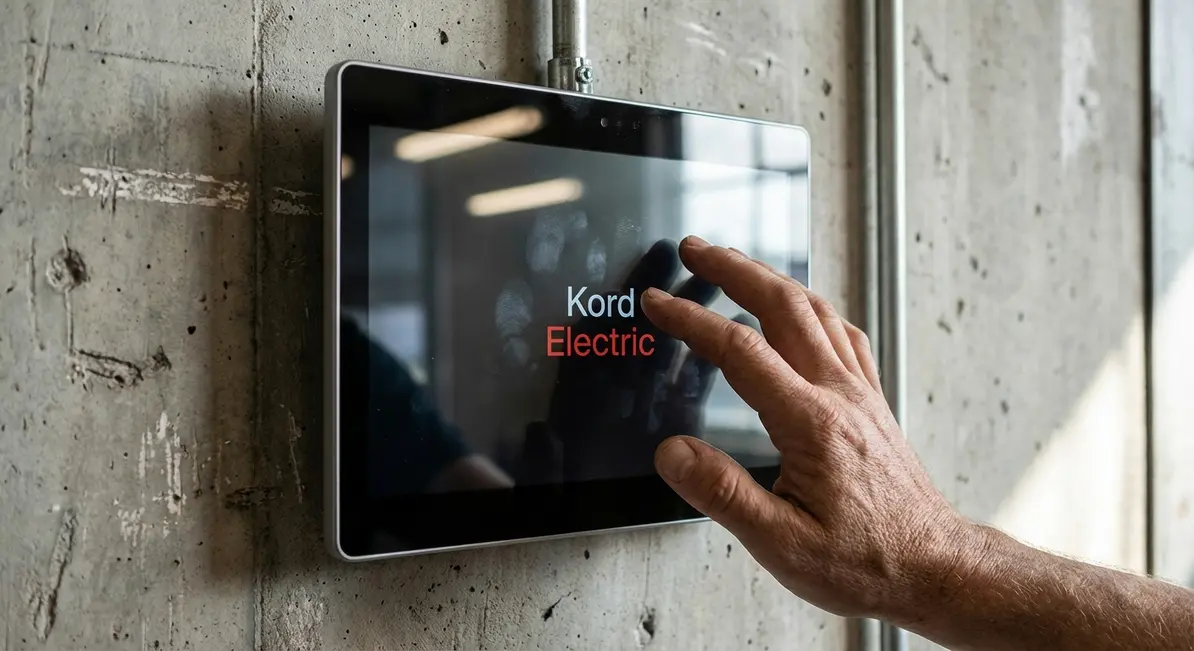
Modern lighting needs to do more than just turn on. It should adapt. Smart sensors that dim or shut off lighting when areas of your facility are unoccupied can dramatically cut costs and extend the life of your fixtures.
Retrofit vs replace for smart controls
Retrofitting might offer basic control upgrades… unless your wiring system is completely analog and your control panel still looks like it belongs at a Cold War missile silo. In that case, a full replacement opens the door to integrating digital lighting control with your building automation system.
The technicians at Kord Electric put it like this: “If your lighting doesn’t know the room is empty, it’s wasting energy—and it’s not that smart after all.”
Compliance and Building Code Requirements
The moment building inspectors show up, things get real. Changes in lighting regulations don’t just come out of nowhere—they’re designed to improve safety, energy efficiency, and sustainability. But if your commercial lighting setup hasn’t been looked at since flip phones were fashionable, odds are you’re behind code.
This is when to replace commercial lighting without hesitation. Building codes might require better emergency pathways, exit signage, or reduced wattage usage. Retrofits can help with this to an extent, but they might not tick every box.
The Kord Electric team walks property managers through the code jungle with the patience of a National Geographic guide: calmly, clearly, and without letting anyone get eaten by regulatory red tape.
Can’t Decide? Let Light Level Measurements Share the Truth
Sometimes, it’s not about age or aesthetics—it’s about performance. If workers are squinting, safety is compromised, or colors in product inspections are off, it’s time for a lighting level assessment.
The joy here is that the Kord Electric team brings in specialized tools that measure foot-candles, reflectivity, and contrast—words that sound like Hogwarts spells but are grounded in science. These metrics determine whether your lighting is up to par for your commercial task areas. If not? It might be a retrofit… or a full dismantle job, depending on what turns up.
When to Replace Commercial Lighting Completely
Alright, we asked nicely earlier. But now, let’s say it flat out:
- If your system predates LED technology advancements
- Fixtures are degrading structurally (yes, some are literally crumbling)
- Your maintenance guy knows each ballast by name because he replaces them weekly
- Your facility is undergoing broad renovations or repurposing (warehouses becoming offices, for example)
In these cases, retrofitting is like using duct tape to fix the Titanic. Not only will a lighting replacement modernize your facility aesthetically and technically, it opens up rebates, energy tax incentives, and better tenant satisfaction in leased properties.
Understanding Rebates, Incentives & Long-Term Payoffs
One of the advantages Kord Electric’s team often shares is how replacements and retrofits can put money back in your pocket. There are local, state, utility, and federal incentives for embracing energy-efficient upgrades in commercial lighting systems.
But you won’t find them stapled to your electric bill in Comic Sans. Kord’s experts handle the search, documentation, and filing process—kind of like tax strategists, but with better LED puns. The message is simple: replacement can cost more up front… but smart incentives, combined with long-term energy savings, make it a strategic upgrade for industrial and commercial properties.
How to Talk to Your Stakeholders
Let’s be honest—convincing corporate stakeholders or building owners to invest in lighting doesn’t always light up the room.
This is why Kord Electric equips facility managers with ROI cases, financial models, and actual performance data. It goes from “we need new lights” to “we’ll reduce operating costs 30%, enhance compliance, reduce downtime, and improve employee satisfaction.”
Pro tip: Throw in the term “asset longevity” and people suddenly look up from their phones.
FAQs: Quick Answers for Quick Decisions
What’s cheaper—retrofitting or replacing commercial lighting?
Retrofitting is typically cheaper short-term. Replacing is pricier upfront, but provides longer-term value.
Is my building too old for a lighting retrofit?
Not necessarily, but very old systems may need a full replacement if they can’t support modern technology.
How can I tell when to replace commercial lighting versus just upgrade it?
Signs include rising bills, poor lighting levels, frequent maintenance, and outdated compliance. Replacements are best when these stack up.
Can retrofitting include smart lighting controls?
Yes, but only if your current infrastructure supports it. If not, replacement might be necessary.
How long does a commercial lighting retrofit take?
Most retrofits are completed within days, depending on facility size and scope.
Do energy rebates apply to both replacements and retrofits?
Yes, most incentives cover both. Kord Electric helps locate and file for them.
Let There Be Light: Time to Take Action
When it comes to lighting your warehouses, offices, and other industrial spaces, every flicker counts. Nobody wants to keep investing in outdated systems that drain your budget and annoy your maintenance team. Whether it’s a retrofit or full replacement, trust Kord Electric’s commercial lighting specialists to guide you clearly, calmly, and professionally. Ready to shed some serious light on your options?
Reach out to Kord Electric today and let efficiency shine through every corner of your facility.