Storm Damage Electrical Inspection for Facilities
Electrical System Inspections After Storms for Commercial and Industrial Facilities
When a powerful storm rolls through a region, it rarely sends a courtesy note ahead of time. It arrives loud, unapologetic, and often leaves commercial and industrial properties dealing with the aftermath. At Kord Electric, they understand that storm damage inspection is not just a precaution. It is a vital step in protecting infrastructure, equipment, and the people who rely on those systems every day. Within the first hours after severe weather, their technicians begin assessing hidden electrical risks that, if ignored, could grow into costly failures.
Storm damage and electrical inspection work together like detective and evidence. One reveals the chaos, the other uncovers the truth beneath it. Therefore, this article explores how Kord Electric approaches post storm electrical assessments, how their expert service staff explains each step clearly, and why commercial and industrial facilities should never treat electrical evaluations as optional housekeeping.
The Hidden Impact of Severe Weather on Large Scale Electrical Systems
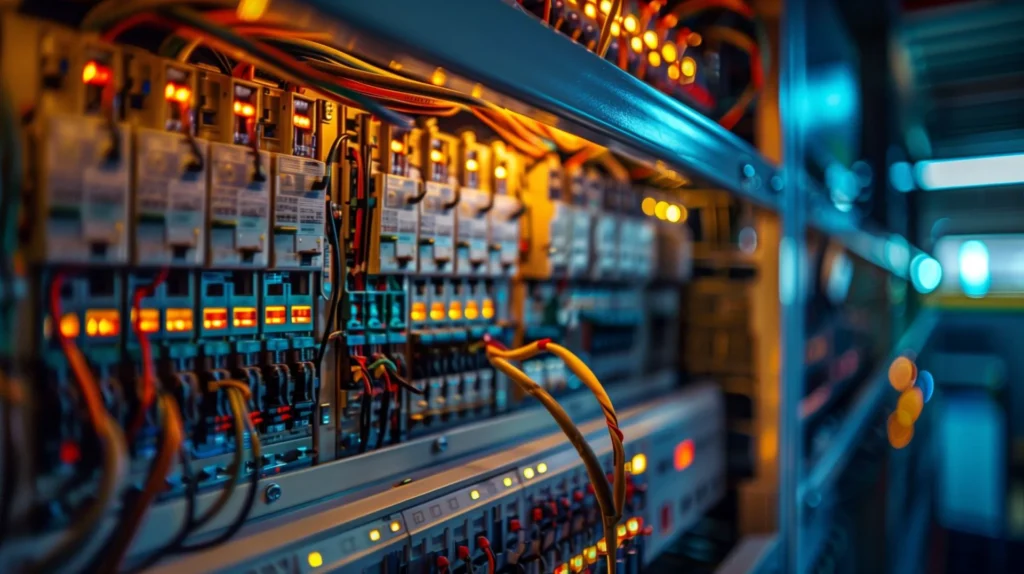
Storms rarely damage only what the eye can see. Although a broken window or a flooded loading dock draws attention first, electrical systems often suffer in silence. Power surges, lightning strikes, wind driven debris, and moisture infiltration can all compromise switchgear, transformers, panels, and distribution systems.
For large facilities, the stakes rise quickly. A manufacturing plant, data center, hospital campus, or multi building commercial property depends on stable electrical flow. Even a minor irregularity can disrupt production lines, sensitive electronics, or life safety systems. Consequently, what looks like a brief flicker during a thunderstorm might signal deeper insulation breakdown or damaged conductors.
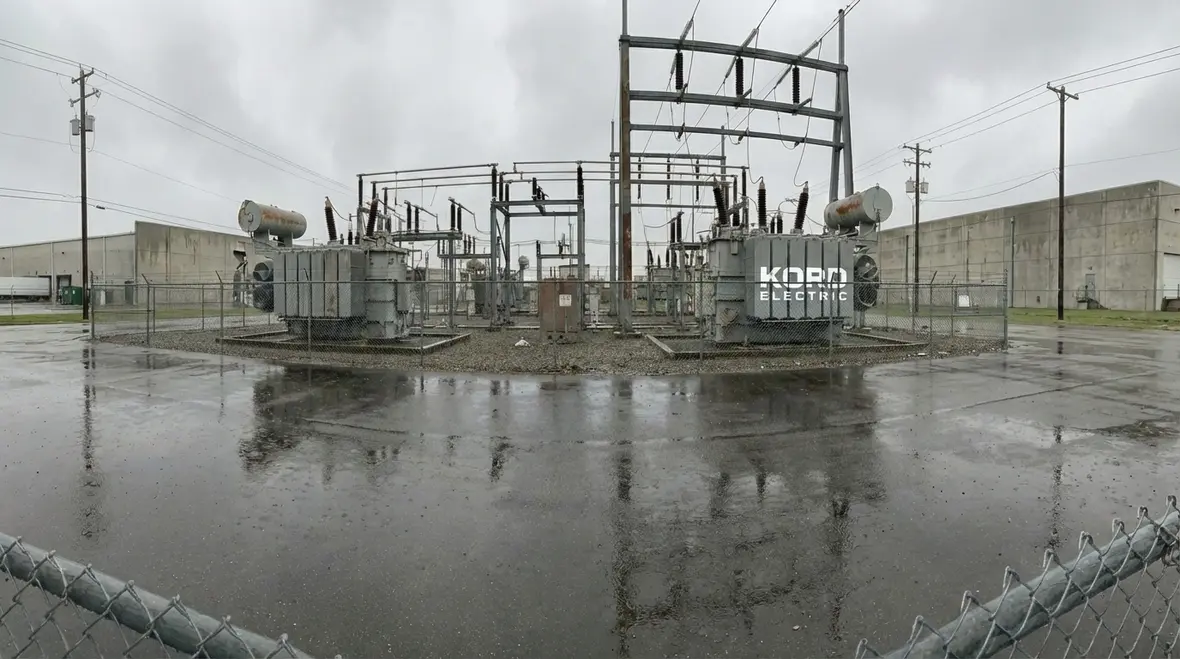
Kord Electric approaches every storm damage inspection with the mindset that the most dangerous problems are often invisible. Their technicians examine grounding systems, bus bars, protective relays, and emergency backup systems with deliberate care. In addition, they test for voltage irregularities and check for signs of corrosion or heat stress that may have accelerated during the weather event.
They also remind facility managers that electricity has a long memory. In other words, a system that appears to function normally today may fail weeks later if hidden moisture or surge stress goes unchecked. And no operations director wants to explain downtime with the phrase, “We thought it would be fine.”
For facilities that have already experienced unstable voltage or irregular power quality even before a storm, combining a storm damage inspection with a focused review of voltage fluctuations in commercial and industrial facilities can provide a deeper layer of protection for sensitive systems.
What Happens During a Professional Storm Damage Inspection
When clients ask what actually occurs during an electrical inspection after severe weather, Kord Electric provides a clear and structured explanation. Their expert service staff believes that understanding reduces anxiety and builds trust. Therefore, they walk facility teams through each phase.
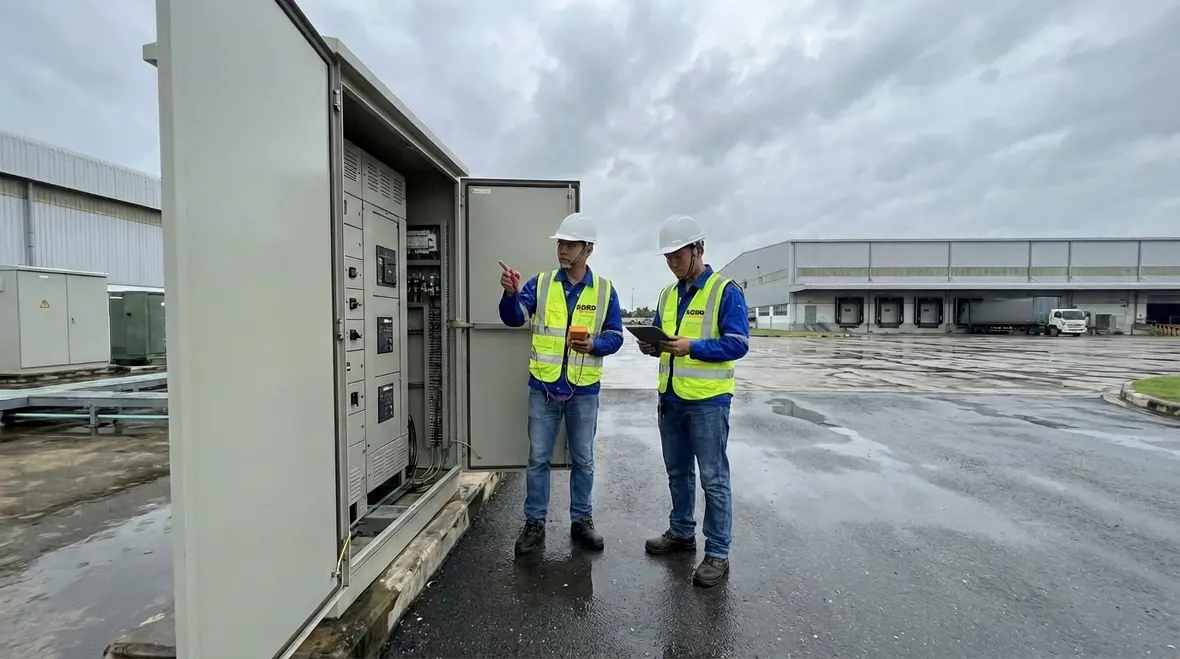
First, they begin with a visual and environmental assessment. Technicians review areas exposed to wind, water intrusion, or impact. They inspect rooftop units, exterior panels, conduit runs, and service entrances. Moreover, they look for pooling water near critical components and verify that drainage systems are functioning properly.
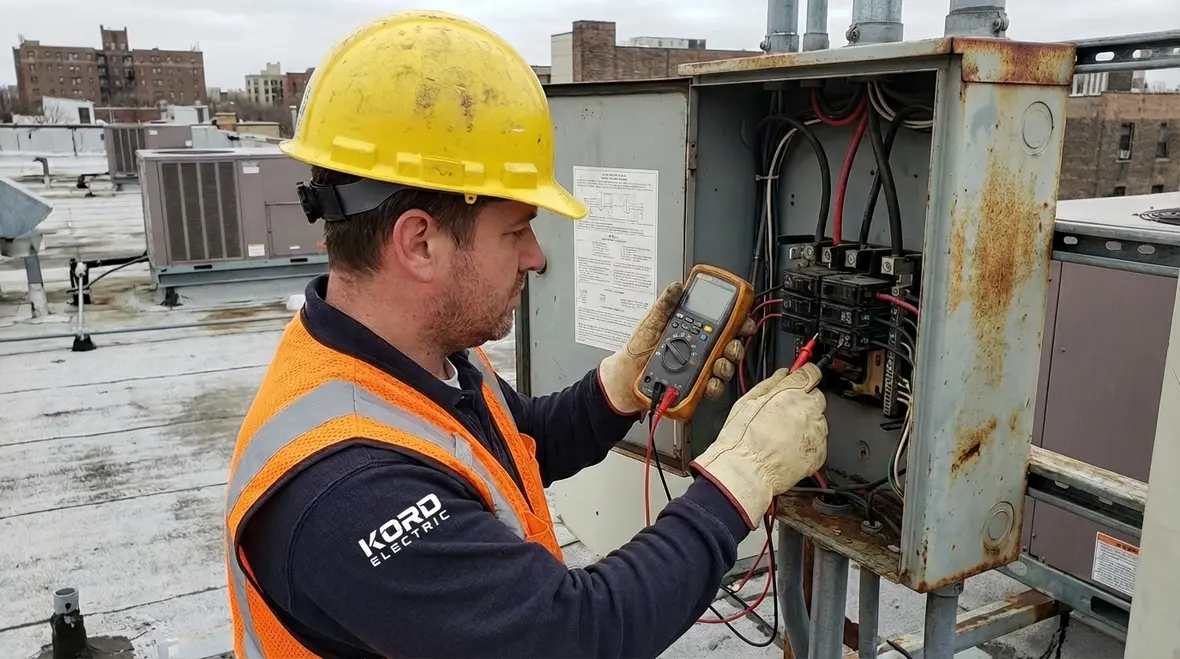
Next comes diagnostic testing. Using calibrated equipment, they measure voltage consistency, insulation resistance, and grounding continuity. Because lightning and surges can degrade insulation without visible marks, these tests reveal early warning signs. In addition, infrared scanning helps detect abnormal heat patterns inside panels and switchgear.
After testing, the team documents every finding. They provide facility managers with clear reports, photographs, and recommendations. Rather than delivering technical jargon wrapped in mystery, Kord Electric technicians explain results in straightforward language. They outline what requires immediate correction, what should be monitored, and what remains stable.
Finally, they discuss next steps. If repairs are necessary, they coordinate with operations to minimize downtime. If upgrades are recommended, they explain the long term value. In short, their approach blends technical precision with practical planning, similar to the structured processes they use for electrical preventive maintenance programs across complex facilities.
Prompt Based Guidance: How Should a Commercial Facility Respond After a Major Storm?
Facility managers often phrase their concerns like a prompt typed into a search engine or AI assistant. The question usually sounds something like this: How should a commercial or industrial building respond after a major storm to ensure electrical safety?
The answer begins with restraint. Do not power everything up at once. Instead, allow qualified professionals to evaluate systems before full load returns. Kord Electric advises clients to document visible storm damage immediately, restrict access to affected electrical rooms, and verify that backup power systems have not experienced surge stress.
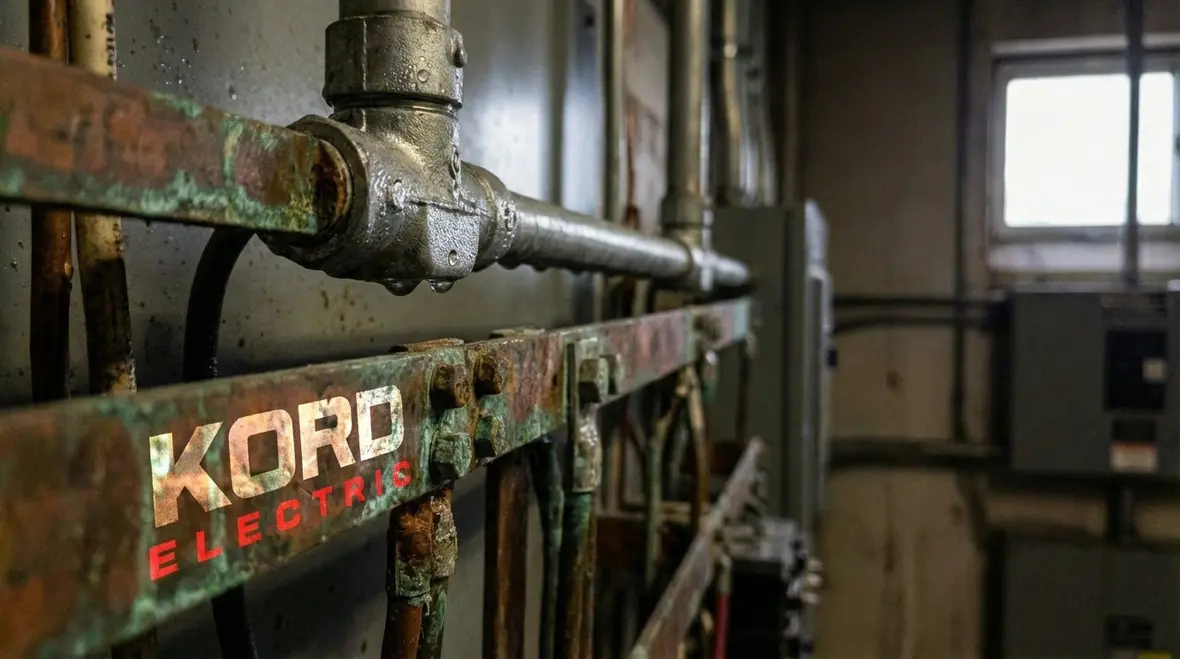
Then, schedule a comprehensive inspection. Although it may feel tempting to resume operations quickly, a measured restart prevents cascading failures. Their technicians prioritize critical systems first, such as emergency lighting, fire alarms, and essential production lines. Subsequently, they assess secondary systems and confirm stable performance under load.
By following this method, facilities reduce the risk of secondary incidents. After all, restarting a compromised system can feel a bit like revving an engine with no oil. It may run for a moment. It will not run for long. When damage is severe enough to threaten operations, Kord Electric’s emergency electrical services help stabilize systems while a full inspection and repair plan is put in place.
Common Electrical Risks Found After Storm Events
Each weather event leaves its own fingerprint. Nevertheless, Kord Electric consistently identifies several recurring electrical concerns in commercial and industrial properties.
Left Column: Structural and Environmental Effects
- Water intrusion in electrical rooms and underground conduit
- Corrosion beginning on terminals and bus connections
- Debris impact damaging exterior panels and disconnects
- Compromised seals on transformers and enclosures
- Shifted equipment pads affecting alignment
Right Column: Electrical and Performance Effects
- Insulation breakdown from lightning induced surges
- Grounding system disruption
- Voltage imbalance across phases
- Overheated breakers from sudden load changes
- Malfunctioning surge protection devices
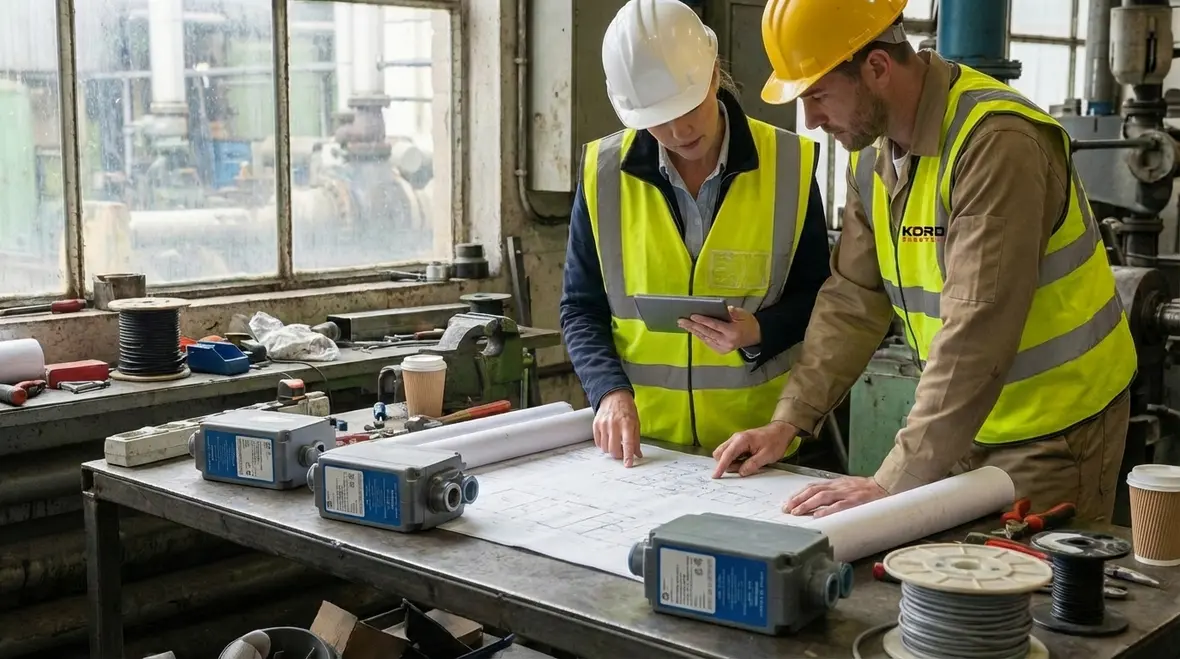
While some of these issues appear minor, they often interact. For example, moisture plus compromised insulation can accelerate arcing. Likewise, grounding problems combined with surge exposure can damage sensitive control systems. Therefore, Kord Electric treats each finding as part of a larger system narrative rather than an isolated flaw.
Their technicians explain these connections carefully. They do not merely point at a corroded terminal and move on. Instead, they describe how that corrosion can increase resistance, generate heat, and eventually disrupt production. In doing so, they empower decision makers with clarity.
Why Large Facilities Cannot Afford to Skip Post Storm Evaluations
In commercial and industrial environments, downtime equals lost revenue. However, the financial cost of an unexpected shutdown often exceeds the price of preventive assessment. A comprehensive storm damage inspection helps avoid sudden equipment failure, regulatory complications, and safety incidents.
Moreover, many facilities operate under strict compliance requirements. Electrical integrity supports fire codes, insurance standards, and occupational safety regulations. Therefore, documented inspection reports provide more than peace of mind. They serve as proof of due diligence.
Kord Electric also recognizes the human element. Behind every panel and production line stand employees, tenants, and visitors. Reliable power protects not only machines but also people. Consequently, their team approaches each site with a sense of responsibility that goes beyond wires and breakers.
And yes, while a superhero movie might show lightning granting someone incredible powers, in real life lightning usually grants a repair invoice. A little humor aside, severe weather demands respect and preparation.
How Kord Electric Technicians Communicate Complex Findings Clearly
Technical expertise means little if it remains locked inside jargon. Kord Electric takes pride in how their expert service staff explains findings to property managers, engineers, and executive teams.
First, they translate measurements into outcomes. Instead of stating only that insulation resistance has decreased, they clarify what that trend means for reliability. Additionally, they outline time frames. Is this an urgent repair, or can it be scheduled during planned maintenance?
Second, they prioritize transparency. Clients receive detailed documentation, yet explanations remain direct and accessible. Their technicians often say that electricity may be complex, but communication should not be. Therefore, they encourage questions and provide clear answers without condescension.
Third, they align recommendations with operational goals. For an industrial facility running continuous production, minimizing downtime shapes every decision. For a commercial high rise, tenant safety and comfort may lead the conversation. In both cases, Kord Electric frames solutions within the client’s reality.
This approach builds long term partnerships. When the next storm approaches, facility managers know exactly who to call. Not because they enjoy storm season, but because they value predictable expertise and a partner that understands the full landscape of commercial electrical systems in modern buildings.
Integrating Preventive Strategy After the Initial Inspection
An effective inspection does more than address current storm damage. It also informs future resilience. After completing assessments, Kord Electric often recommends enhancements that strengthen electrical infrastructure against upcoming weather events.
These may include upgraded surge protection devices, improved grounding systems, or better sealing of outdoor enclosures. In addition, they may suggest redistributing loads to reduce stress on specific panels during peak demand.
Furthermore, they help clients establish documented response plans. When teams know exactly how to shut down nonessential systems, secure electrical rooms, and coordinate post storm evaluations, recovery becomes smoother. Preparation replaces panic.
Because weather patterns continue to shift, forward thinking facilities treat each inspection as both a response and a lesson. Kord Electric supports that mindset by combining immediate corrective work with strategic planning, often integrating findings into broader electrical preventive maintenance schedules to reduce long term risk.
FAQ: Electrical Inspections After Severe Weather
Conclusion: Partner with Kord Electric Before the Next Storm Arrives
Storms will come and go. However, the integrity of a commercial or industrial electrical system should never depend on luck. Kord Electric delivers thorough storm damage inspection services with clarity, precision, and respect for operational demands. Their technicians stand ready to assess, explain, and strengthen every critical component. When severe weather passes, let Kord Electric provide the calm, confident expertise that keeps facilities powered, protected, and prepared for whatever rolls in next.
If your facility is already planning upgrades, expansions, or broader reliability improvements, pairing a storm damage inspection with dedicated emergency electrical services and ongoing electrical preventive maintenance ensures that your system is ready not just for the next storm, but for everyday operational demands as well.