Why Your Circuit Breaker Keeps Tripping
Circuit Breaker Keeps Tripping? Here’s Why.
When a tripping breaker interrupts a production line or dims the lights in a commercial tower, it is not just an inconvenience. It is lost revenue, frustrated tenants, and unnecessary downtime. At Kord Electric, we see it often. Facility managers call us in the middle of electrical troubleshooting, staring at a panel that refuses to cooperate. Is it an overload circuit? A short? A deeper system fault? Our technicians and expert service staff walk through the problem with calm authority, because in commercial and industrial facilities, guesswork is not a strategy. It is a liability.
So let us slow this down, take a steady breath, and explore why breakers trip, what it means for large properties, and how we solve it with precision.
Understanding What a Breaker Is Really Doing
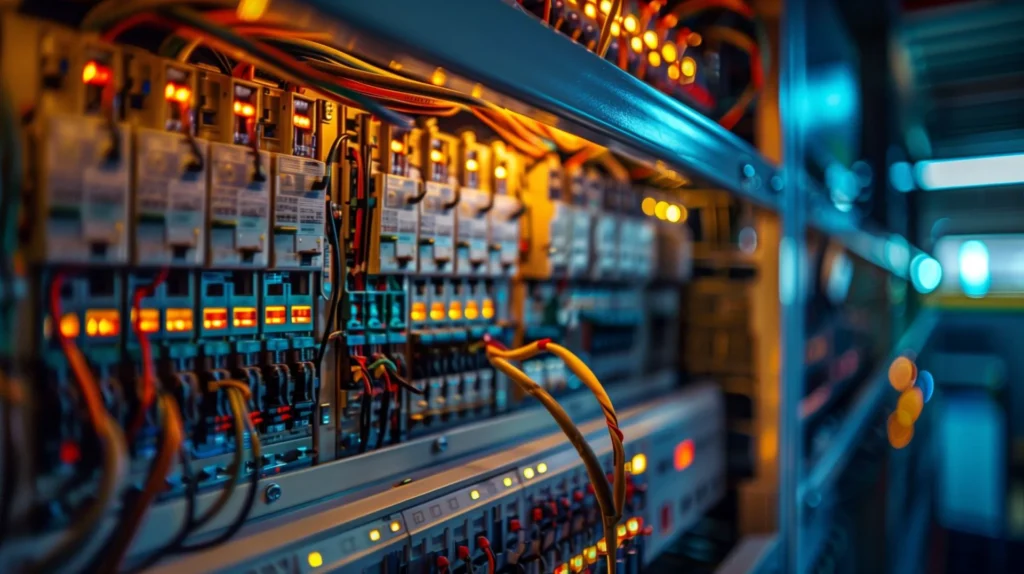
A breaker is not the villain of your building. It is the bodyguard. When it senses danger, it steps in. That is its job. In a commercial or industrial system, breakers protect panels, feeders, switchgear, transformers, and the expensive equipment connected to them. When a tripping breaker shuts down a circuit, it is reacting to conditions that exceed safe limits.
Most often, it responds to three main issues:
1. Overload
2. Short circuit
3. Ground fault
However, in larger facilities, the root cause can be more layered. For example, an overload circuit in a warehouse may stem from added machinery that was never factored into the original load calculation. Meanwhile, in a high rise office tower, aging distribution panels may create resistance that builds heat over time.
Therefore, when our team begins electrical troubleshooting, we do not just reset the breaker. We study the system behind it.

Is It Just an Overload Circuit or Something Bigger?
Many facility managers ask this exact question. They see a breaker trip during peak operations and assume it is simply an overload circuit. Sometimes they are right. Other times, the issue runs deeper.
An overload occurs when equipment pulls more current than the circuit rating allows. In commercial buildings, this often happens after expansions, tenant improvements, or equipment upgrades. Someone adds industrial ovens, high capacity HVAC units, or server racks. The panel does not protest immediately. Then one busy afternoon, the tripping breaker makes its opinion known.
However, if a breaker trips instantly when reset, that points to a short circuit or ground fault. That is a different story. It may involve damaged insulation, compromised wiring, or failing equipment. In manufacturing facilities, vibration alone can loosen connections over time. Additionally, heat cycles in large mechanical rooms can stress conductors and terminals.
Our expert service staff explain these distinctions clearly. We believe informed clients make better decisions. Also, we prefer to solve problems before they turn into expensive lessons.

Common Causes of a Tripping Breaker in Commercial and Industrial Buildings
Let us walk through the causes we see most often in major properties.
Equipment Overload
Large motors, compressors, and production machinery draw significant startup current. If multiple systems cycle on at once, the load can exceed the breaker rating. Consequently, the breaker trips to prevent overheating.
Improper Load Distribution
In older facilities, panels often evolve over decades. Circuits get added wherever space allows. Eventually, one section carries far more load than intended. During electrical troubleshooting, we frequently discover that balancing loads across phases resolves recurring issues.
Short Circuits
When a hot conductor contacts a neutral or another hot conductor, current spikes instantly. Breakers respond fast. This can result from damaged cable insulation, loose lugs, or internal equipment faults.
Ground Faults
A ground fault occurs when current escapes its intended path and finds ground. In industrial environments, moisture, dust, and conductive debris increase this risk. Therefore, routine inspections matter.
Breaker Wear and Tear
Breakers are mechanical devices. Over time, springs weaken and contacts degrade. In large switchgear assemblies, a worn breaker may trip prematurely or fail to hold under normal load. It is not dramatic. It is just aging hardware asking for retirement.
As we like to say, even superheroes need a day off. And yes, breakers count.

How Kord Electric Approaches Electrical Troubleshooting
When we step into a facility, we do not chase symptoms. We investigate systems.
First, our technicians gather load data. We measure real time amperage and compare it to rated capacity. Next, we inspect connections for signs of heat, discoloration, or corrosion. After that, we evaluate recent changes to equipment or tenant layouts.
Moreover, we review panel schedules and one line diagrams. In large properties, documentation tells a story. If that story does not match reality, we correct it.
Our expert service staff also communicate clearly with maintenance teams. We explain what we are seeing and why it matters. For example, if an overload circuit repeatedly trips during specific operational hours, we show how demand patterns align with that timing. Then we propose practical solutions.
Sometimes the fix involves redistributing loads. Other times, it requires upgrading feeders, installing higher capacity breakers, or recommending new panels entirely. We focus on long term reliability, not quick resets.
When a Tripping Breaker Signals a Capacity Problem
Commercial and industrial buildings evolve. Production expands. Data centers grow. HVAC systems upgrade. Yet electrical infrastructure often stays the same.
Eventually, the system reaches its limit. At that point, a tripping breaker becomes a messenger. It tells you the building demands more than the design allows.
In these cases, resetting the breaker is like putting tape over a warning light on your dashboard. The light disappears. The problem does not.
Therefore, we perform load studies to determine whether service upgrades or panel expansions are necessary. For major properties, proactive planning avoids shutdowns and protects tenant satisfaction.
And let us be honest. No property manager wants to explain to a board why the building lost power during peak business hours. That conversation rarely ends with applause.
Two Paths to Resolution in Large Facilities
Below is a simplified comparison of how issues typically resolve in commercial environments:
Path One: System Optimization
Optimize load distribution across panels
Tighten and replace faulty connections
Adjust breaker sizing where appropriate
Implement scheduled maintenance
Path Two: Infrastructure Upgrade
Increase service capacity
Install new switchgear or distribution boards
Add dedicated circuits for high demand equipment
Redesign electrical layout for expansion
In many cases, optimization solves the problem. However, when repeated overload circuit events occur, an upgrade provides stability and room for growth. Our team outlines both options clearly, including costs, timelines, and operational impact.

Preventive Strategies That Reduce Downtime
A tripping breaker rarely appears without warning. Heat builds. Connections loosen. Loads creep upward. Therefore, prevention starts with awareness.
First, schedule regular thermal imaging inspections. Hot spots reveal issues long before failure. Second, update panel directories and load calculations after any renovation. Third, implement routine torque checks on major connections.
Additionally, train on site maintenance teams to report patterns. If a breaker trips every Monday morning at startup, that pattern matters. If it trips only during summer months, HVAC demand may play a role.
At Kord Electric, we partner with facility managers to create maintenance programs tailored to commercial and industrial properties. Our technicians document findings in clear reports, so decision makers have data, not guesswork.
Why Expert Diagnosis Matters in Major Properties
In a residential setting, a single tripping breaker may affect one room. In a commercial tower, it may impact elevators, security systems, or mission critical equipment. The stakes are higher.
Moreover, industrial facilities often operate with three phase power, complex motor controls, and integrated automation. A simple reset without investigation can mask deeper faults.
Our expert service staff approach each case with methodical care. We isolate circuits, test components, and verify integrity before restoring full operation. Because while anyone can flip a switch, not everyone understands the story behind it.
And in our world, understanding the story prevents the sequel.
Frequently Asked Questions
Conclusion and Next Steps
When a tripping breaker disrupts your commercial or industrial facility, it is asking for attention. At Kord Electric, we respond with steady expertise and clear answers. Our technicians perform thorough electrical troubleshooting, identify overload circuit risks, and design solutions built for growth. Do not let recurring interruptions slow your operations. Contact Kord Electric today, and let us restore confidence, stability, and power to your property.
If your breakers are tripping alongside flickering lights, confusing panel labels, or unexplained voltage swings, it may be time for a wider system review. Our team can coordinate breaker diagnostics with broader assessments like voltage fluctuation investigations for commercial and industrial facilities to make sure your power quality, load balance, and infrastructure are working together—not against you.
For properties planning expansions, new equipment, or data-heavy operations, consider pairing breaker and panel upgrades with a strategic look at your overall electrical backbone. Resources like our guide on commercial electrical systems for modern buildings can help you see how today’s fixes support tomorrow’s growth. When you are ready to move from nuisance trips to long term reliability, partner with a commercial and industrial electrical contractor that lives in this world every day.
Whether you are battling a single stubborn tripping breaker or planning a full service upgrade, Kord Electric provides code-compliant, future-ready solutions tailored to your facility. From detailed electrical troubleshooting to system optimization and infrastructure upgrades, our specialists keep your operations powered, protected, and prepared for what is next.
Ready to stop guessing and start solving? Explore how our commercial and industrial electrical services for voltage and load issues can support your facility, then connect with our team to schedule a site visit.