Circuit Breaker Tripping Fixes for Commercial Buildings
Circuit Breaker Tripping Fixes for Commercial and Industrial Facilities
When a facility manager says, our breaker keeps tripping, it is rarely a casual observation. It is usually followed by a sigh, a production delay, and someone staring at a dark control panel. At Kord Electric, they hear that sentence often in large commercial buildings and industrial plants. However, they also know that behind every tripped breaker is a story. Sometimes it is a simple overload. Other times, it signals a deeper electrical issue waiting patiently in the shadows. Therefore, this guide walks through what causes repeat breaker trips, how professionals solve them, and why experienced technicians make all the difference in high demand environments.
They speak plainly. They work methodically. And yes, they occasionally explain electrical theory with the calm confidence of a late night documentary narrator. Because in complex facilities, clarity matters.
Why Does Our Breaker Keeps Tripping in a Commercial Building?
When facility teams ask why the breaker keeps tripping, they are really asking two questions. What is happening right now, and what risk does it pose tomorrow? Fortunately, circuit breakers are designed to trip. They protect equipment, wiring, and people from dangerous current levels. However, when the same breaker trips again and again, it moves from safety feature to operational threat.
In commercial and industrial settings, the most common causes include:
- Overloaded circuits due to added equipment or expanded production lines
- Short circuits caused by damaged conductors or failing insulation
- Ground faults from moisture, deteriorated wiring, or compromised components
- Arc faults that develop in aging switchgear or panel systems
- Breaker fatigue where the breaker itself begins to fail internally
Moreover, large properties often evolve over time. Equipment gets added. Tenants change. Data rooms expand. As a result, electrical loads shift far beyond the original design. Eventually, the system responds by shutting things down. It is not being dramatic. It is doing its job.
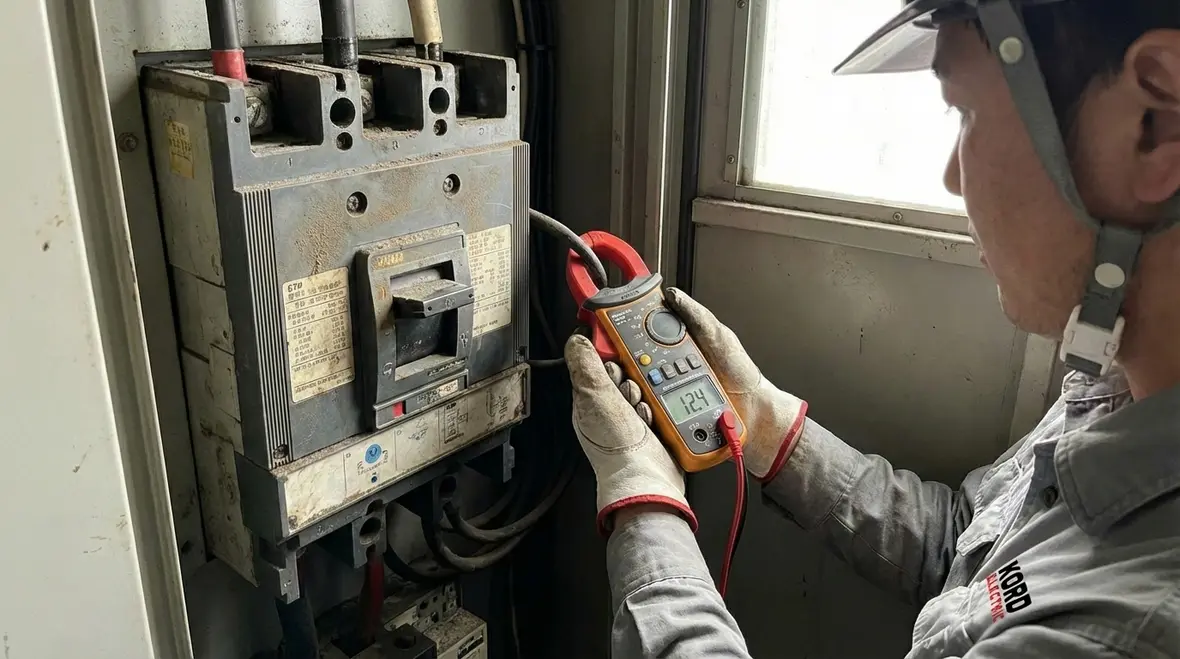
Kord Electric technicians approach this situation with structured diagnostics. They do not guess. Instead, they measure load, inspect connections, test insulation resistance, and evaluate breaker integrity. Because in commercial environments, assumptions cost money.
For facilities already battling unstable power quality, issues like nuisance trips and repeated shutdowns often overlap with problems such as voltage swings and flickering equipment performance. That is why many building owners pair breaker diagnostics with broader assessments of voltage fluctuations in commercial and industrial facilities to uncover deeper system stress before it becomes a major outage.
Understanding Load Imbalance and Overload Conditions
In many facilities, the breaker keeps tripping because of simple math. Too many amps are trying to travel through a conductor rated for less. However, the reasons behind that overload are often layered.
For example, a warehouse may add automated conveyor systems without recalculating panel capacity. Meanwhile, an office tower might install new HVAC equipment during a retrofit. Each addition seems reasonable on its own. Yet collectively, they push circuits beyond safe limits.
Kord Electric service staff explain this in clear terms. They often tell property managers that electricity behaves like traffic on a highway. If the road supports two lanes and five lanes of cars attempt to merge, congestion follows. In electrical terms, that congestion is heat. And heat triggers the breaker.
Therefore, they perform load studies and panel evaluations. They analyze demand factors and peak usage periods. In industrial plants, they also examine motor startup currents, which can spike dramatically. Because although steady state load may appear safe, inrush current during equipment startup can cause a breaker to trip unexpectedly.
Additionally, they inspect for load imbalance across phases in three phase systems. An uneven distribution strains one side of the panel more than others. Over time, this imbalance increases nuisance trips and equipment wear.
Once identified, solutions may include redistributing loads, upgrading breakers, installing new dedicated circuits, or expanding panel capacity. Each solution aligns with code and long term operational goals. No shortcuts. No guesswork.
When load problems are tied to chronic flickering, equipment resets, or unexplained motor failures, Kord Electric often recommends pairing breaker corrections with broader system work such as electrical preventive maintenance for commercial and industrial facilities. This proactive approach catches hidden weaknesses before they show up as downtime on a production schedule.
Short Circuits and Ground Faults in Industrial Systems
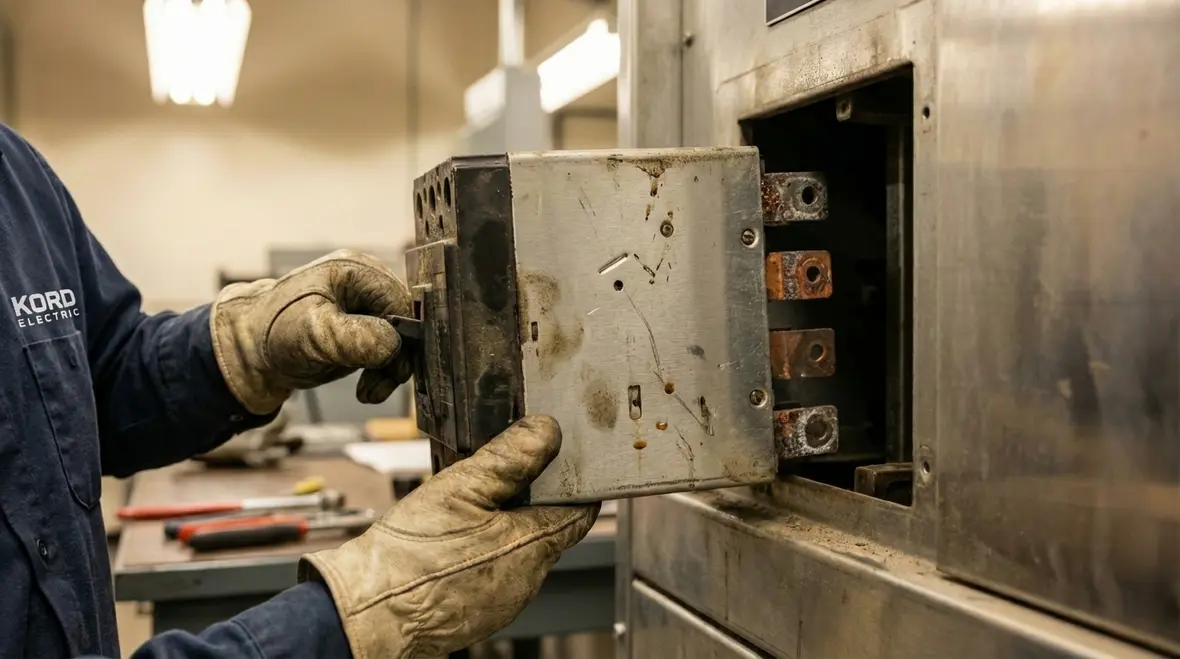
Sometimes, the breaker keeps tripping not because of excess demand, but because of a fault. In industrial environments, vibration, heat, and dust slowly degrade insulation. Eventually, conductors may contact each other or grounded surfaces. When that happens, current surges instantly.
Short circuits generate high fault currents. Consequently, breakers trip immediately to prevent catastrophic damage. However, repeated faults signal underlying deterioration.
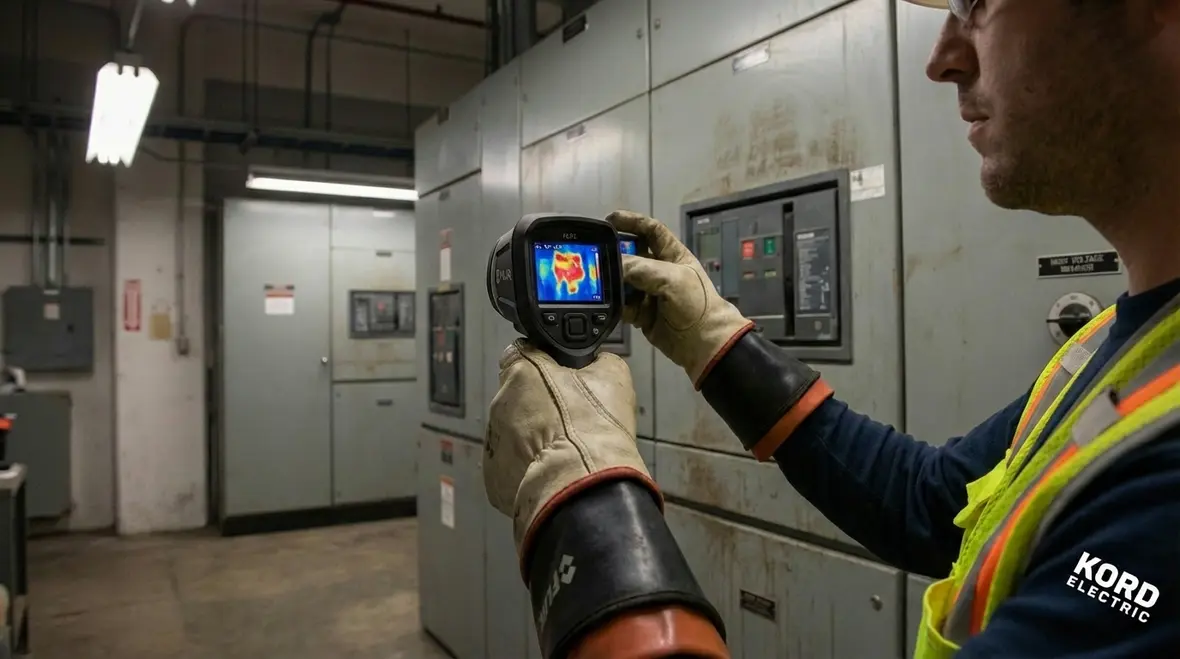
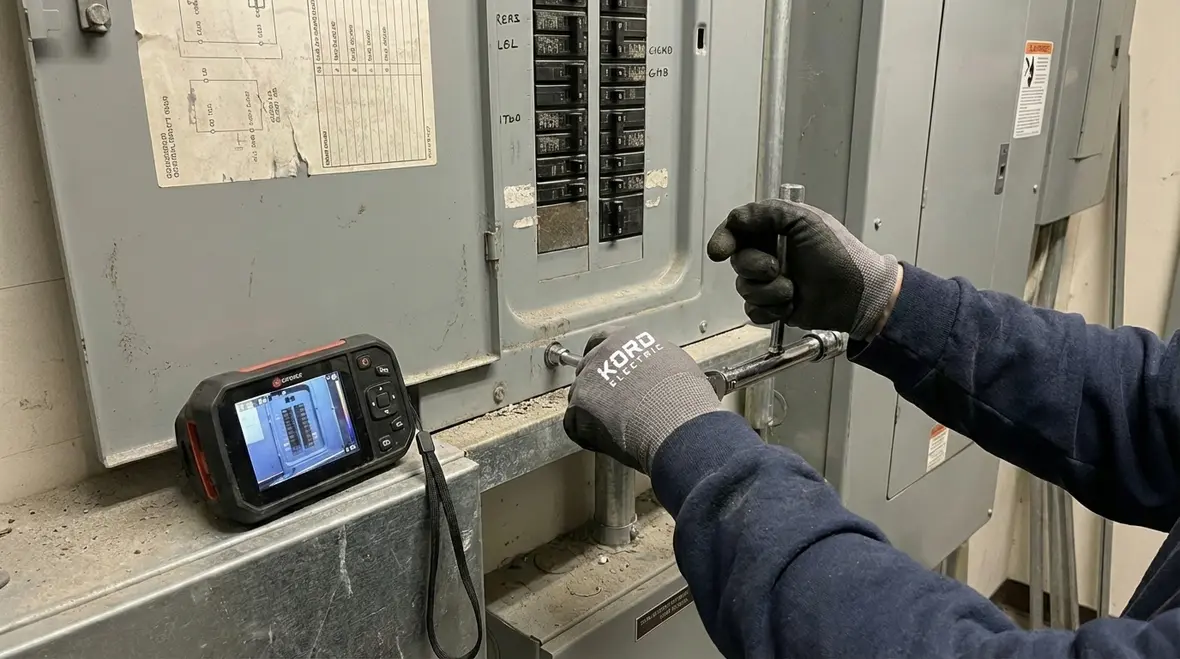
Kord Electric technicians use thermal imaging, insulation resistance testing, and visual inspections to pinpoint these issues. They check bus bars, lugs, and cable terminations. They also examine areas exposed to moisture or chemical vapors, which accelerate corrosion.
In addition, they evaluate grounding systems. A weak or compromised ground path increases risk and complicates fault clearing. Therefore, ensuring proper bonding and grounding remains central to long term reliability.
Industrial managers appreciate that these technicians do more than swap parts. They explain findings in straightforward language. They show where insulation has failed. They outline risk levels. And yes, they occasionally compare a damaged cable to a frayed phone charger, just larger and far less forgiving.
In facilities where recurring faults threaten safety or interrupt operations, these findings often connect directly to emergency response planning. That is why many organizations that struggle with breaker trips also keep Kord Electric on call through their 24/7 emergency electrical services, ensuring that serious ground faults, arcing, or burning odors receive immediate, code-compliant attention.
Breaker Failure and Aging Electrical Infrastructure
Commercial and industrial buildings often operate for decades. While the structure may remain sound, internal electrical components age quietly. Over time, breakers lose calibration accuracy. Springs weaken. Contacts pit. Eventually, nuisance tripping becomes common.
When facility teams report that a breaker keeps tripping without apparent overload or fault, aging hardware becomes a suspect. Therefore, Kord Electric evaluates breaker trip curves and compares them to current load conditions.
In some cases, replacement solves the issue. However, in older facilities, entire panel upgrades may be more appropriate. Because installing new equipment into outdated switchgear can resemble placing a modern engine into a vintage frame. It may run, yet the surrounding system struggles to support it.
Moreover, older panels may not meet current code requirements for arc fault protection or coordination. As a result, upgrading enhances both reliability and compliance. That balance matters in high occupancy commercial properties where downtime and liability intersect.
Their service staff take time to explain options. They outline cost, risk, and lifespan expectations. This clarity allows property owners to make informed decisions rather than reactive ones.
How Kord Electric Diagnoses and Fixes Persistent Tripping
When clients call Kord Electric because the breaker keeps tripping, the process begins with listening. They gather details about timing, load changes, recent equipment additions, and environmental conditions. Then, they conduct a structured site evaluation.
Below is a simplified view of how their team approaches the problem.
Diagnostic Focus vs. Technician Actions
Diagnostic Focus
- Load measurement and demand review
- Visual and thermal inspection
- Breaker performance testing
- Grounding system verification
Action Taken by Technicians
- Perform amp readings during peak and startup conditions
- Identify hot spots, loose lugs, and insulation damage
- Compare trip settings and mechanical condition
- Confirm bonding integrity and resistance values
This dual view highlights a key principle. Every symptom receives a measured response. They do not treat tripping as an isolated annoyance. Instead, they treat it as a signal.
After diagnostics, they provide clear recommendations. Sometimes, the fix involves redistributing circuits. Other times, it requires upgrading switchgear or installing new panels to support growth. In large facilities, they may also recommend system coordination studies to ensure breakers trip in the correct sequence during faults. Because selective coordination reduces widespread outages and protects critical operations.
Preventing Future Circuit Breaker Tripping Issues
Solving today problem is important. However, preventing tomorrow disruption is even better. Therefore, Kord Electric emphasizes proactive maintenance programs for commercial and industrial clients.
Routine infrared scanning identifies developing hot spots before they trigger shutdowns. Scheduled torque checks ensure terminations remain tight. Load analysis tracks growth patterns. In addition, arc flash studies and labeling updates improve safety awareness across maintenance teams.
When facilities expand, their technicians consult during planning stages. They review panel capacity and transformer sizing before equipment arrives on site. As a result, clients avoid the familiar refrain that the breaker keeps tripping right after commissioning new machinery.
They also educate in house teams. Their experts explain warning signs such as flickering lights, buzzing panels, or breakers that feel warm to the touch. Although subtle, these indicators often precede major events. Because electrical systems rarely fail without whispering first.
And yes, occasionally they add a light joke to ease tension. Electricity, after all, follows the laws of physics, not office politics. It does not care about deadlines. It only cares about load and resistance.
For facilities that want to stay ahead of both nuisance trips and major outages, structured service plans built around electrical preventive maintenance provide a practical roadmap. These programs integrate thermal imaging, testing, documentation, and repair planning into one continuous strategy instead of a series of last-minute emergency calls.
FAQs About Breaker Keeps Tripping in Commercial Facilities
Conclusion and Next Steps
When operations slow and teams whisper that the breaker keeps tripping again, it is time for more than a reset. It is time for clarity. Kord Electric brings experienced technicians, structured diagnostics, and practical solutions to commercial and industrial facilities that cannot afford uncertainty. Therefore, if reliability matters to your property, let their experts evaluate the system, explain the findings, and restore steady power with confidence and care.
For properties facing frequent shutdowns, unexplained breaker trips, or power quality complaints from tenants and production teams, the most effective path forward is a coordinated service plan built around both rapid response and long term stability. Kord Electric’s emergency electrical services handle urgent outages and unsafe conditions, while structured preventive maintenance and system upgrades reduce the chances of those emergencies recurring in the first place.
If your facility has reached the point where resetting a breaker feels like part of the daily routine, it is time to treat those trips as the warning signs they are—not just a quick annoyance. Bringing in a commercial electrical team that understands high demand environments, selective coordination, and long horizon planning will help protect uptime, equipment, and everyone who depends on stable power to get work done.