Commercial Lighting Installation Los Angeles Guide
When it comes to lighting installation los for commercial and industrial facilities, the stakes are higher than most people realize. Proper lighting shapes productivity, safety, energy use, and even morale. At Kord Electric, we approach every project with precision and purpose. We serve large commercial properties, industrial plants, warehouses, and major building facilities throughout Los Angeles. In this guide, our expert service staff walks through what matters most in indoor lighting installation, why planning comes first, and how professional execution protects both people and profits. Consider this your clear, steady roadmap through the process.
Why Indoor Lighting Matters in Commercial and Industrial Facilities
Lighting does more than brighten a space. In a distribution center, it supports accuracy and speed. In a manufacturing plant, it reduces risk. In a corporate office tower, it shapes focus and comfort. Therefore, lighting is not decoration. It is infrastructure.
Our technicians often explain it this way: lighting is the quiet engine behind daily operations. When it works, no one notices. When it fails, everyone does. Because of that, commercial lighting installation must account for layout, ceiling height, machinery, traffic flow, and compliance standards.
Moreover, proper lighting affects energy costs. Industrial buildings in Los Angeles run long hours. Consequently, inefficient fixtures drain budgets month after month. By upgrading systems with modern LED solutions and intelligent controls, facility managers can cut operating costs without sacrificing performance.
At Kord Electric, we focus only on large scale properties. We do not handle small residential jobs. Instead, we specialize in facilities where lighting decisions impact hundreds of workers and thousands of square feet.
How to Plan Indoor Lighting Installation for Large Buildings
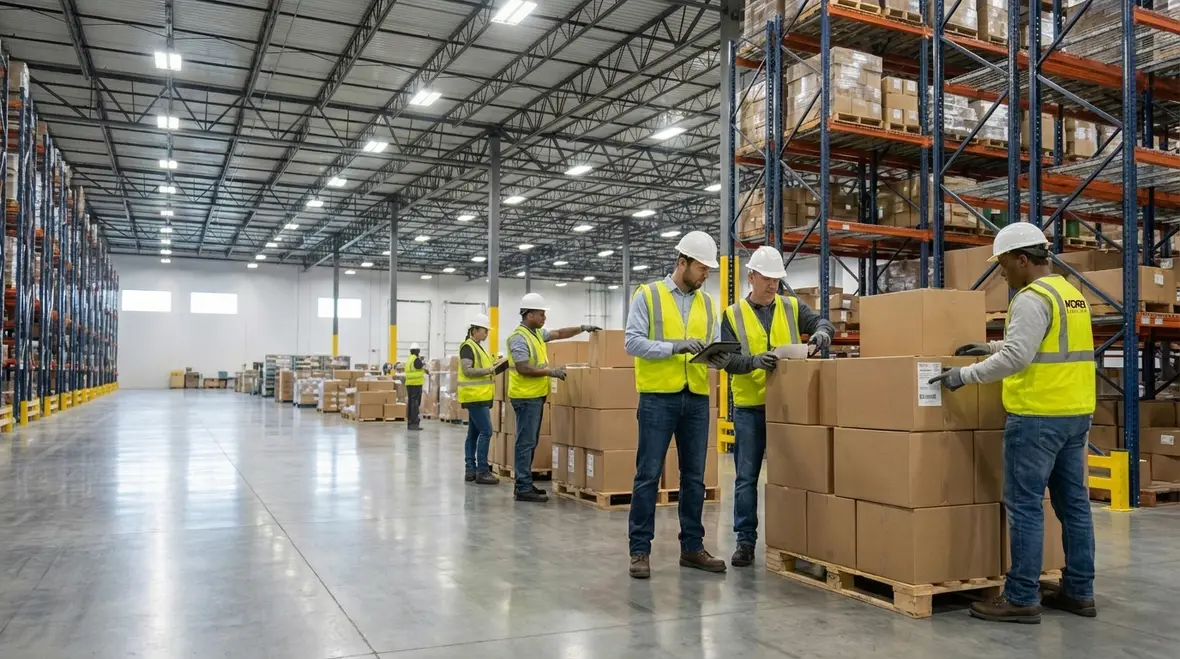
Planning always comes first. Although it may be tempting to jump straight to fixture selection, our expert service staff insists on a full site assessment before any installation begins.
First, we evaluate the building’s purpose. A logistics warehouse needs different light levels than a data center. Then, we review ceiling heights and structural elements. High bay fixtures, for example, require precise placement to avoid dark zones. After that, we measure current light levels and compare them with industry standards, often referencing state guidelines and best practices similar to those outlined in California’s commercial lighting codes for 2026.
Additionally, we review electrical capacity. Large facilities often have aging panels or circuits that cannot support modern upgrades without modification. Because of this, lighting installation in Los Angeles commercial buildings must align with both load calculations and local code. When needed, our team coordinates closely with electrical preventive maintenance programs to make sure panels and feeders are ready before the first new fixture goes in.
Finally, we create a lighting layout plan. This includes fixture type, spacing, mounting method, and control systems. Our technicians explain each choice clearly. No guesswork. No vague answers. Just facts, delivered calmly and clearly, guiding you through the story of your own building.
Connecting Planning to Code Compliance
A strong plan does more than place fixtures on a drawing. It ties illumination levels, sensor locations, and control zones back to Title 24 and other California requirements so your project passes inspection the first time. Many facility managers find it helpful to review resources like Kord Electric’s California commercial lighting code guide for 2026 while we develop the design, so every line on the plan has a clear compliance purpose.
Choosing the Right Fixtures and Controls for Efficiency
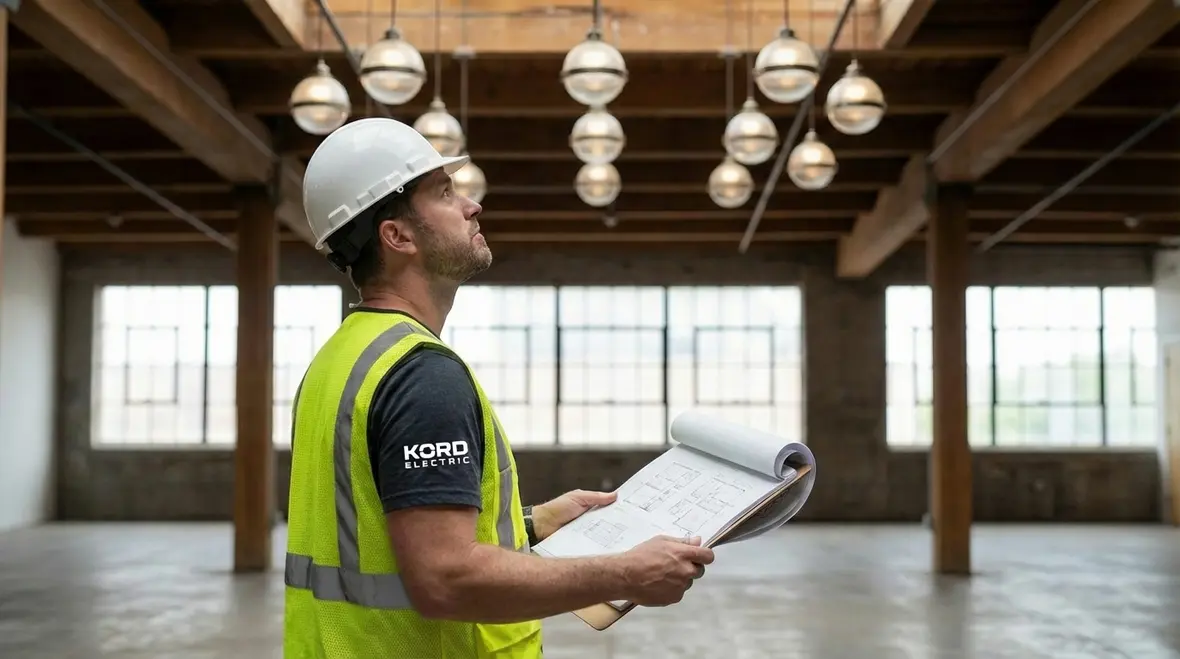
Not all lights are created equal. In fact, some fixtures are about as useful in a warehouse as sunglasses at midnight. Therefore, selecting the right technology matters.
LED high bays dominate industrial environments for good reason. They offer strong output, long lifespan, and reduced maintenance. However, in office areas within commercial buildings, panel lights or troffers may be more appropriate. Meanwhile, task lighting supports detailed workstations.
Controls add another layer of efficiency. Motion sensors, daylight harvesting systems, and smart timers reduce unnecessary usage. As a result, facilities lower their energy bills while extending fixture life.
Our team often recommends zoned lighting systems. Instead of illuminating an entire 200,000 square foot warehouse at full intensity, specific sections can adjust based on activity. It is practical, cost effective, and yes, just a little bit satisfying to watch unused areas dim automatically.
Furthermore, compliance with California energy standards plays a critical role. Our technicians stay updated on local regulations, ensuring every commercial lighting installation meets code and avoids costly penalties. For many large properties, integrating lighting upgrades with broader electrical preventive maintenance strategies creates a powerful combination of safety, reliability, and efficiency.
Pairing Fixtures with Facility Type
Industrial plants, campuses, and government facilities across Southern California each rely on different fixture types and lens options to handle dust, vibration, temperature swings, and 24/7 runtime. That’s why Kord Electric’s dedicated lighting installation services team evaluates conditions zone by zone rather than recommending a one-size-fits-all product list.
Step by Step Indoor Lighting Installation Guide
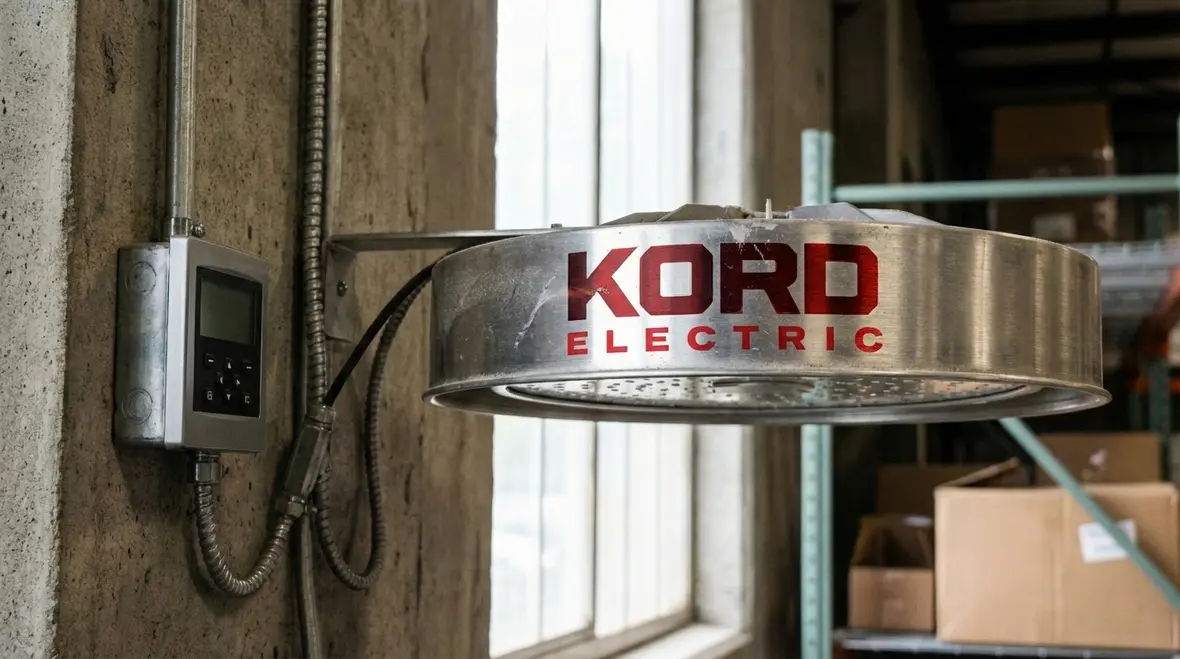
Although each project differs, the installation process follows a structured path. Because we work in active commercial and industrial environments, coordination and safety come first.
1. Pre Installation Preparation
We secure permits if required and coordinate with facility managers. Equipment staging areas are defined. Safety protocols are reviewed with on site staff.
2. Power Shutdown and Circuit Management
Our licensed electricians isolate circuits carefully. Lockout and tagout procedures protect everyone involved. No shortcuts. Ever.
3. Removal of Existing Fixtures
Old fixtures are removed methodically. We inspect wiring for wear or damage. If upgrades are needed, we address them immediately.
4. Mounting and Wiring New Fixtures
Fixtures are installed according to engineered layouts. Wiring connections are secured and tested. In high ceiling environments, specialized lifts ensure precision and safety.
5. Control System Integration
Sensors and control panels are programmed. Zones are configured to match operational needs.
6. Testing and Calibration
Light levels are measured. Adjustments are made. Our technicians confirm uniform distribution and eliminate shadows.
Throughout the process, we maintain communication with building management. Because industrial facilities cannot always shut down completely, we often phase projects to reduce disruption. Think of it like changing the tires on a moving vehicle, except far more organized and with fewer action movie explosions.
Integrating Installation with Broader Electrical Services
On many sites, lighting projects run alongside other electrical work, such as panel upgrades, voltage stabilization, or emergency power improvements. Kord Electric’s teams coordinate these scopes so lighting installation los projects align with long-term reliability goals instead of acting as isolated one-off upgrades.
Common Challenges in Lighting Installation Los Angeles Facilities Face
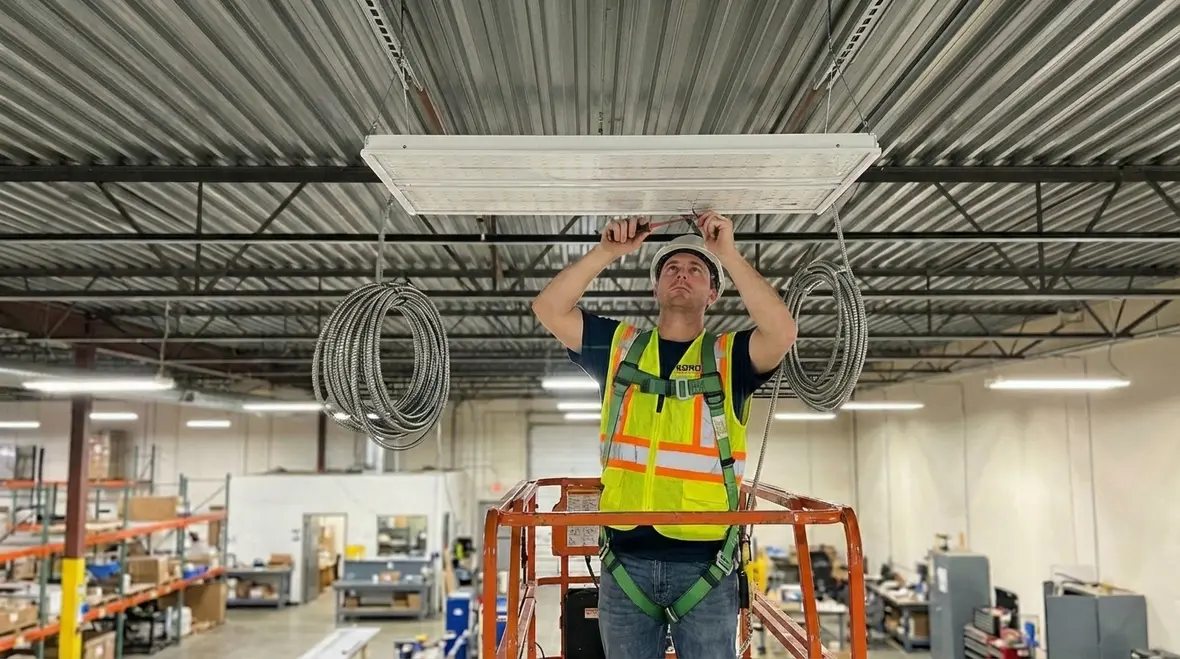
Los Angeles commercial and industrial buildings present unique challenges. However, with experience comes preparation.
Older facilities often contain outdated wiring systems. Therefore, upgrades may require panel replacements or conduit rerouting. Seismic considerations also influence mounting methods. Because California does not take earthquakes lightly, neither do we.
Additionally, large open spaces can create uneven lighting if not carefully designed. Shadows between storage racks or machinery can reduce visibility and safety. Our expert service staff uses precise calculations to avoid these issues.
Heat management is another factor. Industrial environments generate substantial heat. Consequently, fixtures must withstand higher temperatures without reduced lifespan.
Finally, project timing can complicate installation. Many facilities operate around the clock. As a result, our team often works during off peak hours to minimize impact. We adapt. We plan. We execute.
Lighting, Voltage, and Power Quality
Some lighting problems are actually symptoms of deeper electrical issues, such as voltage fluctuations that cause flicker, premature lamp failure, or nuisance breaker trips. When we see these patterns, our licensed electricians can extend the scope beyond lighting to address the underlying power quality issues and protect sensitive equipment throughout the facility.
Safety Standards and Code Compliance for Commercial Properties
Safety is not optional. It is foundational.
Commercial lighting installation must comply with national electrical codes and California energy regulations. Moreover, proper illumination levels reduce workplace accidents. In warehouses and manufacturing plants, poor lighting increases the risk of trips, falls, and equipment mishandling.
Our licensed electricians follow strict procedures during every lighting installation los project. Grounding is verified. Circuits are labeled. Load capacities are confirmed. Because inspections matter, documentation remains organized and accessible.
In addition, emergency lighting systems require special attention. Exit signs and backup lighting must activate instantly during power loss. We test these systems thoroughly. After all, during an outage, no one wants to play hide and seek with the nearest exit.
Working with Title 24 and Local Inspectors
California’s commercial lighting codes evolve regularly, which is why partnering with a contractor who lives in that world every day matters. From mandatory sensors and multi-level controls to documentation for acceptance testing, our team builds compliance requirements into the project plan so inspections feel like a formality, not a gamble.
Energy Savings and Long Term Maintenance Strategy
Installation is only the beginning. A long term strategy protects the investment.
LED systems reduce maintenance frequency, yet regular inspections remain important. Dust accumulation, vibration, and environmental factors can affect performance. Therefore, scheduled evaluations ensure continued efficiency.
Moreover, energy monitoring tools provide insight into usage patterns. Facility managers can adjust schedules and zones for further savings. Over time, these incremental improvements add up significantly.
At Kord Electric, we offer ongoing support for large properties. Our technicians remain available to troubleshoot, upgrade, and optimize systems as operations evolve. Because buildings change, lighting systems must adapt as well. Many clients also combine lighting installation with electrical preventive maintenance programs for a proactive, data-driven approach to reliability.
Designing Maintenance Around Critical Operations
For distribution centers, manufacturing plants, and mission-critical campuses, planned lighting and electrical maintenance is scheduled around production cycles, shift changes, and peak seasons. This keeps safety and compliance high without disrupting the operations that keep the facility running.
What Should Facility Managers Ask Before Starting?
Facility leaders often ask the right questions before beginning a project. Here are key considerations:
• What are the target light levels for each area?
Ensure compliance with industry standards and operational needs.
• Can the current electrical system support upgrades?
Load calculations determine whether panel improvements are required.
• How will installation affect operations?
Phased scheduling reduces downtime.
• What rebates or incentives are available?
Energy efficient upgrades may qualify for local programs.
Our expert service staff explains these points clearly, helping decision makers feel confident rather than overwhelmed.
Aligning Questions with Service Options
From full-scale lighting installation services to targeted voltage correction, emergency electrical services, and preventive maintenance, Kord Electric helps facility managers connect their questions to practical service paths. That way, every decision ties back to safety, uptime, and long-term operating cost.
Project Overview at a Glance
|
Phase Assessment and Planning Fixture Selection Installation Testing Ongoing Maintenance |
Key Focus Site evaluation, load analysis, layout design Energy efficiency, durability, compliance Safe wiring, secure mounting, minimal disruption Light level verification, system calibration Performance checks, optimization, support |
Frequently Asked Questions
Conclusion and Next Steps
Indoor lighting shapes the way commercial and industrial facilities function every single day. With careful planning, skilled execution, and a commitment to safety, the right system supports productivity and reduces long term costs. At Kord Electric, we bring experience, precision, and calm confidence to every project. If your facility is ready for a professional lighting upgrade in Los Angeles, our team stands prepared to guide the process from assessment to final inspection.
For many properties, the most effective path forward is to pair dedicated lighting installation services with broader electrical support, such as emergency electrical services and preventive maintenance. This combined approach keeps your systems code-compliant, resilient, and ready for growth as your operations evolve.
When you are ready to modernize your facility lighting, improve safety, and align with California’s latest energy codes, Kord Electric’s commercial and industrial lighting installation services provide a clear, structured way to get there. From large warehouses and campuses to government and institutional properties, our licensed electricians deliver lighting systems built for the demands of Los Angeles.
If your facility is ready for a professional lighting upgrade in Los Angeles, our team stands prepared to guide the process from assessment to final inspection. Contact us today and let us illuminate your operations with purpose.