Electrical Inspection California Commercial Properties
When it comes to electrical inspection california requirements, commercial and industrial property owners cannot afford guesswork. At Kord Electric, we understand that a facility is more than walls and wires. It is productivity. It is safety. It is reputation. Therefore, we approach every project with steady hands, clear eyes, and the kind of calm authority that comes from years in the field. Our technicians and expert service staff take the time to explain what is required, why it matters, and how to address it without disrupting operations. Because in California, compliance is not optional. It is the cost of doing business well.
In the sections ahead, we walk through what large facilities need to know, how state and local codes apply, and how professional inspections protect both assets and people. Think of this as your guide through the wiring behind the walls and the rules behind the wiring.
Understanding Electrical Inspection Requirements California for Commercial Properties
California enforces strict electrical standards for commercial and industrial buildings. These standards follow the California Electrical Code, which is based on the National Electrical Code but includes state specific amendments. Therefore, owners of warehouses, manufacturing plants, office towers, data centers, and retail complexes must meet both national and state level rules.
Inspections typically occur during new construction, tenant improvements, major equipment upgrades, and system alterations. However, they may also arise after safety complaints, insurance reviews, or fire incidents. In addition, local authorities having jurisdiction conduct their own reviews, which means compliance is both statewide and local.
At Kord Electric, we help property managers interpret these layered requirements. Our technicians explain load calculations, panel ratings, grounding systems, and arc flash protection in plain language. After all, not everyone dreams in conduit sizes and breaker curves. We do, so you do not have to.
Most importantly, inspections verify that electrical systems can safely handle operational demands. In a commercial facility, those demands are significant. Industrial machinery, HVAC systems, elevator banks, server racks, and lighting grids place constant pressure on distribution systems. Consequently, proper evaluation ensures the infrastructure can sustain that load without overheating, short circuiting, or failing at the worst possible moment.
What Triggers a Commercial Electrical Inspection in California?
Many facility owners ask what events actually require an inspection. The answer is straightforward. Any substantial change to an electrical system typically triggers review by local authorities.
Common triggers include:
New construction of commercial or industrial buildings
Major renovations or tenant improvements
Service panel upgrades or transformer replacements
Installation of heavy equipment or production lines
Solar integration or backup generator systems
Fire damage repairs or system replacements
Additionally, certain municipalities conduct periodic safety inspections for large occupancy buildings. Insurance carriers may also request documentation showing code compliance. Therefore, keeping inspection records organized is not just good practice. It is strategic.
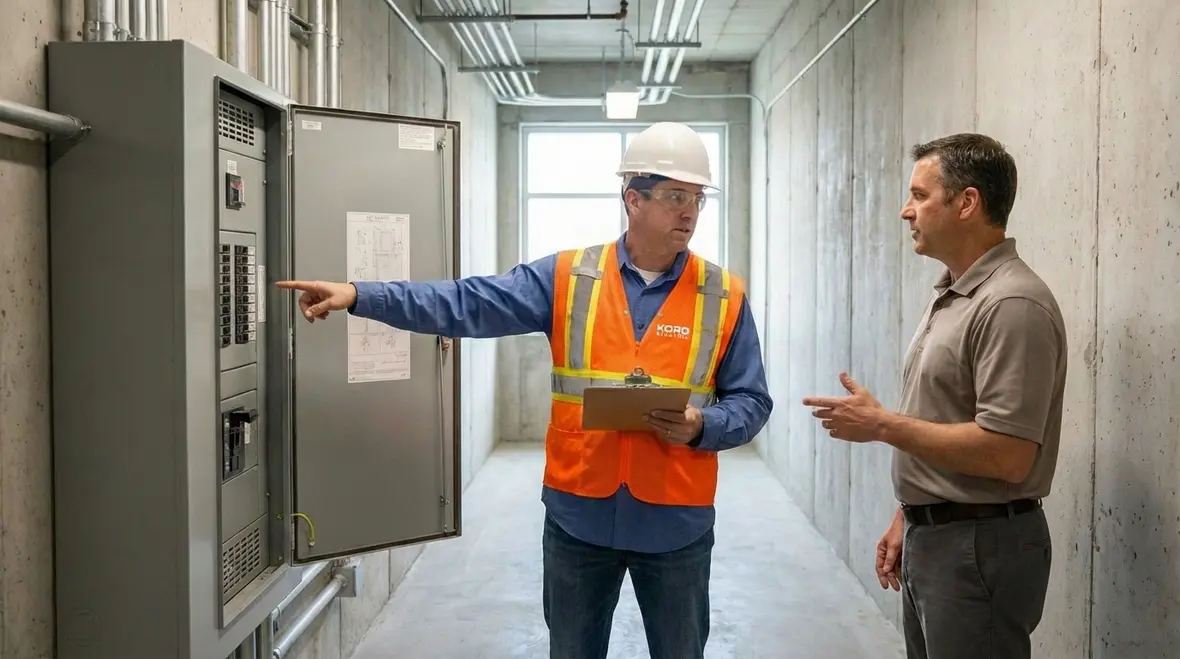
Our expert service staff works closely with property managers before the inspector arrives. We review drawings, verify clearances, test grounding continuity, and confirm labeling accuracy. Because when an inspector opens a panel door, that is not the moment for surprises. It is the moment for quiet confidence.

How Commercial Facilities Prepare for an Electrical Inspection California Review
Preparation separates smooth approvals from costly delays. Although the code may seem complex, preparation follows a practical sequence.
First, documentation must align with actual installations. Load calculations, single line diagrams, and equipment specifications should match field conditions. Therefore, discrepancies between paper and practice must be corrected early.
Second, access matters. Inspectors require safe and unobstructed entry to panels, switchgear, and service equipment. Storage in front of electrical rooms is a common issue. Yes, that extra pallet of supplies may seem harmless. However, in the eyes of code enforcement, it is an obstruction.
Third, labeling must be clear and accurate. Circuits should identify connected loads. Disconnects must be properly marked. Arc flash warnings must remain visible and legible. In industrial settings, this is more than a formality. It is a worker safety requirement.
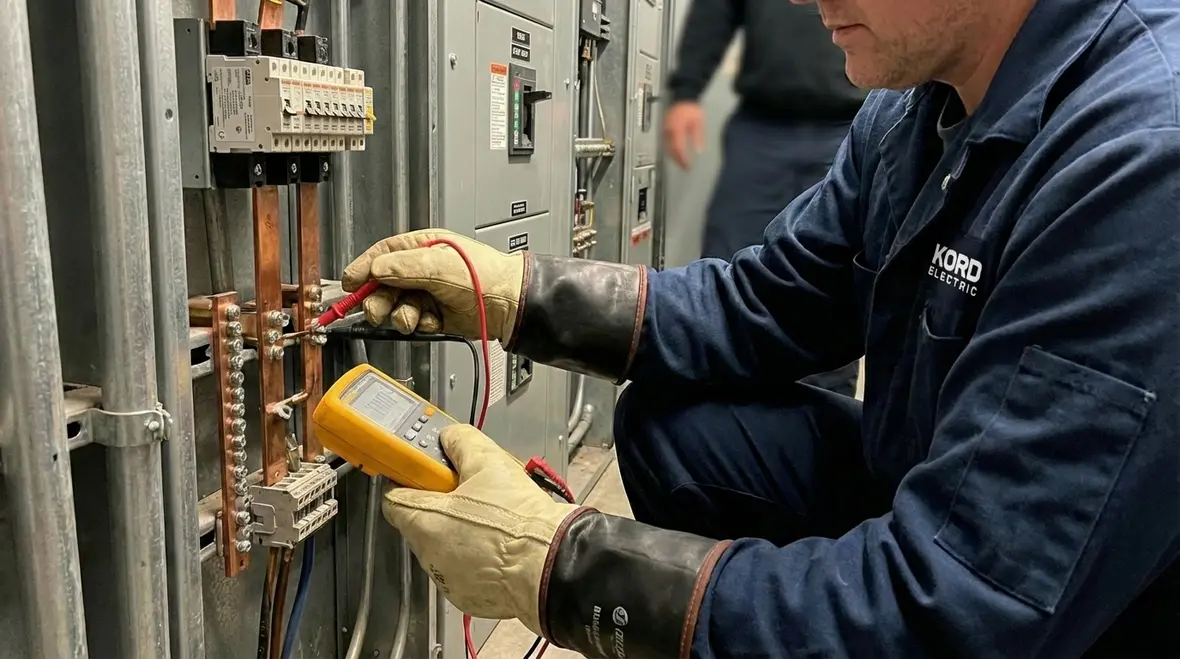
Finally, testing validates performance. Ground fault systems, emergency lighting, transfer switches, and surge protection devices should function as intended. Our technicians perform pre inspection walkthroughs to catch concerns before they become violations. As we often say, it is better to meet the inspector as a host, not as a defendant.

Core Areas Evaluated During a Commercial Electrical Inspection
Although each facility differs, inspectors generally focus on several core areas.
Service Equipment and Distribution
They assess service entrance conductors, main disconnects, overcurrent protection, and proper bonding. Overloaded panels or undersized feeders often signal deeper design issues.
Grounding and Bonding Systems
Effective grounding prevents dangerous voltage buildup. Therefore, inspectors verify connections to grounding electrodes and bonding jumpers.
Overcurrent Protection
Breakers and fuses must match conductor ampacity. Improper sizing can lead to overheating and fire risk.
Working Clearances
Electrical rooms require specific space around equipment. This ensures safe maintenance access.
Emergency Systems
Exit lighting, backup power, and fire alarm interfaces receive close attention, particularly in high occupancy buildings. This is where coordination with services like electrical preventive maintenance helps keep systems inspection ready and reliable.
Because industrial and commercial properties operate at higher voltages and loads, inspectors scrutinize these elements carefully. At Kord Electric, we approach each of these categories methodically. Our team walks facility managers through findings in clear steps. We explain what is mandatory, what is recommended, and what can be phased over time. No smoke. No mirrors. Just facts and solutions.
Why Compliance Protects Operations and Reputation
Compliance is not just about passing an inspection. It protects uptime. It protects employees. It protects the brand.
Consider an industrial plant running continuous shifts. An unexpected shutdown due to electrical failure can halt production, delay shipments, and strain contracts. Moreover, safety incidents can attract regulatory penalties and public scrutiny. In today’s connected world, news travels faster than electricity itself.
On the other hand, a well maintained system supports efficiency. Proper load balancing reduces stress on equipment. Correct grounding reduces sensitive equipment interference. Clear labeling speeds maintenance response. Therefore, inspections serve as checkpoints for operational excellence.
Our technicians often compare inspections to annual physical exams. They may not be glamorous. However, they reveal hidden issues before they escalate. And unlike a dramatic movie scene, real life electrical failures do not come with heroic background music. They come with downtime and invoices.
Common Violations Found in Large Facilities
Even well managed properties encounter violations. However, patterns emerge across commercial and industrial sites.
Overfilled panels with no remaining capacity
Improper breaker sizing after equipment additions
Missing or damaged conduit supports
Inadequate arc flash labeling
Blocked access to switchgear rooms
Outdated single line diagrams
Often, these issues arise gradually as facilities expand. A new machine gets added. A temporary solution becomes permanent. Years pass. Consequently, the system drifts from its original design intent.
At Kord Electric, we conduct detailed assessments that look beyond surface symptoms. We analyze load trends, future expansion plans, and code updates. Then we recommend practical corrections that align with business goals. Our service staff explains options clearly, so decision makers understand both risk and return.
Partnering with Kord Electric for Ongoing Code Compliance
Electrical systems in large facilities are not static. They evolve with operations. Therefore, compliance should be ongoing, not reactive.
We support commercial and industrial clients with scheduled inspections, system audits, preventive maintenance, and upgrade planning. Our team coordinates with engineers, facility directors, and local authorities to streamline approvals. Because when communication flows, projects move faster.
Below is a snapshot of how we support facilities:
Compliance Support
Code review before inspections
Load analysis and panel evaluation
Arc flash assessment
Documentation updates
Preventive maintenance programs
Operational Benefits
Fewer delays and corrections
Reduced overload risk
Improved worker safety
Cleaner audit records
Longer equipment life
Because we focus exclusively on commercial and industrial facilities, we understand the scale and complexity involved. We know that downtime costs money. We know that clarity saves time. And yes, we know that inspectors appreciate neat panel work more than a surprise spaghetti junction of wires.
For facilities planning lighting or power upgrades alongside an electrical inspection california review, services such as lighting installation for commercial and industrial buildings help align projects with both code compliance and long term efficiency.
Frequently Asked Questions About Commercial Electrical Inspections
Move Forward with Confidence
Electrical systems power more than machines. They power opportunity. At Kord Electric, we approach every commercial and industrial project with calm precision and clear communication. If your facility requires guidance on electrical inspection california standards or proactive compliance planning, our technicians and expert service staff stand ready to help.
Many facilities pair inspection readiness with broader reliability planning, including electrical preventive maintenance programs that keep critical systems stable between formal reviews. When urgent issues arise, services such as 24/7 emergency electrical repair ensure that downtime and risk stay as low as possible.
Contact us today, and let us bring clarity, safety, and steady power to the spaces that keep your business moving.