Commercial and Industrial Electrical Maintenance Plans
Preventative Electrical Maintenance Plans for Commercial and Industrial Facilities
In the world of commercial and industrial operations, silence is golden. Not the awkward silence in a boardroom when someone forgets the quarterly numbers. The good kind. The hum of equipment running smoothly. The steady glow of lighting across a production floor. The quiet confidence that comes from knowing your electrical infrastructure is strong, stable, and built for system longevity.
At Kord Electric, we believe in the power of preventative maintenance. Not as a buzzword. Not as a line item buried in a budget. But as a disciplined, forward thinking strategy that protects major properties, safeguards operations, and extends the life of critical systems. Our technicians and expert service staff take the time to explain what they are seeing, what it means, and what actions keep your facility running at full strength. Because in large scale facilities, waiting for failure is not bold. It is expensive.
So let us walk through how we approach electrical care for commercial and industrial environments, and why the right plan changes everything.
Why Preventative Maintenance Matters for Large Facilities
Large buildings and industrial complexes are living systems. Panels distribute power like arteries move blood. Switchgear directs flow. Transformers step voltage up and down with quiet precision. However, even the most advanced equipment wears down over time. Heat builds. Connections loosen. Dust collects. And while nothing may look dramatic at first glance, small issues grow with patience.
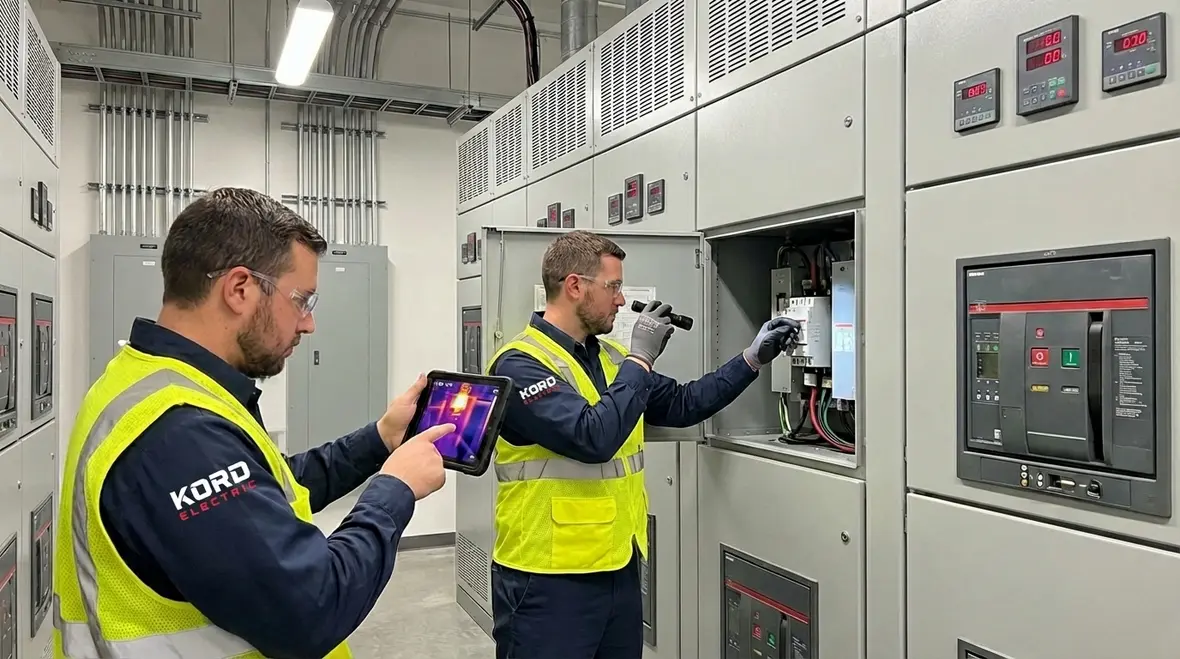
Therefore, preventative maintenance steps in before problems escalate. Instead of reacting to outages, we inspect, test, clean, tighten, and verify. Our technicians do not just glance at a panel and call it a day. They open it. They measure load levels. They check torque settings. They scan for hot spots using thermal imaging. They analyze patterns that others might overlook.
As a result, facility managers gain predictability. Downtime decreases. Insurance risks shrink. And leadership sleeps better at night knowing that electrical failure will not headline tomorrow morning’s meeting.
Besides, no operations director has ever said, “I wish we had more surprise shutdowns.”

For facilities already experiencing unstable power or nuisance trips, pairing a structured maintenance plan with targeted diagnostics such as voltage fluctuation assessments helps catch deeper infrastructure issues before they disrupt production or damage sensitive equipment.
What Does a Comprehensive Electrical Plan Include?
When clients ask what a real maintenance plan involves, we answer immediately and clearly. It is structured, documented, and tailored to the scale of the property. More importantly, it is proactive.
- Routine inspections of switchgear, panels, and distribution systems
- Infrared thermal scanning to detect heat irregularities
- Breaker testing and calibration to ensure proper trip settings
- Power quality analysis to identify harmonics or voltage imbalance
- Transformer inspections and oil testing where applicable
- Load studies to confirm capacity aligns with operational demand
- Documentation and reporting with clear explanations from our technicians
In addition, our expert service staff walk clients through findings in plain language. They do not hide behind jargon. They explain what is urgent, what is developing, and what can wait. Because informed decision making supports long term performance and true system longevity.
While others may rush through a checklist, we treat each facility as unique. After all, a distribution warehouse does not operate like a data center. A manufacturing plant does not mirror a high rise commercial tower. Context matters. And we plan accordingly.
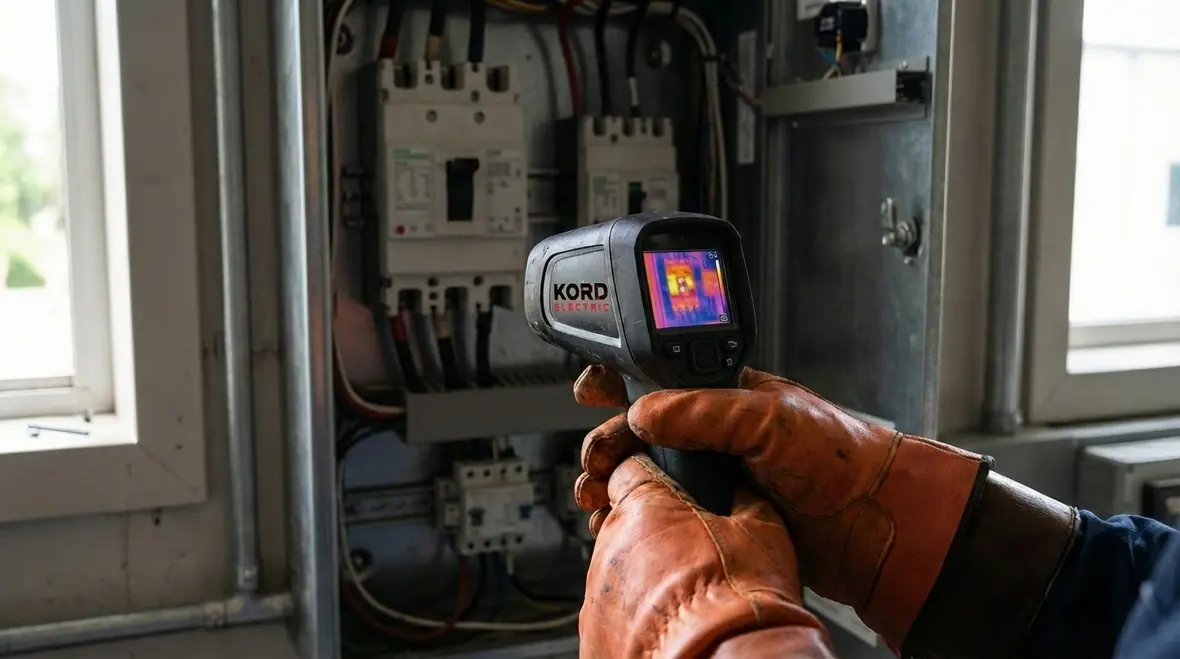
For organizations formalizing their strategy, this kind of structured, proactive program aligns closely with Kord Electric’s dedicated electrical preventive maintenance services, which are built specifically for commercial, industrial, and government properties.
The Hidden Costs of Reactive Repairs
It is tempting to address issues only when something fails. On the surface, that approach appears cost effective. However, reactive repairs often come with hidden consequences.
First, emergency service costs more. Overtime labor, expedited parts, and operational disruption add up quickly. Second, equipment failure can damage connected systems. One overheated breaker can impact an entire distribution line. Third, downtime affects productivity and revenue. In industrial environments, even a brief shutdown can ripple across supply chains.
Moreover, reactive strategies shorten system longevity. When components fail abruptly, stress transfers to surrounding equipment. Over time, that strain compounds.
At Kord Electric, we prefer steady hands over fire drills. Yes, we respond quickly when emergencies occur. However, we would rather prevent the spark than chase the smoke. It is less dramatic. But it is far more effective.
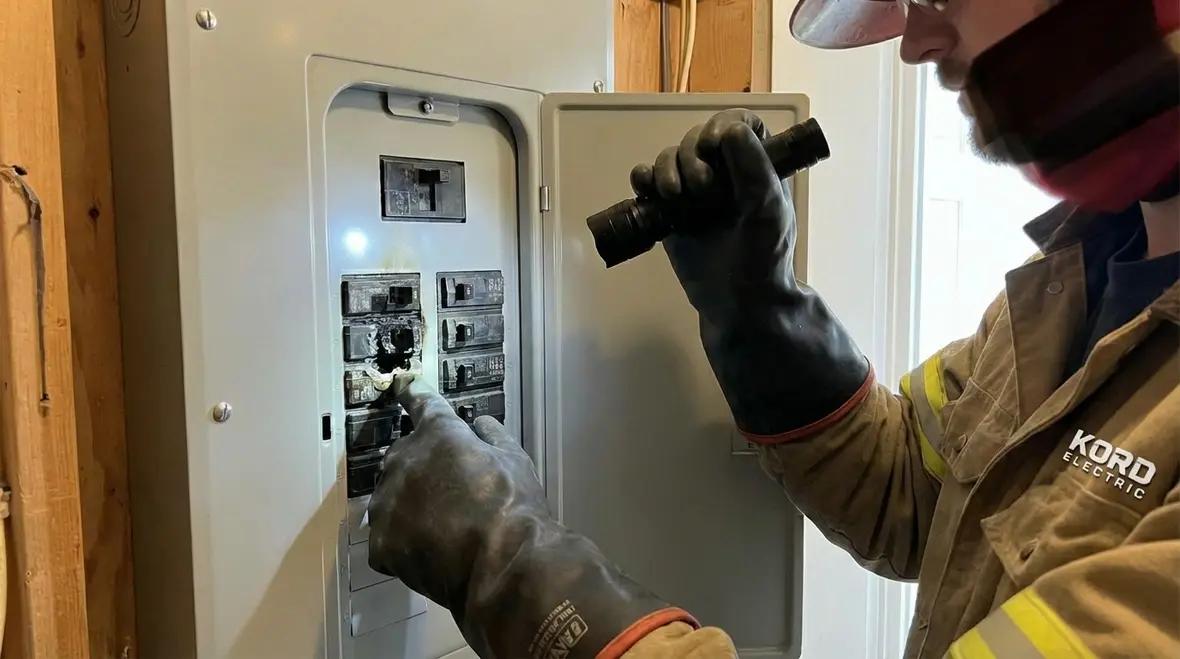
Of course, when a failure does happen, having a partner that already understands your site and systems makes a difference. That is why many facilities pair their maintenance plans with Kord Electric’s 24/7 emergency electrical services, ensuring rapid, code-compliant response when it matters most.
How Our Technicians Protect System Longevity
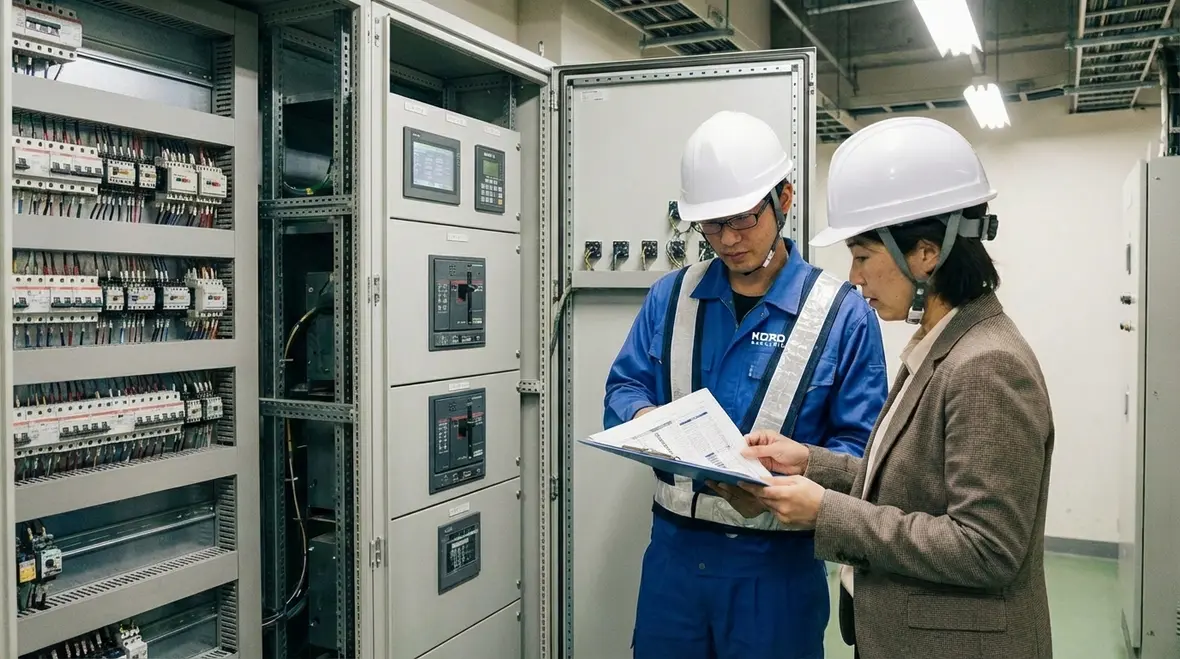
Our technicians bring experience, certification, and attention to detail into every facility. They understand the stakes in large commercial and industrial properties. Therefore, they look beyond surface level observations.
They examine load balance across phases to prevent overheating. They test protective relays to confirm accurate response times. They verify grounding integrity to reduce fault risk. Additionally, they check for environmental factors such as moisture or dust accumulation that quietly degrade components.
What sets our team apart, however, is communication. After each visit, our expert service staff review findings with facility managers. They explain how a minor temperature variance today could become a serious issue tomorrow. They outline options clearly, including cost ranges and recommended timelines.
Consequently, clients do not feel pressured. They feel informed. And informed clients make smart decisions that support system longevity over years, not months.
In a way, our technicians act like electrical historians. They study past performance, evaluate present conditions, and forecast future outcomes. It is not fortune telling. It is disciplined analysis backed by data and field experience.
Comparing Reactive Repairs and Preventative Maintenance
To illustrate the difference, consider the following comparison. One approach waits for breakdown. The other works to prevent it.
| Reactive Approach | Preventative Approach |
| Responds after equipment failure | Identifies risks before failure occurs |
| Higher emergency labor costs | Scheduled service with predictable budgeting |
| Unplanned downtime | Coordinated service around operations |
| Greater risk of collateral damage | Improved system longevity |
| Limited documentation | Detailed reporting and historical tracking |
While both approaches involve skilled electricians, only one consistently reduces risk. Furthermore, planned service allows facilities to align maintenance windows with production schedules. That alignment protects revenue and operational flow.
It is a bit like routine health checkups. Most people would rather schedule a quick visit than experience a dramatic ambulance ride. The same logic applies to electrical infrastructure.
Custom Plans for Complex Commercial and Industrial Properties
No two major properties operate the same way. Therefore, we design each maintenance program around the specific demands of the facility.
For manufacturing plants, we focus on motor control centers, heavy load circuits, and machine reliability. For high rise commercial buildings, we prioritize distribution panels, emergency systems, and tenant continuity. For logistics hubs and warehouses, we monitor lighting systems, panel capacity, and distribution integrity to support constant movement.
Additionally, we consider growth projections. If a facility plans expansion, we assess whether current infrastructure can handle increased demand. In many cases, small upgrades during scheduled service prevent large scale overhauls later.
Throughout the process, our team remains transparent. We provide written reports, photographic documentation, and prioritized recommendations. That way, property managers and operations directors can present clear data to stakeholders.
Preventative maintenance, when done correctly, becomes a strategic asset rather than a routine task. It supports budgeting, risk management, and operational planning. And yes, it also keeps the lights on.
How Often Should Commercial Electrical Systems Be Serviced?
This question comes up often, and the answer depends on load, environment, and equipment age. However, most commercial and industrial facilities benefit from annual comprehensive inspections, with critical systems reviewed more frequently.
High demand environments may require quarterly thermal scans or breaker testing. Facilities with sensitive equipment may need regular power quality analysis. Meanwhile, older systems often benefit from more frequent evaluation to preserve system longevity.
At Kord Electric, we assess usage patterns and risk levels before recommending a schedule. We do not oversell. We align service frequency with operational reality.
Moreover, consistent scheduling builds a historical record. Over time, data reveals trends. If a breaker temperature slowly rises year over year, we can intervene early. If load levels increase steadily, we can plan capacity upgrades before overload occurs.
In short, frequency is not arbitrary. It is strategic.
Building a Culture of Reliability
Preventative maintenance is not just about equipment. It shapes organizational culture. When leadership invests in proactive care, teams notice. Confidence grows. Planning improves. Crisis mode becomes rare rather than routine.
Furthermore, regulatory compliance often becomes easier. Documented inspections, testing records, and corrective actions demonstrate due diligence. Insurance providers also value structured maintenance programs, which can influence coverage considerations.
Our role extends beyond technical tasks. We act as partners in reliability. We collaborate with facility managers, engineers, and operations leaders. We share insights from other commercial and industrial environments, always respecting confidentiality. And we adapt as technology evolves.
While electrical systems may not receive the spotlight in a glossy annual report, they form the backbone of every commercial and industrial operation. Without stable power distribution, productivity stalls. With disciplined preventative maintenance, however, facilities move forward with strength and confidence.
Frequently Asked Questions
Conclusion
At Kord Electric, we believe reliability is built, not hoped for. Through disciplined preventative maintenance, careful analysis, and clear communication, we help commercial and industrial facilities protect performance and strengthen system longevity. If your property demands stability, precision, and expert guidance, we are ready to serve. Connect with our team today, and let us design a maintenance plan that keeps your operation steady, efficient, and prepared for what comes next.
If your facility also needs upgrades to lighting systems, targeted power quality corrections, or new infrastructure like EV charging, our dedicated service lines—from lighting installation services to EV charger installation—can be seamlessly integrated into your maintenance strategy to further support long term reliability.