Motor Control Systems for Commercial Facilities
Motor Control Systems Basics for Commercial and Industrial Facilities
In every commercial tower, manufacturing plant, data center, and distribution hub, there is a quiet force at work. It hums behind walls, inside panels, and beneath concrete floors. At Kord Electric, that force often begins with well designed motor controls and precise industrial wiring. Within the first few minutes of walking a job site, our technicians can tell whether a system was planned with intention or patched together over time like a sequel nobody asked for.
Therefore, this article breaks down the fundamentals of motor control systems, explains how they support large scale facilities, and shows how our experienced service staff guide property managers and facility directors through every step. While the topic may sound technical, we promise to keep it clear, steady, and maybe even a little entertaining.
Understanding Motor Control Systems in Commercial Buildings
At its core, a motor control system manages the operation of electric motors. However, in a commercial or industrial setting, that simple sentence carries serious weight. Motors drive air handling units, chilled water pumps, conveyor systems, exhaust fans, cooling towers, elevators, and production lines. If the motor stops, operations slow. If operations slow, revenue follows. Nobody wants that.
Motor control systems regulate how those motors start, stop, and change speed. More importantly, they protect the equipment from overload, short circuits, and voltage drops. In addition, they help manage energy use, which matters when utility bills rival the plot twists in a long running drama series.
Our expert service staff often explain it this way. The motor is the muscle. The control system is the brain. And the industrial wiring is the nervous system that connects everything together. Without coordination, even the strongest muscle will fail.
Because commercial properties operate at scale, their control systems must handle high voltage, heavy loads, and constant demand. Consequently, design, installation, and maintenance require careful planning and skilled hands. That is where our technicians step in, sleeves rolled up, meters in hand, ready to bring order to the chaos.
How Do Motor Controls Actually Work?

When clients ask this question, we see a mix of curiosity and concern. So we break it down clearly.
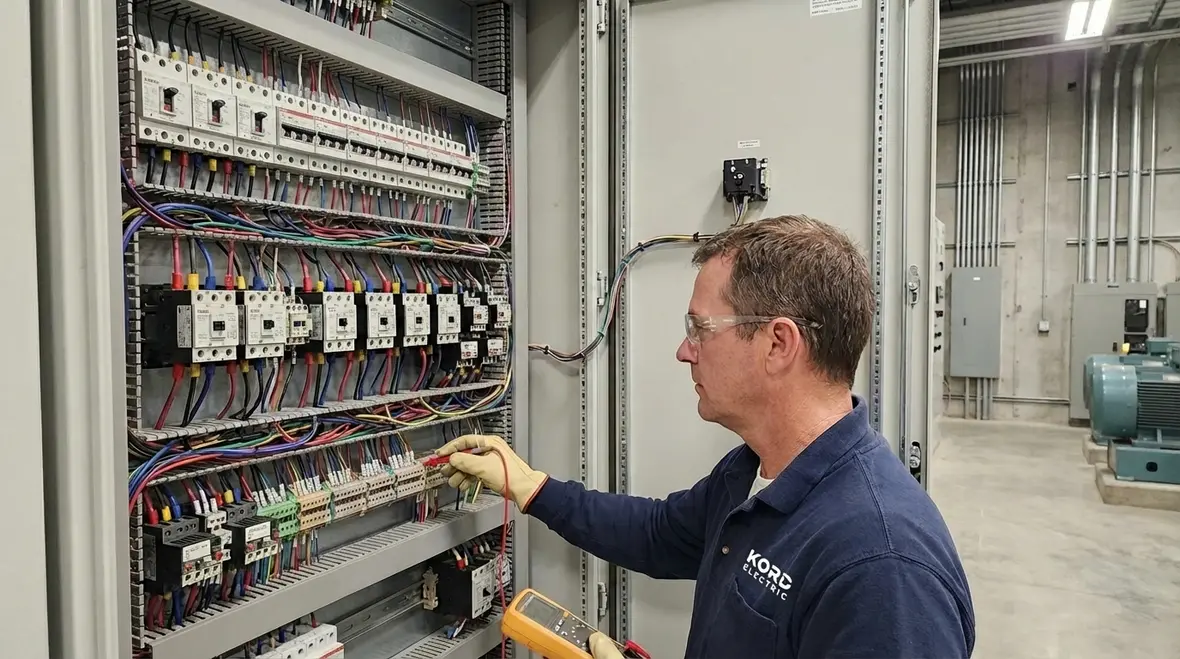
First, power enters the system through a distribution panel. From there, it feeds into motor control components such as contactors, overload relays, variable frequency drives, and circuit protection devices. Each component serves a purpose.
- Contactors act like heavy duty switches. They allow large amounts of current to flow to the motor when energized.
- Overload relays monitor current draw. If a motor pulls too much power for too long, they trip and prevent damage.
- Variable frequency drives adjust motor speed by changing frequency and voltage. This improves efficiency and reduces wear.
- Circuit breakers and fuses protect against short circuits and fault conditions.
Meanwhile, control wiring connects sensors, push buttons, programmable logic controllers, and monitoring systems. As a result, facility managers can automate operations, set schedules, and receive alerts before small issues become major shutdowns.
Our technicians often walk clients through live panels, explaining what each component does in plain language. Because when people understand their systems, they make better decisions. And better decisions keep buildings running smoothly.
The Role of Industrial Wiring in Reliable Performance
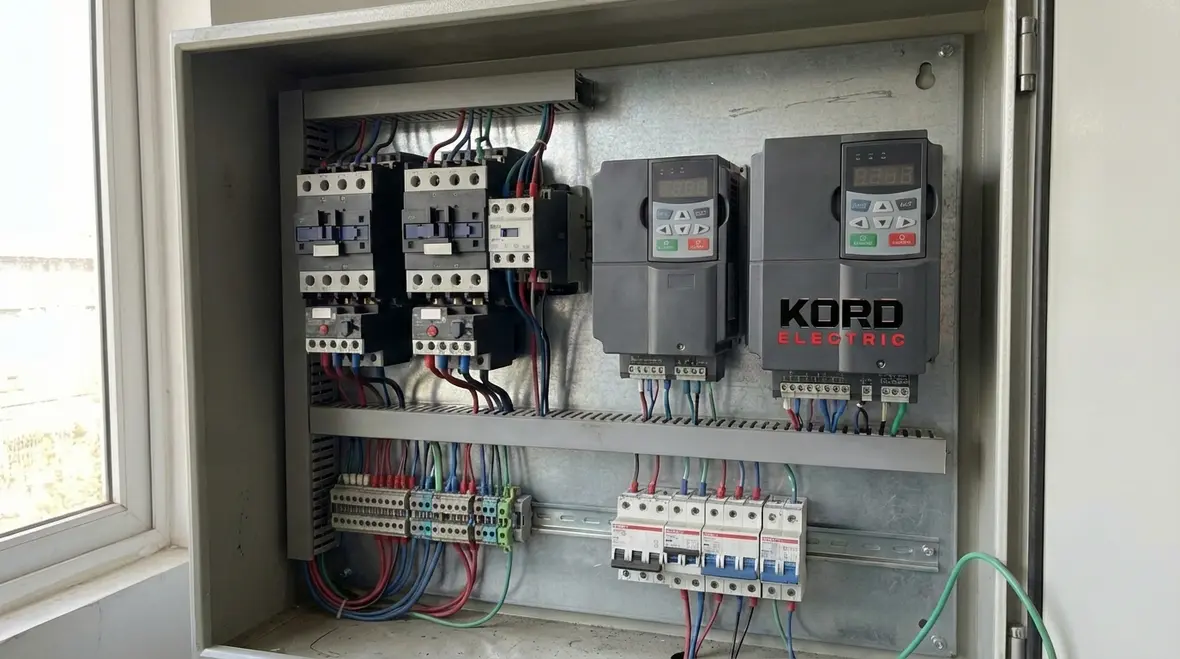
While shiny control panels tend to steal the spotlight, industrial wiring does the real heavy lifting behind the scenes. It carries power from source to load, links control devices, and ensures consistent communication between components.
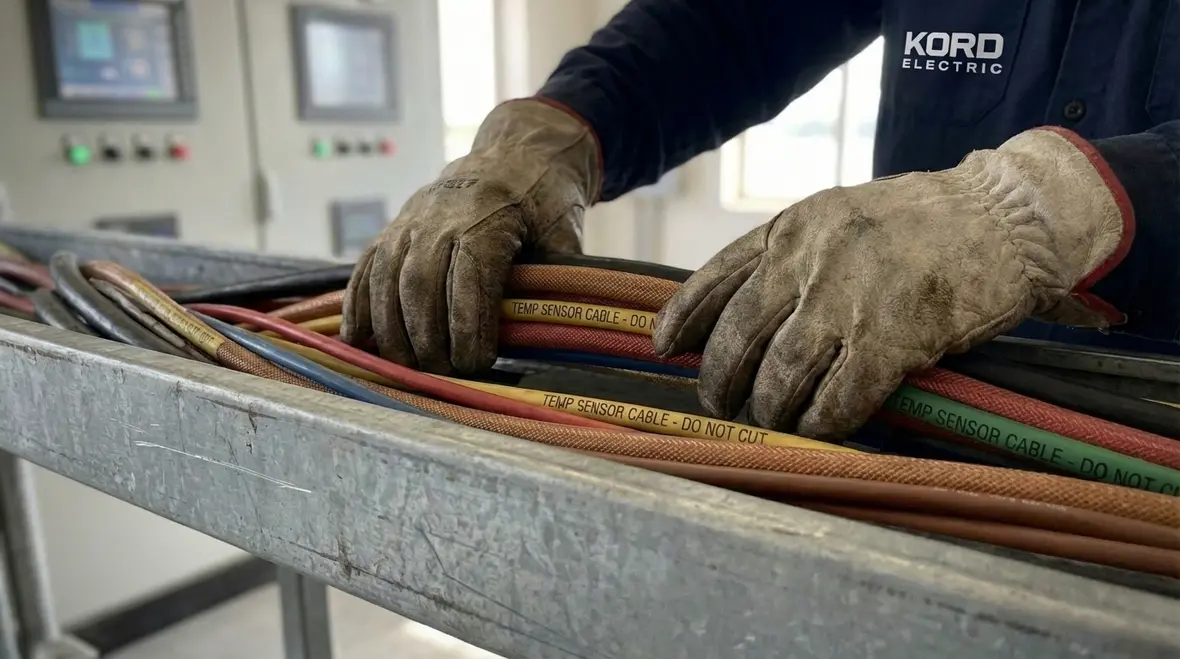
However, not all wiring is created equal. Commercial and industrial environments demand conductors rated for high temperatures, mechanical stress, and sometimes harsh conditions such as moisture or chemicals. Therefore, routing, conduit selection, grounding, and labeling become critical.
Our service staff frequently encounter facilities where wiring was extended over decades. Although each addition may have solved an immediate need, the overall system can become cluttered and inefficient. In those cases, we assess load capacity, verify code compliance, and reorganize circuits to restore clarity.
Because clean and properly sized wiring reduces voltage drop, motors run cooler and last longer. Additionally, accurate labeling saves hours during troubleshooting. That might not sound glamorous, but in a large facility, time is money. And no one wants to trace mystery wires like they are solving a detective series from the 90s.
In many facilities, tightening up industrial wiring practices goes hand in hand with broader reliability programs like structured electrical preventive maintenance. When wiring, protection, and maintenance align, your critical motors have the best chance of running safely and efficiently year round.
Core Components Inside Modern Motor Control Centers
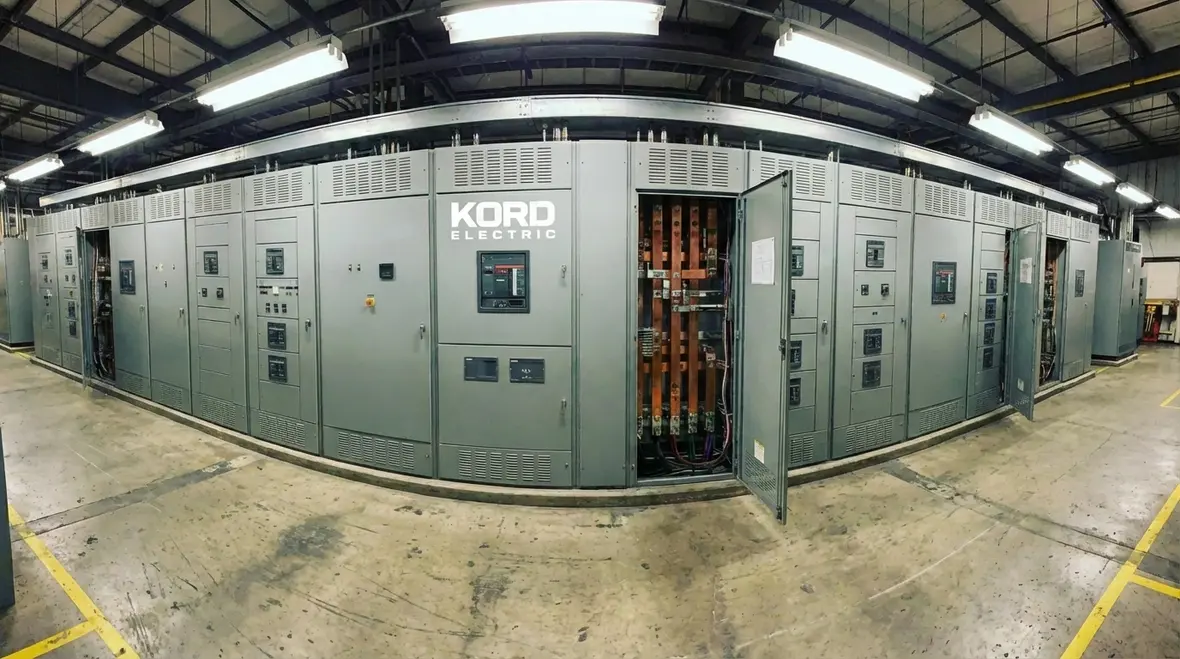
Large facilities often use motor control centers to centralize equipment. These assemblies house multiple motor starters and control units in a single lineup. As operations expand, sections can be added, making them scalable for growth.
Below is a structured look at key elements, presented in two practical columns for clarity.
Column One: Power and Protection
- Main disconnects that isolate incoming power
- Circuit breakers rated for high fault current
- Bus bars distributing power across sections
- Grounding systems that protect personnel and equipment
Column Two: Control and Intelligence
- Motor starters for across the line or reduced voltage starts
- Variable frequency drives for speed control
- Programmable logic controllers for automation
- Human machine interfaces for operator interaction
Together, these components form an organized ecosystem. Moreover, when designed correctly, they allow maintenance teams to isolate one section without shutting down the entire facility. Our technicians emphasize this benefit during planning meetings. After all, downtime in a manufacturing plant is not just inconvenient. It is expensive.
Energy Efficiency and Operational Control at Scale
Energy management remains a top priority for commercial property owners. Therefore, modern motor control strategies focus on reducing waste without sacrificing performance.
Variable frequency drives play a major role. Instead of running motors at full speed all day, drives adjust output to match demand. For example, a chilled water pump in a high rise does not need maximum speed during mild weather. By reducing speed slightly, energy consumption drops significantly. Because power use varies with the cube of speed, even small adjustments produce meaningful savings.
Additionally, integrated monitoring systems track current, voltage, and runtime. Consequently, facility managers gain data driven insight into equipment health. Our expert service staff often review these metrics with clients, explaining trends and recommending improvements. Think of it as a health checkup for your building, minus the awkward waiting room magazines.
Furthermore, coordinated control sequences prevent equipment from starting simultaneously, which reduces demand spikes. In large facilities, this strategy can lower peak charges from utilities. Over time, those savings justify the investment in advanced systems.
In facilities fighting chronic voltage issues or nuisance trips, these control strategies often work best alongside targeted corrections for voltage fluctuations in commercial and industrial systems. When the supply is stable and the controls are smart, motors operate in a much tighter, more efficient window.
Common Challenges in Large Facilities and How We Address Them
Commercial and industrial properties face unique challenges. Aging infrastructure, expanding loads, and changing regulations all add complexity. However, most issues trace back to a few core factors.
- Undersized conductors that overheat under new loads
- Outdated starters lacking proper protection
- Poor documentation that complicates troubleshooting
- Inconsistent grounding and bonding practices
When our technicians arrive on site, they begin with a comprehensive assessment. First, they review load calculations and compare them with actual usage. Next, they inspect panels, terminations, and conduit runs. Then, they test protective devices to confirm proper operation.
Because safety drives every decision, we prioritize compliance with current electrical codes and industry standards. If upgrades are required, we present clear options and phased plans. This approach allows property managers to budget effectively while maintaining operational continuity.
We also believe in education. Therefore, our team explains findings in straightforward terms. No jargon storms. No mystery acronyms. Just practical guidance delivered with the calm assurance that comes from years in the field.
Designing Motor Controls for Long Term Reliability
Strong systems begin long before installation. During design, engineers consider load types, starting characteristics, environmental conditions, and future expansion. For example, high inertia loads may require soft starters or drives to reduce mechanical stress. Likewise, dusty environments may call for sealed enclosures with enhanced cooling.
Coordination studies ensure protective devices trip in the correct order during a fault. As a result, only the affected branch shuts down instead of the entire distribution system. In a data center or production facility, selective coordination can mean the difference between a minor hiccup and a headline.
Additionally, clear schematics and labeling streamline future maintenance. Our service staff often remark that good documentation feels like a well written script. Everyone knows their role, and the story unfolds without confusion.
By integrating robust industrial wiring practices with intelligent control design, we create systems that support continuous operation. Because in large properties, reliability is not optional. It is expected.
What Should Facility Managers Ask About Motor Control Upgrades?
This is the one question we encourage every client to raise. And yes, asking questions is not a sign of weakness. It is a sign of leadership.
Facility managers should consider the following:
- Is the current system sized for projected growth?
- Are protective devices properly coordinated?
- Can energy performance improve with variable speed technology?
- Is the industrial wiring rated for present and future loads?
- Do monitoring tools provide actionable data?
Our technicians walk through these points during consultations. Because proactive upgrades cost less than emergency repairs, planning ahead protects both budgets and reputations. No one wants to explain a preventable outage to upper management. That conversation rarely ends with applause.
If those questions uncover gaps in your current infrastructure, it may be time to pair control upgrades with broader emergency electrical services planning. Knowing how your systems behave in a crisis, and who to call when something trips or fails, is just as important as the day to day performance of your motor controls.
FAQ About Motor Control Systems
Conclusion and Next Steps
Motor control systems form the backbone of commercial and industrial operations. When designed and maintained with care, they deliver safety, efficiency, and long term reliability. At Kord Electric, our skilled technicians and expert service staff stand ready to evaluate, upgrade, and optimize your facility. If your property demands dependable performance, let us bring clarity, strength, and steady guidance to your electrical infrastructure. Reach out today and move forward with confidence.
Whether you are planning a new build, modernizing aging equipment, or tightening up existing motor controls and industrial wiring, pairing these efforts with structured electrical preventive maintenance services helps protect your investment. With a clear strategy, you can keep motors online, protect critical loads, and give your team the confidence that every start command will do exactly what it is supposed to do.
If you are ready to take the next step toward safer, smarter motor controls for your commercial or industrial facility, our team is here to help you plan, execute, and maintain the upgrades that matter most.