Commercial Electrical Permits and Inspections Guide
When it comes to electrical permits, inspections, and legal requirements, most commercial property owners would rather focus on tenants, production schedules, or expansion plans. We understand. Paperwork rarely feels heroic. However, behind every safe industrial facility and every high performing commercial building, there is a clear path of approvals, code compliance, and documented oversight. At Kord Electric, our expert service staff guide clients through that process with calm authority. We explain what needs to happen, why it matters, and how to keep projects moving without regulatory surprises. Because in large scale facilities, small oversights can lead to very expensive lessons.
Electrical Permits for Commercial and Industrial Facilities
Electrical permits are formal approvals issued by local authorities that allow specific electrical work to begin. While that sounds simple, the reality for commercial and industrial properties is far more layered. Unlike a small tenant improvement, a manufacturing line upgrade or high voltage distribution change touches multiple codes, load calculations, and safety standards.
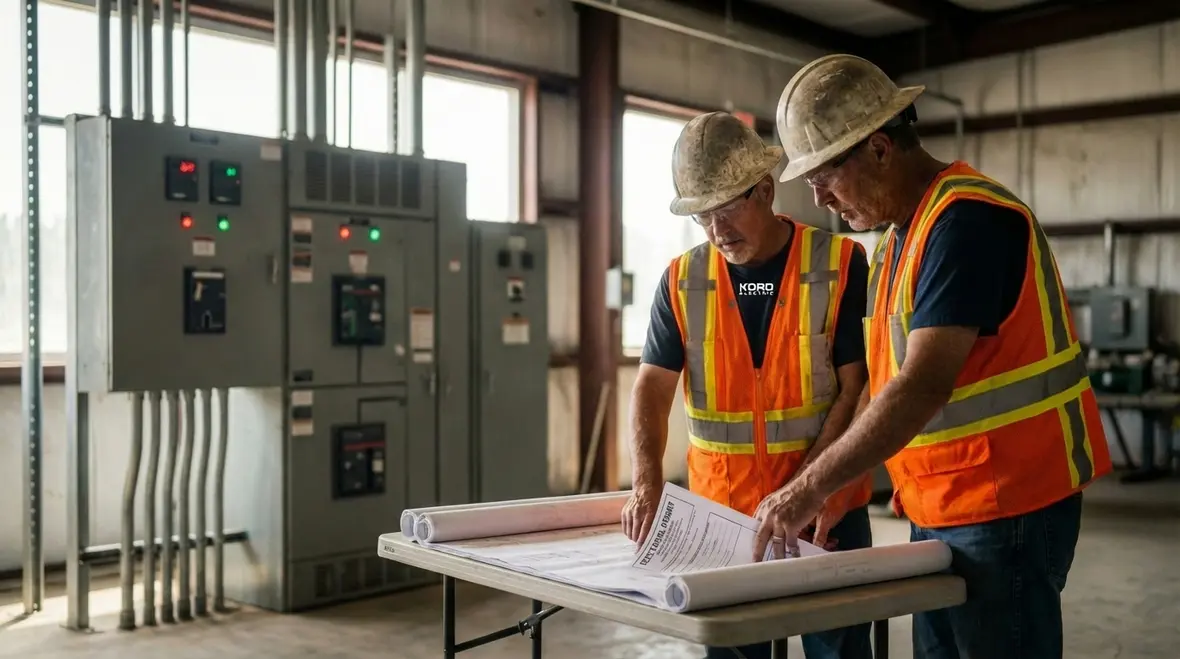
Therefore, permits act as a checkpoint. They ensure that the scope of work meets building codes, fire regulations, and utility standards before a single conduit is pulled. In large facilities, this oversight protects not only the structure but also employees, equipment, and business continuity.
Our technicians at Kord Electric approach permits as part of the engineering process rather than an afterthought. We review drawings, panel schedules, feeder loads, fault current calculations, and coordination studies before submission. In addition, we work closely with engineers and facility managers to confirm that documentation aligns with local authority expectations.
After all, nothing stalls production like an inspector shaking their head at an undocumented load change. And while we enjoy a dramatic pause now and then, we prefer it in a movie theater, not in a mechanical room.
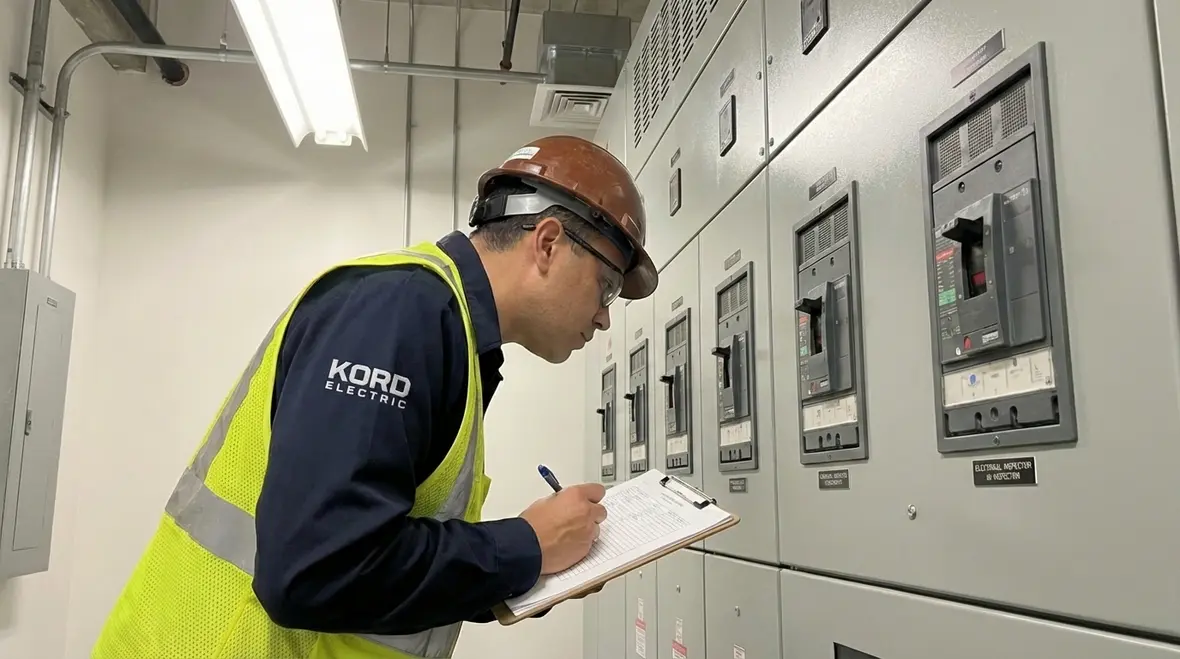
Why Legal Requirements Matter in Large Scale Projects
Legal requirements in electrical work are not suggestions. They are enforceable standards designed to reduce fire risks, prevent shock hazards, and protect public infrastructure. In commercial and industrial environments, the stakes increase significantly because systems operate at higher voltages and amperages.
For example, altering a service entrance, installing new switchgear, or expanding a distribution panel without proper approval can lead to fines, project shutdowns, or even denied insurance claims. Moreover, if an incident occurs, investigators will immediately review whether permits and inspections were secured.
Kord Electric treats compliance as a core service, not a side note. Our experienced staff explain each applicable regulation in clear language. We do not drown clients in code citations. Instead, we translate requirements into action steps. Consequently, building owners can make informed decisions with confidence.
It is a bit like having a seasoned narrator guiding you through a complex plot. You do not need to memorize every line. You simply need to understand what happens next and why.
When Do Commercial Properties Need Electrical Permits?
This is the question many facility managers type into search bars late at night. The answer depends on scope, load impact, and local codes. However, several scenarios almost always require formal approval.
Common situations that require permits:
New service installations or service upgrades
Switchgear replacement or major panel changes
High voltage equipment installation
Backup generator systems tied into building distribution
Large scale lighting retrofits affecting branch circuits
Industrial machinery installations requiring dedicated feeders
Fire alarm or life safety system electrical modifications
On the other hand, minor maintenance such as replacing a like for like breaker may not require formal authorization. However, assumptions can be risky. Therefore, our team reviews each project in detail before advising on next steps.
Additionally, in multi tenant commercial properties, landlord approvals and municipal permits may both apply. We help coordinate those layers. Because while juggling compliance agencies might build character, most property managers would prefer we handle the juggling.

How Inspections Protect Your Facility and Operations
Inspections are not designed to slow projects. In truth, they protect investments. When an inspector verifies grounding, bonding, overcurrent protection, and conductor sizing, they confirm that the installation meets safety standards.
Furthermore, documented inspections create a compliance trail. This record becomes essential during insurance renewals, audits, property sales, or refinancing. Lenders and insurers often review whether major electrical upgrades were properly approved and inspected.
At Kord Electric, we prepare for inspections long before the official visit. Our technicians conduct internal reviews, checking torque settings, labeling, clearances, and documentation. As a result, when inspectors arrive, the work speaks for itself.
There is a quiet satisfaction in watching an inspector move methodically through a room and nod. It is not applause. However, in our world, it is close.

Behind the Scenes: How We Manage Permits and Compliance
Clients often see the finished installation but not the coordination behind it. Therefore, it helps to understand our process.
Our structured approach includes:
Reviewing project scope with engineers and facility managers
Confirming applicable codes and authority jurisdiction
Preparing detailed drawings and load calculations
Submitting permit applications with required documentation
Scheduling inspections at appropriate construction milestones
Addressing inspector comments promptly and professionally
Documenting final approvals for client records
Because commercial and industrial facilities cannot afford extended downtime, timing is critical. We coordinate inspections to align with construction phases. In addition, we communicate clearly with operations teams to minimize disruption.
Our expert service staff take time to explain each step. We believe informed clients make stronger long term decisions. So instead of vague updates, we provide clear explanations of what has been approved, what remains pending, and what that means for the schedule.
Common Misconceptions About Electrical Permits
Misunderstandings about permits and legal requirements can lead to costly shortcuts. Let us address a few common myths.
Myth 1: If the work is inside the building, no one needs to know.
In reality, interior electrical modifications can significantly affect load calculations and fire safety. Authorities require oversight precisely because hidden changes can create hidden risks.
Myth 2: Permits are just a revenue tool for cities.
While fees are involved, the primary purpose is safety. Structured review prevents overloaded systems, improper grounding, and code violations that could endanger lives.
Myth 3: Inspections always delay projects.
Delays usually result from incomplete preparation. When documentation and installation align with code, inspections move efficiently.
Myth 4: Experienced contractors do not need permits.
Experience does not replace legal requirements. In fact, seasoned professionals respect the system because they understand the consequences of bypassing it.
At Kord Electric, we have seen what happens when projects skip proper channels. Fixing non compliant work often costs far more than doing it right the first time. And while we enjoy a good comeback story, we prefer our projects to start strong.
Commercial Electrical Permits and Risk Management Strategy
In large facilities, risk management extends beyond security cameras and insurance policies. Electrical infrastructure plays a central role. Therefore, compliance with permitting and inspection standards becomes part of a broader operational strategy.
When expansions are planned, we assess existing capacity. If transformers or switchboards approach limits, we advise on upgrades before submitting for approval. This proactive planning reduces the risk of failed inspections or unexpected redesigns.
Additionally, proper documentation strengthens negotiations with insurers. Carriers often look favorably on facilities that demonstrate clear records of inspections and adherence to legal requirements. As a result, compliance can support more stable coverage terms.
In industrial settings where downtime translates to significant financial impact, preventing electrical failures is essential. Permits and inspections may seem procedural. However, they function as preventive safeguards.
Without Proper Permits
Increased liability exposure
Potential project shutdowns
Insurance complications
Fines and corrective work
Higher long term maintenance risks
With Proper Permits and Inspections
Verified code compliance
Documented safety standards
Smoother insurance reviews
Reduced operational risk
Greater long term system reliability
The contrast is clear. One path invites uncertainty. The other builds stability. We guide clients toward stability every time.
Working With Authorities Without Losing Momentum
Some property owners worry that involving local authorities will complicate projects. However, structured coordination often accelerates progress. When plans are transparent and documentation thorough, approval processes tend to move more smoothly.
Our team maintains professional relationships with permitting offices and inspectors. While we never assume outcomes, we understand submission standards and common review concerns. Consequently, we prepare applications that anticipate questions before they arise.
Moreover, we keep clients informed throughout the review cycle. If adjustments are required, we address them promptly and explain the implications clearly. That steady communication helps leadership teams plan budgets and timelines with fewer surprises.
There is a certain calm that comes from knowing every box is checked. It is not flashy. It will not trend on social media. However, in commercial and industrial operations, quiet confidence wins every time.
FAQ About Electrical Permits for Commercial Properties
Partner With Kord Electric for Confident Compliance
Electrical permits, inspections, and legal requirements form the backbone of safe commercial and industrial operations. Rather than viewing them as obstacles, we treat them as safeguards that protect people, property, and productivity. At Kord Electric, our expert technicians manage the process with clarity and steady leadership. If your facility is planning upgrades, expansions, or infrastructure improvements, let us guide you through compliance with precision and calm confidence.
For facilities planning larger programs of upgrades or recurring inspections, structured support matters just as much as individual projects. Our electrical preventive maintenance services help keep systems reliable, document ongoing compliance, and reduce the risk of surprise shutdowns across commercial and industrial portfolios.
If your organization is also considering system-wide improvements to lighting performance while staying aligned with electrical permits, inspections, and legal requirements, you can explore our dedicated commercial lighting installation services for code-compliant upgrades designed for large facilities.
At Kord Electric, we coordinate commercial electrical permits from planning to final inspection, so your leadership team can focus on production, tenants, and growth. Contact Kord Electric today and build your next project on solid ground.