Commercial Emergency Power Systems: Requirements, Design & Maintenance
Kord Electric supports clients with Commercial Emergency Power Systems: Requirements, Design & Maintenance for commercial and industrial facilities, as well as major property buildings where downtime is not an option. In this article, we explain what emergency power really requires, how our technicians design systems that match the building load, and how ongoing maintenance keeps the lights, life safety systems, and critical operations alive when the utility power drops.
Then, we slow things down and make it clear, step by step, so facility managers can make better decisions without needing a degree in electrical engineering. And yes, while emergency power sounds like a dramatic movie plot, it is mostly careful planning, code compliance, and routine checks. The kind of work that prevents the “why did this fail today” conversation that nobody enjoys.
What commercial buildings need when utility power fails
In the commercial and industrial world, emergency power must do more than “keep the lights on.” When the utility power fails, the facility has to move from normal operations to emergency operations fast, safely, and predictably. That means systems must cover the loads required by code and the loads that protect people, equipment, and ongoing business operations.
Typically, others expect emergency systems to power life safety circuits, exit and egress lighting, fire alarm and detection systems, emergency communications, and other critical building functions. Meanwhile, operations leaders often add process and operational loads such as pumps, control systems, data rooms, and certain mechanical equipment. However, the exact list depends on the occupancy type, building design, and local requirements.
Because of that, our expert service staff approaches the job with a clear method. First, we review the project documents, then we verify the emergency load schedule, and next we confirm the start and transfer sequence. Finally, we test the system under real conditions. That last step matters, because the system can look perfect on paper and still stumble under a real load.
For a deeper look at how backup strategies support business continuity planning, facility teams can also study related guidance such as emergency power for business continuity design and commercial backup power solutions, which expand on how loads, transfer behavior, and risk management connect across a full electrical strategy.
Emergency system design that matches real loads, not guesswork
Design works best when we respect how power behaves. In real buildings, motors and controls draw current differently at startup, and they do not all start at once unless we plan for it. Therefore, a correct Commercial Emergency Power Systems: Requirements, Design & Maintenance plan begins with load analysis and continues through sequencing, voltage selection, and transfer strategy.
Our technicians usually start with a load study that focuses on connected equipment, expected demand, and priority levels. Next, we account for run time needs, fuel strategy, and the space constraints that major property buildings often face. Then, we set the transfer behavior so the system avoids overload during the first seconds of operation.
In addition, we pay close attention to coordination between normal power gear and emergency transfer gear. When design and controls align, the transfer feels smooth and the emergency source performs as intended. When they do not, the system can experience nuisance transfers or failures that look like “ghost problems.” And in electrical work, ghosts are not cute.
We also consider site realities. For industrial facilities, critical processes may require tighter stability. For commercial buildings, reliable life safety power must respond without delay. In both cases, the design protects the business while meeting compliance expectations.
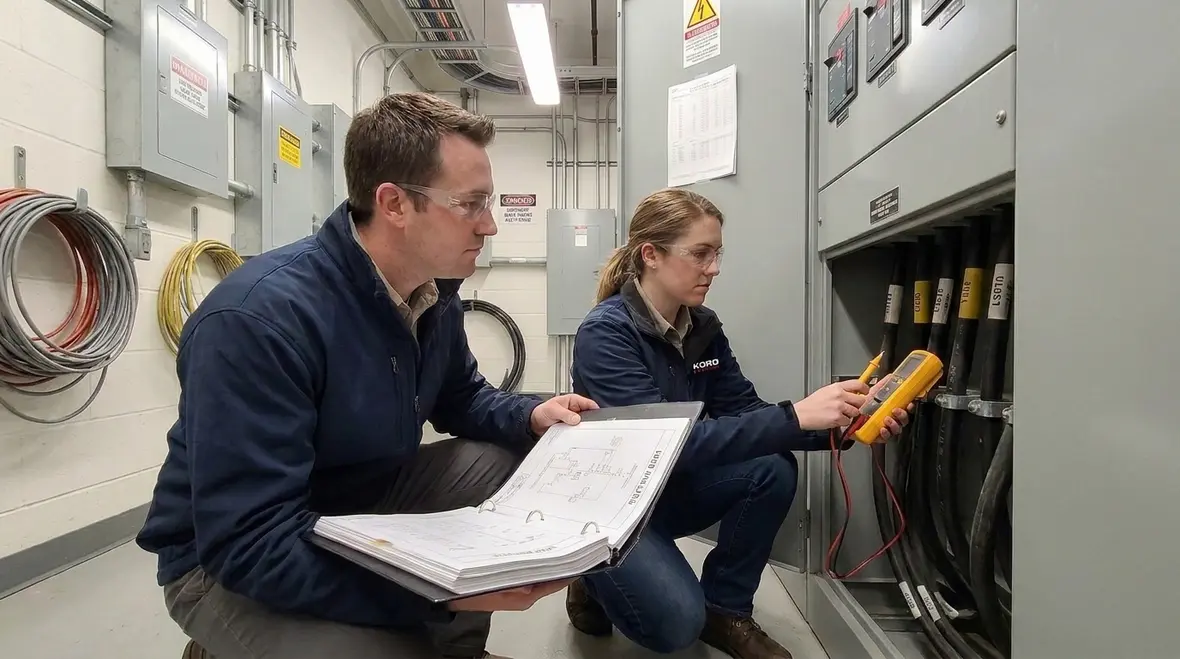
When facilities need to go deeper into generator planning itself, they can align this design work with focused resources on commercial emergency power generator planning so that sizing, fuel storage, and placement decisions all reinforce the same reliability goals.
Compliance requirements that prevent painful surprises
Emergency power systems live in a world of codes and standards. Even when the generator and transfer equipment work, compliance gaps can create risk for the facility and the people inside it. That is why our expert service staff explains the “why” behind each requirement, instead of just listing steps.
For commercial and industrial facilities, we typically coordinate around the electrical requirements and life safety needs that apply to the occupancy. We also focus on acceptance testing, labeling, and documentation so the system meets expectations during inspections.
Common requirement themes include proper transfer times, correct sizing for the intended emergency circuits, proper protection devices, and safe wiring practices. Also, the system must include a strategy for starting the emergency source and handling the load in a controlled way. If the system tries to do everything at once, it may trip protection devices or destabilize the power output.
As we work with facility teams, we make sure the building understands how the emergency system is supposed to perform during a real utility outage. Then, we help them connect the dots between the design drawings and what operators will see during testing. That is how we prevent confusion when the alarm panel lights up and everyone suddenly becomes an electrician for five minutes.
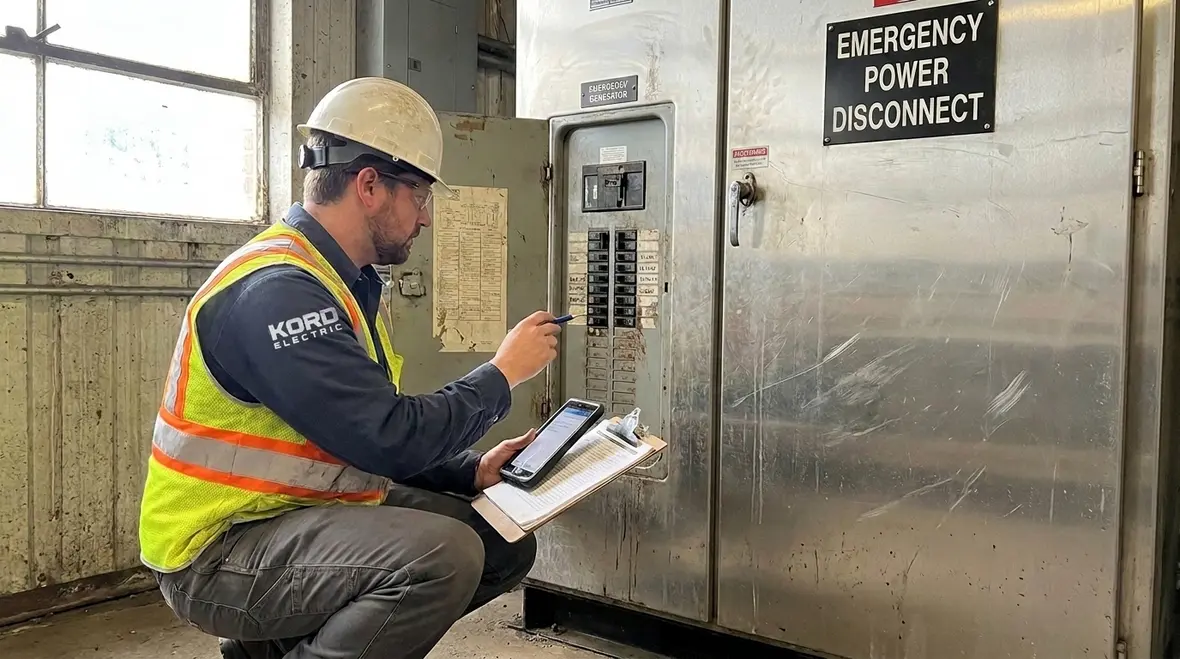
Compliance also lives in ongoing testing. Facilities that adopt structured emergency power system testing programs gain predictable performance instead of hoping the system works when the grid fails.
Transfer equipment and controls: the quiet heroes
Many people focus on generators first, and we understand why. Big equipment gets the spotlight. Yet in an emergency power system, transfer equipment and controls often decide whether the system behaves calmly or chaotically.
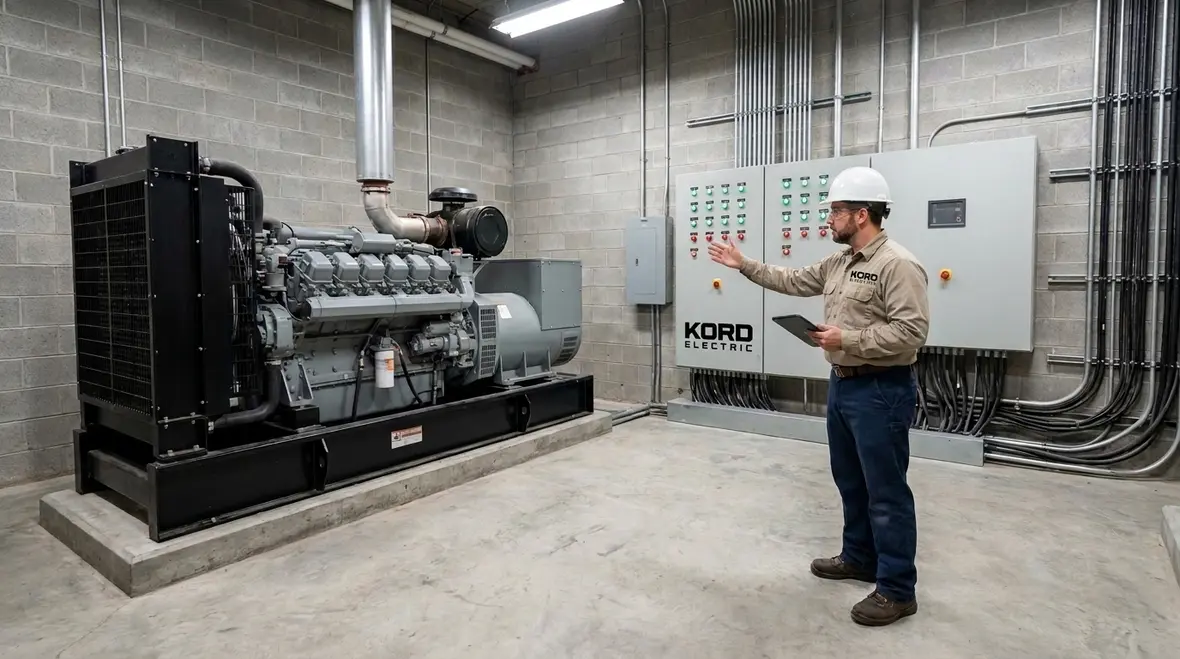
Transfer equipment moves loads from normal power to emergency power in a specific sequence. We design this sequence so the emergency source can pick up the right circuits without causing overload. Additionally, the controls manage monitoring, sensing, and timing. They also support start signals, engine protection, and alarms.
Our technicians verify control logic and sequence behavior. For example, some emergency loads require immediate power for life safety, while others can start in a staged approach. If the building uses staged load transfer, the system can reduce peak demand and protect generator performance.
Also, for major property buildings with complex electrical rooms, we pay attention to labeling and clarity. Facility operators benefit when the system communicates what it is doing and when it is doing it. After all, a system that runs correctly but confuses everyone is like a GPS that keeps rerouting you to the wrong side of town. Technically, it is “working.” Practically, it wastes time.
Thoughtful transfer control design aligns naturally with broader critical power protection practices, where sensing, coordination, and communication all work together to guard essential loads.
Maintenance that keeps reliability high year after year
Maintenance is where most emergency power systems either earn trust or lose it. Because emergency systems sit quietly most of the year, they can degrade without warning. Therefore, Commercial Emergency Power Systems: Requirements, Design & Maintenance includes a maintenance plan that focuses on readiness, testing, and documentation.
Our expert service staff follows a disciplined approach. First, we check the generator set health, including battery condition, engine operation, cooling, and fuel system readiness. Then we inspect and test transfer equipment, protective devices, and controls. After that, we review the load testing approach so the system experiences realistic conditions rather than only light run checks.
We also verify that systems perform as expected during simulated outages and routine tests. That reduces surprises when real utility power fails. And when issues show up, we handle them quickly, because a small problem today can become a major outage tomorrow.
One more thing: maintenance is not just about running the generator. It is also about reviewing records, confirming the emergency load schedule still matches the building reality, and updating documentation after renovations. Commercial and industrial facilities change. If electrical scope changes, emergency power performance must keep up.
Many of our clients fold this work into their broader commercial and industrial electrical maintenance programs so that emergency gear, distribution equipment, and critical loads all stay aligned under a single preventive strategy.
How we support facility teams before, during, and after installations
From first discussion to final acceptance, we keep the process clear. Facility leaders often need answers that connect electrical work to operational goals, so we explain what the system does and what operators should expect.
Before installation, our technicians help teams clarify requirements, review load lists, and confirm design intent. During installation, we coordinate work so wiring, gear placement, controls, and safety checks follow best practices. After installation, we test, verify sequencing, and support training so the team understands alarms, transfer behavior, and routine operational steps.
Then, we stay involved through our service program. That matters because major property buildings and industrial operations need consistent support, not a once-and-done handoff. We want the system to earn confidence over time, not just impress during commissioning.
And yes, we know people run busy schedules. We keep communication practical and we aim for minimal disruption, because shutting down critical operations is rarely on anyone’s calendar. If electrical work can move safely and predictably, we treat that like a priority, not a suggestion.
For organizations across Los Angeles County, this support often connects with broader commercial electrical services so that new emergency systems integrate smoothly with ongoing projects, upgrades, and repairs across the property.
FAQ
Ready to protect your operations with a dependable emergency plan
If your commercial or industrial facility depends on power for safety and continuity, Kord Electric helps you build and maintain a system that works when it matters. Our technicians and expert service staff guide the requirements, design the right transfer and load strategy, and then keep reliability high with planned maintenance and testing. Reach out to us and we will help you map your needs to a practical, compliant emergency power solution. Then you can stop worrying, and get back to running the business.
For organizations that manage large campuses or complex occupancies, it can also help to connect Commercial Emergency Power Systems: Requirements, Design & Maintenance with complementary topics like emergency power system testing for commercial buildings and related critical power redundancy guides, so that generator plans, transfer schemes, and protection settings all reinforce each other instead of living in separate silos.
If your facility is in Los Angeles County or the surrounding region and you need a team that already understands commercial codes, industrial processes, and major property building operations, explore our Los Angeles County electrical services to see how emergency power, distribution upgrades, and troubleshooting all come together in one coordinated plan.