Commercial Lighting Installation: What Gets Missed
Why Lighting Installation Is More Than Just Fixtures And What Gets Missed Most
At Kord Electric, we have walked through enough commercial corridors, industrial plants, and high rise properties to know one thing for certain. Lighting installation is never just about hanging fixtures and flipping a switch. It is about performance, safety, efficiency, and long term reliability. Yet time and time again, we see critical elements overlooked. Our technicians and expert service staff explain this to property managers and facility directors every day. They do it patiently, clearly, and sometimes with a touch of humor, because while lighting may not sound glamorous, it quietly shapes everything inside a building.
So yes, we install lighting. But what we truly deliver is clarity, compliance, and control.
The Hidden Engineering Behind Professional Lighting Installation
When many people picture lighting installation, they imagine ladders, wires, and ceiling tiles. However, commercial and industrial lighting is a calculated system. It demands load analysis, circuit planning, control integration, and coordination with mechanical and structural elements. In other words, it is choreography, not guesswork.
First, there is electrical capacity. Every fixture draws power, and every panel has limits. If someone adds high output LED arrays without reviewing load calculations, they risk tripping breakers or worse, overheating conductors. That is not dramatic. That is physics.
Then there is distribution. In a warehouse, uniform light levels support safety and productivity. In an office tower, glare reduction improves comfort and reduces fatigue. Meanwhile, in manufacturing plants, task specific illumination prevents costly errors. Therefore, lighting layout must follow operational needs, not just ceiling symmetry.
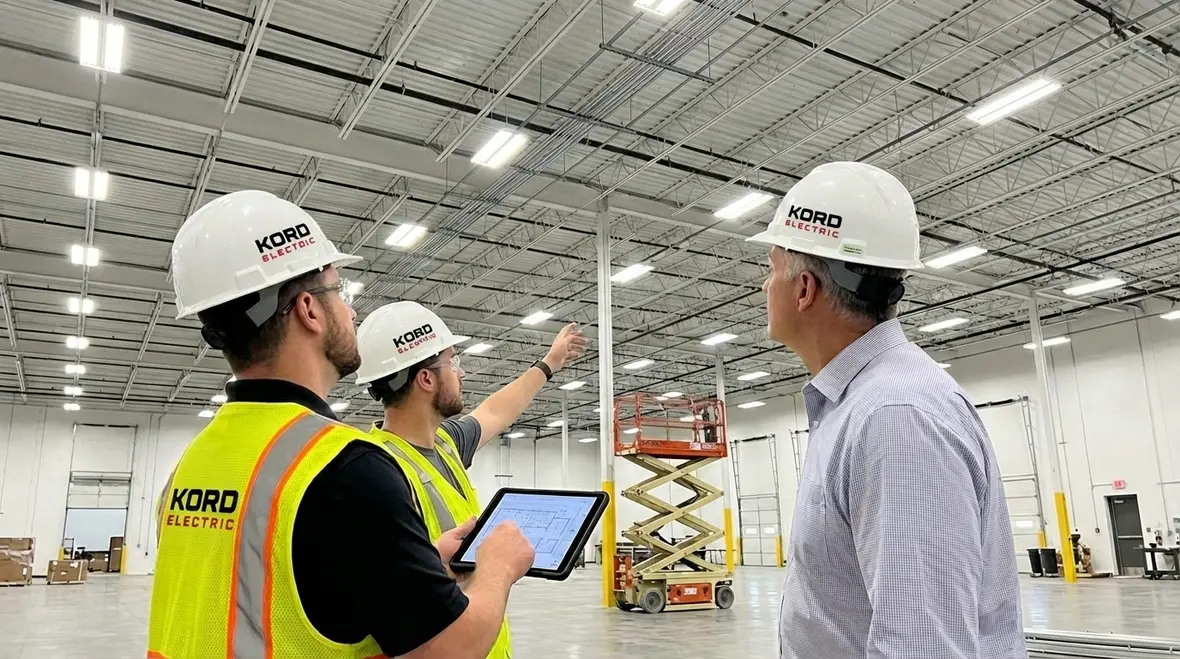
Our expert service staff routinely explains these nuances during project planning. They walk clients through photometric studies, code requirements, and energy targets. Because while a fixture catalog looks simple, the engineering behind it rarely is.
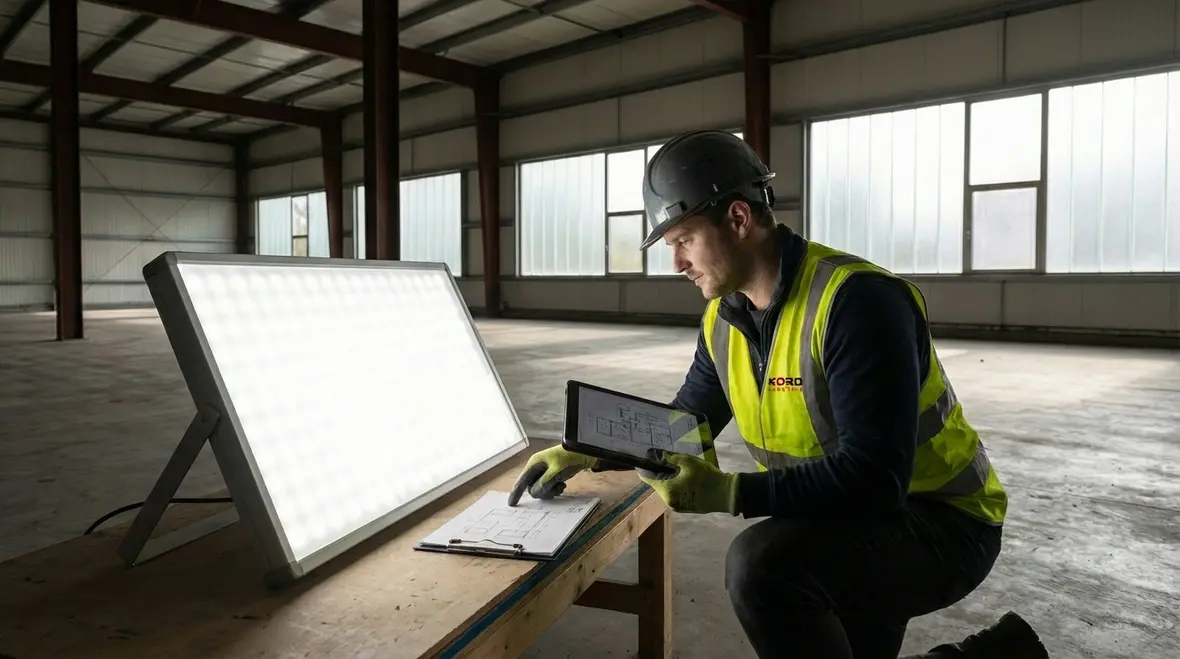
Behind every dependable system is a design that has already argued with gravity, voltage, and the building code—and won.
What Gets Missed Most During Lighting Projects
Now let us address the quiet oversights. The details that rarely make it into the budget meeting.
1. Control systems integration
Too often, lighting controls get treated as an afterthought. However, occupancy sensors, daylight harvesting, and centralized management systems can drastically reduce energy use. Without proper integration, even premium fixtures underperform.
2. Maintenance access
It sounds basic, yet it is frequently ignored. In large facilities, inaccessible drivers or poorly positioned fixtures create service headaches. Consequently, maintenance teams spend more time on lifts and less time on core operations.
3. Emergency lighting coordination
Emergency circuits must comply with strict codes. Nevertheless, some installations fail to separate normal and emergency feeds correctly. During inspections, that mistake becomes very visible.
4. Power quality considerations
Industrial environments often contain heavy equipment that affects voltage stability. If lighting systems are not designed with this in mind, flicker and premature failure follow. When needed, specialized support for voltage fluctuations in commercial and industrial facilities helps keep lighting performance steady.
In short, what gets missed most is not the fixture. It is the system thinking around it.
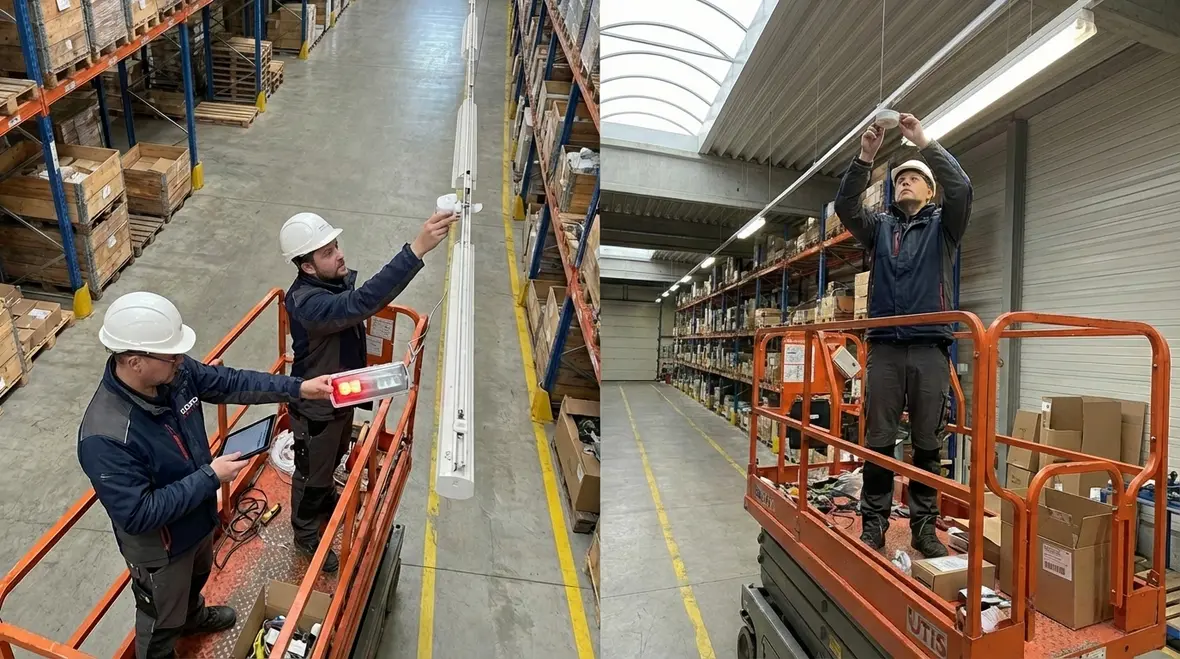
How Our Technicians Explain Lighting Installation To Facility Managers
At Kord Electric, our technicians do not hide behind jargon. Instead, they translate complexity into clear steps. They might say, “Think of your lighting like a team. If one player ignores the playbook, the whole system struggles.” It lands. People nod. And then we get to work.
Moreover, our expert service staff reviews timelines, shutdown windows, and operational constraints before any installation begins. In industrial facilities, downtime is not an inconvenience. It is revenue walking out the door. Therefore, coordination becomes as important as wiring.
We also believe explanation builds trust. So we show facility teams why certain conduit routes protect against heat exposure. We explain why specific mounting heights improve uniformity. Occasionally, someone jokes that we talk about lighting like it is a Broadway production. They are not wrong. Every element must hit its mark.
That shared understanding makes it easier to approve changes, schedule shutdowns, and plan future upgrades without last-minute surprises.
Lighting Installation In Commercial And Industrial Buildings Requires Strategy
Large properties operate like living organisms. They breathe through HVAC systems, think through automation platforms, and move through elevators and production lines. Lighting installation must support that ecosystem.
For example, in distribution centers, high bay LED systems must account for rack height, aisle width, and forklift traffic. Meanwhile, in corporate campuses, layered lighting enhances both collaboration areas and focused work zones. Each scenario demands a tailored approach.
Additionally, energy codes continue to evolve. Municipal regulations now require tighter efficiency standards and advanced controls. Therefore, staying compliant means staying informed. Our team tracks these updates so property managers do not have to read policy documents at midnight. Although if that is your hobby, we will not judge.
Strategy also includes planning for growth. New tenants, added shifts, or expanded production lines all change how spaces are used. A thoughtful commercial lighting installation today prevents expensive rework tomorrow.

What Should A Commercial Property Manager Ask About Lighting Installation?
A fair question. In fact, it is the right one.
First, ask about load calculations. Ensure the system aligns with existing electrical infrastructure.
Next, ask how controls integrate with building management systems. Seamless communication improves efficiency.
Then, review maintenance planning. Who will service drivers and sensors five years from now? Accessibility matters.
Also, confirm code compliance. Emergency egress lighting, illumination levels, and control zoning must meet current standards.
Finally, ask about long term scalability. Can the system expand as operations grow? A future ready design prevents costly retrofits.
When our technicians meet with facility teams, they proactively address these questions. As a result, projects move forward with fewer surprises.
For more complex projects, many property managers also review dedicated lighting installation services to align expectations on scope, timelines, and performance guarantees.
Where Lighting Installation Impacts Safety And Productivity
Good lighting does more than brighten a room. It shapes behavior.
In manufacturing environments, consistent illumination reduces visual strain. Workers spot defects faster. Consequently, product quality improves. In logistics centers, proper lighting placement reduces shadows in loading docks, which lowers accident risk. Safety managers appreciate that. So do insurance providers.
Furthermore, office environments benefit from balanced color temperature and glare control. Employees experience fewer headaches and less fatigue. It may not sound dramatic, yet over months and years, those small improvements compound.
Below is a simplified comparison our expert service staff often shares during consultations.
Standard Approach
- Basic fixture replacement
- Minimal control integration
- Limited code review
- Reactive maintenance
- Short term cost focus
Strategic Approach By Kord Electric
- Comprehensive load analysis
- Advanced control systems
- Full compliance verification
- Planned service strategy
- Long term operational savings
The difference is not cosmetic. It is operational.

The Role Of Expert Service Staff In Long Term Performance
Installation marks the beginning, not the end. Over time, drivers age, sensors drift, and usage patterns shift. Therefore, ongoing evaluation keeps systems aligned with performance goals.
Our technicians conduct inspections that go beyond a quick glance. They measure light levels, review energy consumption trends, and test emergency circuits. If adjustments are needed, they explain the reasoning clearly. No mystery. No smoke and mirrors.
Moreover, industrial facilities often expand production lines. When that happens, lighting layouts must adapt. Because we design with scalability in mind, upgrades integrate smoothly. It is a bit like planning a sequel before the first movie even premieres. Think less surprise plot twist, more steady franchise success.
In many cases, that long term partnership also extends to related support, such as resolving power quality issues or coordinating with emergency electrical services when critical systems are at stake.
Why Lighting Installation Is A Financial Decision, Not Just A Technical One
Every commercial and industrial property operates within budgets. Therefore, lighting installation decisions influence operational costs for years.
Energy efficient systems reduce monthly utility expenses. Advanced controls cut unnecessary runtime. Strategic layout lowers maintenance labor. Over time, these factors compound into significant savings.
Additionally, proper documentation supports rebate programs and sustainability reporting. Many organizations now track carbon reduction goals. Efficient lighting systems contribute measurable results.
Our expert service staff often walks finance teams through projected savings models. They outline payback periods and lifecycle costs. As a result, decision makers see the broader picture. It is not about spending more. It is about investing wisely.
When the time comes to modernize aging systems, partnering with a team experienced in lighting installation services for commercial and industrial facilities helps align technical performance, safety, and financial return.
FAQ About Commercial And Industrial Lighting Installation
Conclusion
Lighting installation shapes safety, efficiency, and long term performance in every commercial and industrial building. At Kord Electric, we approach each project with strategy, clarity, and expert care. Our technicians and service staff guide clients through every detail, ensuring nothing gets missed. If your facility demands more than basic fixtures, we are ready to deliver systems that perform. Connect with us today and let us bring precision and purpose to your next project.
Whether you are planning a new build, a major retrofit, or targeted upgrades, partnering with a team that specializes in commercial and industrial lighting installation services keeps your facility safer, more efficient, and ready for what comes next.
If you are already seeing signs of trouble—like flickering fixtures, nuisance trips, or voltage-related issues—pairing a strategic lighting plan with services such as voltage fluctuation diagnostics and repair ensures your new installation is built on a stable electrical foundation.