Commercial Lighting That Passes Inspection First Time
In the world of commercial and industrial construction, there are few phrases sweeter than this: Lighting That Passes Inspection. At Kord Electric, we treat those words like a standing ovation at the end of a long performance. Because when lighting systems pass inspection the first time, building owners save time, protect budgets, and keep projects moving. In this guide, we explain how we approach compliant lighting installations for major commercial and industrial properties, why inspections fail, and what building owners can do to stay ahead. Our expert technicians and experienced service staff walk clients through every step, translating code into plain language and action.
Why First Time Approval Matters in Commercial and Industrial Buildings
Large facilities run on timelines. Delays cost money. Additionally, failed inspections can stall tenant improvements, occupancy permits, and even financing milestones. Therefore, getting lighting systems approved on the first inspection is not just a technical goal. It is a business strategy.
Commercial and industrial lighting must meet strict electrical codes, energy standards, and safety requirements. Inspectors look at wiring methods, fixture placement, emergency systems, load calculations, and documentation. If one element misses the mark, the entire approval can pause.
At Kord Electric, we approach every project with the end in mind. Our team studies local and national codes before the first conduit is installed. Moreover, our technicians review project drawings against real world site conditions. As a result, surprises shrink and approvals become smoother.
In short, first time approval protects:
- Construction schedules
- Tenant move in dates
- Budget forecasts
- Safety compliance records
And yes, it also protects everyone’s blood pressure.
What Inspectors Look for in Commercial Lighting Installations
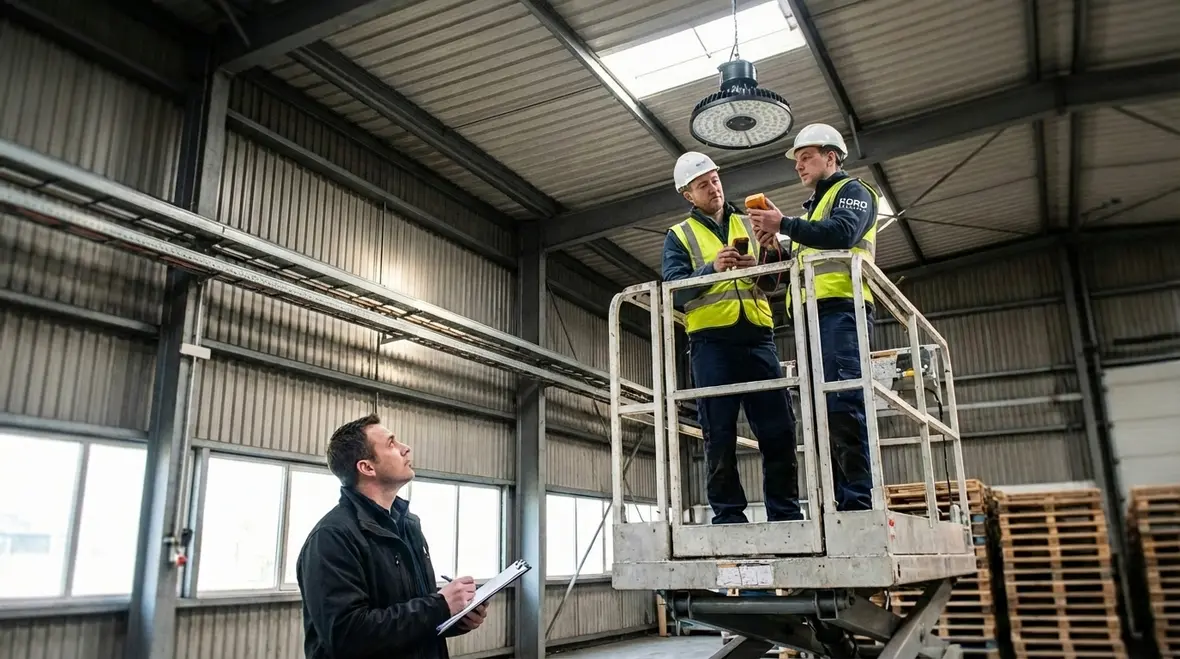
If building owners could read an inspector’s mind, many sleepless nights would vanish. While we cannot promise telepathy, we can explain what typically drives inspection outcomes.
Inspectors focus on code compliance, safety, and documentation. They verify proper grounding and bonding. They check conductor sizing and overcurrent protection. In addition, they confirm that fixtures are rated for their environment, especially in industrial settings where dust, moisture, or hazardous materials may be present.
Emergency lighting and exit signage receive special attention. These systems must activate reliably during power loss. Consequently, battery backups, generators, and control systems must function exactly as designed.
Energy codes also play a major role. Lighting power density limits, occupancy sensors, daylight harvesting controls, and time based systems must align with current standards. Because regulations evolve, relying on outdated practices can lead to rejection.
Our experienced service staff walks clients through these requirements before installation begins. We explain what will be inspected and why. Therefore, building owners understand not just what we do, but how it protects them.
For a deeper code-level overview, property managers often pair this planning with resources like our California Commercial Lighting Code Guide for 2026, which breaks down how evolving Title 24 requirements show up in real-world projects.
Lighting That Passes Inspection Begins with Design Alignment
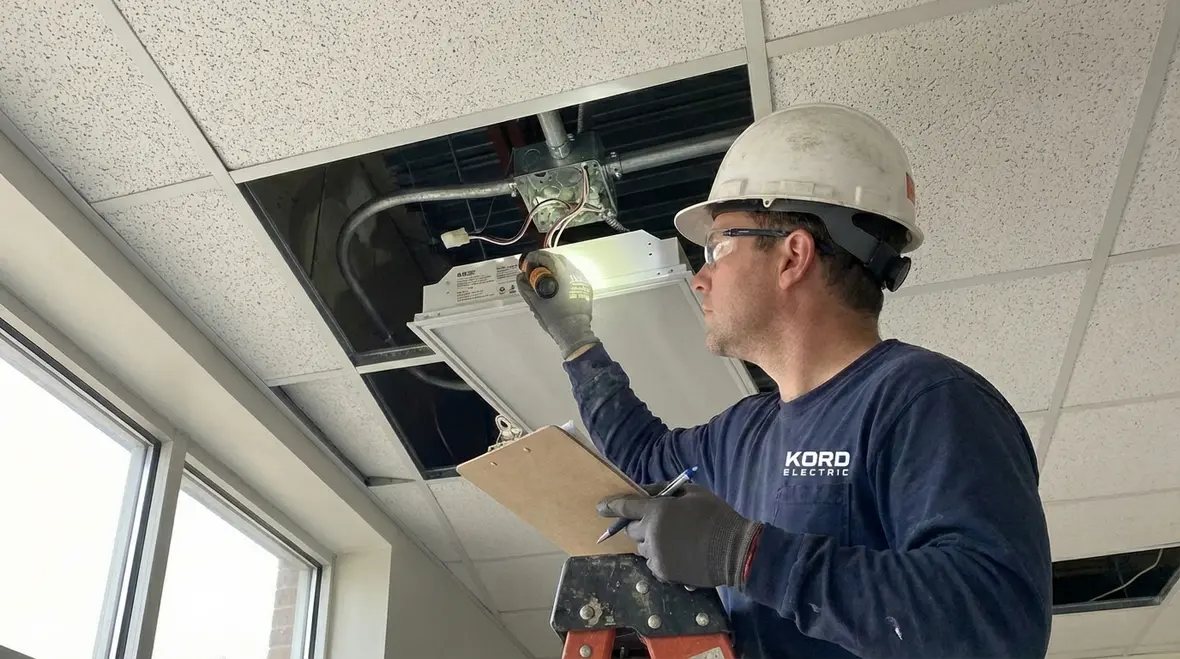
Great results rarely start in the field. They begin on paper. For commercial and industrial facilities, design alignment between engineers, contractors, and owners is essential.
At Kord Electric, we review lighting layouts with a practical lens. We compare fixture specifications against code requirements. Additionally, we confirm that control systems meet energy mandates. If something raises a red flag, we address it early. It is far easier to adjust a drawing than to rip out installed fixtures.
We also coordinate with other trades. For example, ductwork, sprinkler lines, and structural elements can interfere with fixture placement. Therefore, our team communicates proactively to avoid conflicts that could trigger inspection failures later.
While some may see lighting as a simple line item, we treat it as an integrated system. Wiring methods, panel capacity, and control strategies must all align. When these pieces work together, approval follows more naturally.
As our technicians often tell clients, “An inspector does not care how fast you installed it. They care how well it meets code.” We tend to agree.
For many owners, this design alignment phase is the ideal moment to talk through options like recessed or high-bay layouts and whether a full system upgrade or a targeted lighting installation makes the most sense for both inspections and long-term performance.
Common Reasons Commercial Lighting Fails Inspection
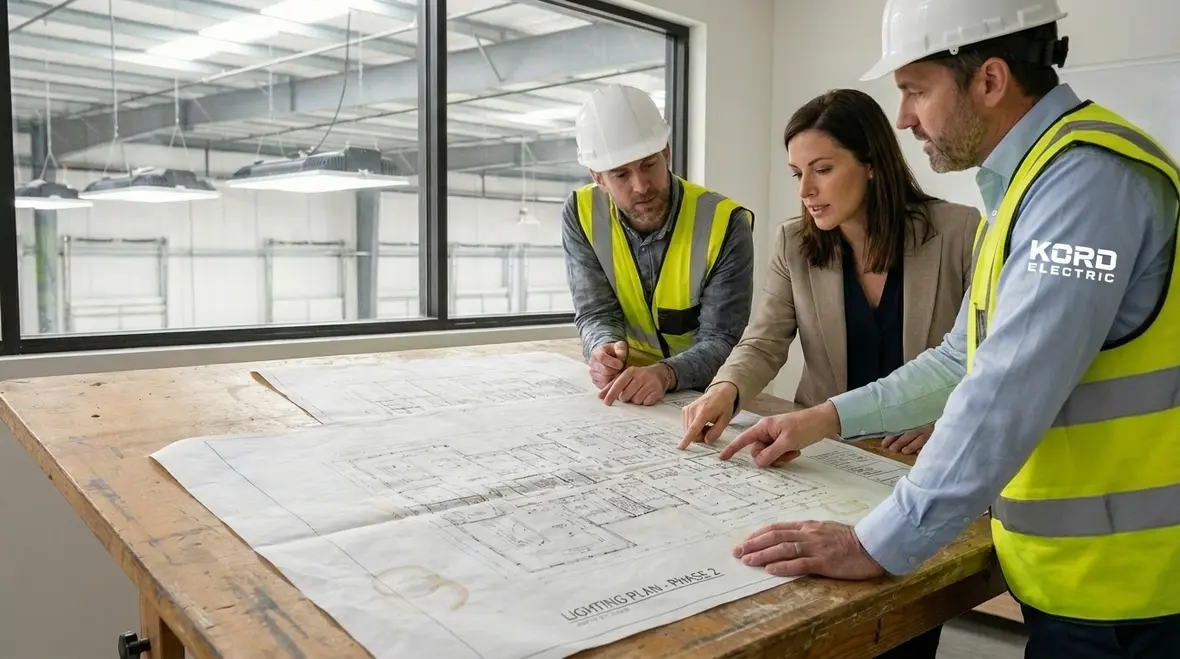
Even well planned projects can stumble. However, most inspection failures trace back to a handful of preventable issues.
Improper Wiring Methods
Using incorrect conduit types or failing to secure wiring properly often leads to citations. In industrial environments, this becomes even more critical due to vibration and environmental exposure.
Incorrect Fixture Ratings
Installing fixtures not rated for damp, wet, or hazardous locations invites rejection. Therefore, verifying environmental classifications is essential.
Missing or Incomplete Documentation
Inspectors frequently request load calculations, cut sheets, and control diagrams. If documentation is incomplete, approval may pause.
Energy Code Violations
Lighting power density that exceeds limits or missing occupancy sensors can derail an otherwise solid installation.
Emergency System Deficiencies
Battery backups that fail testing or improperly wired exit signs often require correction before approval.
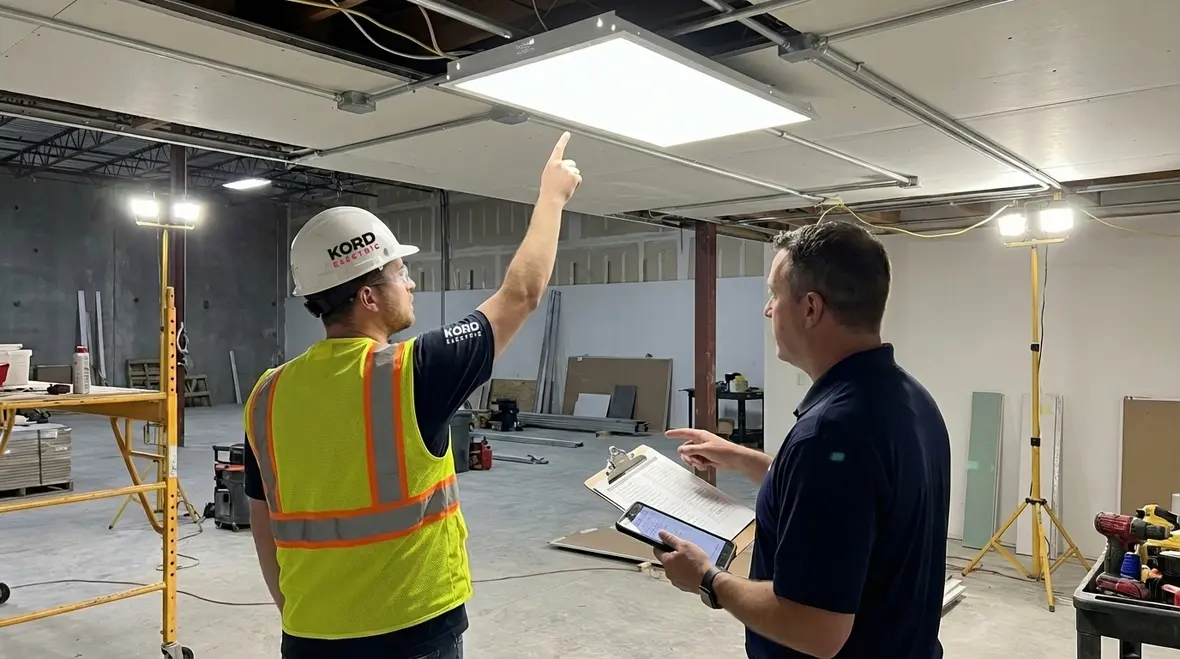
At Kord Electric, we use internal checklists before any inspection. Our expert service staff performs pre inspection walk throughs, testing systems as if they were the inspector. Consequently, we catch issues early rather than reacting under pressure.
These same disciplined checklists are a core part of our electrical preventive maintenance programs, which help facility teams stay ahead of surprise failures that could disrupt future inspections.
How Kord Electric Delivers Lighting That Passes Inspection
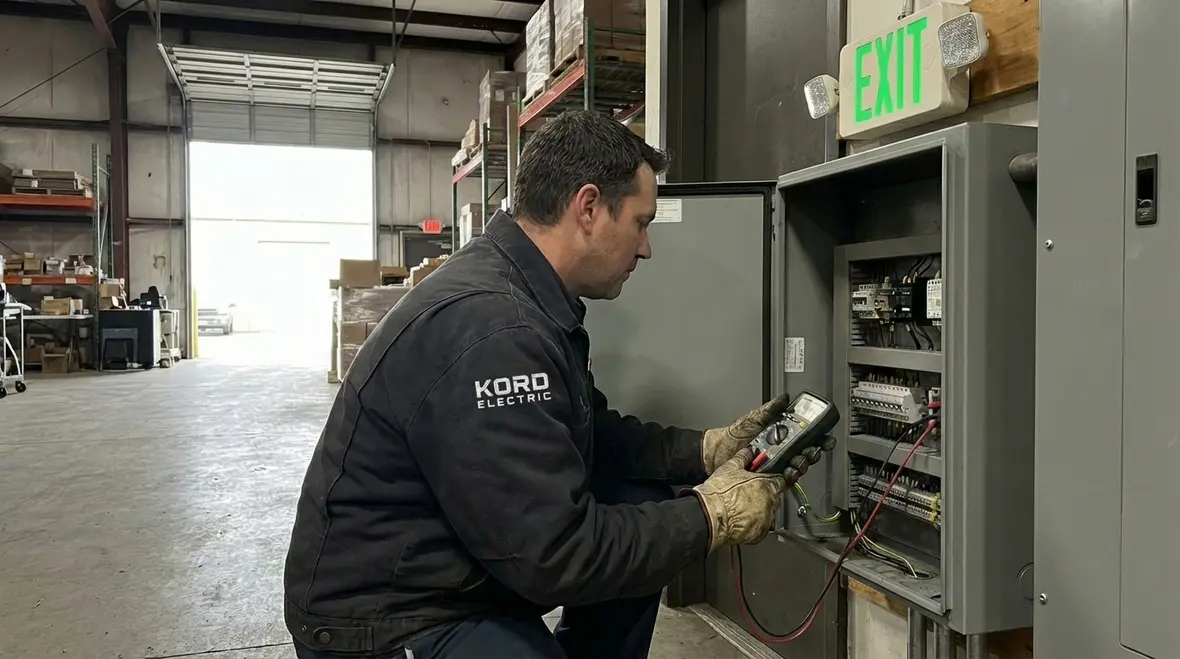
Delivering compliant lighting systems for major commercial and industrial properties requires more than technical skill. It demands discipline, communication, and accountability.
Below is how we approach projects from start to finish.
Our Approach
Planning and Review
- Code analysis before mobilization
- Fixture and control verification
- Load and panel review
- Coordination meetings with stakeholders
Execution and Verification
- Licensed technicians on site
- Quality control inspections
- Functional testing of emergency systems
- Documentation preparation for inspectors
Because we focus on commercial and industrial facilities, our crews understand the scale and complexity involved. High bay lighting in warehouses, advanced controls in office towers, and specialized systems in manufacturing plants each present unique challenges. However, our technicians bring consistent standards to every site.
Moreover, we keep building owners informed. We explain what we are installing and why it meets code. We do not hide behind jargon. After all, clear communication builds trust. And trust makes inspections far less stressful.
For facilities considering a broader upgrade, this same project discipline extends into services like recessed lighting installation, LED retrofits, and full lighting redesigns that are built for both inspection day and long-term reliability.
How Building Owners Can Prepare for a Lighting Inspection
Organize Documentation Before the Inspector Arrives
Although electrical contractors carry much of the responsibility, building owners play an important role. Preparation supports success.
First, ensure that project documentation is organized and accessible. Inspectors often request plans, permits, and specification sheets. Therefore, having these ready prevents delays.
Confirm Related Systems Are Ready
Second, confirm that all related systems are complete. Lighting inspections may involve fire alarm interfaces, generators, or building management systems. If these are unfinished, approval may stall.
Schedule Inspections Strategically
Third, schedule inspections strategically. Rushing an inspection before systems are fully tested can backfire. As tempting as it may be to move fast, patience often saves time in the long run.
Our service staff guides owners through this process. We provide checklists and conduct final reviews. Additionally, we remain present during inspections to answer technical questions. Inspectors appreciate clear answers. And frankly, so do owners.
Technology, Energy Codes, and Future Ready Compliance
Lighting systems evolve quickly. LED technology, smart controls, and networked systems now dominate commercial and industrial spaces. Consequently, inspections increasingly include verification of control programming and energy performance.
Energy codes require features such as occupancy sensors, daylight response controls, and automatic shutoff. However, proper installation is only part of the equation. Systems must also be commissioned and calibrated correctly.
At Kord Electric, we treat technology as a tool, not a toy. While advanced systems offer efficiency and cost savings, they must still meet compliance standards. Therefore, our technicians test programming, verify sensor placement, and confirm time schedules before inspection.
Furthermore, we stay current with evolving regulations. Codes change. Standards update. Because we serve major commercial and industrial facilities, we cannot rely on outdated assumptions. Instead, we invest in training so our team remains ahead of the curve.
Think of it this way. Technology may be flashy, but inspectors still care about fundamentals. And fundamentals win games, whether in football or electrical work.
If you are working through California’s latest Title 24 updates or planning a multi-phase retrofit, pairing that strategy with guides like our California commercial lighting code overview and structured maintenance or upgrade plans will keep your Lighting That Passes Inspection goals on track for years, not just for a single project.
Frequently Asked Questions About Commercial Lighting Inspections
Conclusion: Partner with Kord Electric for Confident Approval
When commercial and industrial building owners need lighting systems that meet code and move projects forward, Kord Electric stands ready. We design, install, and verify every detail with discipline and care. Our technicians and expert service staff guide clients from planning through inspection, ensuring clarity at every step. If your facility demands reliable performance and smooth approval, contact us today. Let us deliver lighting solutions that pass inspection the first time and keep your project on schedule.
If you are mapping out your next project and want to turn lighting from a risk into an advantage, explore our dedicated Lighting Installation Services for commercial and industrial facilities. From code-driven design to field-tested commissioning, our team keeps inspections predictable, documentation complete, and your Lighting That Passes Inspection goals firmly within reach.