
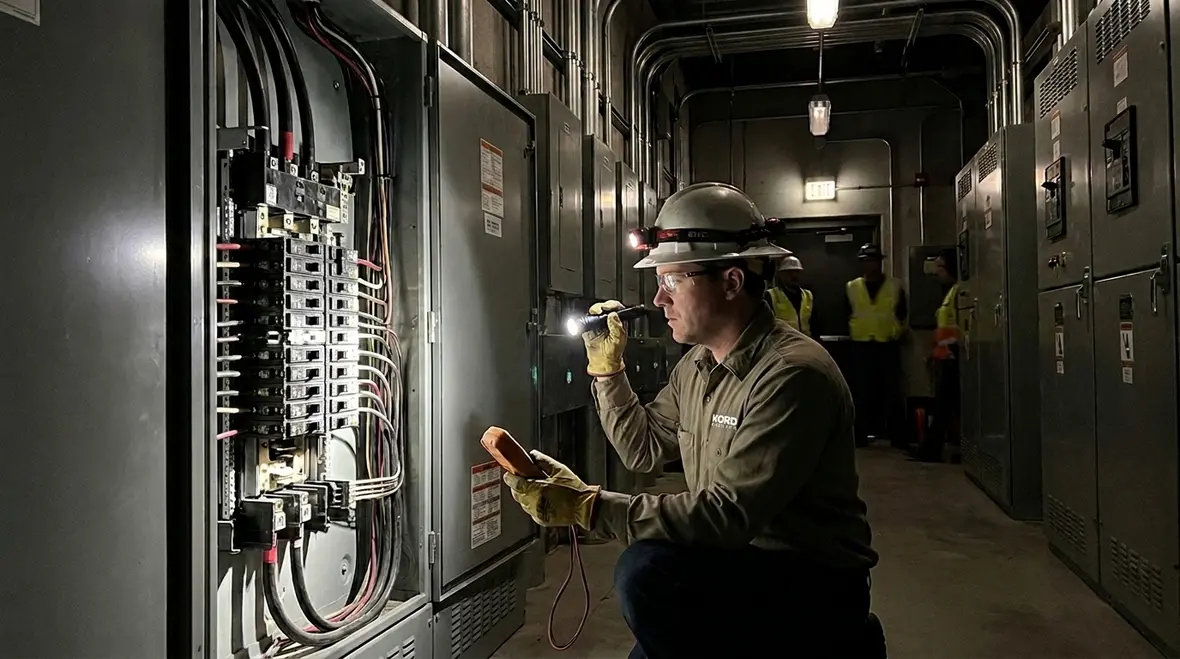
Commercial Power Outage Electrician: What to Do When Your Business Loses Power
When your business loses power, the first minutes feel like a long commercial break you did not ask for. That is why a Commercial Power Outage Electrician: What to Do When Your Business Loses Power matters. We see it every day at Kord Electric: lights go out, computers panic, alarms start acting dramatic, and someone suddenly becomes an expert in breaker labels. However, we also know the calm path. Our emergency focused response helps commercial and industrial facilities regain power safely and quickly, while protecting equipment, people, and schedules.
In this guide, we walk you through what others should do when power fails, how our expert technicians handle the investigation, and why the fix depends on the cause, not the loudest complaint in the room. And yes, we do explain things in plain language, because panic is never a good troubleshooting tool.
Immediate steps to protect people, systems, and food while power is out
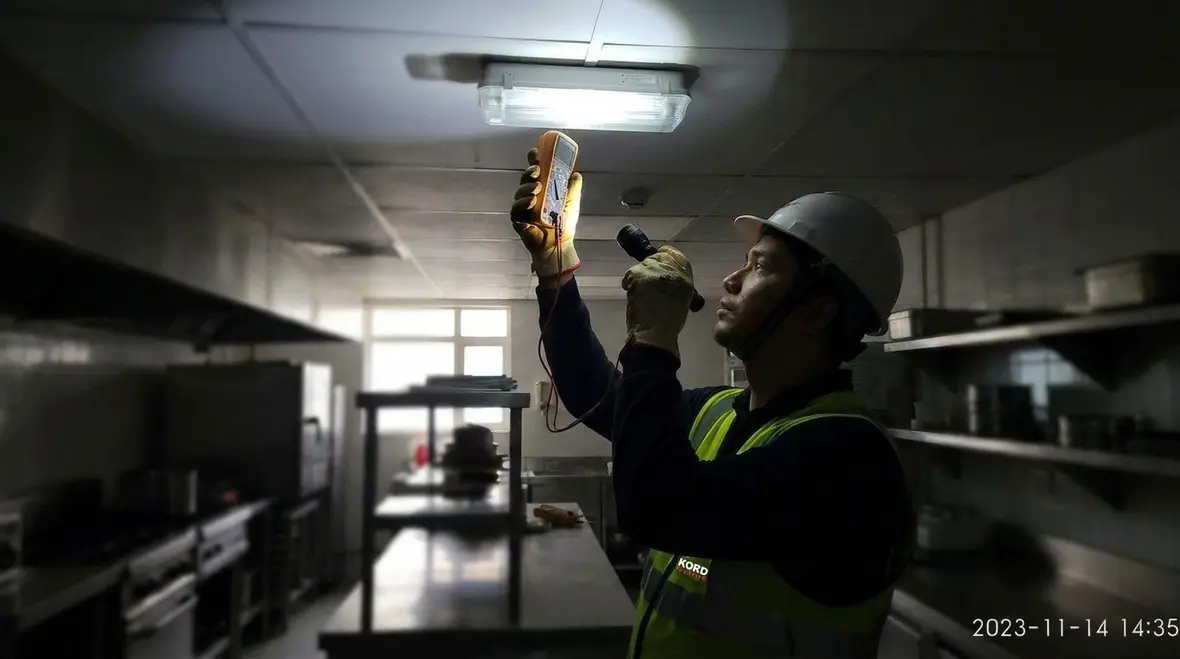
When power drops, others often chase the wrong thing first. Instead, we tell building leaders to act in this order. First, secure people and hazards. If emergency lighting fails or exit signage dims, treat it like a safety event. Then, prevent equipment damage. Shut down sensitive systems safely, especially servers, process controls, and large refrigeration loads. Next, keep critical refrigeration closed, and follow your facility procedures for spoiled inventory to minimize losses.
After that, we help you reduce confusion. Call a commercial power outage electrician and share key details: time the outage started, what devices stopped, whether partial power stayed on, and if any circuit breakers tripped. Then we ask for photos of the panel if your staff can do it safely. Finally, do not reset breakers repeatedly. Each reset can make a fault worse, like hitting “skip ad” during a power arc. It is tempting, but it never ends well.
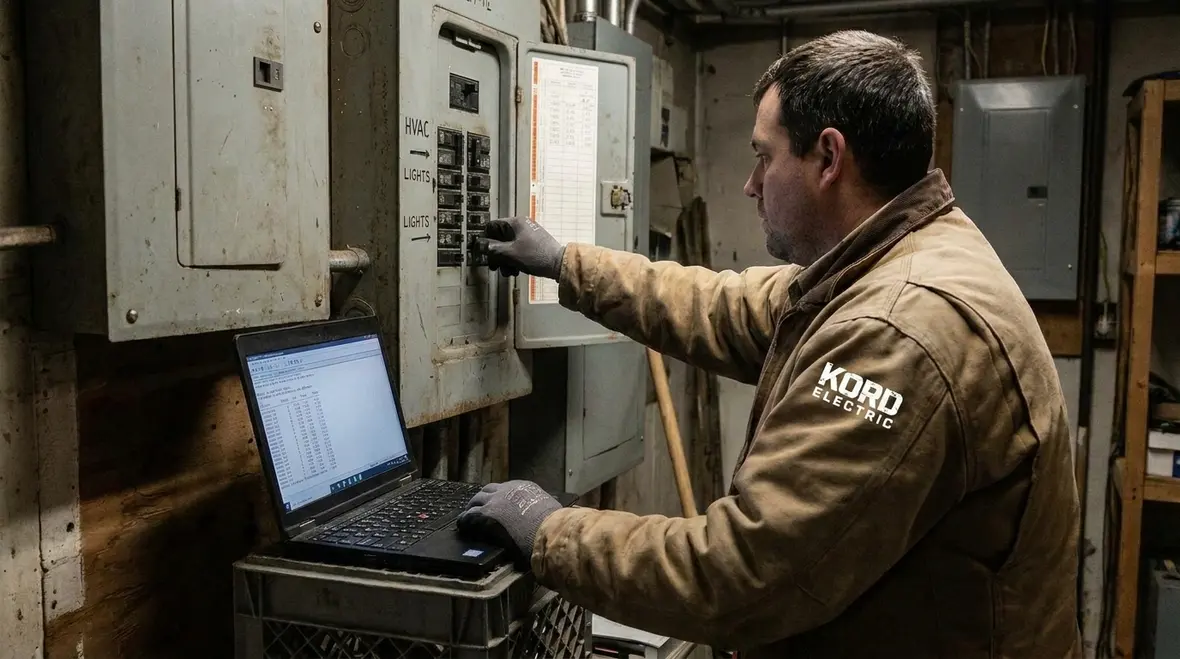
How we diagnose outages in commercial buildings without guessing
In most commercial and industrial facilities, an outage comes from one of a few places. The utility may have a distribution issue. Your service equipment could have a fault. A feeder or transformer problem can also cause a full or partial shutdown. Therefore, we diagnose, we do not guess.
Our expert service staff arrives ready to evaluate the building like a system, not a pile of wires. First, our technicians confirm what is out. They check whether the outage is total or sectional, and they look for patterns like one floor losing power while another stays on. Then they verify protective device states, including main disconnect positions, breaker trip indications, and any alarm messages from switchgear or transfer equipment.
Next, we inspect for visible damage and abnormal conditions. We look for signs that point to moisture intrusion, loose terminations, overheated bus connections, or failed components. And if the building uses generator or UPS systems, we check those transfer paths too. Finally, we isolate and locate the fault. Once we identify the cause, we move to restore service safely and plan the permanent repair so the lights do not vanish again tomorrow.

Understanding why “resetting” can turn a minor fault into a major repair
Some people believe power outages are like bad Wi Fi. You hit reset, and suddenly everything works. In a commercial facility, that mindset costs time and money. When a protective device trips, it means the system saw a condition that required protection. If the fault is still present, repeated resets can increase stress and cause more damage.
We explain this clearly to our clients. First, circuit breakers and protective relays are built to interrupt current before damage spreads. Second, a repeated reset can allow arcing, overheat, or short circuit events to continue longer than intended. Third, if you reset before the cause is found, you also reduce the clues our technicians need. That is why others should pause, document, and call for proper inspection.
Our approach focuses on what we call safe certainty. We verify before we restore. We test and confirm the fault location. Then we correct the issue and only then bring the building back to full operation. If you run a facility with a schedule, we respect it. Still, we will not rush restoration in a way that puts your equipment at risk.
Restoring power step by step when your facility needs to come back fast
Once we confirm the cause, we build a restoration plan that matches your facility needs. Because commercial and industrial buildings do not all behave the same, we tailor the sequence to your loads and protection settings.
First, we restore critical circuits. For many clients, that means life safety systems, communications, and any process controls required to prevent downtime losses. Next, we bring up non critical lighting and HVAC stepwise. Third, we test transfer equipment and verify generator or UPS operation if they are part of your setup.
Then we perform checks that go beyond flipping breakers back on. We verify load balance, check for abnormal temperatures at terminations when possible, and confirm stable voltage under operational load. After that, we run functional tests on key systems based on your building type and equipment list.
Finally, we communicate results. Our technicians explain what happened, what we fixed, and what we recommend for prevention. That way, others are not left guessing while they draft incident reports and chase vendors. If you want the short version, we give it. If you want the technical version, we also provide that. Either way, you get clarity.
If you manage a site in Los Angeles County and want a broader view of how restoration ties into long term reliability, our Los Angeles County electrical services coverage shows how planned work and emergency response fit together for commercial and industrial facilities.
Emergency electrical services for outages and unsafe conditions
Sometimes the outage comes with warnings. A burning smell. Buzzing sounds. Smoke near a panel or switchgear. Water intrusion that puts energized equipment at risk. When those conditions exist, a normal work order becomes an emergency.
That is where our emergency electrical services matter. We support commercial and industrial facilities and major property buildings with fast response and careful on site evaluation. Our team works to keep people safe, reduce downtime, and restore power with the right repairs rather than temporary patches.
Per our service overview, we focus on emergency response for situations that threaten safety or halt operations. We coordinate our technicians, manage access needs, and prioritize the circuits that keep your business running. And because calm matters in stressful moments, our expert service staff keeps communication clear. We tell you what we see, what we are doing next, and what you can expect as the timeline moves forward.
When a power failure crosses into a true emergency, pairing this Commercial Power Outage Electrician: What to Do When Your Business Loses Power playbook with our dedicated emergency electrical services gives your facility both immediate support and a structured path back to normal operations.
How to plan for the next outage before it happens
Preventing downtime starts before the lights go out. We help facilities plan so the next power event becomes a manageable incident instead of a chaotic event that eats the entire day.
First, we recommend a maintenance schedule for critical gear. That includes inspection of switchgear, panelboards, transfer switches, and connections that commonly loosen over time. Second, we review protective device settings and coordination. When coordination fails, one small issue can wipe out more circuits than it should. Third, we evaluate backup power systems. Generators and UPS systems perform best when testing matches real operational needs.
Next, we improve documentation. Others should ensure your single line diagram matches actual equipment, that breaker labeling is accurate, and that your staff knows which circuits are critical. We also encourage staff training for the basics: what to do, what not to do, and who to call.
Finally, we suggest a post incident review after each outage. Our technicians help you identify the root cause and recommend specific steps that reduce recurrence. Nobody likes paying for prevention, but downtime is the real expense. Like replacing a smoke detector after a fire starts. You can laugh, but you should not.
For a deeper look at how proactive planning and preventive work can keep outages from turning into full scale crises, you can also explore Kord Electric’s guides on commercial electrical troubleshooting and emergency power design, which complement this Commercial Power Outage Electrician: What to Do When Your Business Loses Power roadmap.
Dual column checklist: what your team should do and what to avoid
Do right away
Secure people and check for exit lighting needs
Shut down sensitive equipment using facility procedures
Document timing, affected areas, and any panel messages
Call our emergency response team for on site diagnosis
Share photos of panels and switchgear with our technicians
Avoid during outage
Repeatedly resetting breakers without inspection
Ignoring burning smells, smoke, or buzzing sounds
Trying DIY fixes in energized equipment areas
Restoring partial loads randomly without verification
Delaying a call when critical life safety loads fail
FAQ about commercial power loss and emergency response
Commercial Power Outage Electrician: What to Do When Your Business Loses Power, and how we help you recover
When the lights go out, others move fast for the wrong reasons. We keep it steady. Our commercial focused electricians protect people first, diagnose the real cause, restore critical systems carefully, and explain the next steps in plain language. If you want fewer surprises and a smoother return to operation, call Kord Electric now. Our expert service staff will respond, assess, and move you from outage to safe restoration with a plan you can trust.
Contact Kord Electric for emergency support and long term outage planning for your commercial or industrial facility, and consider pairing this response focused approach with broader emergency power and continuity planning so your next outage feels more like a drill than a disaster.
If your organization needs structured help beyond a single outage, our commercial power outage electrician team can connect you with related services such as preventive maintenance, load balancing, and distribution upgrades, so your electrical system is ready long before the next storm, equipment fault, or grid issue arrives.
For businesses across the region, including those supported by our dedicated Los Angeles County electrical services, that combination of emergency response and long term planning is what keeps operations calm when the utility does anything but cooperate.


