Commercial Subpanel Circuit Balancing Guide
Essential Guide to Commercial Subpanel Circuit Balancing
In commercial spaces, Commercial subpanel circuit balancing keeps equipment steady, wiring cooler, and bills less painful. When Kord Electric plans or troubleshoots electrical panels, our focus goes beyond “making it work.” We balance loads so the system runs within safe limits, and we prevent the hidden problems that show up months later, usually right after the tenant’s move in or the big event finishes. Our technicians and expert service staff explain the process in plain terms, because no one wants to learn electrical basics the hard way. And yes, we have seen cases where “it’s probably fine” became a full day of downtime. Let’s walk through what balancing means, why it matters, and how our team handles it in real commercial and industrial facilities.
Why balancing matters in commercial panels
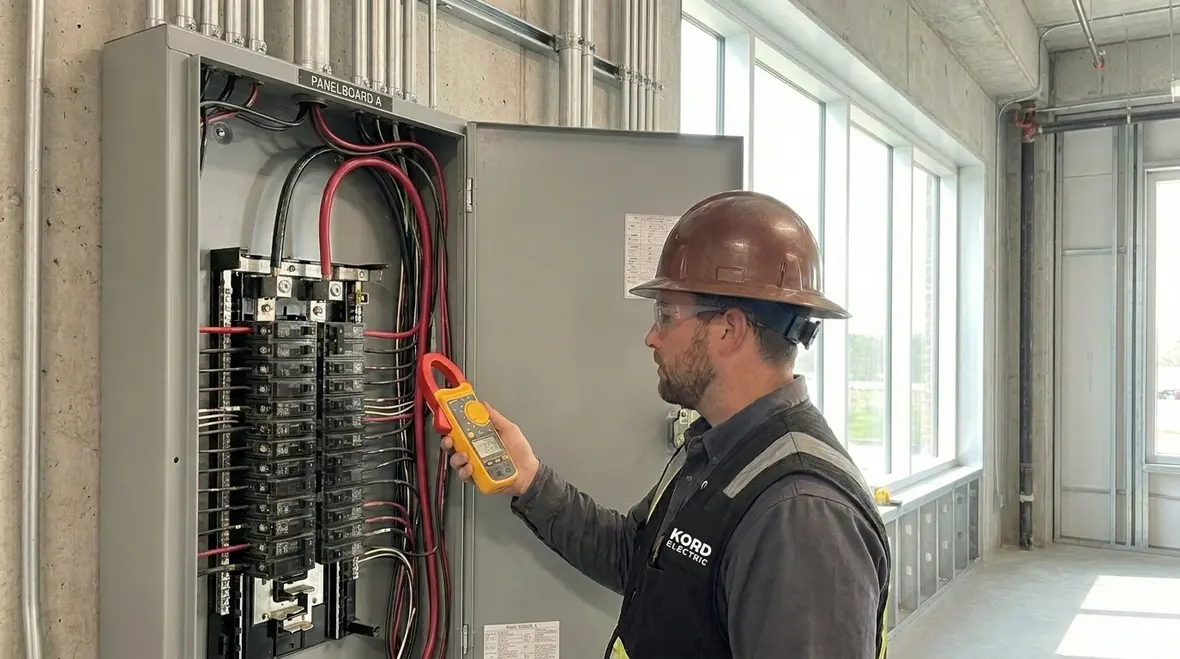
When an electrical panel feeds multiple circuits, the load does not spread itself evenly. Instead, people plug in, add equipment, remodel, and upgrade. Over time, one phase can carry more current than the others. Commercial subpanel circuit balancing corrects that imbalance so current stays closer across legs of the service. This reduces heat, lowers the stress on breakers and bus bars, and helps motors and HVAC controls behave the way the manufacturer intended.
Further, balancing protects the whole chain. If one phase runs hotter, terminations loosen faster. If terminations loosen, resistance rises. If resistance rises, heat rises again. It is like a pop song that keeps playing the same chorus, except the chorus is a failure. Our expert service staff points out that these conditions can hide in plain sight, especially in facilities where people do not watch the panel closely.
Common signs of electrical imbalance we see
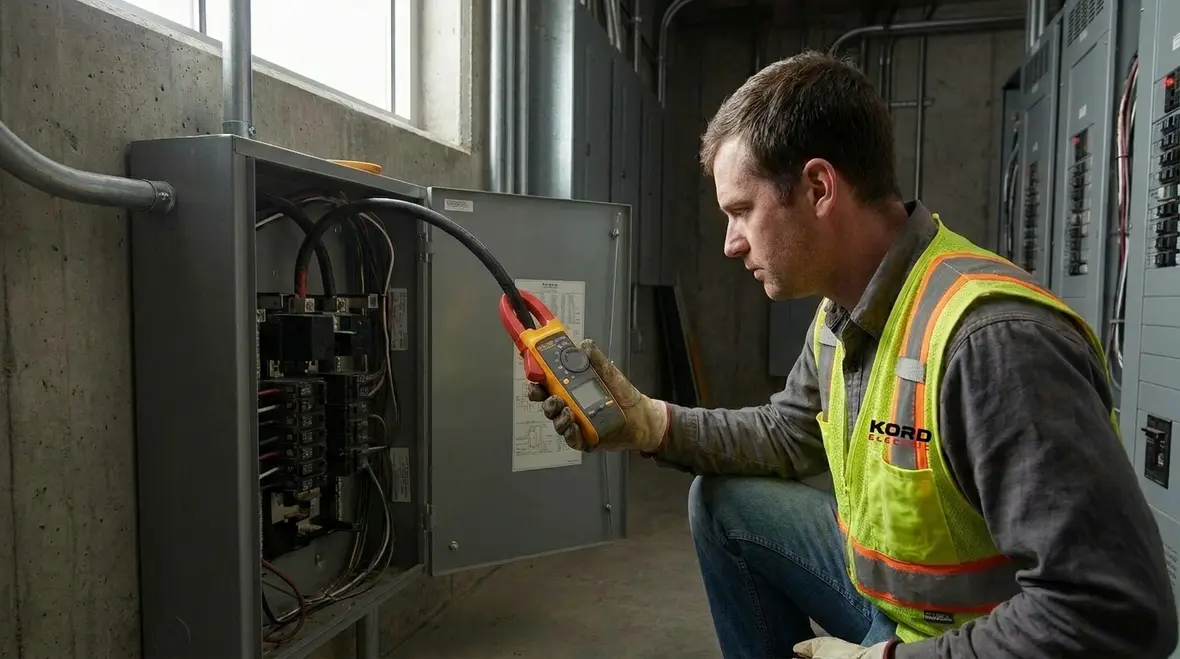
Commercial and industrial sites often show imbalance through performance issues before anyone checks the meter. Kord Electric technicians commonly spot these signs during routine service calls and preventive maintenance visits.
If the facility uses three phase power, an imbalanced load can lead to:
Hot breaker handles or warm panel interiors, even when the facility feels “normal”
Tripping that seems random, often during specific operations like chillers, elevators, or kitchen equipment
Lights that dim on one side of the building when motors start
Motors running hotter or drawing higher current than expected
Buzzing or crackling at bus bars or terminations, which is never a “just ignore it” situation
Also, the signs can show up differently depending on how the building grew. A property that began with a small tenant load may later add HVAC units, processing equipment, or server rooms. Then, the old panel layout becomes the wrong layout, even if nobody changed the panel itself. In short, the building evolves, and the wiring story changes with it.
How technicians measure load distribution
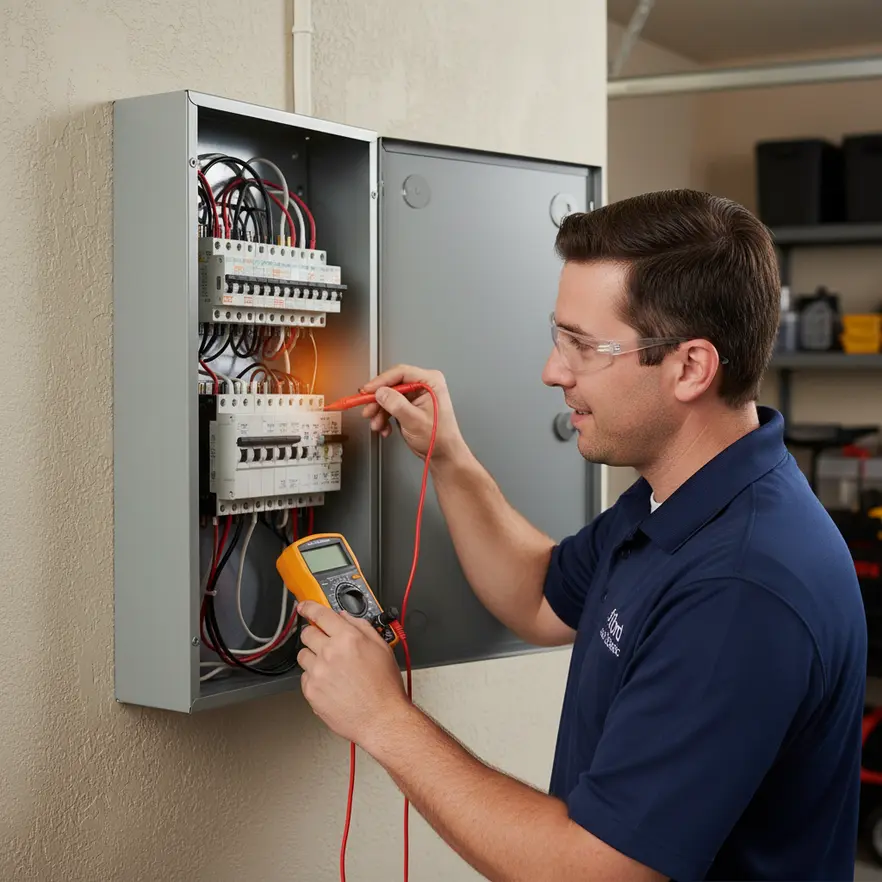
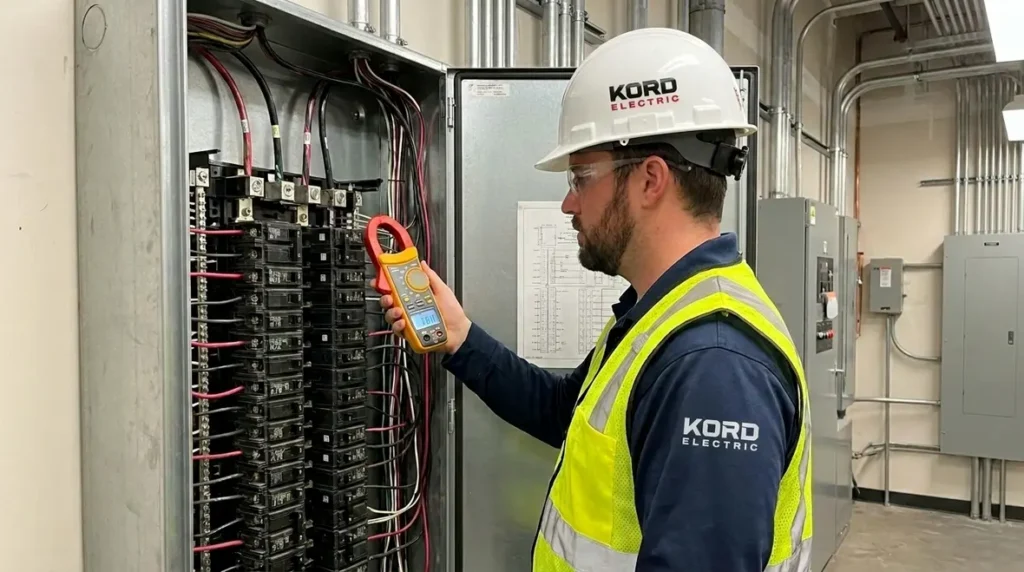
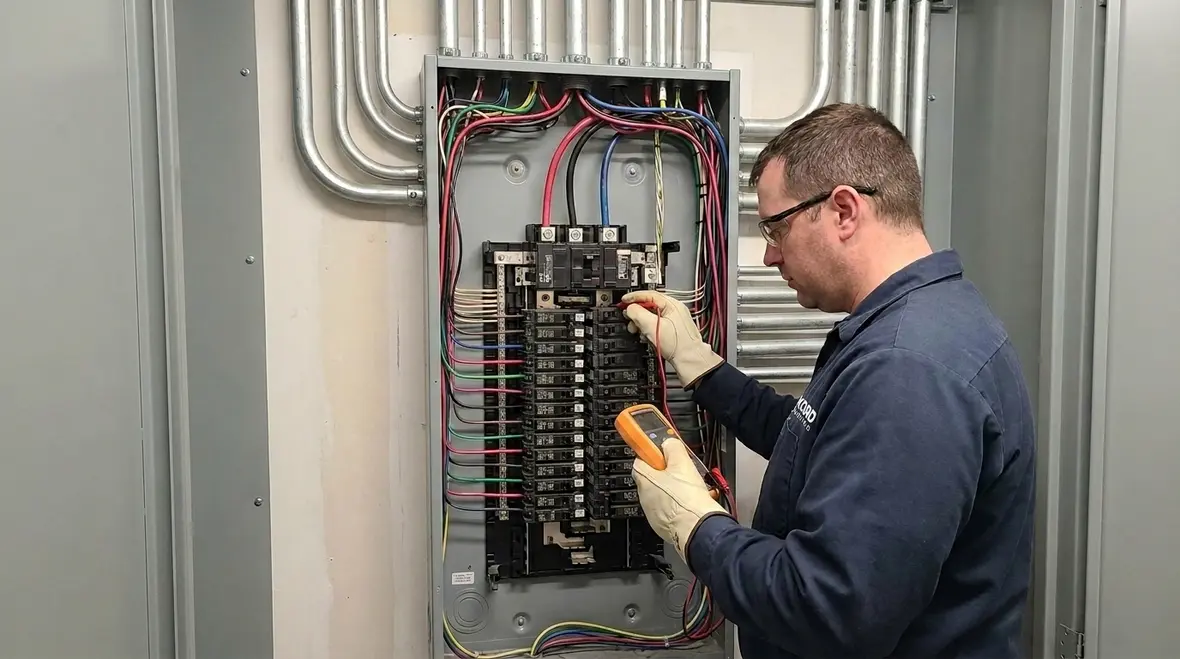
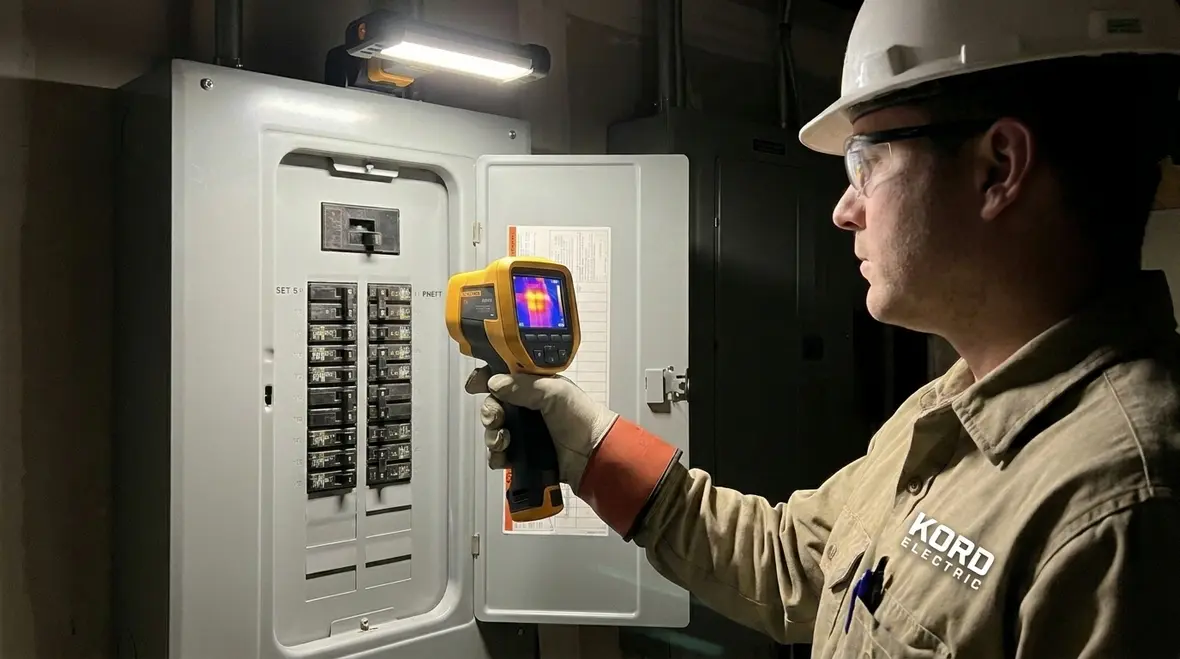
Balancing does not start with guesswork. In the field, our technicians use measurement and a clear plan. First, we identify which circuits feed which equipment and where those loads land across phases. Then we measure current on each phase during realistic operating conditions. We also take note of time patterns, like peaks during shift changes or when dock doors open and motor loads cycle.
Next, we build a load profile. This matters because some circuits run steady while others pulse. For example, a data center load might look stable for hours, while compressors and exhaust fans can spike in short bursts. Therefore, technicians measure long enough to see the real behavior, not just a quick snapshot.
Finally, we compare the readings to safe expectations and the panel’s rated capacity. When the numbers show one phase carrying too much, we plan the balancing moves in a way that avoids creating a new hotspot on the other side. Our expert service staff treats this like tight choreography. Move one circuit, and you check the partner. Move again, and you recheck the timing.
Step by step: balancing the circuit plan
Once measurements confirm imbalance, Kord Electric develops a practical approach for Commercial subpanel circuit balancing that fits the facility’s schedule and safety needs. We typically proceed in steps.
Map existing circuits by panel position, breaker rating, and connected equipment
Verify breaker and termination health before changes. If connections already run hot, balancing alone cannot fix the root issue
Group similar load types when possible. Steady loads and motor loads do not behave the same way, so we plan accordingly
Reassign circuits across phases where safe and allowed by the panel and wiring design
Label and update documentation so the next service call does not turn into a scavenger hunt
Confirm results with new measurements under normal operation
In many cases, circuit reassignment requires care around multiwire branch circuits, shared neutrals, and code requirements. Also, we coordinate with the site team so the facility does not lose critical power. Our technicians work for commercial and industrial buildings and major property sites, so we plan around tenant operations, production cycles, and critical systems like HVAC, life safety equipment, and loading docks.
And if you are thinking, “Can’t we just move breakers around and call it a day?” We understand the urge. But panels do not respond to vibes. They respond to proper wiring, good labeling, and verified results.
Hidden electrical risks in commercial buildings and how we reduce them
Imbalance and poor connections often share the same root: changes made over time without a full electrical review. In our blog on hidden electrical risks in commercial buildings, we highlight issues that can sit quietly until load climbs. If one phase carries more current, heat builds faster at terminations and bus connections. Eventually, that heat can lead to loosened parts, worn insulation, and failing components.
Therefore, Kord Electric approaches balancing as part of a wider risk check. Before we shift circuits, we look at common trouble spots like:
Loose connections at breaker terminals and bus bars
Overloaded neutral paths when designs include shared neutral setups
Deteriorated breaker condition that shows up as inconsistent performance
Panel oversubscription where the building’s real load exceeds the planned capacity
Then, after we rebalance, our team verifies the system runs cooler and steadier. In other words, we do not just move numbers around. We help stop the chain reaction that turns small wiring issues into expensive downtime. That is the calm, authoritative way to handle it, and yes, it also keeps the “electrical mystery box” from becoming a sitcom plot.
Maintenance practices that keep balance from slipping
Balancing is not a one time event. Commercial and industrial facilities change all the time. New equipment gets installed. Remodels add loads. Tenant spaces get reconfigured. If the facility does not manage that growth, the panel balance drifts again.
So Kord Electric recommends maintenance habits that keep the electrical system stable. Our technicians often suggest:
Seasonal or shift based checks for major load areas like HVAC rooms, production lines, and kitchen equipment
Updated load documentation whenever equipment changes, so future service staff can work fast
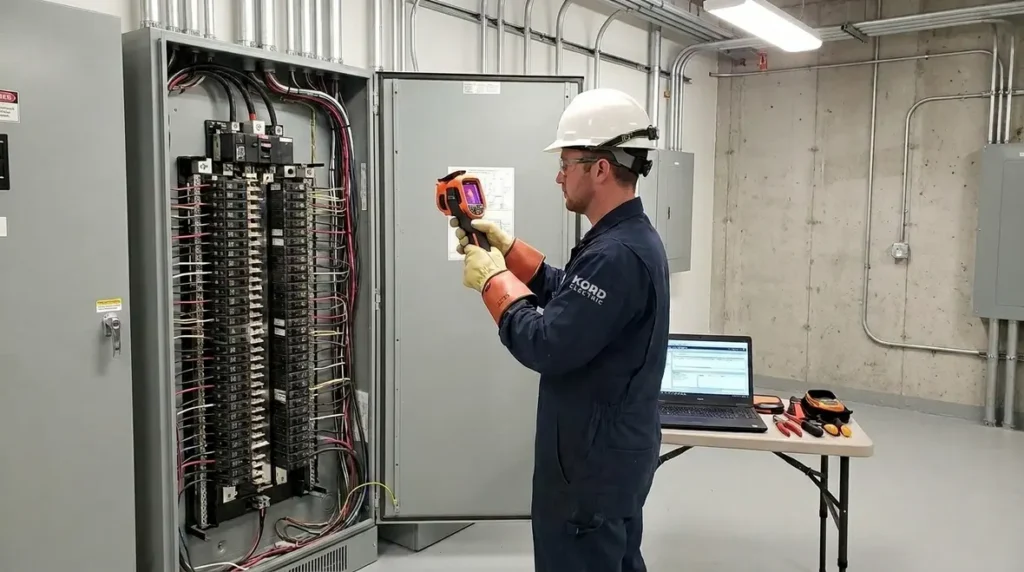
Thermal and visual inspection of panels during routine visits
Early review after tenant buildouts before problems show up in the hottest season
Clear labeling standards for breaker identification and circuit purpose
Also, our expert service staff encourages facility managers to treat panel health like other maintenance. It is not glamorous, but it prevents the “why is this failing now” meeting that nobody wants to attend. When balance stays stable, breakers last longer, motors run smoother, and the building avoids unnecessary surprises.
For facilities across the region, especially those coordinating multiple locations, pairing these practices with support like Los Angeles County commercial electrical services helps keep both everyday operations and long term planning aligned.
FAQ about commercial subpanel circuit balancing
Final word from Kord Electric
Commercial and industrial buildings deserve electrical systems that stay steady as loads grow. Kord Electric technicians handle Commercial subpanel circuit balancing with measurement, safe planning, and verified results, not guesswork. If your panel runs warm, breakers trip, or motors seem stressed, it is time to get it checked before the issue expands. Contact Kord Electric to schedule an assessment for your facility. We will explain what we find, what we recommend, and how we can keep your operations calm and powered.
Whether you manage a single major property or a portfolio of busy sites, including locations across the region, aligning your panels, feeders, and subpanels with a clear balancing strategy pays off in reliability and fewer surprises. When you are ready to dig deeper into how panel health ties into broader risk, their article on hidden electrical risks in commercial buildings is a natural next read.
If your facility needs structured service beyond a one time check, explore how Kord Electric’s commercial and industrial work across Los Angeles County can support panel upgrades, preventive maintenance, and ongoing balancing as operations evolve.
When you want fewer “why is this failing now” meetings and more quiet, predictable uptime, Commercial subpanel circuit balancing becomes one of the simplest, highest impact electrical strategies you can put in place.