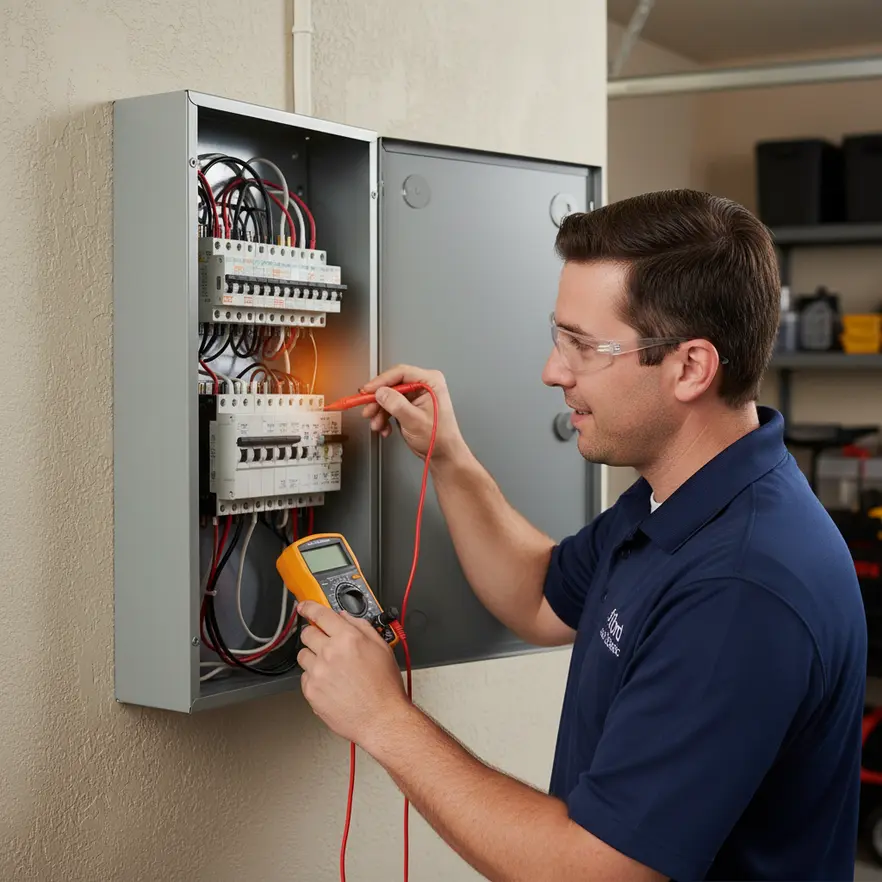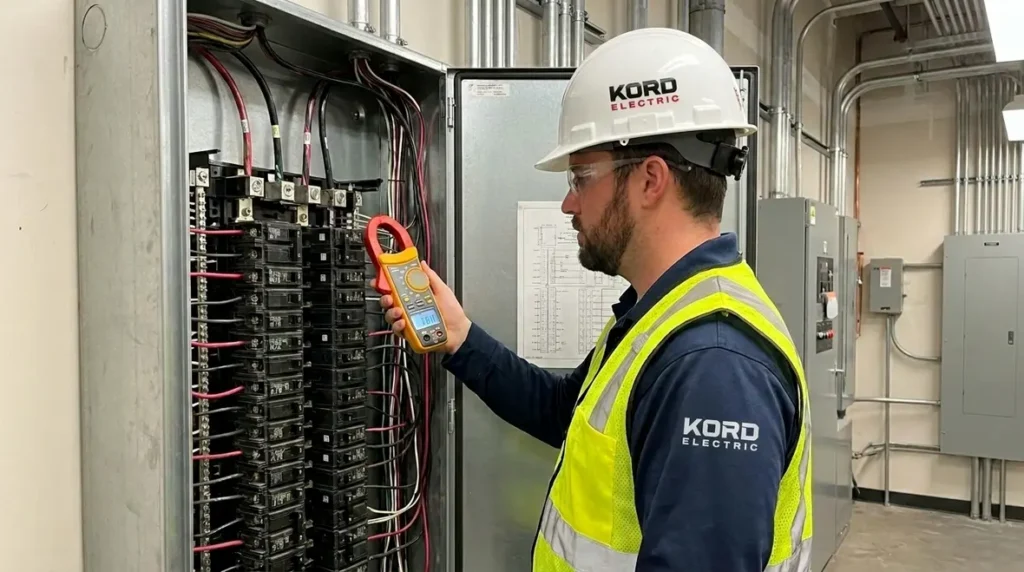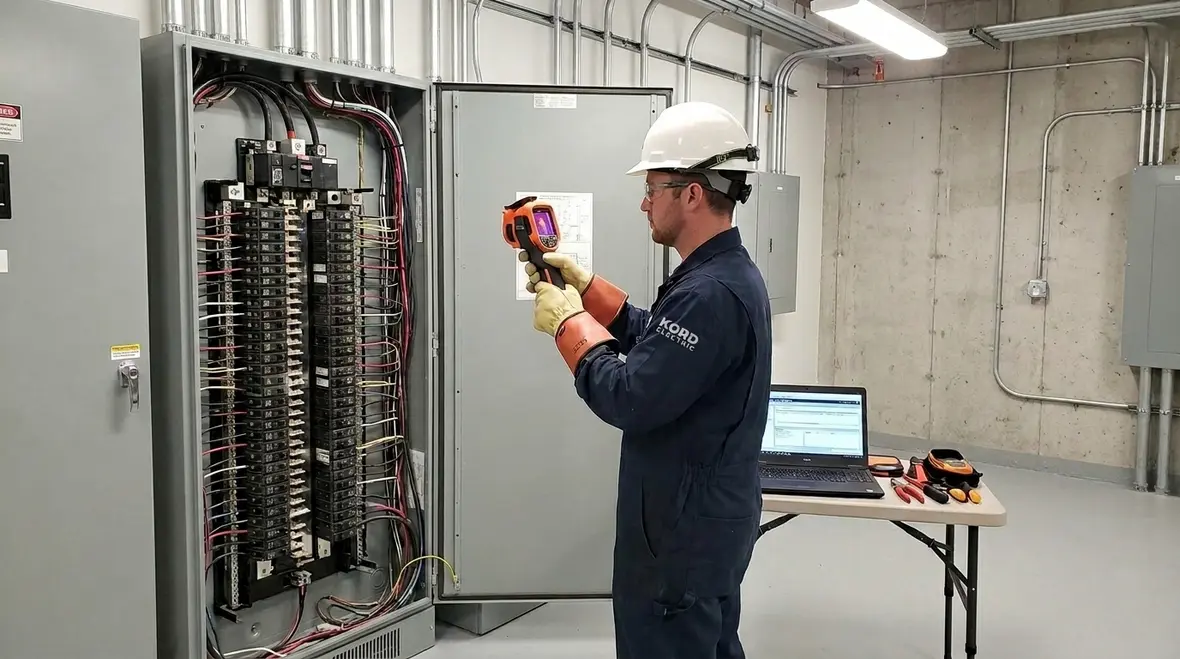
Electrical Panel Preventative Maintenance Guide
The real reason commercial owners budget for Electrical panel preventative maintenance for commercial buildings
In commercial settings, the lights may stay on, the HVAC may keep moving, and the doors may open on time. Yet behind that calm surface, electrical panels quietly work like an overqualified night shift employee. They carry load, handle heat, absorb vibration, and process power day after day. That is why Electrical panel preventative maintenance for commercial buildings cannot be treated like a “someday” task. We at Kord Electric focus on electrical panel preventative maintenance for commercial buildings and major properties, because a small issue inside a panel can grow into downtime, safety risk, and expensive repairs. And yes, while we love a good superhero story, electrical failures do not come with a heroic ending.
We send experienced technicians and expert service staff who explain what they find in plain language. As a result, building managers get clarity, not confusion. In the rest of this guide, we walk through what preventative maintenance really covers, what can go wrong, and how we help keep commercial electrical systems stable.
What preventative maintenance actually checks inside a panel
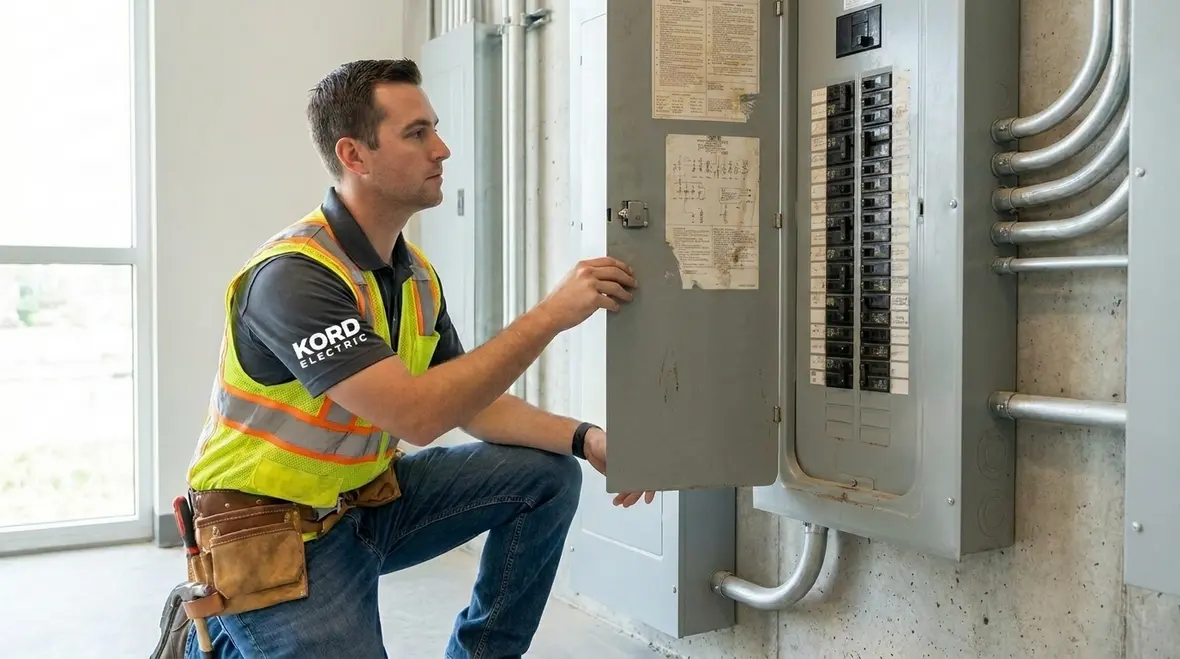
When our technicians open a commercial electrical panel, we do not just look for scorch marks and call it a day. We follow a structured process that targets the most common hidden problems. First, we inspect the physical condition of the cabinet, bus bars, and connections. Then we verify mechanical integrity, and finally we confirm electrical performance under realistic conditions.
- Torque and connection checks: Loose connections create heat and arcing. Therefore, we verify tightness to manufacturer specs.
- Thermal evaluation: We look for hot spots that suggest failing components. Consequently, issues surface before they become outages.
- Breaker and component inspection: We assess wear, discoloration, and signs of moisture or contamination.
- Bus bar and grounding review: We check for corrosion, improper bonding, and grounding problems that can raise risk during faults.
- Labeling and circuit verification: We confirm panel schedules and markings match actual loads, which reduces troubleshooting time later.
Others may treat maintenance like a quick visual sweep. We treat it like a safety audit and a reliability program. Our team also takes time to explain the findings, because informed facility managers make better decisions. And if you are thinking, “I hope they check the basics,” good. That is exactly what we do. The basics are where most failures hide.
How small panel problems turn into major commercial outages
Commercial electrical systems run more hours than most people realize. Yet many panel issues start subtle. A minor loosened connection can heat up slowly for months. After that, the heat damages insulation, forms carbon tracking, and increases resistance across the path. Then the panel behaves like a bad kettle that never stops boiling. Eventually, the breaker trips, voltage drops, or protective devices fail to perform correctly.
We also see a pattern with newer tenants and remodels. When loads change, the panel may face higher demand than it was designed for. In addition, new equipment can add harmonics and create nuisance tripping if the system is not assessed. Therefore, preventative maintenance helps us understand the “before and after” story, not just the moment something breaks.
Our expert service staff then documents what we find and ties it back to operational risk. As a result, building owners do not only get repairs, they also get a clearer picture of future performance. And yes, the most expensive time to learn about an overheating connection is during a peak production shift. We would rather help you learn during a scheduled visit, when you still control the timeline.
Why heat, dust, and moisture matter more than people think
In commercial and industrial spaces, panels face harsh conditions. First, dust and airborne particles accumulate on internal surfaces. Over time, this can interfere with cooling and increase surface conductivity. Next, moisture from humidity, roof leaks, or washdown areas can lead to corrosion and insulation breakdown.
Heat does the rest. Electrical components run hot even under normal conditions. When connections loosen or components age, temperature rises. Once temperature climbs beyond safe limits, protective materials degrade faster. Therefore, a panel may look fine on the outside while internal components quietly fail.
We handle these realities during service visits. Our technicians clean where appropriate, inspect for signs of moisture intrusion, and check components that often fail early in high stress environments. They also recommend practical steps that staff can support between visits, like managing access, keeping panel rooms clear, and addressing water sources quickly.
And if you are wondering, “Do we really have to worry about this if the panel never trips?” Our answer stays consistent: prevention does not wait for drama. A panel that stays online can still suffer damage that reduces long term reliability. We would rather catch the problem while it still behaves politely.
Electrical panel preventative maintenance for commercial buildings that protects people
Safety comes first. In commercial buildings, electrical panels sit near staff, equipment, and traffic. A fault condition can turn into an arc flash event if protective devices fail or if connections degrade. That is why maintenance must go beyond routine observation. We check conditions that raise the risk of electrical flash, shock, and fire.
Our approach emphasizes risk reduction through careful inspection, correct re-termination, and verification of protective functions. We also confirm that labeling and circuit identification support safe operations during maintenance or emergency troubleshooting. So, when someone needs to respond quickly, they can find the right circuit without guessing.
Additionally, we align our work with the realities of commercial operations. We plan around business hours when possible, coordinate access needs, and keep the area secure during service. In our experience, this professionalism helps facility teams trust the process, because everyone sees the discipline instead of hearing vague promises.
We also stay ready for the moments prevention cannot prevent. If an incident occurs, Kord Electric supports emergency needs. To see how we respond, facility teams can review our emergency electrical services details and understand what to expect when time matters most.
How we schedule maintenance for major properties without disrupting operations
Commercial facilities do not run on office hours. That is why we design maintenance planning around uptime. First, we review the site layout, panel inventory, and known load patterns. Then we set a schedule that matches risk level and operational impact. For example, critical production panels or life safety related systems often require more frequent attention than panels feeding low use areas.
Next, our expert service staff collects baseline data. We document panel conditions and performance indicators so future visits compare apples to apples. Therefore, we can spot changes early, instead of relying on memory or guesswork.
- We confirm panel readiness: We ensure access, power off procedures, and safety steps match the task.
- We coordinate downtime windows: We plan work so operations keep flowing as much as possible.
- We communicate findings clearly: We explain risks and recommended actions in business language.
- We support repeatable maintenance: We help teams create consistent inspection habits between formal visits.
It is like scheduling a tune up for a fleet of trucks. Nobody waits until the engine locks up in the middle of delivery routes. Yet with panels, some teams still treat maintenance as optional. We do not. We treat your electrical infrastructure as part of the business, not as background scenery.
Featured warning signs that a panel needs service soon
Even with good planning, buildings send signals. Our technicians often find these issues during inspections or after a tenant reports symptoms. Pay attention to the signs below, because early action saves money.
- Warm or hot breaker faces: Staff may notice heat near the panel area.
- Frequent nuisance tripping: Breakers trip without obvious reasons.
- Buzzing or crackling sounds: Loose connections and failing components can make noise.
- Discolored wiring or panel parts: Darkening can indicate overheating or arcing.
- Moisture stains or corrosion: Water intrusion can quietly worsen insulation.
- Panel labels not matching reality: Mismatched circuit maps slow down response and raise risk.
When these signs show up, we recommend prompt evaluation. And if you hear buzzing and think, “That is probably fine,” we will gently remind you that electricity does not follow optimism. It follows physics.
Why Kord Electric treats panel maintenance like a professional trade, not a checklist
We serve commercial, industrial, and major property buildings. That means we understand how electrical systems support production schedules, tenant operations, and safety requirements. Our technicians bring experience, and our expert service staff explains findings in a way that building leaders can act on immediately.
In practice, that means we do not hand you a vague report and disappear. We connect the inspection results to actual risk and next steps. We also tailor recommendations to your equipment, load profile, and operational needs. As a result, you get an informed plan that aligns with how your facility runs.
And when maintenance needs to expand beyond panels, we help you prioritize what matters most first. For example, if we identify protective device concerns or grounding problems, we address them before they force urgent work. In commercial environments, avoiding last minute emergencies is not just smart. It is a competitive advantage.
If you want to see how broader electrical strategies can support long term reliability beyond individual panels, you can explore Kord Electric’s dedicated electrical preventive maintenance services, which are designed for commercial, industrial, and large property portfolios.
FAQ
Final call to action
If you operate a commercial or industrial facility, you already understand downtime costs real money. Preventative work costs less, protects people, and keeps your systems performing when the day gets busy. Kord Electric schedules thoughtful panel maintenance, and our technicians explain findings in plain business terms so you can act quickly. Reach out today to plan Electrical panel preventative maintenance for commercial buildings around your uptime needs. Then let us handle the details while you keep the operation moving.
If your facility is already experiencing issues such as unstable voltage, nuisance trips, or sensitive equipment problems, it may be time to pair panel work with a focused service like Kord Electric’s voltage fluctuation repair for commercial and industrial facilities. Addressing root-cause electrical issues and maintaining panels together helps protect critical systems from repeat disruptions.