Commercial EV Charging Station Installation Guide
Commercial EV charging station installation requirements: the real checklist before the first bolt
Commercial EV charging station installation requirements decide whether a site delivers dependable charging or a frustrating pilot program that dies quietly in the corner of the parking lot. At Kord Electric, we build for commercial and industrial facilities and major property buildings, and we plan from the start: power capacity, load planning, parking layout, safety clearances, conduit routing, and permits. Even before a charger is selected, our team coordinates site conditions and electrical design so the project moves cleanly from plan to energize. And yes, we explain it in plain language, because nobody should need a decoder ring to understand a breaker schedule. In this guide, our expert service staff walks through the steps that keep your charging infrastructure safe, scalable, and ready for today’s vehicles and tomorrow’s growth.
Site load planning that prevents future headaches
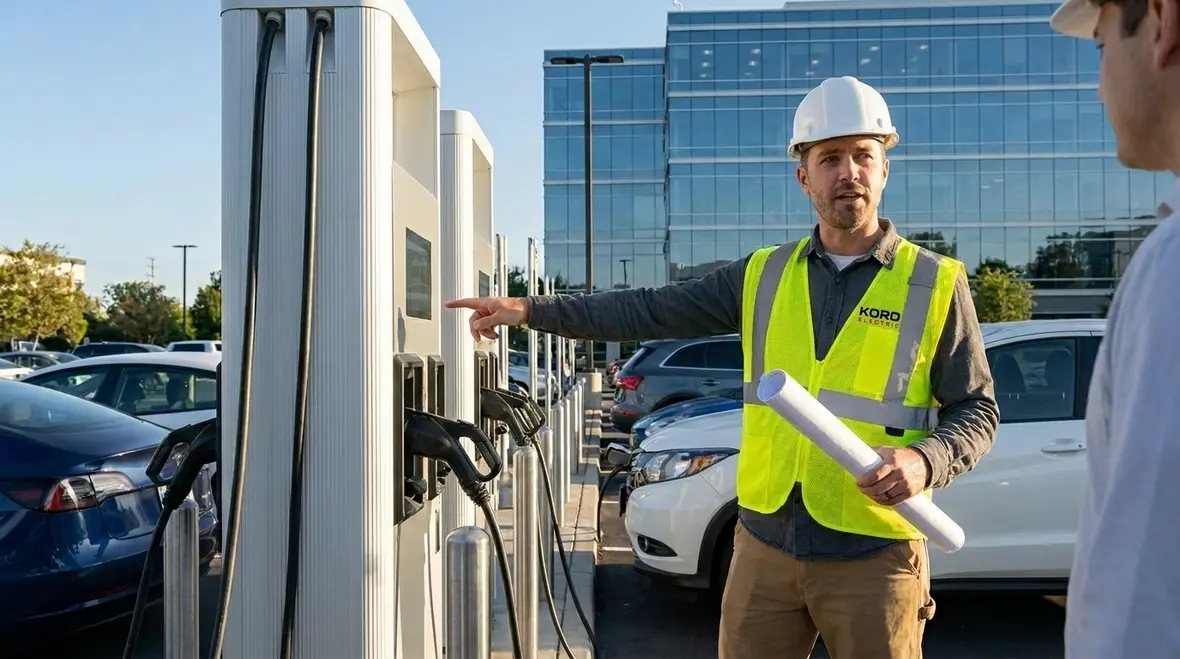
First, we assess the existing electrical system as if we expect the building manager to ask tough questions later. Because they always do. We start by reviewing utility service capacity, panel schedules, available breaker spaces, transformer ratings, and any recent load additions. Then we model the parking area load so the chargers do not fight the rest of the facility during peak demand.
As we guide the process, our technicians focus on practical outcomes. If the site can support higher power chargers, we plan for it. If not, we design a phased approach that upgrades capacity over time. This is where many projects stumble, since teams sometimes pick charger specs first and treat electrical design like an afterthought. We do the opposite. We align charging power with building realities and future expansion plans.
To make this easier for owners and facility managers, we share a clear explanation of how load management works, what “simultaneous charging” really means, and how demand limits can keep you compliant while protecting equipment. When people understand the “why,” decisions get faster. And when decisions get faster, the schedule stays real, not mythical like a superhero origin story.
Conduit, routing, and service upgrades built for heavy use
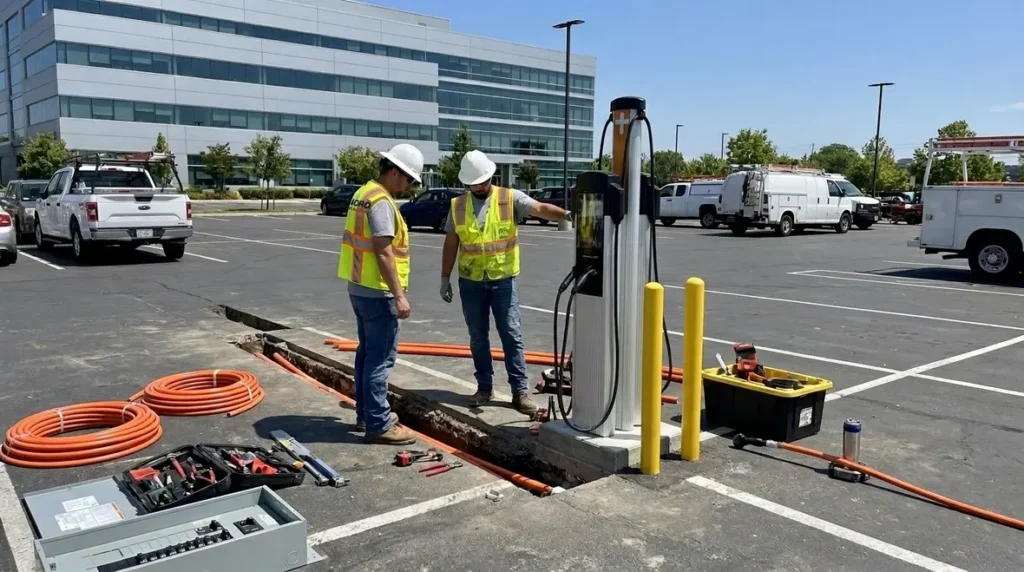
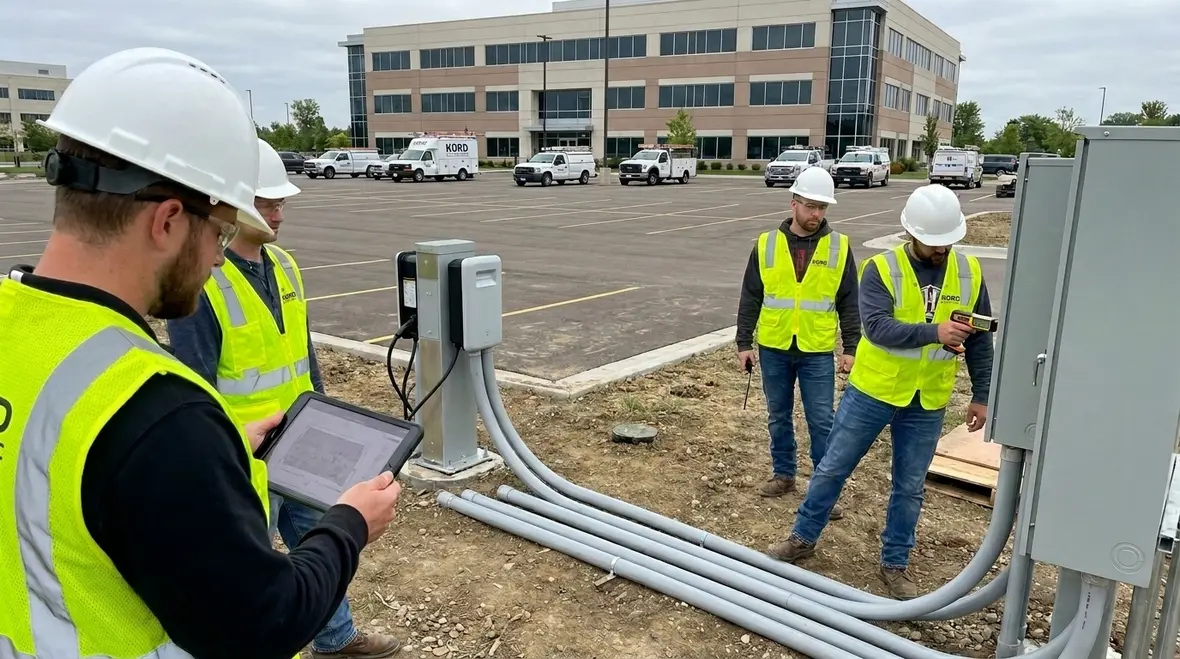
Next, we plan the path between the electrical room and the charger locations. Then we verify the ground conditions, traffic patterns, and protection needs. For commercial and industrial sites, this matters because the infrastructure takes daily abuse from people, equipment, weather, and time. We choose conduit sizes and routing methods that support long term reliability and safe installation, and we avoid shortcuts that only look good in photos.
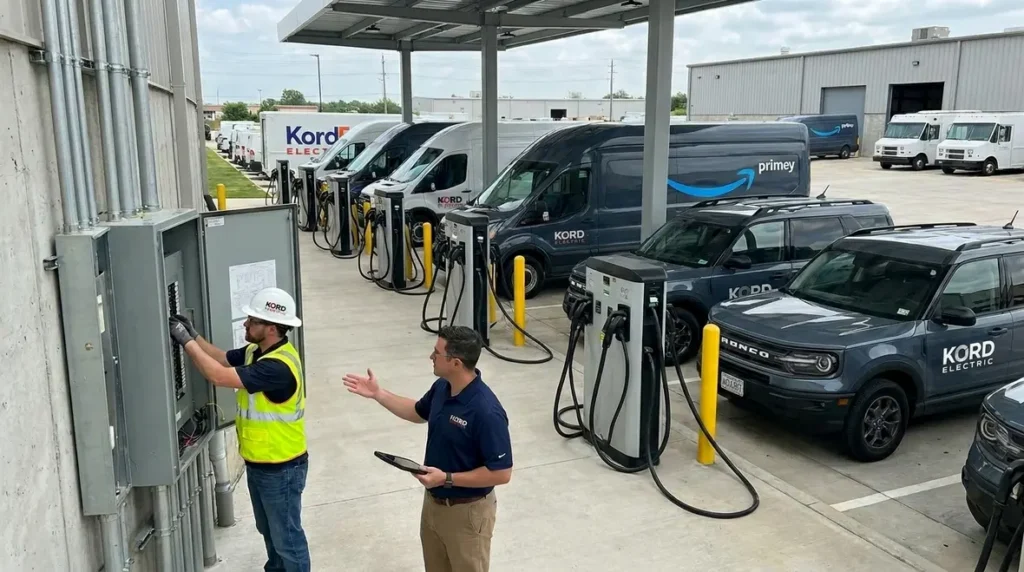
Our technicians also pay attention to service upgrades. If the electrical service needs reinforcement, we address it early so we do not scramble mid construction. We coordinate details such as transformer changes, switchgear additions, panel upgrades, and meter configurations when the utility requires involvement. This is not just technical work, it is project risk management.
Where routing meets safety, we follow code driven practices for separation, physical protection, and proper termination. And we keep the experience calm for the customer by walking through what is visible, what is buried, and what is inside equipment rooms. That way, nobody feels like they are signing a contract with a mystery box.
Permits, code compliance, and utility coordination that actually get approved
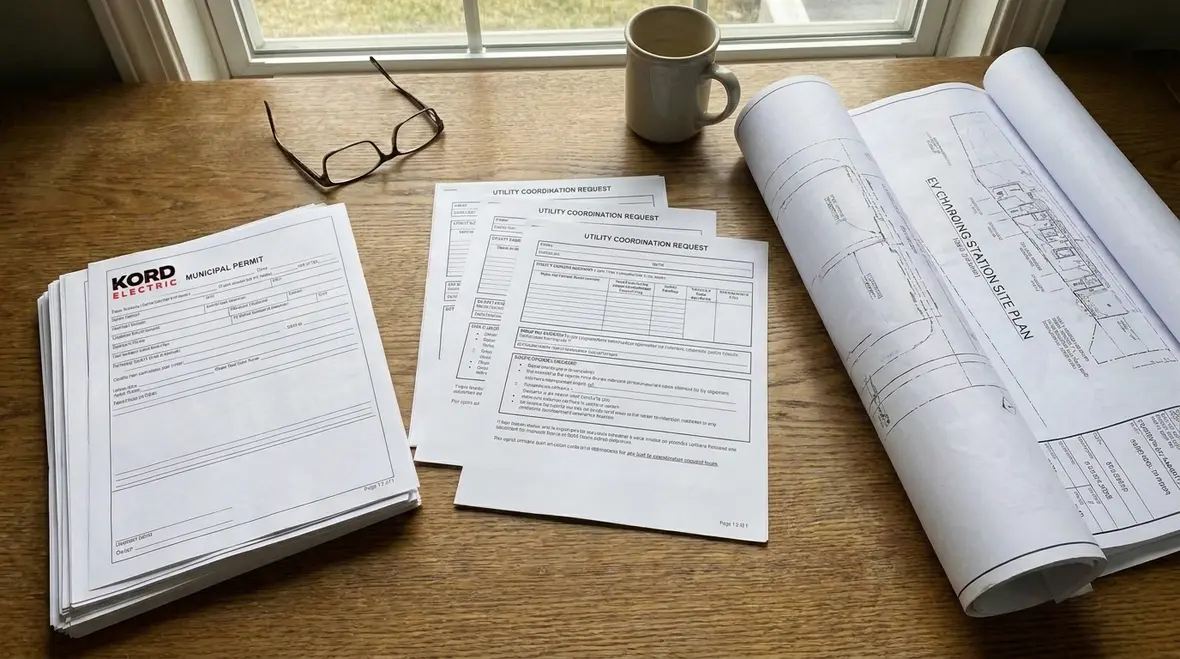
Then comes the part that can slow projects down if it is handled casually: permits and utility coordination. For major property buildings and industrial campuses, we treat approvals as a process with steps, timelines, and documents that must match each other. We review local requirements, confirm equipment listing and labeling needs, and ensure the design aligns with inspection expectations.
Our expert service staff helps explain what inspectors usually look for, including proper grounding and bonding, correct conductor sizing, safe enclosure practices, and installation quality that matches the drawings. Since requirements vary by location, we confirm the rules up front and plan for the exact scope of the job.
Utility coordination often includes load review and sometimes upgrades. If utilities require approvals for new or expanded loads, we build the timeline around those milestones. We also communicate clearly so the customer knows what actions we handle and what actions the utility or property owner must complete.
At Kord Electric, we keep this professional and business casual. We can be serious about safety without speaking like a robot stuck in a technical manual.
Warranty ready planning and electrical budgeting that fits real projects
Owners often ask about rewiring costs and overall electrical budgeting. So we approach electrical upgrades with the same discipline we apply to wiring. We confirm what needs replacement, what can be upgraded, and what should be left alone to reduce waste.
When we review costs for commercial electrical systems, we consider factors such as service size, panel work, trenching and conduit runs, labor complexity, and any required testing. If any existing components must be modified or relocated, we estimate impact accurately so the budget does not drift. For additional context on planning and pricing electrical work, Kord Electric’s blog on rewiring cost for commercial electrical systems can help explain how commercial electrical systems cost drivers typically show up on real invoices.
To keep planning honest, we also discuss how a charger plan affects wiring scope. For example, choosing fewer chargers with higher capacity may require different electrical infrastructure than installing many lower power units across a lot. Furthermore, load management features can shift upgrade needs by enabling smarter allocation of power.
In short, we budget for the electrical reality, not the fantasy version. And unlike some pop culture “future tech” that looks amazing in trailers, our approach keeps your site functional and auditable.
Safety features, signage, and user experience for high traffic parking
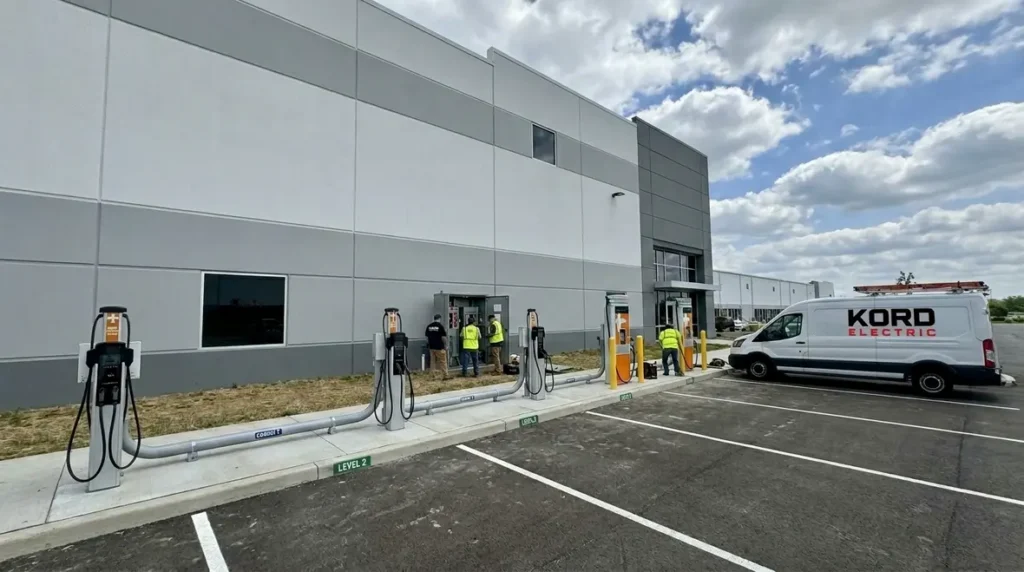
After electrical design and approvals, we build the charging area with safety and usability in mind. That means installing chargers and power components with durable hardware, protected cabling pathways, and clear physical separation where needed. It also means planning for vehicle access, cable management, and safe interaction with pedestrians.
Commercial sites also need signage, labeling, and operational clarity. We help customers understand what information should appear at the point of use so users can charge without confusion. When a site serves tenants, customers, or fleet operators, the charging experience affects satisfaction and adoption.
And yes, we think about aesthetics too, within reason. A clean install reduces maintenance calls, and it keeps the property looking professional. If a charger looks like it was installed by someone who “winged it,” it usually attracts the same level of maintenance effort. We aim for the opposite.
Meanwhile, our technicians document key details that support future service and warranty needs. We explain what we tested, what we verified, and what owners can watch for as the site runs.
Phasing strategy for scalability: expand without rework
Finally, we design for growth, because commercial and industrial facilities rarely stop at one phase. A property might start with a few chargers for early demand, then add more once tenants and fleet partners commit. To support that pattern, we plan electrical capacity and infrastructure with expansion pathways.
We discuss options like conduit “future pulls,” reserved space in panels or switchgear, and design choices that reduce demolition. At the same time, we align the phasing plan with operational needs, so charging stays available while construction progresses elsewhere in the lot.
Our team explains the difference between adding a charger that can plug into the existing plan and adding a charger that forces a full redesign. Then we recommend the smart path that keeps you from paying twice. Nobody wants to buy a second set of conduit because the first set was treated like a disposable snack wrapper.
Additionally, we coordinate installation timing with facility schedules. That reduces disruption for businesses that cannot afford long shutdowns. When we handle this well, the project feels smoother, and the result looks like it was always meant to be there.
FAQ
Conclusion: choose a team that builds for real power and real inspections
When commercial customers expect dependable charging, they deserve a plan that respects electrical capacity, safety, permits, and future growth. Kord Electric designs and installs charging infrastructure for commercial and industrial facilities and major property buildings with clear communication, code driven work, and technician led quality checks. If you want Commercial EV charging station installation requirements met with less guesswork and fewer surprises, reach out to us today. We will review your site and map the best path to energize, expand, and stay compliant.
If you are planning a broader electrical upgrade alongside EV charging, pairing your project with disciplined preventive maintenance can keep new infrastructure performing at its best. Kord Electric’s electrical preventive maintenance services help protect panels, feeders, and critical equipment so your new charging investment runs on stable, reliable power.
When you are ready to move from planning to construction, our dedicated commercial EV charger installation team can handle everything from site evaluation and system design to final commissioning and testing, so your chargers go live smoothly and stay ready for business.