Scaling Commercial Fleet EV Charging Safely
Scaling Up Commercial Fleet EV Charging Without Overloading Panels
At Kord Electric, we design EV charging infrastructure for commercial fleets that actually scales with real business growth. We integrate charging for delivery fleets, service vehicles, shuttle operations, and other commercial and industrial site fleets while keeping building power stable. And yes, we plan for the part nobody wants to talk about: the moment you add chargers and the electrical system suddenly acts like it forgot everything it knew. That is where careful engineering saves the day. We work with major property buildings and C and I facilities because those sites run on schedules, budgets, and uptime, not guesses.
So, we start with a simple goal. We help others add charging capacity step by step, without overloading panels, tripping breakers, or turning your daily operations into an impromptu drama. Then we bring our technicians and expert service staff into the process, explaining what we are doing in plain language, so the plan stays clear from day one.
How we plan electrical capacity before installing new chargers
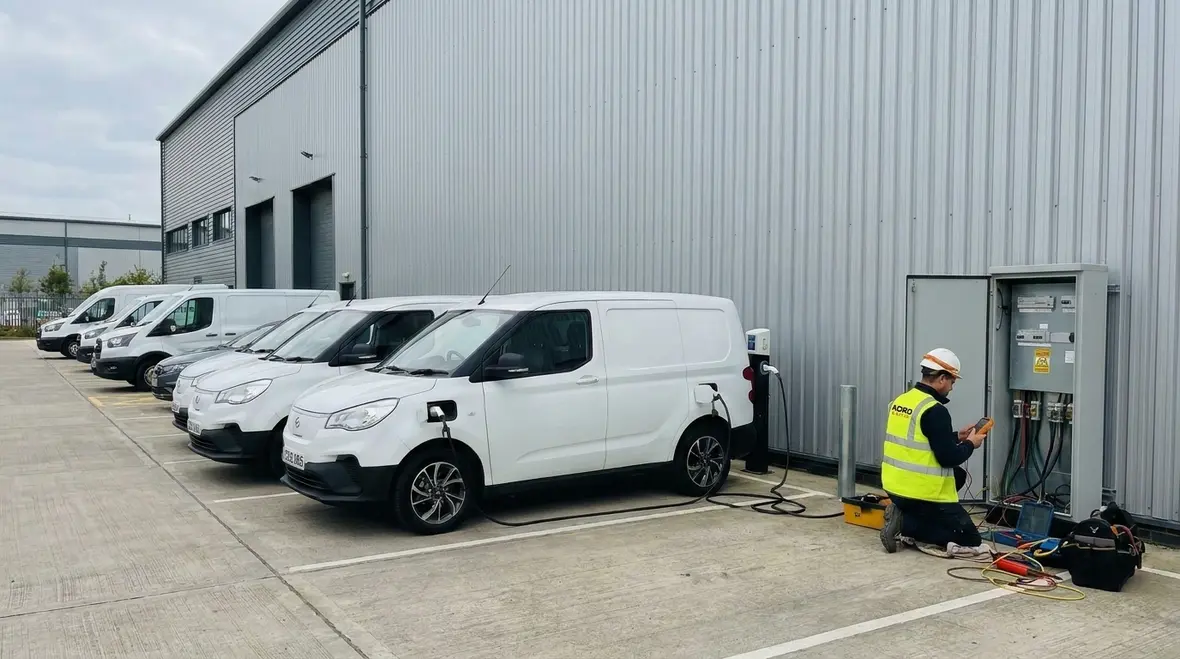
In commercial work, “will it work” is not a plan. Therefore, we begin with a load picture that matches how the facility actually behaves. We review existing panel schedules, transformer capacity, feeder size, and measured demand profiles. Next, we look at seasonal peaks, shift changes, HVAC cycles, kitchen or production loads, and any equipment that spikes under heavy use.
Then, we map the chargers to that load reality. However, we do not stop at single point calculations. We consider diversity factors because not every truck charges at the same second. We also evaluate simultaneous usage patterns based on routes, arrival times, and driver behavior. As a result, the design supports real charging workflows while staying within safe operating limits.
That capacity planning step is also where we look beyond the charging yard. If your facility has already dealt with issues like voltage fluctuations, nuisance trips, or unexplained shutdowns under heavy load, we bring the same diagnostic discipline used in projects focused on stabilizing commercial and industrial power quality to your EV charging design. Instead of letting future chargers push a stressed system over the edge, we use data, measurements, and a structured approach so the charging layer sits on a stable foundation.
For major properties with large common areas, extensive lighting, or specialized equipment, we also tie capacity planning to other upgrade decisions. If a building is already evaluating lighting installation or panel upgrades, we fold EV charging into that roadmap so one project reinforces the next instead of competing for the same limited capacity.
Designing EV charging around real facility behavior
Once we understand how your building actually uses power over a day, week, and season, we design EV charging that respects those patterns instead of fighting them. That means aligning charging windows with low demand periods, protecting critical production or tenant loads, and keeping headroom for the unexpected. The result is a system that feels like part of the facility, not an afterthought bolted on the side.
Integrating chargers into existing panels, safely and cleanly
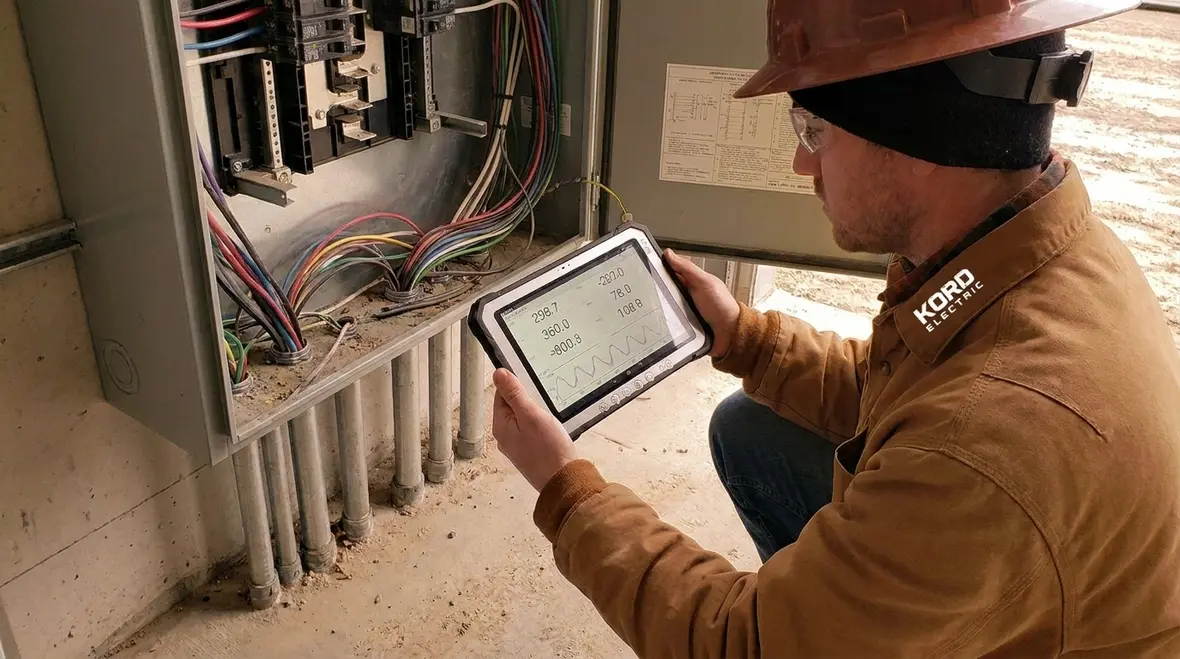
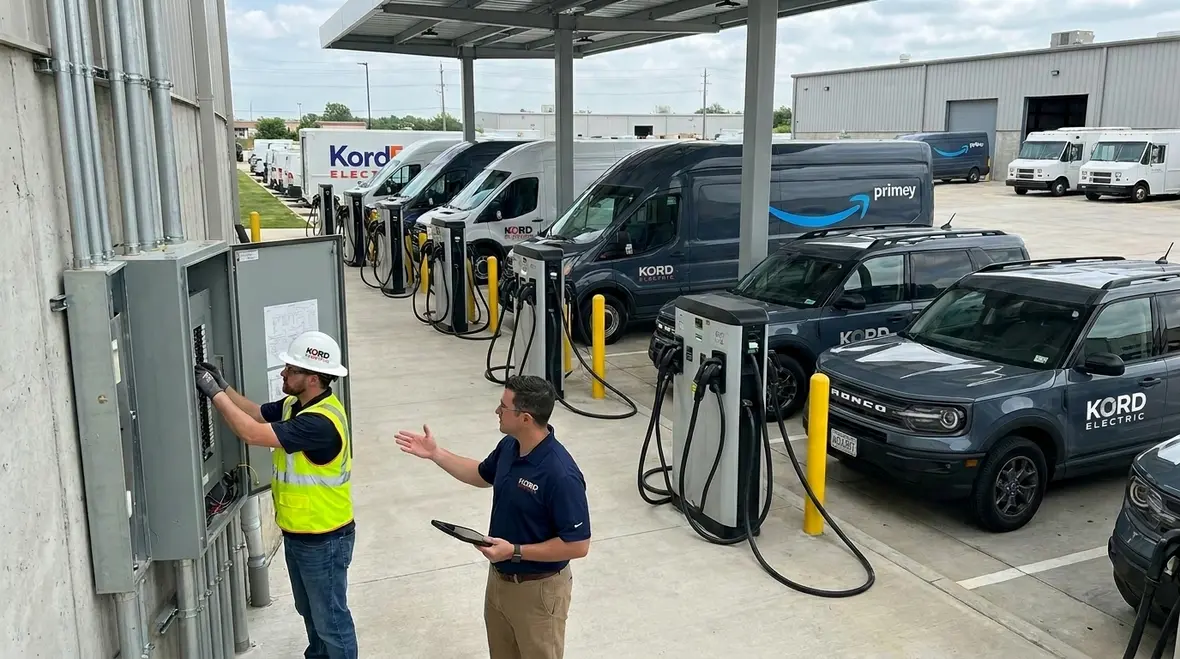
Once the capacity plan is set, our electricians and technicians move into integration. We coordinate with the site to ensure the work fits operations, especially for major property buildings where tenants and shared systems matter. Moreover, we verify labeling, conduit routing, and equipment ratings before a single circuit is energized. That step matters because field changes can create hidden risk later.
Next, we install in a way that keeps things maintainable. We avoid crowding panels beyond manufacturer recommendations. We also plan breaker sizing and conductor sizes so voltage drop stays reasonable during charging events. If a site includes shared electrical rooms, we pay attention to access, heat buildup, and future service needs.
Finally, our expert service staff walks the facility team through what they need to know. For example, we explain how the charging control behavior affects demand at different times, and we show where the safety protections live. In short, the goal is simple: the system should look professional, behave predictably, and stay serviceable.
Keeping commercial electrical systems inspection-ready
Clean integration also supports smoother inspections and long-term code compliance. By coordinating EV charging work with broader commercial electrical standards and documentation practices used throughout your building, we help your facility stay ready for the next inspector walk-through, lease negotiation, or insurance review. Organized labeling, consistent installation methods, and clear as-built drawings are not just nice touches; they are risk reduction tools for the life of the system.
Why load management keeps demand under control

When others scale charging, they often scale hardware first. We recommend a smarter order. We build the electrical design first, then we add load management to align charger output with available capacity. Consequently, EV charging infrastructure for commercial fleets does not mean every port runs at full power all at once. Instead, the charging system coordinates power based on site limits.
For example, if a facility adds more vehicles over time, load management helps prevent the kind of demand spike that leads to nuisance trips or utility issues. At the same time, it still lets vehicles charge fast enough to meet operational needs. Therefore, the system can flex with your fleet schedule.
Also, we use commissioning and testing to confirm the behavior in the real world. We verify charging setpoints, check communication between chargers and the control layer, and confirm measured demand stays within the target range. If something acts like a stubborn roommate and refuses to follow the plan, we correct it now, not after the first week of service.
Aligning charging behavior with business priorities
Load management is not just a technical feature. It is a business tool. We tune charging priorities so mission-critical vehicles, routes, or shifts get the power they need first while still protecting your maximum demand. That means scheduling overnight charging to take advantage of lower utilization, shaping start times to avoid stack-ups, and coordinating charging profiles with other projects like lighting upgrades or preventive maintenance so your overall system works as one strategy instead of competing silos.
Phased expansion for fleets that grow, not for fantasies
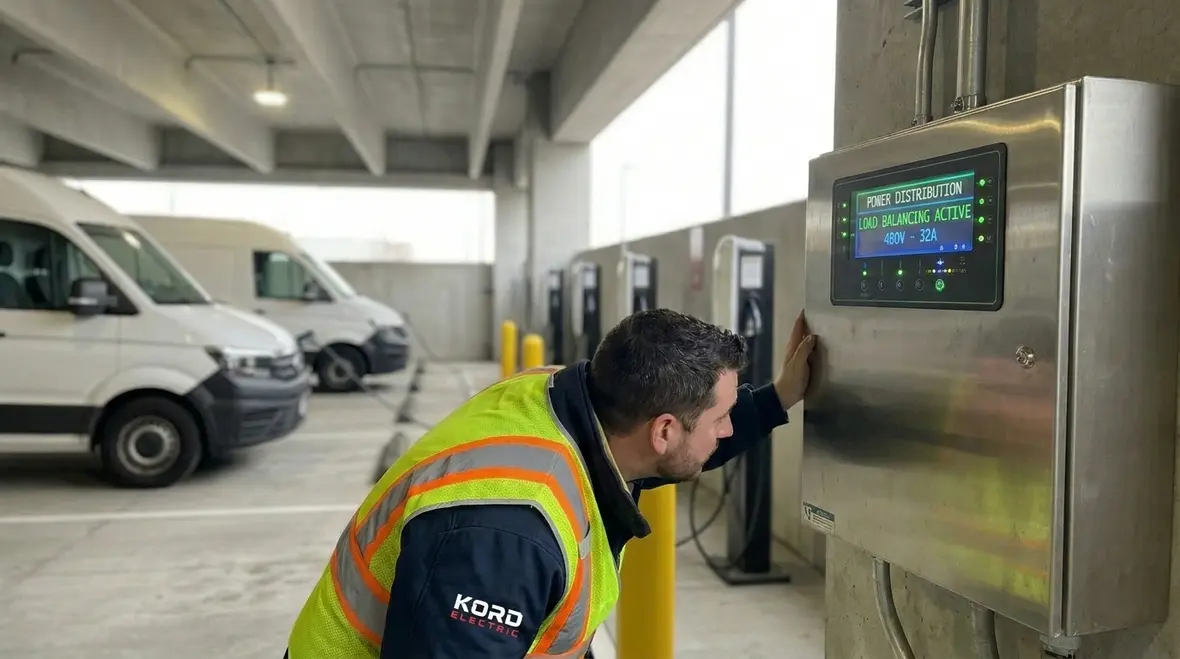
Most commercial fleets do not grow in a neat straight line. They grow when contracts expand, routes change, and replacement cycles catch up. Because of that, we design for phased expansion from the start. That means providing spare capacity where possible, setting up future circuit pathways, and choosing equipment that supports staged additions.
So, we define a growth roadmap. First, we set the initial charger count and power strategy. Then, we create a clear path for adding more charging stalls without a full electrical rebuild. For major property buildings and C and I facilities, that approach protects budgets and reduces downtime.
Our technicians also document the plan in a way that teams can use. In other words, when the next phase arrives, others can understand what changed and why. This also helps property managers and facility operators explain the setup to stakeholders without sounding like they are reading from a confusing manual.
Linking EV charging growth to broader electrical strategy
Phased EV expansion should not live in a vacuum. We tie fleet planning into existing commercial electrical strategies like lighting installation improvements, voltage stability projects, and preventive maintenance programs. That way, when your facility invests in upgrades that free up capacity, improve efficiency, or stabilize power, those gains can be channeled directly into future charging phases instead of being swallowed by unmanaged growth.
The role of utility coordination and smart power decisions
Even the best internal design can run into limits if utility constraints are ignored. Therefore, we work with the utility environment early, especially for sites that may face demand charges, service upgrade requirements, or capacity planning timelines. We help others understand how utility rate structures can affect charging schedules and operational cost.
Next, we align smart power decisions with business needs. If a fleet returns vehicles to the yard during off peak hours, the charging schedule can reduce peak demand and manage costs. However, if vehicles need morning readiness, we coordinate charging targets to finish on time. That way, the system supports operations while still respecting power limits.
Meanwhile, we monitor system health after installation. We track performance patterns and confirm the charging infrastructure for commercial fleets stays stable during busy operating periods. When operators call us, our expert service staff responds with clear next steps, not vague assurances.
Turning rate structures into a planning advantage
Utility coordination is not just about avoiding surprises. It is an opportunity to design your charging strategy around time-of-use rates, demand thresholds, and long-term capacity plans. By combining utility insight with smart load management, we help create charging profiles that support fleet readiness while taming the bill. When expansion eventually requires a service upgrade, we make sure that investment is timed, scoped, and sequenced with your broader facility roadmap instead of arriving as an emergency expense.
What our expert service staff explains during commissioning
After installation, we do not just walk away. We conduct commissioning and training, and we explain the “why” behind the “what.” Our technicians show facility teams how to check status, verify charging behavior, and interpret basic system outputs. Then, they explain how load management impacts charging speed at different times.
Additionally, we cover maintenance habits that prevent downtime. We review inspection points, connector care, and how to handle unusual conditions safely. We also explain the process for reporting issues so our team can troubleshoot efficiently. If you have ever tried to get help from a system that speaks only in error codes, you already know why this matters.
Finally, we set expectations for scaling. We explain what parameters can change, what needs approval, and what steps are required when the facility adds vehicles or chargers. That clarity keeps your future projects smoother, and it protects both uptime and budget.
Connecting commissioning to long-term reliability
The same mindset that shapes our commercial electrical maintenance plans shows up in EV commissioning. We want your system to start strong and stay strong. That means documenting baseline performance, establishing simple visual checks for operators, and aligning recommended inspection intervals with your existing maintenance routines. When charging equipment lives inside a broader preventive maintenance framework, it is far less likely to surprise you at 2 a.m. on a critical route launch.
FAQ for commercial EV charging upgrades
Ready to scale charging capacity with confidence?
If your commercial fleet is growing, do not gamble with electrical limits. At Kord Electric, we engineer EV charging infrastructure for commercial fleets that integrates into your panels, supports staged expansion, and uses load management to stay stable. Our technicians and expert service staff explain the plan clearly, then we commission and support the system so your site stays operational.
That work does not happen in isolation. It connects to the same disciplined approach we bring to commercial electrical systems, lighting installation projects, voltage stability work, and long-term maintenance programs across large facilities. When those pieces are coordinated, your building gets more than chargers in a parking lot. It gets a power strategy that supports how your operation actually runs.
If you are planning a new charging yard, reworking an existing electrical room, or exploring a broader facility upgrade that includes EV infrastructure, you can also look at how our dedicated EV charger installation services support commercial and industrial properties across Southern California. From initial assessment to long-term support, Kord Electric helps keep your projects grounded in real-world electrical performance, not guesswork.
Contact Kord Electric today to schedule a capacity review for your commercial and industrial facility or major property building. We will map a safe path forward. Your power system will thank you.