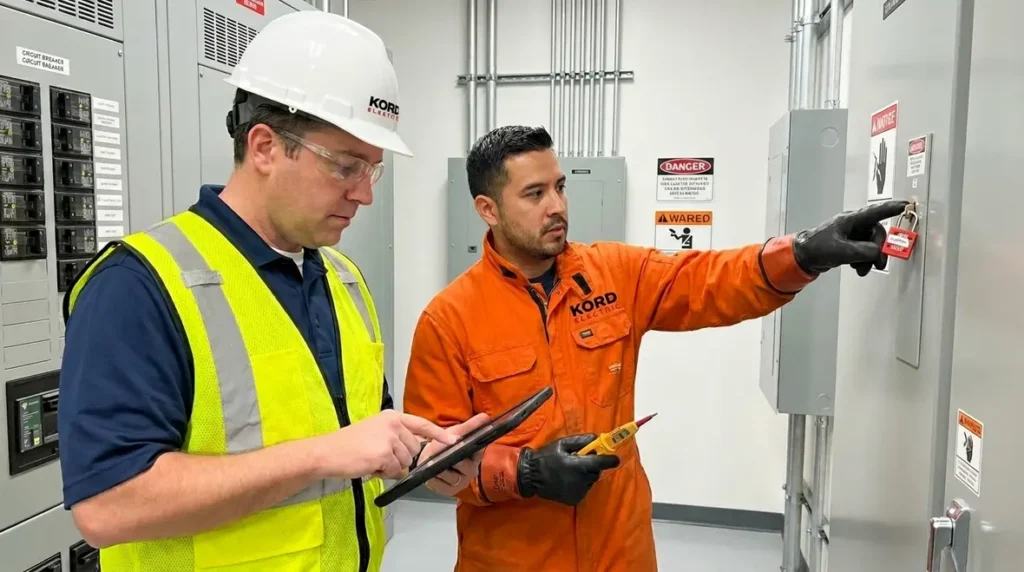
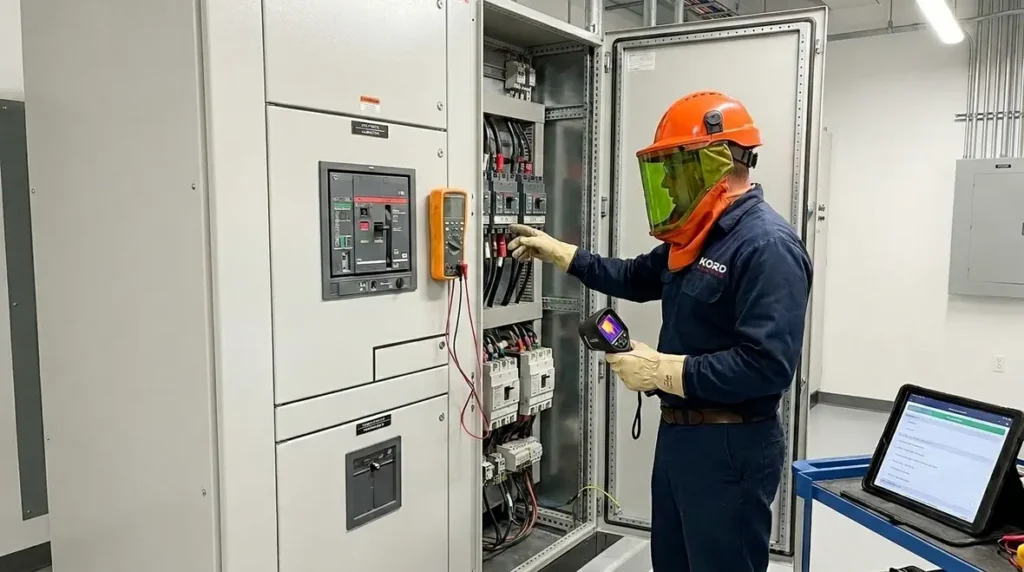
Commercial Electrical Preventative Maintenance Checklist
A Facility Manager’s commercial electrical preventative maintenance checklist, in plain terms
When a commercial site runs well, it is quiet in the best way. Yet behind that calm is a system that needs regular checks, documented, and corrected before it turns into downtime or a safety incident. That is why our commercial electrical preventative maintenance checklist starts with the basics and then goes deeper: visual reviews, insulation checks, breaker and panel inspection, load assessment, grounding verification, and testing of key protective devices. We wrote it to help a facility manager keep electrical systems reliable across warehouses, offices, data closets, and large common-area loads. Also, we keep it practical. Because nobody wants to read a 60 page mystery novel called “Panelboard Appendix B.”
Why electrical issues grow quietly in commercial buildings

Most electrical failures do not show up like a dramatic movie explosion. Instead, they build slowly, like a popcorn kernel stuck in a vent that becomes a “small problem” for years. In commercial and industrial facilities, conditions change fast: after hours loading, seasonal HVAC cycles, new tenant equipment, and renovations that shuffle circuits. As a result, the same panel that looked fine last quarter may not carry the same load today. Kord Electric helps facility teams stay ahead by aligning maintenance work with real operating conditions.
In the field, our technicians see the usual suspects. Loose connections lose tightness with heat cycling. Dust and moisture creep into enclosures. Aging insulation hardens and becomes less forgiving. And corrosion quietly attacks terminations in outdoor or washdown-adjacent areas. Meanwhile, a facility can keep operating, so leaders may not notice until performance drops or a breaker trips at the worst possible moment, usually during a busy day when everyone suddenly becomes an amateur electrician.
This is also why a strong electrical preventive maintenance program matters. A commercial electrical preventative maintenance checklist gives you a repeatable way to spot those quiet issues before they become loud problems.
How we build a maintenance plan around risk, not guesswork

Facility managers need a plan they can run every month, not a one time “we should do that” project. So our approach uses risk first thinking. We look at what can hurt people, stop production, or damage expensive equipment. Then we map those priorities to routine checks and targeted tests. This is where our expert service staff makes a difference. We explain what we find, what it means, and what it costs if you wait.
To keep work from spreading across the entire building like glitter, we focus on critical electrical paths. We typically include incoming service equipment, main distribution, branch panels for life safety and critical loads, disconnects for mechanical equipment, and any systems tied to production, controls, and communications. Next, we set frequencies based on usage intensity and environment. A clean office panel in a climate controlled building does not need the same schedule as a manufacturing support room exposed to humidity and frequent switching.
Finally, we organize the work so the facility manager gets clarity. Instead of vague notes, we deliver results tied to the electrical preventive maintenance effort and the next steps needed to keep the system stable. And yes, we keep the language business friendly. The goal is informed decisions, not a lecture.
If you manage multiple locations or larger campuses, pairing this commercial electrical preventative maintenance checklist with a structured program like Kord Electric’s ongoing electrical preventive maintenance services helps standardize what “good” looks like across every property.
Commercial panel and breaker checks: what matters and why
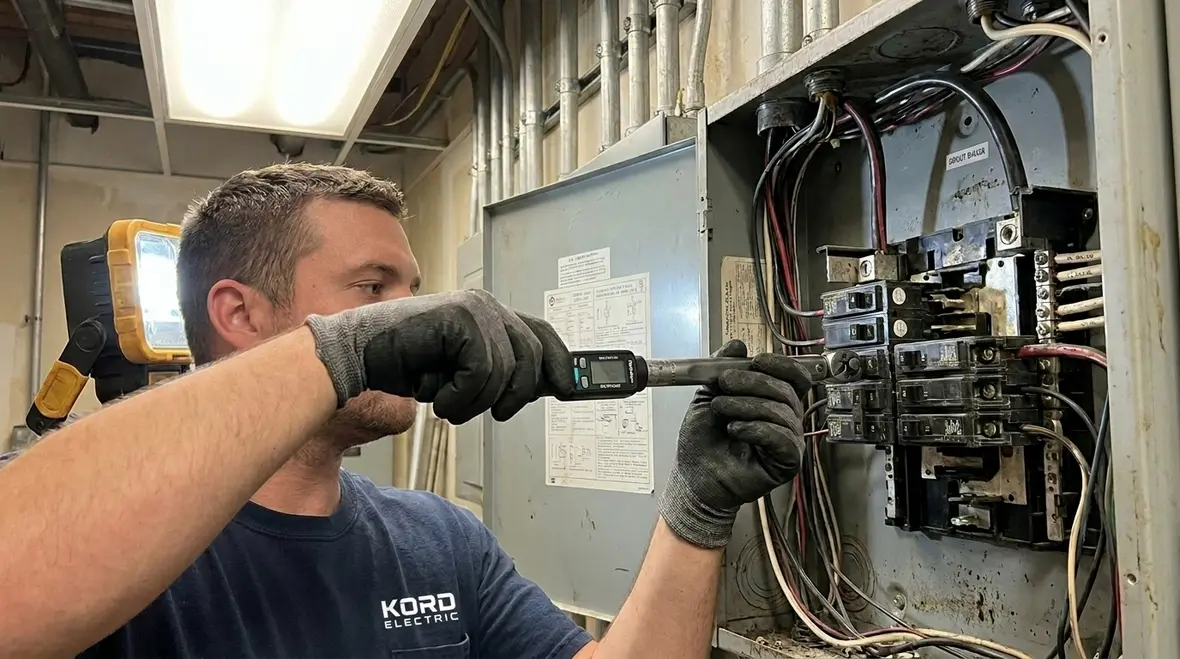
Panels and breakers act like the building’s electrical backbone, so the checklist cannot treat them as “set and forget.” During our site visits, we use a methodical commercial electrical preventative maintenance checklist that covers the condition, the connections, and the protective behavior. We start with a visual scan, then move to measurement and verification. That order matters because safety first always beats guesswork, and our technicians do not cut corners.
Key areas we inspect include panel labeling and directory accuracy, door interlocks and hinges, torque condition on critical terminations, signs of overheating, and evidence of moisture intrusion. We also check for signs of arcing marks, discoloration, and dust buildup that can trap heat. When we find a concern, we document it clearly, then explain the likely cause. For example, recurring breaker nuisance trips often point to load imbalance, loose terminations, failing components, or control circuits that do not behave as expected.
From there, we verify protective device performance based on the facility’s needs. We do not rely on age alone. We consider loading patterns, historical issues, and the building’s operational risk. If a building runs critical processes, we make sure testing connects back to that goal: fewer unexpected trips and more stable power delivery.
Grounding, bonding, and safety checks that protect people and equipment
In commercial and industrial environments, grounding and bonding are not just compliance language. They are the difference between a safe fault path and a risk that can damage equipment or harm staff. Many facility teams focus on loads and forget the quiet work that keeps systems protected. We make sure the routine checks cover the foundation.
Our expert service staff reviews grounding conductor integrity, verifies bonding paths, and checks that grounding electrodes and connections align with the system design. We also pay attention to metallic pathways that support safety. When there is corrosion, loose connections, or missing bonding jumpers, the electrical safety performance can degrade over time. Then, during a fault event, the system may not clear as expected, and protective devices may not behave reliably.
Ground verification also supports stable operation of sensitive equipment. It helps reduce noise issues and supports consistent performance for controls, communications gear, and monitoring devices commonly found in major property buildings.
Load balance, infrared screening, and thermal clues you should not ignore
Load imbalance turns electrical panels into hot spots. And hot spots do not always trigger immediate failures. Instead, they accelerate aging and increase the chance of insulation breakdown. That is why we include load and thermal awareness as part of the maintenance rhythm. We help facility managers spot issues early using measurement methods and thermal inspection where appropriate.
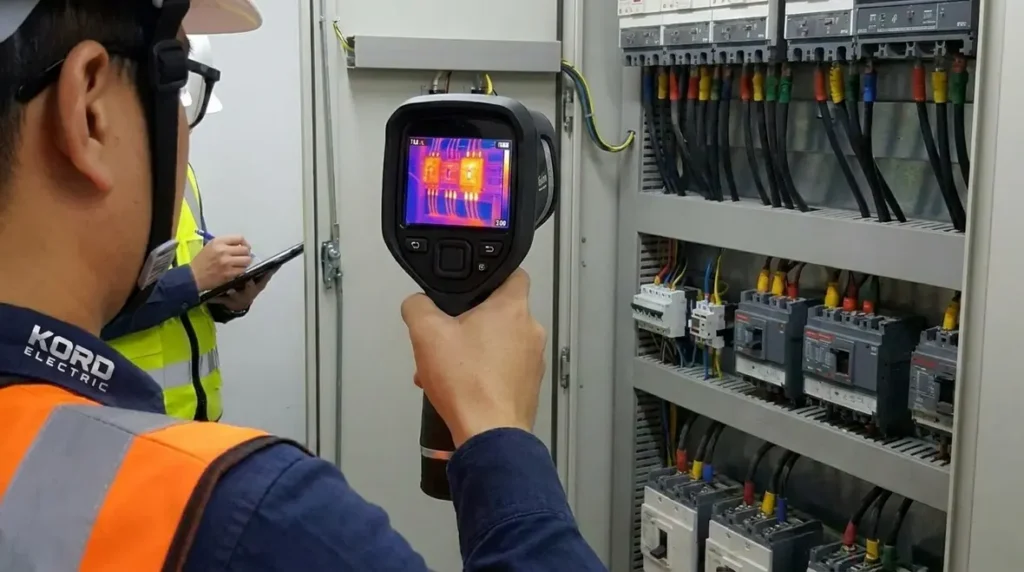
Thermal clues can reveal problems that a visual inspection misses. For instance, a connection can look fine until heat cycles expose the issue. Infrared screening can help identify abnormal temperatures at bus bars, breakers, lugs, and terminations. After screening, we validate the findings with practical next steps. Our team explains what we see and how it connects to system behavior.
To keep the work efficient, we coordinate testing with normal operations and schedule around business needs. Nobody wants to shut down an entire distribution area when a targeted inspection would do. We plan access, confirm safety steps, and then proceed in a way that protects staff and reduces disruption.
If thermal inspection reveals deeper issues like voltage instability or chronic hot spots, it can also be a signal to review the broader system. In some facilities, a focused service such as Kord Electric’s voltage fluctuation diagnostics and repair brings long term stability back to critical equipment.
Documentation, reporting, and how a facility manager uses the results
If the work is done and nobody can use the information, it might as well have not happened. So we structure reporting for the real needs of facility managers. After each commercial electrical preventative maintenance effort, our technicians provide findings with clear descriptions, priority levels, and recommended next actions. That means you get more than “something needs attention.” You get a path you can budget and plan.
We also help teams build maintenance history. Over time, that record supports better decisions. If a breaker shows repeated temperature drift, it points toward a component problem or an ongoing load pattern shift. If a moisture issue repeats in a specific enclosure, it suggests a sealing or drainage fix. This is how good maintenance becomes smarter maintenance.
And yes, we include the practical stuff like labeling updates, closure checks, and corrections that keep the site running smoothly. We treat every visit like an investment, not a checkbox exercise.
For facilities planning larger upgrades after repeated findings, this same documentation can support capital projects and tie into services like commercial and industrial electrical maintenance plans or full system upgrades guided by detailed maintenance history.
FAQ
Schedule your commercial preventative maintenance with Kord Electric
A facility manager can only do so much with downtime pressure, tenant demands, and shifting schedules. So we help you build a calm, reliable plan for electrical performance. Kord Electric works with commercial and industrial facilities and major propertie buildings to deliver inspections, testing, and clear documentation tied to a commercial electrical preventative maintenance checklist approach. Contact us to review your current maintenance rhythm, walk through priorities, and schedule the next visit. Let us handle the sparks before they become problems. You handle the meetings.
If your facility is already seeing frequent trips, unexplained shutdowns, or chronic hot spots, you may also benefit from dedicated services beyond this checklist. Kord Electric’s targeted solutions for voltage fluctuations in commercial and industrial facilities and structured electrical preventive maintenance programs help stabilize operations and extend system life across major properties.
Together, a disciplined commercial electrical preventative maintenance checklist, a risk based inspection schedule, and the right service partner turn “we hope nothing breaks” into “we know what to expect.” That shift saves time, reduces surprise outages, and supports a safer, more predictable work environment for everyone in the building.