Electrical Safety Protocols for Facility Technicians
At Kord Electric, we help commercial and industrial facilities build safer work every single day. However, safety does not come from posters or once a year trainings. It comes from electrical safety protocols for facility technicians that managers lead, model, and reinforce. In our approach, we start by setting clear procedures for lockout tagout, safe test methods, energized work controls, and incident reporting. Then we make sure those rules live inside the job flow, not just inside a binder. Our technicians and expert service staff explain the why behind each step, and they do it in plain language that sticks. Because yes, people can remember “two hands, one tool” longer than “abstract risk theory.” Like any good sitcom, the best safety cultures have repeatable routines and a few well placed jokes, while the work stays serious.
1) Why managers shape the real safety culture
When others talk about safety, they often focus on equipment. Yet managers shape behavior. They decide what gets priority during busy shifts, what gets fixed first, and what gets celebrated. If a supervisor treats near misses like paperwork, workers learn to hide problems. On the other hand, when leaders treat hazards like opportunities to improve, crews start speaking up early.
We see it in how managers run pre job planning. For example, our facility partners ask technicians to review job scope, verify equipment condition, and confirm access to the right tools before work begins. Then we align supervisors to watch for missing steps without humiliating anyone. That matters. People do not resist safety rules when they feel respected and supported.
To keep the tone calm and consistent, Kord Electric encourages leaders to use the same language in the field. That way a technician hears one message from the panel door, not three different messages from three different managers. After all, nobody wants a “choose your own adventure” safety plan. And if you do, please do not do it near a live cabinet.
2) Build your electrical safety protocols into daily routines
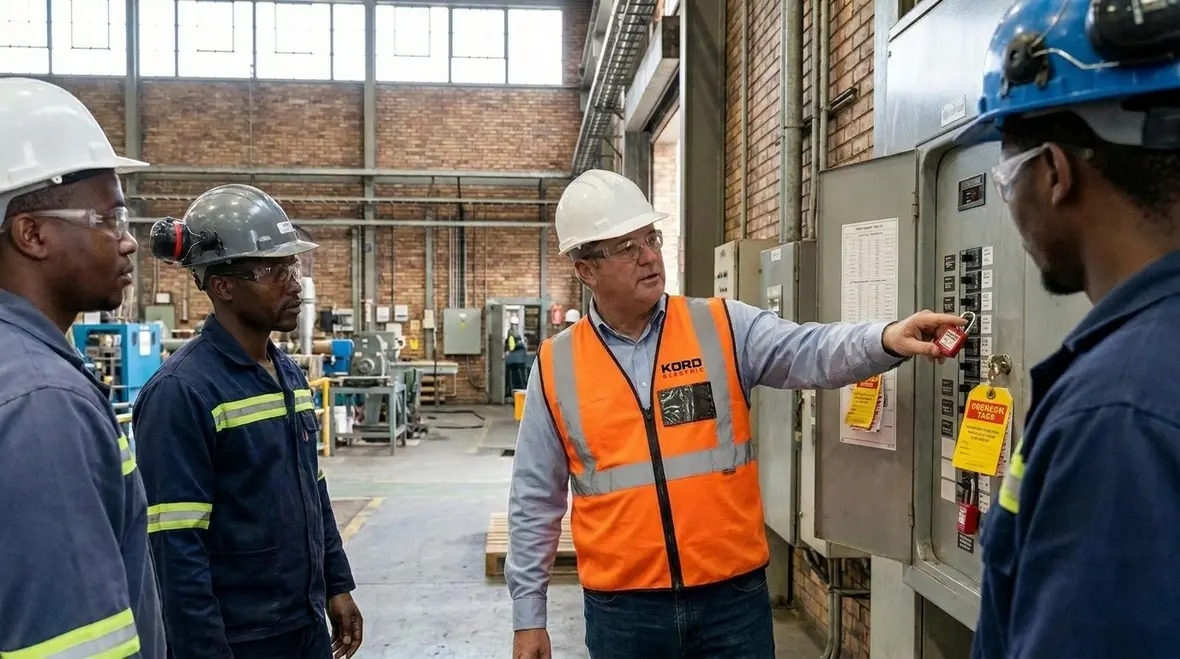
To build a culture that lasts, a manager needs routines that repeat. We recommend five daily building blocks for commercial and industrial settings: shift start checks, task specific hazard review, equipment isolation verification, control of test and measurement, and end of job site restoration.
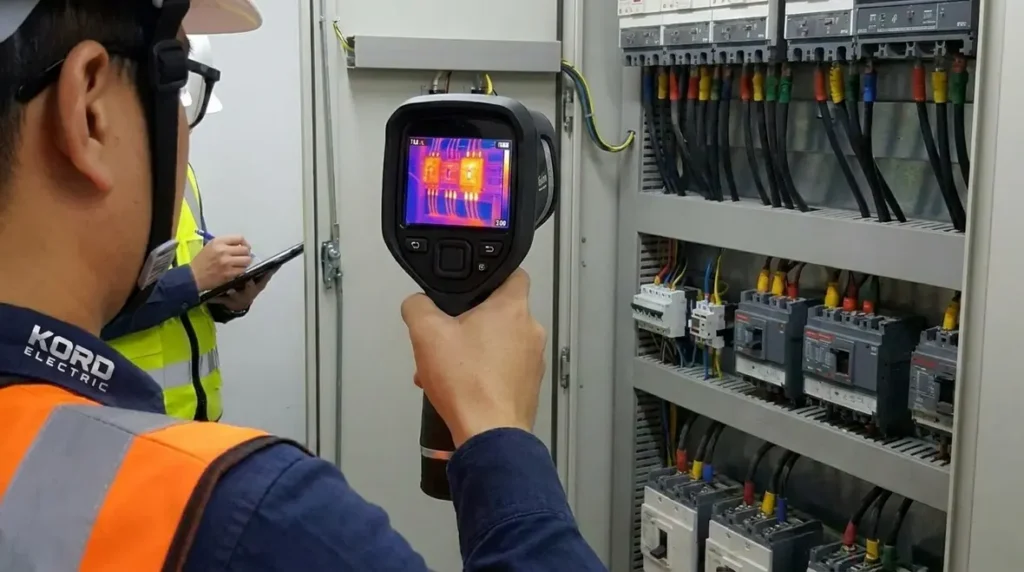
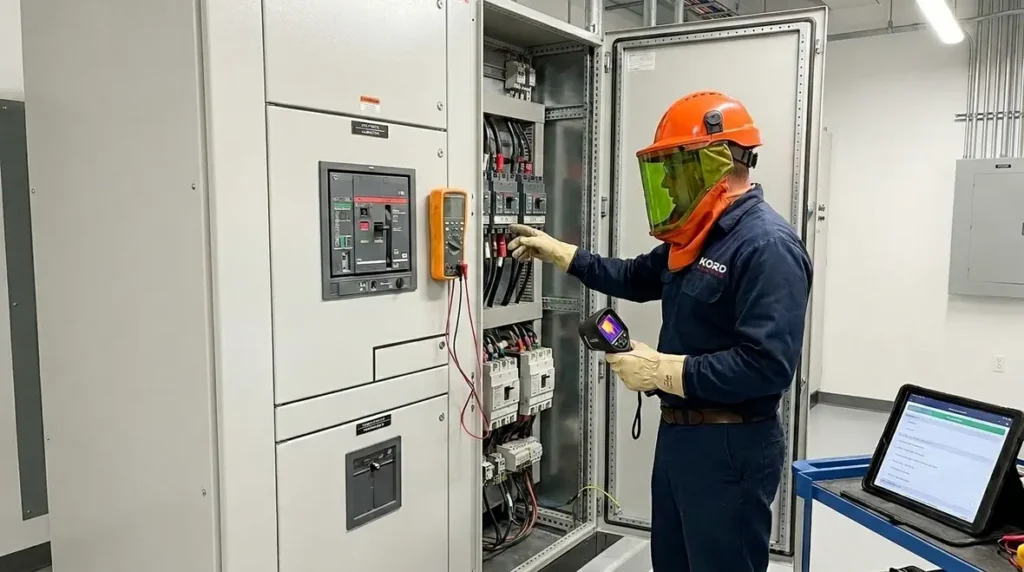
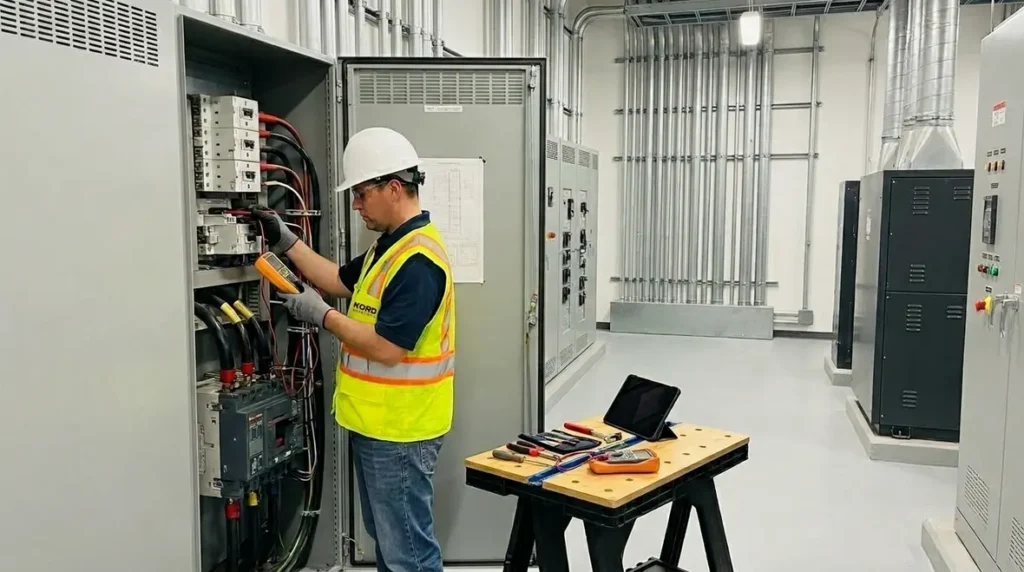
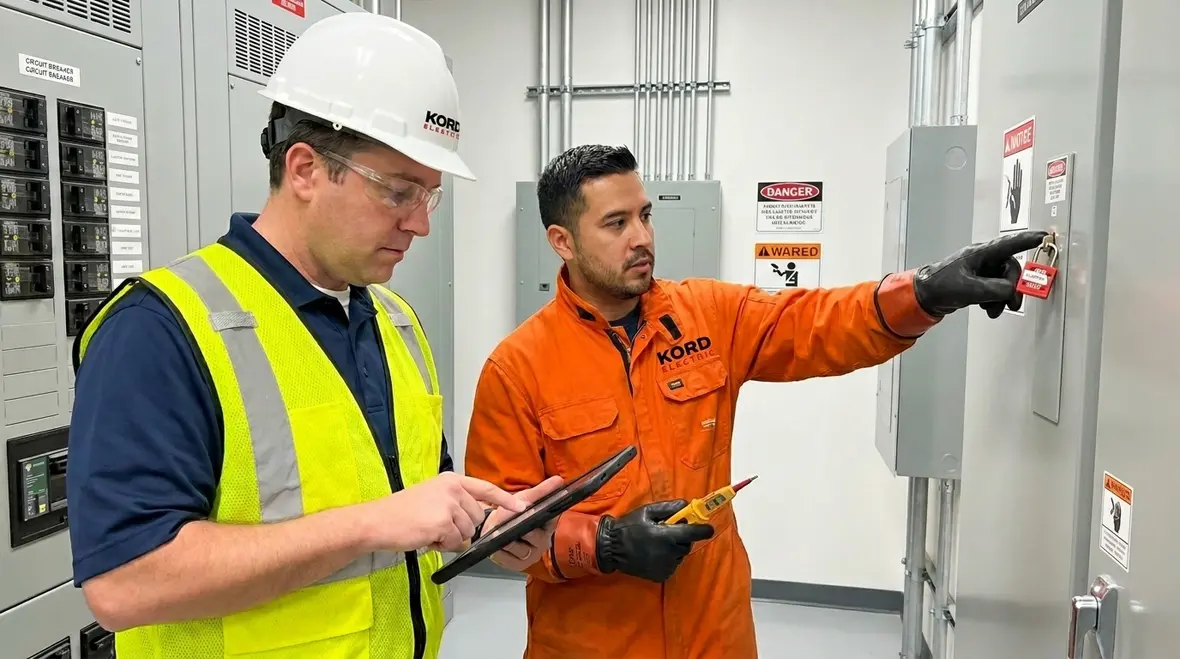
First, shift start checks should include verification of PPE availability, test instrument calibration status, and access to lockout devices. Next, task specific reviews should name the energy source, outline isolation points, and confirm what “safe” looks like for that task. Then, crews should perform isolation verification with approved methods before touching conductors. Additionally, test and measurement should follow a consistent approach, so the technician does not improvise under pressure. Finally, the job ends only when the work area returns to safe operating condition, with covers replaced and documentation completed.
Our expert service staff often walks managers through these steps during onboarding, then they coach supervisors on how to spot gaps quickly. When we do that, the protocols stop feeling like rules and start feeling like a reliable process.

Turn routines into a dependable electrical safety backbone
When those daily steps become muscle memory, electrical safety protocols for facility technicians hold up even when staffing changes or workloads spike. For many of our commercial and industrial partners, these routines also tie directly into structured programs like electrical preventive maintenance, so the day to day habits line up with long term reliability plans.
3) Teach the “why” using your technicians as the message
Training fails when it sounds like a lecture. It works when it sounds like experience. Kord Electric keeps this simple: we use our technicians and expert service staff to explain hazards in the same words crews use on site. That approach helps teams connect the procedure to real outcomes.
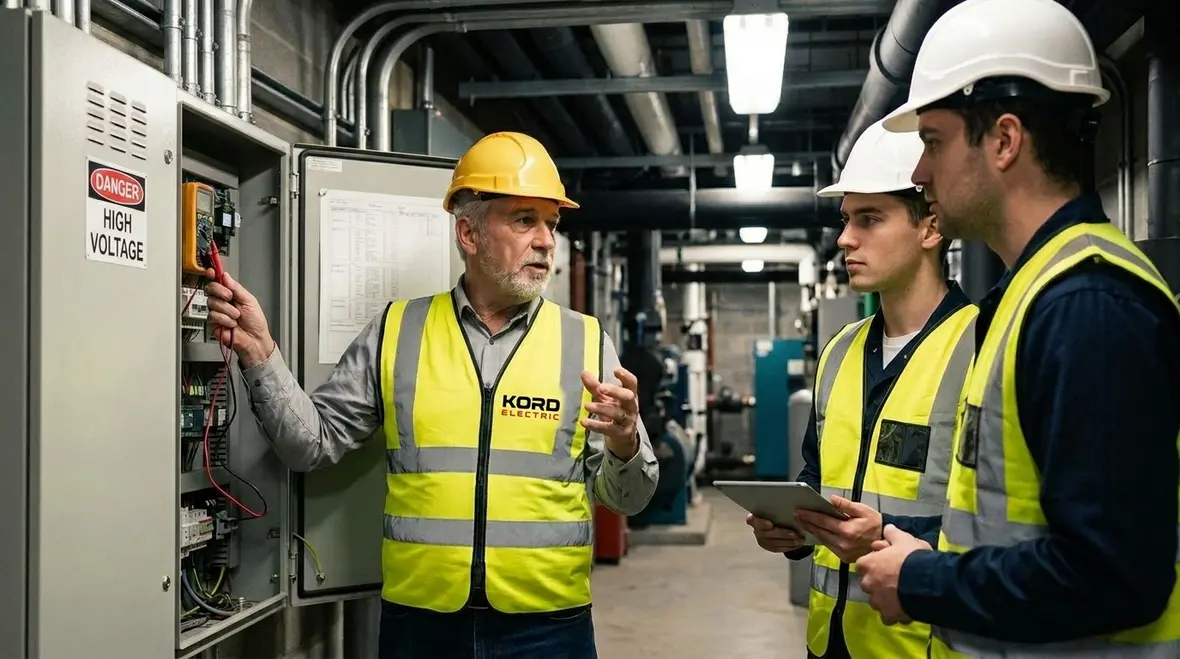
During toolbox talks, our team points out typical commercial and industrial scenarios. A cabinet that looks de energized may still feed a control circuit. A “quick lock” can break when someone does not isolate the full energy path. Also, a rushed test method can confuse a technician who is using the wrong meter range. When technicians explain these risks, they naturally cover what to check, what to verify, and what to avoid.
In addition, we recommend short scenario drills. Managers can ask, “What would you verify first and why?” This turns knowledge into a habit. And because our technicians speak from the field, the answers feel realistic, not like a textbook guessing game.
Let field stories carry the safety message
When technicians describe what almost went wrong on a rooftop panel or during a late night restart, those stories do more than any slide deck. They translate electrical safety protocols for facility technicians into lived experience. Crews remember the near miss on the chiller feed, the time a “dead” circuit still carried control voltage, or the instance when a rushed test skipped verification and almost caused an arc. Those specifics make the “why” impossible to ignore.
4) Use coaching, not blame, when something slips
Even in strong programs, something will drift. A label falls off. A tag gets delayed. Someone rushes because a production line needs power now. Here is where managers either protect culture or quietly poison it.
We urge leaders to respond with calm, immediate coaching. First, stop the work if there is an unsafe condition. Second, gather facts. Third, correct the process and retrain the point of failure. Most importantly, do not treat every mistake as a character flaw. If the environment supports shortcuts, the culture will follow that path.
To make this practical, Kord Electric encourages a structured after action review. It includes what happened, what controls were in place, what controls failed, and what new barrier will prevent recurrence. Additionally, managers should track patterns across crews and shifts. Trends tell you more than single events. If multiple teams miss the same verification step, the solution often involves better tools, clearer isolation points, or more consistent signage.
In our experience, coaching works best when managers join the field walkthroughs. That small act signals, “We do this together.” And yes, it also helps managers avoid the classic mistake of learning safety only after a headline shows up on a morning news show.
Turning near misses into better electrical safety protocols
When a near miss happens around energized gear or during lockout tagout, a blame heavy response usually pushes information underground. A coaching response does the opposite. It brings technicians into the conversation, asks what pressure they felt, and adjusts electrical safety protocols for facility technicians so they work in the real world, not just on a whiteboard.
5) Improve coverage with smart audits and clear records
Audits should not feel like a pop quiz. They should feel like maintenance for the program. When managers run audits well, they catch weak spots early and strengthen accountability without turning the site into a surveillance zone.
We recommend a simple audit rhythm for large facilities: quick checks weekly and deeper reviews monthly. Quick checks verify basic controls such as lock placement, label clarity, and PPE availability. Deeper reviews confirm that isolation verification is performed consistently and that documentation aligns with what actually happened on site. Also, audits should include a walkdown of the affected equipment, not just a desk review of paperwork.
Below, Kord Electric supports managers with a dual view of what to audit and how to fix it. This helps teams move from observation to action without getting lost in meetings.
Audit focus |
Manager action |
Isolation verification method used for each task |
Confirm approved test procedure, then coach technicians on the verification sequence |
Lockout devices and tag placement during multi person work |
Review responsibility rules, then standardize how teams apply and remove locks |
Access control around energized panels and temporary setups |
Adjust barricades, signage, and escort requirements to match site conditions |
End of job restoration and sign off quality |
Set a clear final step checklist, then verify covers, labeling, and documentation |
Meanwhile, records matter. When managers keep clear logs of observations and fixes, they show follow through. That builds trust, and it also supports compliance for commercial and industrial operations where audits show up like clockwork.
Make audits part of normal operations, not rare events
In facilities that already lean on structured programs like electrical preventive maintenance, safety audits become a natural extension of the work. Technicians expect periodic checks on isolation methods, labeling, and documentation. Over time, that rhythm hardens electrical safety protocols for facility technicians into everyday habits instead of occasional campaigns.
6) Standardize work so safety holds under pressure
Many incidents happen during “unplanned” work. A production issue, a utility interruption, or a late equipment problem forces crews into high pressure. That is when standardization becomes your safety shield.
Kord Electric recommends standardized job steps for common facility tasks. Managers should require that crews use defined isolation points, approved tools, and documented verification sequences. Then they should provide quick reference materials that match the real layout of the site. If a reference guide lists procedures that do not match the equipment, crews will stop trusting it. And if they stop trusting it, the entire program quietly collapses like a poorly installed panel cover.
Also, assign responsibility clearly. In commercial and industrial buildings, multiple teams may work around the same electrical system. Managers should define boundaries for access, communication, and handoffs. When everyone knows who controls the switchgear area and who owns the sign off, the job runs smoother and safety decisions become faster.
Finally, build a feedback loop. Encourage technicians to report what slowed them down or where the procedure felt unclear. Then managers adapt the program. Safety culture grows when it responds to reality, not when it ignores it.

Standardization that still leaves room for judgment
Standard work does not mean robotic work. It means giving facility technicians a steady base to stand on when pressure hits. Clear isolation points, well marked panels, consistent PPE expectations, and repeatable test sequences free up mental space so teams can focus on what is unique: the specific fault, the unusual weather, or the odd behavior of a piece of equipment. In that way, electrical safety protocols for facility technicians support good judgment instead of replacing it.
7) FAQ: Building an in house electrical safety culture for facility teams
As managers strengthen electrical safety protocols for facility technicians, a few questions come up over and over again. The answers below give you a quick starting point while you build your own in house program.
Connecting culture, procedures, and preventive maintenance
As your in house culture matures, linking it with a structured service such as Electrical Preventive Maintenance for commercial and industrial facilities helps keep safety, reliability, and compliance moving in the same direction. Field habits, audit findings, and maintenance schedules all feed into one integrated approach instead of competing for attention.
Conclusion: Make your culture stick with Kord Electric
Managers can build an in house electrical safety culture that protects people, reduces downtime, and strengthens compliance for commercial and industrial facilities. At Kord Electric, we work with your team to standardize work, coach technicians in the field, and tighten electrical safety protocols for facility technicians into everyday routines. If you want a safer operation without the chaos, reach out to Kord Electric. We will help you map gaps, strengthen controls, and keep your crews focused on the right steps.
If your facility is ready to connect better day to day habits with a disciplined maintenance strategy, explore how our dedicated Electrical Preventive Maintenance services support critical commercial and industrial infrastructure. Together, we can align your culture, your procedures, and your systems so they all point toward the same goal: safe, reliable power for every shift.