Industrial Electrical Surge Protection Solutions
At Kord Electric, we design and install industrial electrical surge protection solutions for commercial and industrial facilities, plus major property buildings where downtime costs real money. When a lightning strike, a switching event, or even a utility fault rolls through, a well planned surge path can help protect critical equipment like PLCs, drives, HVAC controls, SCADA systems, and power supplies. And yes, surges can arrive faster than anyone can say “who left the lights on.”
To keep equipment safe, our technicians explain the rules of surge protection the same way we would explain a safety checklist on a busy jobsite: slow, clear, and with purpose. In the sections below, we outline best practices that reduce risk, improve protection levels, and keep systems reliable.
1) Start with the risk map before you buy the first device
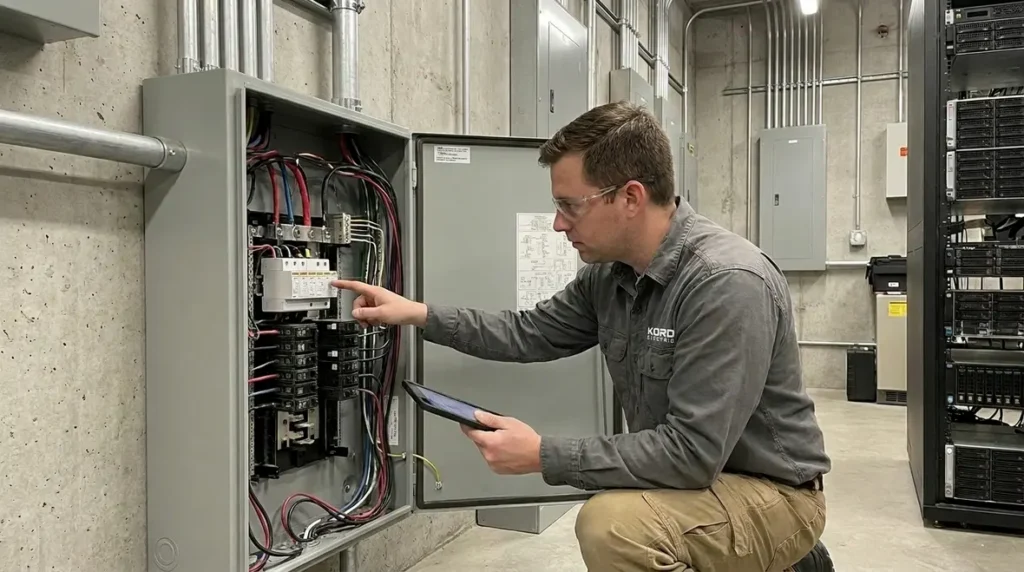
In industrial settings, surge protection does not start at the panel. It starts at the building and the load. First, we gather site details, because the same surge device can perform very differently in different layouts. For example, a facility with long cable runs to remote motor controls faces a different stress pattern than a building with compact wiring and short feeder lengths.
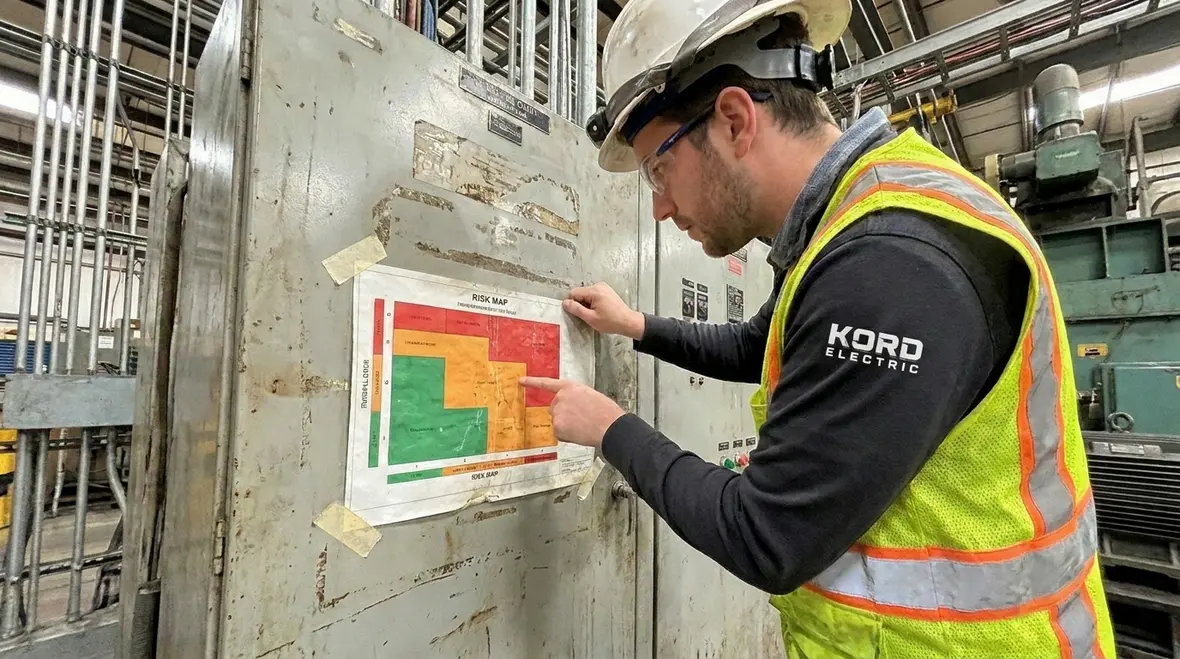
Then our team builds a risk map based on three main factors. First, the likely surge sources, like lightning exposure and utility switching. Second, the path the surge will travel through power and signal circuits. Third, the equipment sensitivity, because a modern drive controller responds differently than a simple contactor.
Next, we identify where failures usually happen. Often, the damage path comes from poor bonding, long conductor runs, or missing coordination between devices. That is why we tell clients to treat surge suppression like protection, not decoration. If it is installed like an afterthought, it behaves like one too.
2) Use coordination, not a single “magic” protector
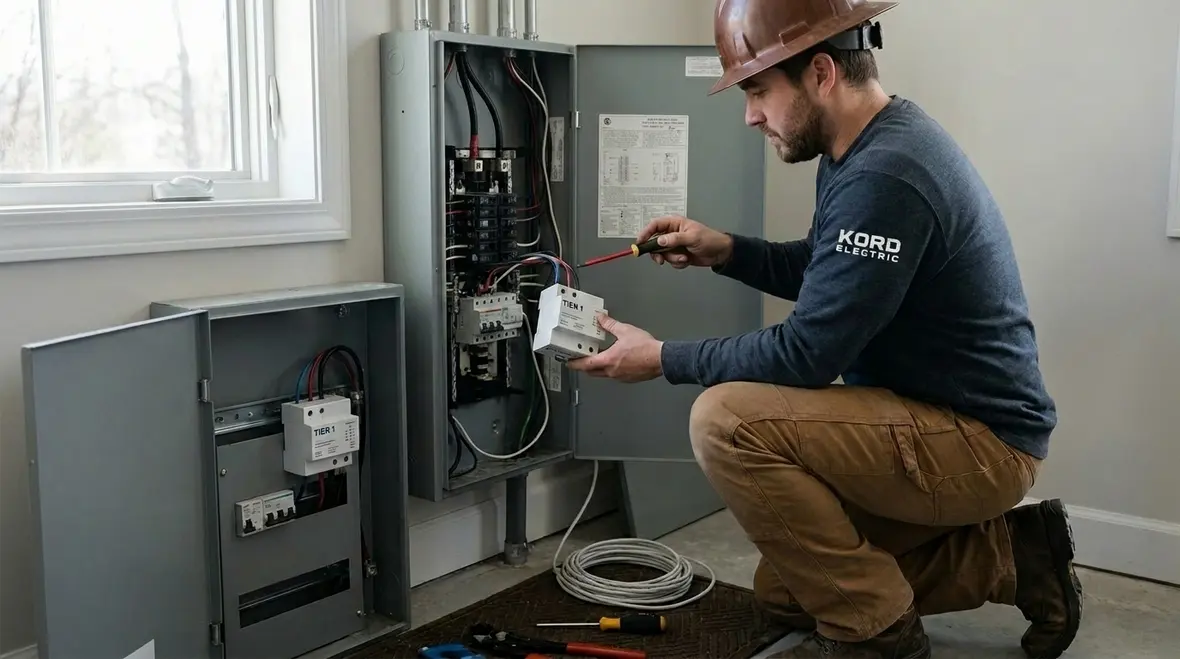
Surge events rarely respect a single panel boundary. Therefore, best practice calls for coordinated protection across levels. In plain terms, a facility should use layered protection so the energy gets handled step by step, rather than dumped all at once into one location.
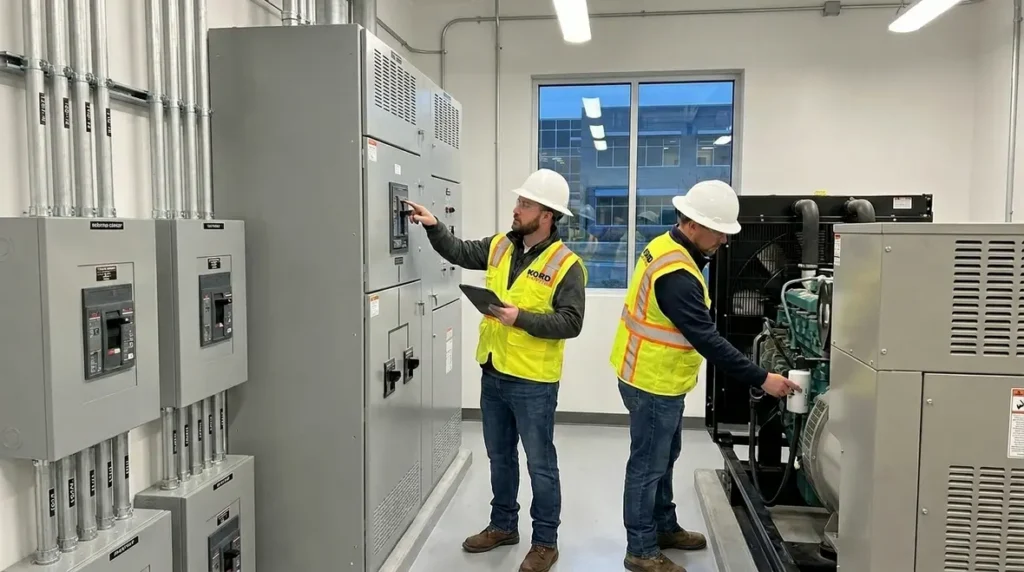
Our technicians typically recommend a staged approach that matches the facility power system. For example, protection often starts at service entrance or main distribution, then continues at distribution boards closer to sensitive loads, and finally at the equipment level where controls and power supplies need tighter protection.
When those layers coordinate correctly, each device shares the workload, and the voltage stress on downstream equipment drops. When they do not, one device may see more energy than it was designed to handle, and the “protected” gear can still take the hit. It is like putting one firefighter on the roof and hoping the fire stops because it noticed professionalism.
This same layered mindset shows up in other critical environments as well. For example, in data infrastructure, staged protection across service, distribution, and equipment is part of the broader reliability picture described in Kord Electric’s data center electrical infrastructure essentials, where power quality, redundancy, and uptime all depend on thoughtful electrical design.
3) Pay attention to grounding and bonding like it is the main character
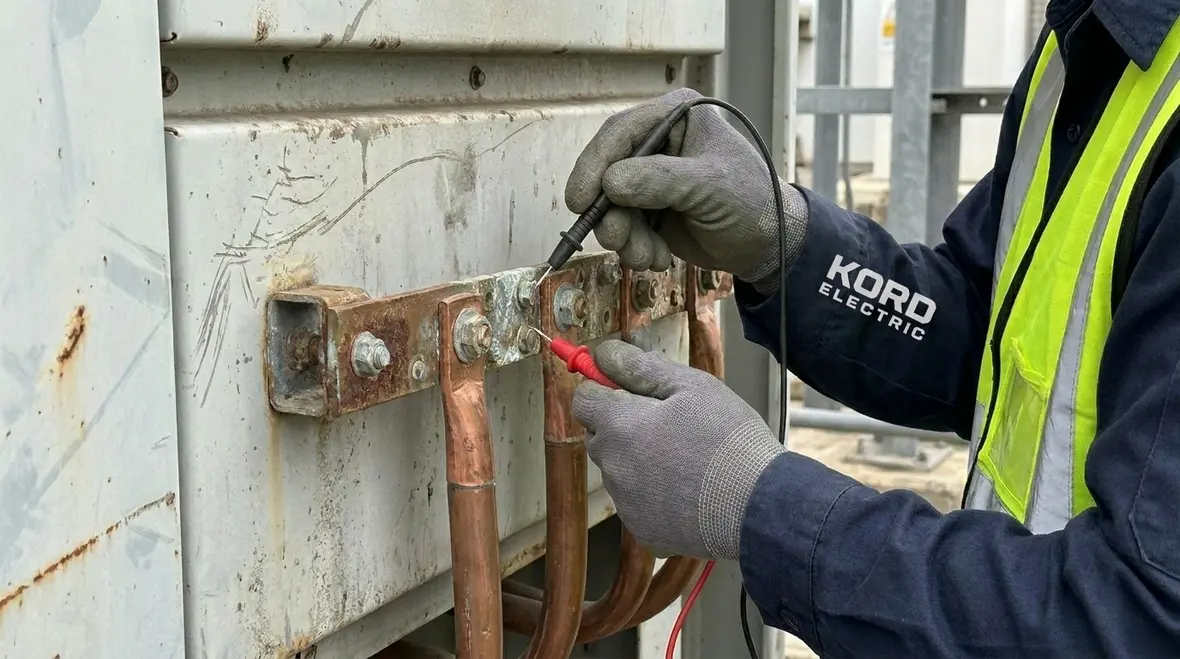
In surge protection, grounding and bonding act like the stage the performance happens on. If the stage is shaky, the show wobbles. Therefore, we do not treat grounding as a generic checklist item. We verify conductor paths, connection quality, and the actual impedance behavior of the system.
Surges move through both the power conductors and the grounding system. So if bonding is loose, corroded, undersized, or routed poorly, the surge voltage can rise where it should not. That can increase stress on equipment and shorten device life.
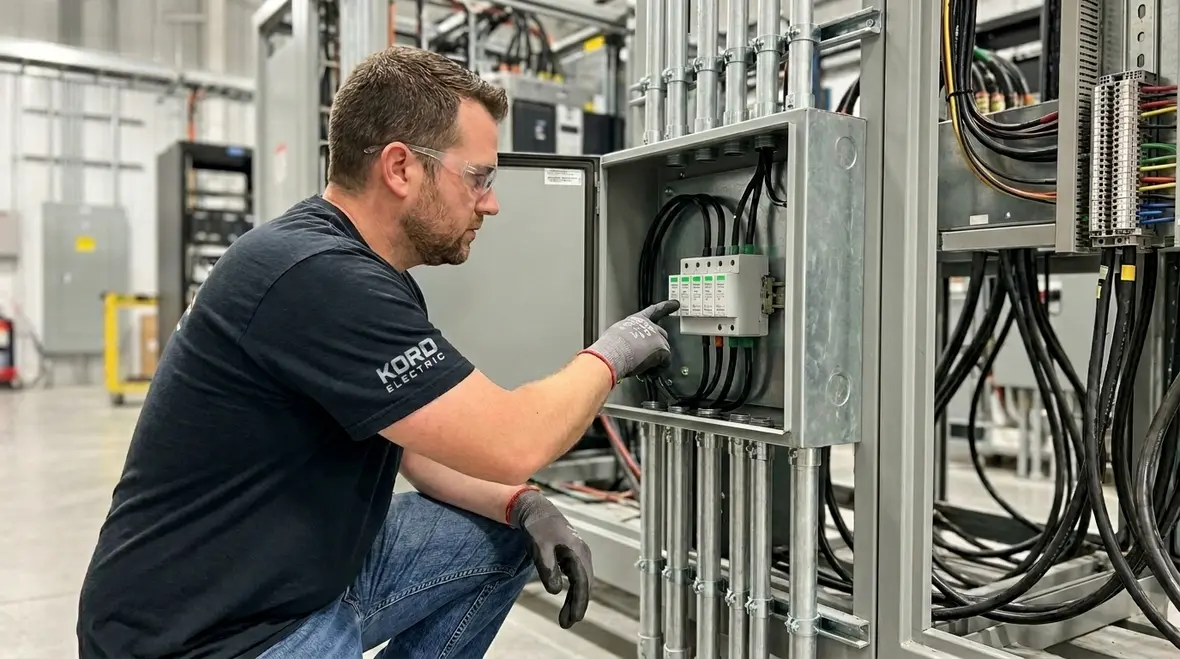
At Kord Electric, we focus on the details that matter for commercial and industrial facilities. We check continuity, connection integrity, and proper separation where required. Additionally, we ensure surge devices connect with short, straight conductor routes so energy does not build up on unintended inductance.
4) Control conductor length and routing to reduce voltage rise
People often focus on the surge device rating, and we understand why. It is a clean number on a spec sheet. However, surge energy follows physics, not hope. As conductor length increases, voltage rise increases too, because inductance fights the surge current.
That is why best practices include strict rules for routing and installation. We recommend short leads, direct paths, and tidy layout that prevents loops. When possible, we design connections so the surge path stays predictable. We also avoid routing that places surge conductors next to noise sensitive cables without proper separation.
During installation, our expert service staff explains the “why” behind the layout choices. They show how the placement affects performance, because a surge device installed with long leads can underperform even if the product rating looks strong. Think of it like putting a smoke detector in the basement and wondering why the kitchen still feels chaotic.

5) Protect power and communication paths, not just the obvious circuits
Critical industrial equipment rarely lives on power alone. Computers, network switches, process controls, building management systems, and instrumentation all connect through data and signal paths. So a full protection plan covers both:
- Power circuit surge suppression for feeders, panels, and equipment power inputs
- Signal and communication protection for network lines, control wiring, and monitoring systems
Moreover, the same event that hits a motor drive control cabinet can also push noise through Ethernet, Modbus, or other control buses. If signal paths run unprotected, sensitive electronics can fail even when the power side looks “covered.”
When Kord Electric designs industrial electrical surge protection solutions for commercial and industrial facilities, we also consider how signals enter and leave cabinets and racks. Then we coordinate protection so the system stays stable. In many cases, the goal is not only to prevent total failures but also to reduce nuisance faults, resets, and performance glitches that lead to downtime.
For facilities that depend heavily on digital infrastructure, this power-plus-communication mindset pairs naturally with broader reliability planning. Surge protection, grounding, and clean routing all support the same stability goals described in Kord Electric’s work on data center electrical infrastructure essentials, where signal integrity and uptime go hand in hand.
6) Maintain the protection system, because devices age and so do connections
Surge protection is not a set it and forget it strategy. Devices can degrade after events, especially when they see repeated surges. Connections can loosen. Enclosures can get damp. Terminations can corrode. And then the protection plan becomes a rumor instead of a shield.
Therefore, we recommend inspection and verification at intervals that fit the facility environment and risk level. Our technicians review indicators, check terminations, and confirm that devices still operate within expected performance. Additionally, we evaluate any equipment issues that show patterns after storms, utility events, or generator switching.
Our expert service staff helps clients understand what “inspection” means in practical terms. It includes visual checks, continuity checks where appropriate, and documentation updates so the facility can plan upgrades before failures appear. Because when production stops, it does not care whether the surge device looked fine last year.
7) Reference checklist we follow for facility readiness
For major property buildings and industrial operations, we use a structured approach that keeps projects clear and measurable. Our team aligns hardware selection, installation details, and testing expectations. As a result, clients get a system that protects critical equipment with less guesswork.
- We define critical loads and map surge paths across power and control circuits
- We build a coordinated plan across service, distribution, and equipment levels
- We verify grounding and bonding quality and correct weak connections
- We install surge devices with short, straight, low impedance conductor routing
- We protect communication and signal interfaces, not only power inputs
- We plan maintenance, inspection, and documentation so the system stays ready
Some people treat surge suppression like a rainy day umbrella. At Kord Electric, we treat it like building a roof that has to work every day, even when the weather gets dramatic.
FAQ: Industrial electrical surge protection solutions
Conclusion: Building surge protection that matches your facility
If your facility runs critical systems, surge events are not a maybe. They are a timing problem. Kord Electric builds coordinated, properly installed industrial electrical surge protection solutions for commercial and industrial facilities and major property buildings, with grounding, routing, and ongoing maintenance done right. Our technicians and expert service staff explain the process in clear terms, because confidence matters when uptime matters. Contact us today to assess your infrastructure and create a surge protection plan that stands its ground.
When surge protection ties into broader upgrades such as service modernization, rewiring, or data infrastructure improvements, Kord Electric helps facility leaders evaluate the full picture—from surge paths and grounding to capacity, redundancy, and compliance. To explore how surge planning fits into a larger electrical strategy, see how it connects with their guidance on data center electrical infrastructure essentials and related commercial electrical system planning.
If you are planning major upgrades or need a structured review of your power distribution, coordination, and protection, Kord Electric’s commercial and industrial electrical services provide the next step. Their team can evaluate panels, feeders, protection devices, and surge paths together so the entire system supports uptime, not just individual components.
Ready to put a coordinated surge strategy to work across your facility, from service entrance to the smallest control cabinet? Reach out to Kord Electric’s commercial and industrial services team for a site review, surge assessment, and implementation roadmap tailored to your building and your operations.