Electrical Panel Thermal Imaging Benefits Guide
Kord Electric helps commercial and industrial facilities catch problems before they grow teeth. With electrical panel thermal imaging benefits, we see temperature differences that the naked eye simply cannot. That means fewer surprise shutdowns, less overtime spent chasing “mystery” breaker trips, and a smarter path to maintenance planning. While some companies guess, we measure, and then we document. In other words, we replace panic with proof.
Now, let’s talk about how hidden hazards show up inside electrical panels, why they start small, and how our expert service staff uses thermography to protect people, equipment, and budgets. Yes, electricity can be dramatic, but we do not have to make the story end in smoke.
How Hidden Hazards Form Inside Commercial Electrical Panels
Commercial and industrial panels do not fail all at once. Instead, they degrade slowly, and then they fail quickly. First, connections loosen from vibration, heat cycles, or poor installation. Next, dust, moisture, and airborne contaminants can create paths for current where it should not travel. Meanwhile, aging breakers and bus bar surfaces lose integrity. Then, under load, a small rise in resistance turns into a hotter hotspot.
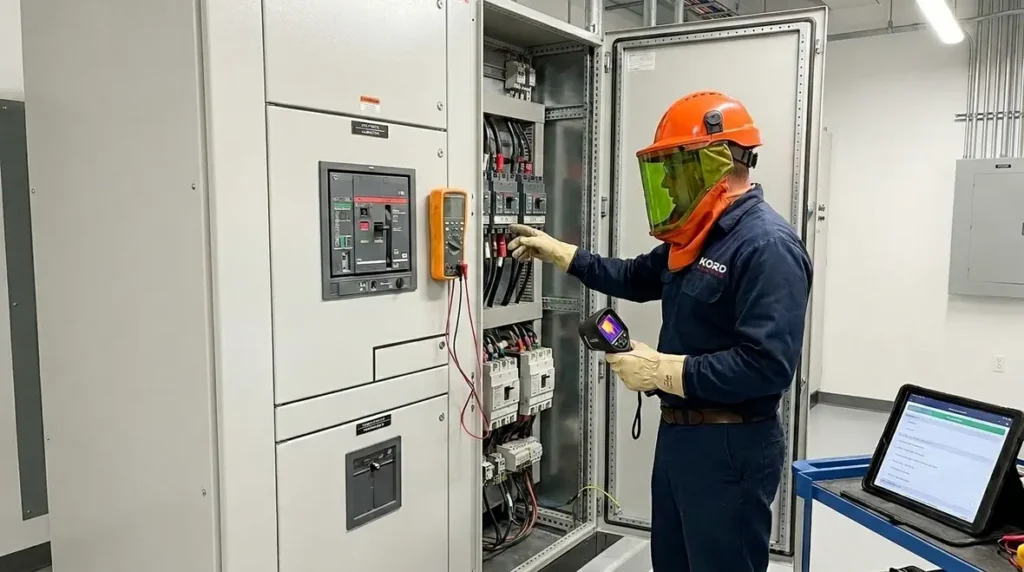
To make this real, Kord Electric technicians often see the same pattern during inspections: elevated temperature near terminations, abnormal heat near lugs, and uneven cooling where airflow blocks. Even if a facility runs fine on a typical day, the panel can be quietly “cooking” at the component level. Therefore, waiting for visible damage usually arrives too late. By the time a problem trips a breaker or degrades performance, the system already paid a price.
Why Thermal Imaging Spots What Standard Checks Miss
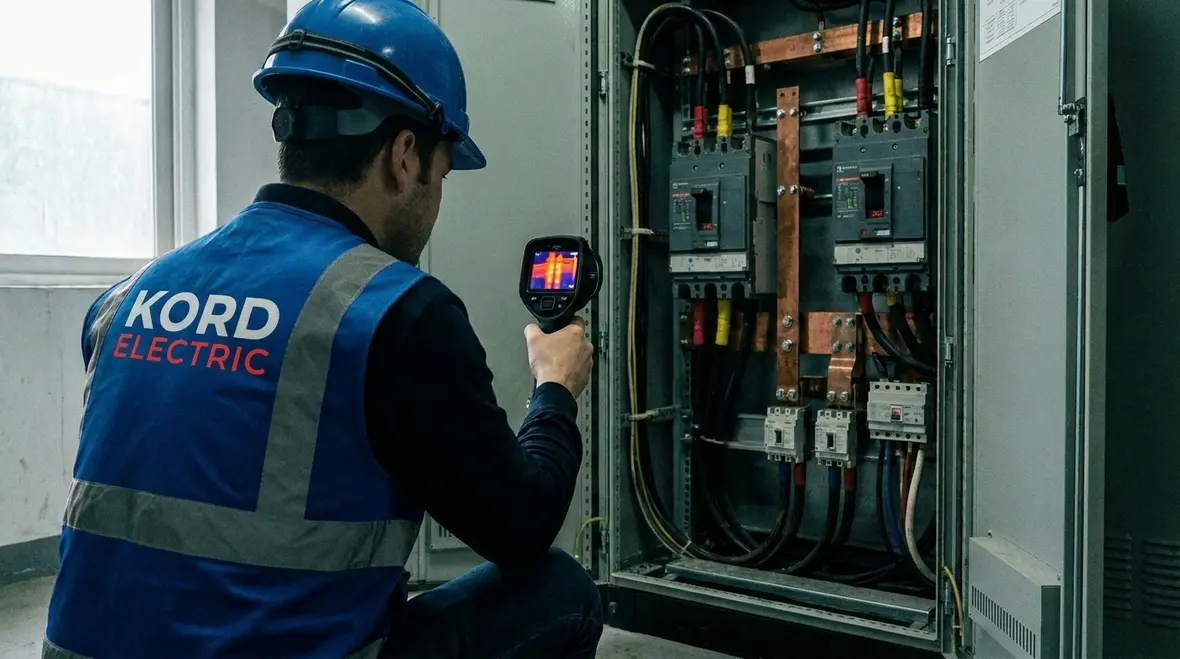
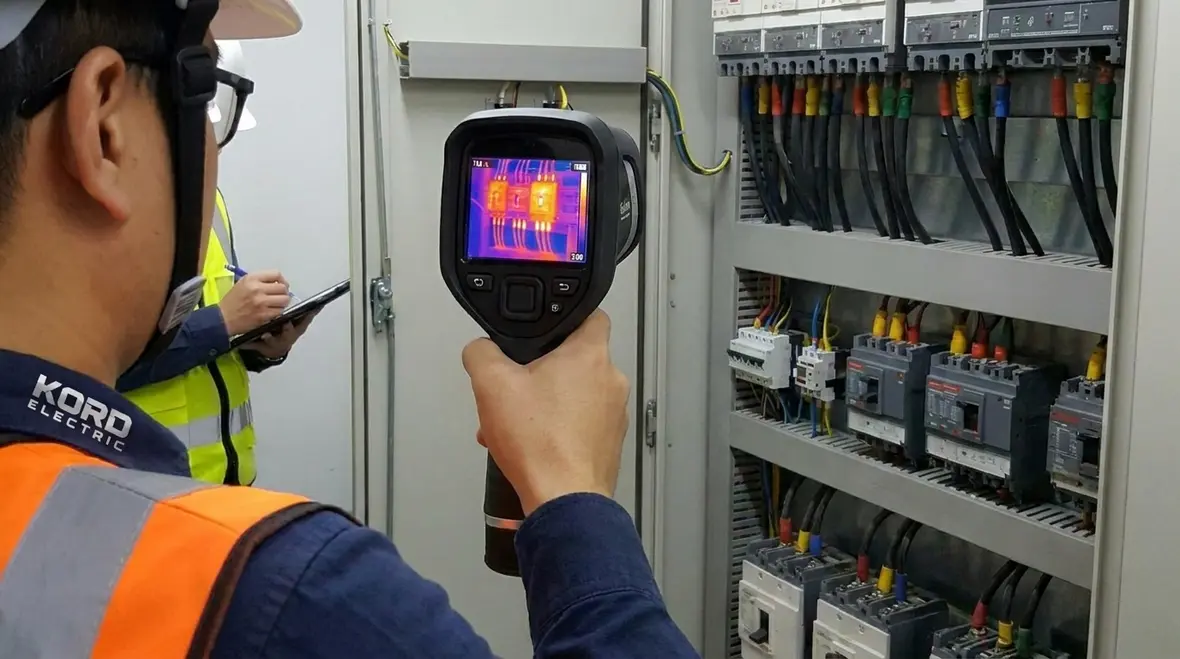
Thermal imaging looks at surface temperatures and helps identify abnormal heating. However, it does more than show a glowing picture. It compares panel sections, catches imbalance, and flags components that run hotter than expected. Our expert service staff then interprets the readings in context: load conditions, equipment rating, and normal operating behavior.
For example, a breaker might not trip, yet its connection points can run warmer than adjacent phases. Similarly, a neutral bar can develop heat when imbalanced loads push current. In those cases, electrical panel thermal imaging benefits show up as earlier detection and clearer decision making. Instead of “It feels warm,” we get “This component is above baseline by a meaningful margin.”
And yes, the tool does not lie. It simply records what the physics already decided.
Electrical Panel Thermal Imaging Benefits for Safety and Uptime
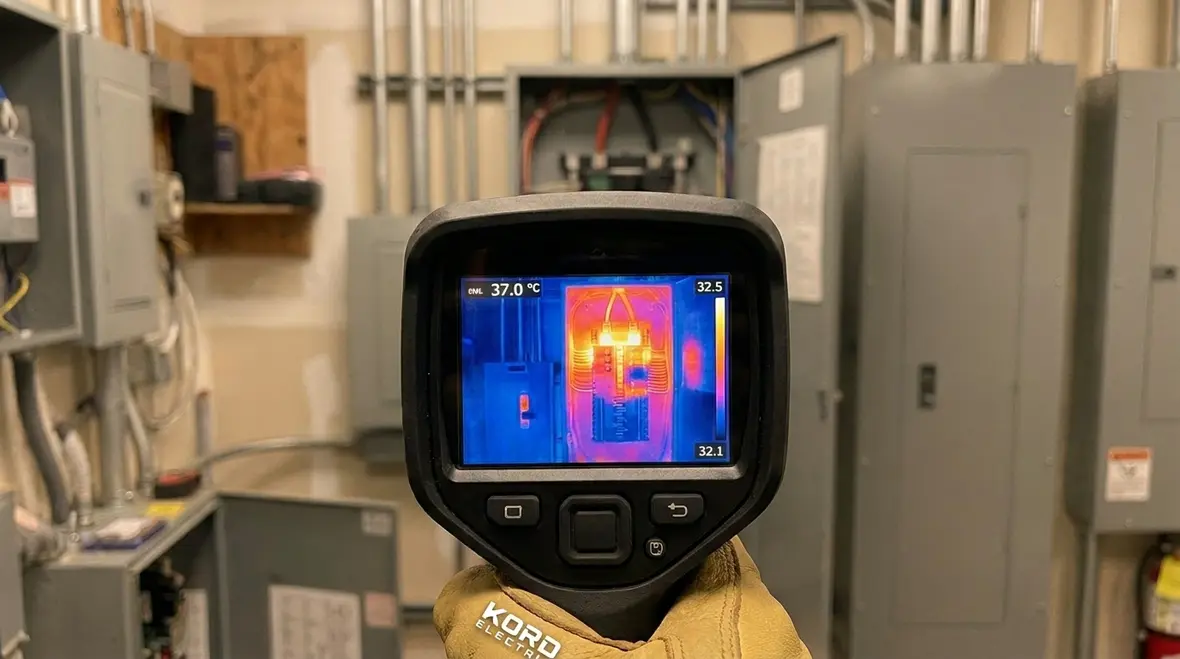
At Kord Electric, we focus on commercial and industrial facilities and major property buildings. For these operations, downtime costs real money, and safety risks do not take lunch breaks. Thermal imaging benefits the facility in three practical ways.
- Prevent arc flash and component damage: Hotspots can indicate loose connections and higher risk conditions before a catastrophic event.
- Reduce unexpected outages: We detect issues while the system still has time to be serviced.
- Support smarter maintenance scheduling: We help prioritize work based on condition, not on guesswork.
Furthermore, we treat the panel like a living system. By repeating thermal scans under similar load patterns, we can track change over time. Therefore, maintenance shifts from reactive to planned. That is how a facility avoids being the headline in a local news story titled “Electrical System Mystery Solved… After the Fire.” We prefer a quieter ending.
What Our Technicians Look for During a Thermal Scan
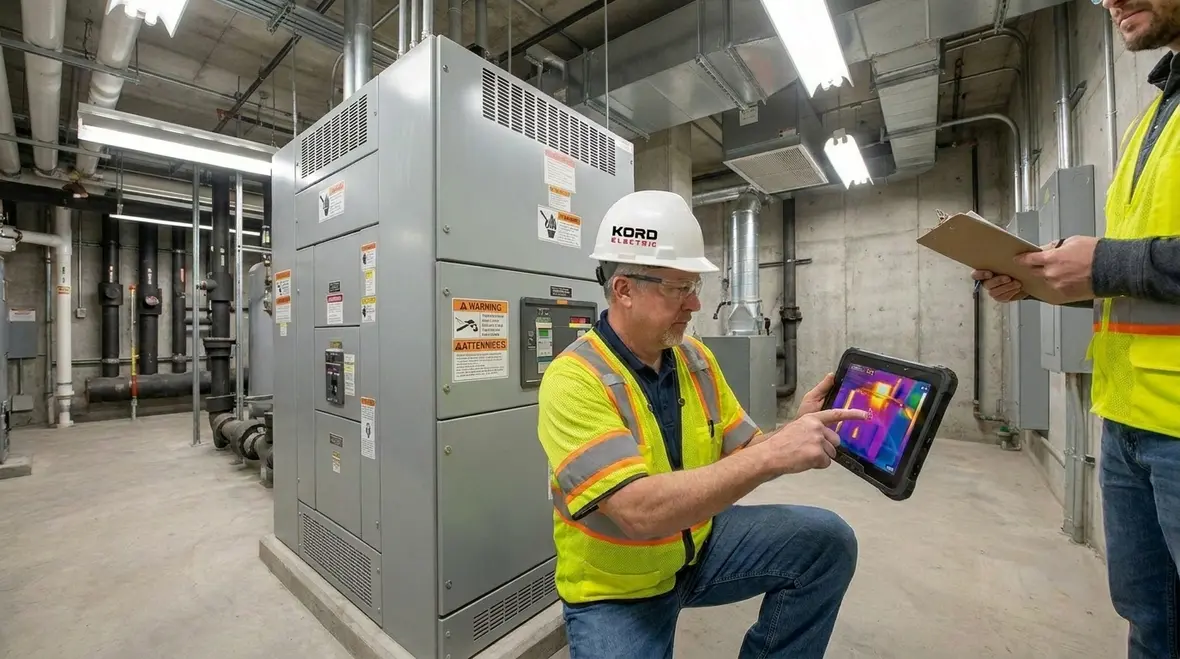
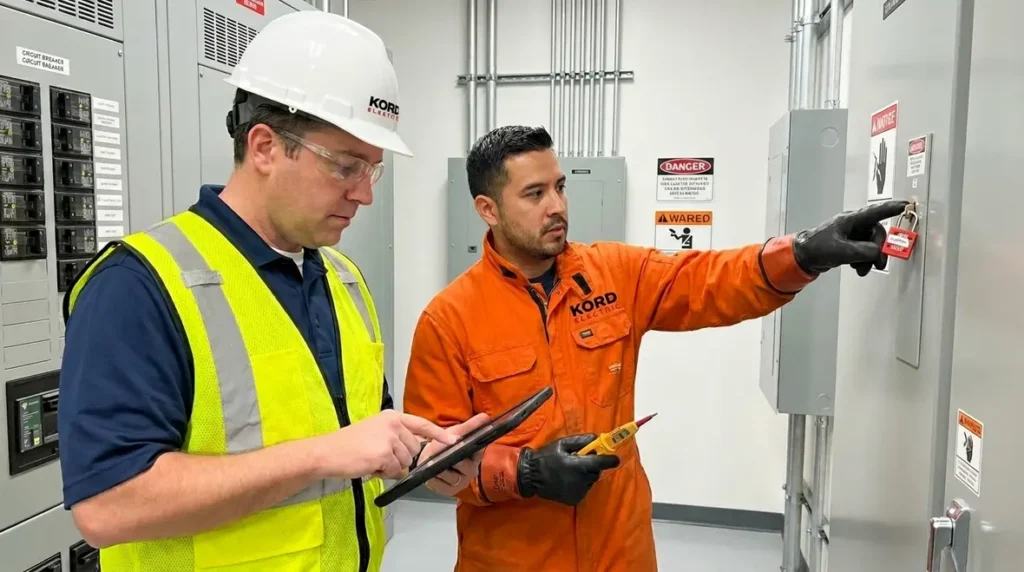
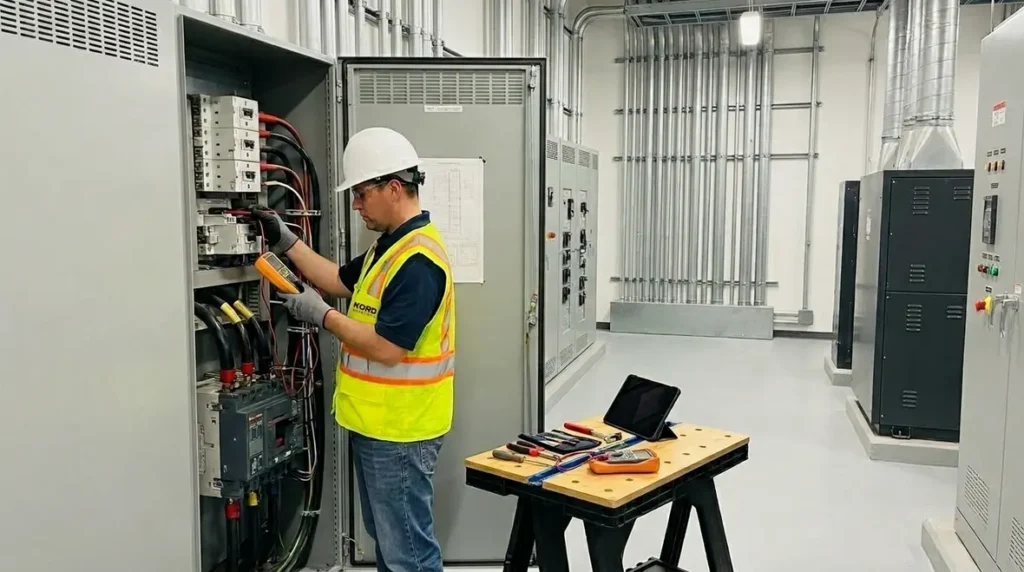
When our Kord Electric technicians arrive, they do not just point a camera and hope. They follow a method that fits the facility’s equipment and operating reality. First, they review the electrical one line, prior maintenance records, and any known issues. Next, they check environmental factors that affect readings, such as airflow, panel location, and recent load changes.
Then, they scan key areas, including
- Lug and termination points, where resistance often rises first
- Bus bars, where uneven heat can show phase imbalance or aging
- Breaker interiors and adjacent connections, which can reveal abnormal heating without tripping
- Neutral connections, where overload and imbalance often appear as heat
After that, we document findings with images and notes tied to specific components. Then, our expert service staff explains what the readings mean in plain language. If a part needs attention soon, we say so. If it is stable, we say that too. Either way, the facility gets clarity, not confusion.
How Thermal Data Fits Into Commercial and Industrial Maintenance Plans

Thermal imaging works best when it has a role in a broader plan. Kord Electric aligns its service approach to commercial and industrial electrical maintenance planning, which supports routine checks and predictable scheduling. In the commercial and industrial electrical maintenance plans we outline on our site, the idea stays consistent: facilities need a program that reduces surprises and improves accountability. For a deeper dive into how structured programs work, see our guide on commercial and industrial electrical maintenance plans.
So, how does the thermal data fit? We use scans to guide which tasks matter most right now. For instance, if thermography flags a recurring hotspot, we recommend inspection and tightening procedures, and we verify results after service. If we spot patterns that match known failure modes, we plan additional follow up during the next maintenance window. That approach prevents “band aid” work and helps maintain system performance.
And because business owners often ask for a simple plan, we give one. We explain priorities, estimated timelines, and the reason behind each recommendation. Transitioning from reactive repairs to structured service keeps operations running, and it keeps management calm, which is rarer than a quiet day during a Monday rush.
Choosing the Right Frequency for Thermal Inspections
Thermal scanning frequency should match risk, usage, and operating conditions. Facilities with high load cycling, significant vibration, or known history of loose connections often need more frequent checks. Meanwhile, sites with steady loads may require less frequent but still consistent monitoring.
At Kord Electric, our technicians help set a practical schedule based on panel type, building activity, and criticality. Moreover, we align scans with operational goals. For example, we can plan around peak loads when readings reflect real stress, since “cool and calm” can hide what “working hard” reveals. In addition, we consider changes such as new equipment, renovations, or changes in production schedules.
In the real world, electrical systems do not care about our calendar. They care about heat, resistance, and time. So, we plan accordingly.
Interpreting Results Without Panic or Guessing
Some people see a hot image and immediately assume the worst. We do not do that. We interpret results with a clear process, because temperature alone is not the whole story. We consider loading, ambient conditions, and equipment design. Then, we compare readings between similar components and track changes across repeat scans.
If one component shows higher temperature than its neighbors, we look for the probable cause. Often, it points to a connection issue, an imbalance, or component aging. Next, we recommend verification work, such as targeted inspection, cleaning, and tightening, where appropriate and safe. Then, we confirm improvement by rescanning.
That is why our expert service staff explains findings with context. We support decisions that protect the facility without wasting budget on unnecessary replacements. In short, we help the facility act with confidence, not drama. Electricity already brings enough drama on its own.
FAQ
Contact Kord Electric for Panel Thermal Imaging That Fits Your Facility
Kord Electric helps commercial and industrial facilities protect uptime, safety, and budgets through planned electrical maintenance. Our technicians use thermal imaging to detect hidden hazards inside electrical panels, then we explain what the readings mean and what actions to take. If your facility runs critical equipment, or if maintenance decisions feel like educated guessing, it is time to switch to measured clarity. Contact Kord Electric now to schedule a thermal inspection and build a maintenance plan you can trust.
For facilities that want thermal imaging tied directly into a structured program, Kord Electric’s dedicated electrical preventive maintenance services integrate infrared and thermal inspections with routine testing, documentation, and compliance support across commercial, industrial, and government properties.
When thermal scans uncover deeper power quality concerns or nuisance trips, our team can also connect panel findings with targeted solutions such as voltage stability diagnostics and corrective work, leveraging field experience from projects like addressing voltage fluctuations in commercial and industrial facilities so your electrical system stays as steady as your production schedule.