Commercial Electrical Switchgear Maintenance Guide
At Kord Electric, we know commercial electrical switchgear is the kind of equipment that does its job quietly, right up until it does not. That is why our approach to commercial electrical switchgear maintenance starts with preventive action, not emergency repairs. Our teams and expert service staff review switchgear health, plan service around real risk, and keep power systems steady for commercial and industrial facilities and major property buildings. In this guide, third person readers will see how others extend switchgear life using best practices that are practical, repeatable, and built for the long run. And yes, we promise this is not the boring kind of maintenance that makes time feel like it is stuck in traffic.
Why switchgear fails early in commercial buildings
Most premature failures come from predictable causes: heat, contamination, loose connections, moisture, and poor tuning of protection devices. When a building runs hard, switchgear must handle repeated load changes, short surges, and seasonal humidity swings. Even when everything seems fine, small issues can grow. For example, a slightly loose terminal may not trip immediately, but it can raise local temperature. Over time, that heat damages insulation and weakens the connection. Next, arcing can start inside the gear, and the whole story speeds up.
In commercial and industrial settings, people often focus on uptime and spend time chasing symptoms. However, our expert service staff at Kord Electric focuses on causes. We also explain findings in plain terms, so facility managers understand what is happening and why it matters. Think of it like listening to a car engine: if you ignore the odd sound, it turns into an expensive personality change.
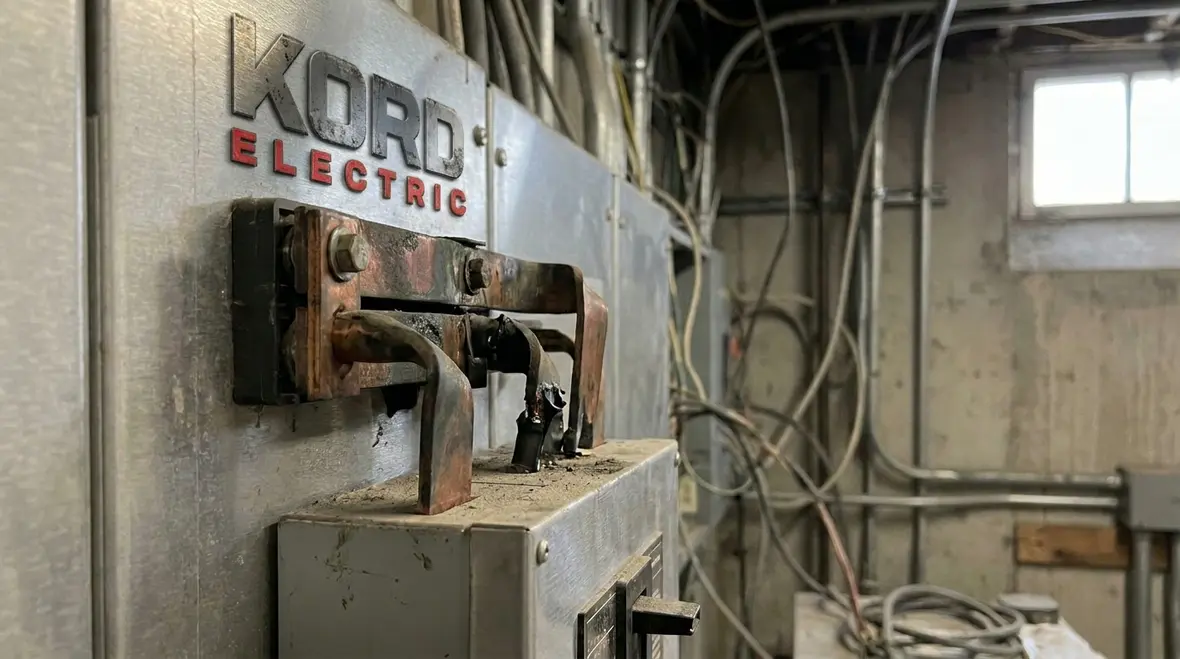
Commercial electrical switchgear maintenance: a structured service routine
To keep switchgear reliable, we build a schedule that matches how the building operates. Therefore, a routine should include inspection, testing, cleaning, and documentation. It also should account for bus condition, drawout mechanisms, breakers, control wiring, and protective relays. In other words, others cannot treat “maintenance” like a single event. It becomes an ongoing program with clear steps and measurable outcomes.
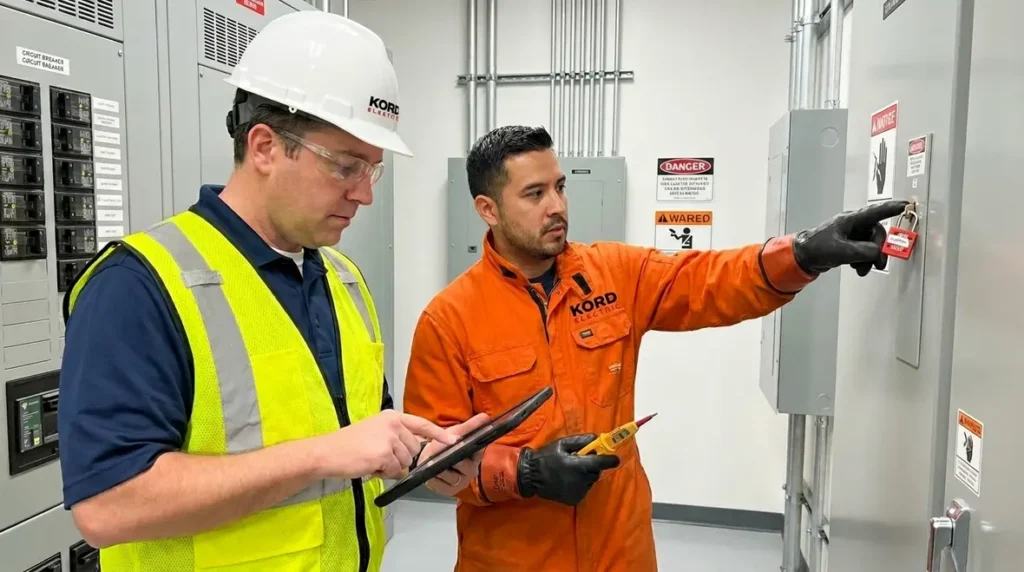
Our technicians follow a preventive maintenance path aligned with the type of equipment and its duty cycle. If the gear serves critical loads, the service plan must reduce risk during peak operations. So we plan work windows, coordinate with electrical rooms, and use safe isolation methods.
At Kord Electric, we reference our broader electrical preventive maintenance approach, including how we support proactive electrical care rather than reactive fixes. For our clients, we make sure the process is consistent, and we keep records that help future teams understand what was found, what was repaired, and what should be watched next.
A structured commercial electrical switchgear maintenance program usually follows a rhythm like this:
Visual and mechanical inspection of switchgear enclosures, doors, and interlocks
Cleaning of interior compartments, bus, and insulation surfaces using appropriate methods
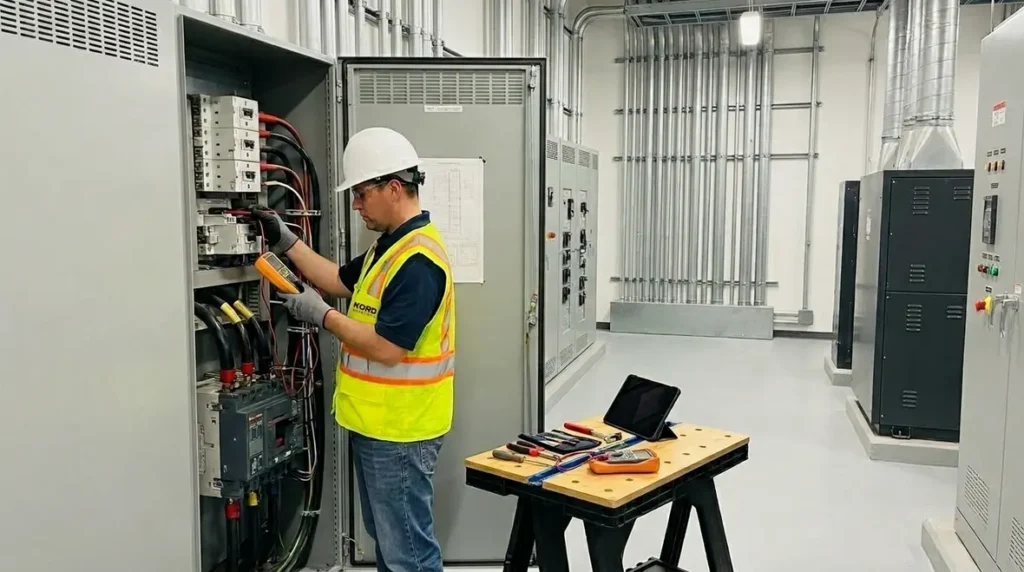
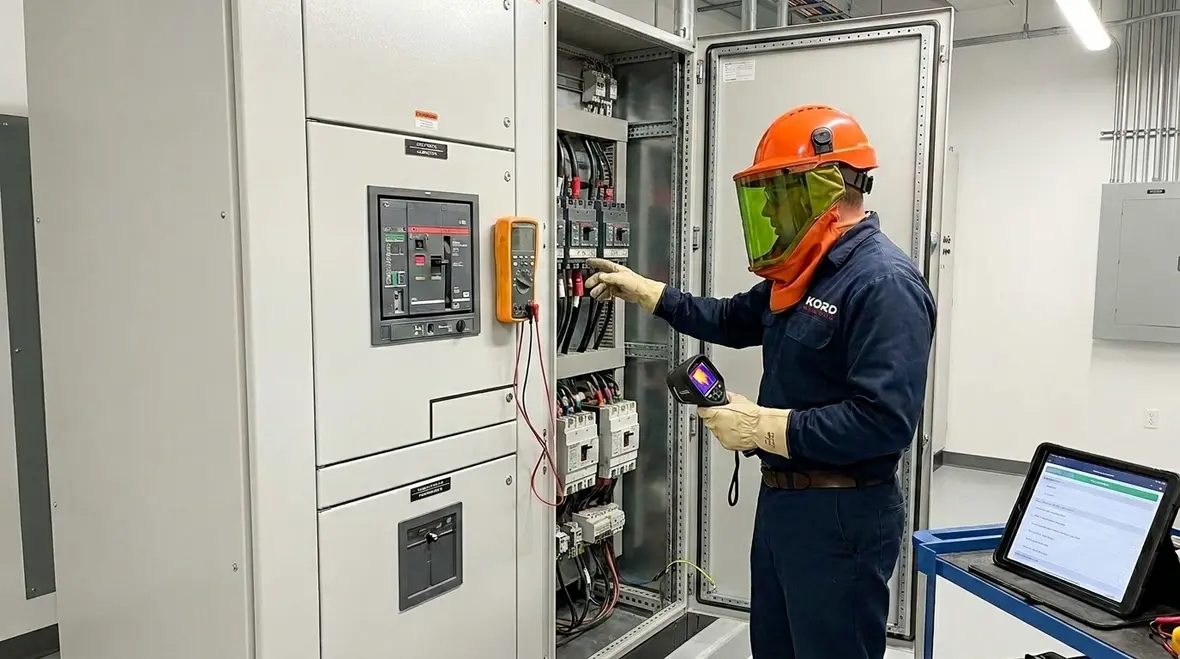
Testing of breakers, protective devices, and control circuits
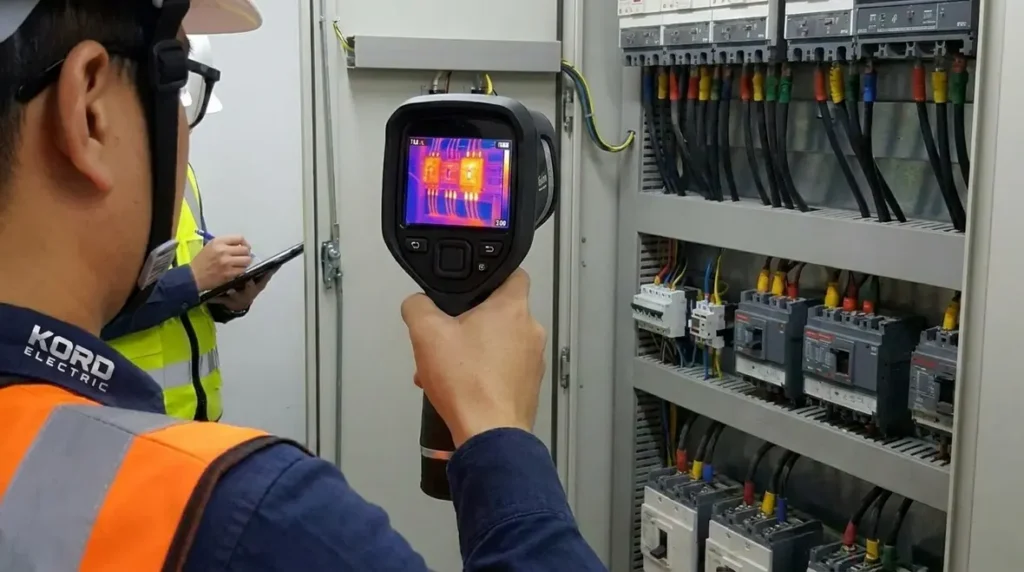
Thermal scanning or temperature checks on connections during load conditions
Documentation of test values, anomalies, and recommended follow-up actions
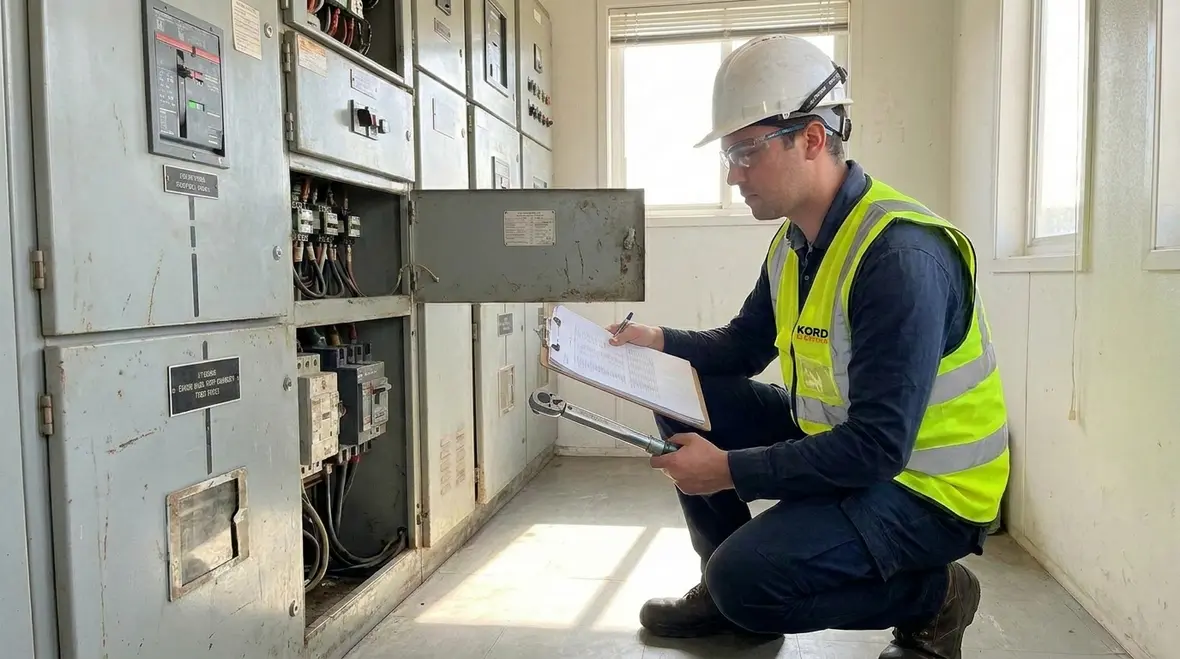
Aligning maintenance with building operations
In busy commercial buildings, maintenance that ignores operations will not last long. That is why schedules are coordinated around production cycles, tenant hours, and seasonal loads. Critical switchgear gets serviced during planned outages, with clear communication and contingency planning. Others see fewer surprises, and the facility gains confidence that preventive tasks are supporting uptime, not threatening it.
How to manage heat, dust, and moisture before they cause damage
Switchgear does not fail because it is weak. It fails because the environment keeps pressing the issue. Dust can collect on insulators and surfaces, and moisture can lower insulation resistance. Meanwhile, thermal stress builds when loads run too high or when ventilation and cooling degrade. Over time, these conditions promote tracking and allow small faults to grow.
Effective best practices focus on controlled cleaning, air quality awareness, and proper storage. Therefore, our technicians verify seals and gaskets, check door alignment, and confirm that ventilation paths stay open. Then we inspect for signs of contamination, discoloration, and corrosion. If a facility has high particulate areas, we recommend adjustments to cleaning intervals and housekeeping around electrical rooms.
We also remind others that “it still powers everything” is not a full health report. Just like a phone battery that keeps working at 70 percent, switchgear can seem fine while its condition quietly slips. However, our team treats those early warning signs as data, not guesswork.
Environmental controls that extend switchgear life
Some of the simplest commercial electrical switchgear maintenance improvements start with the room itself:
Keeping electrical rooms clear of storage that restricts airflow or blocks panels
Verifying that HVAC systems keep temperature and humidity within recommended ranges
Checking that filters, louvers, and vents are not clogged with dust or debris
Using appropriate corrosion-resistant hardware and finishes in harsher environments
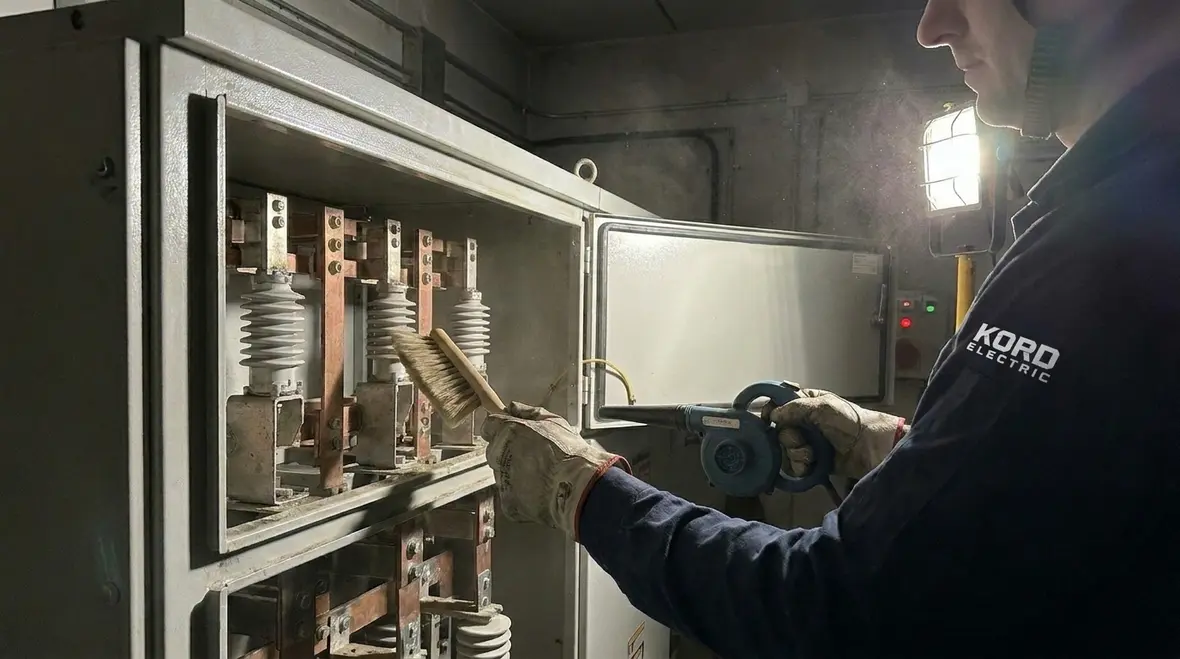
Inspection and testing that catch loose connections and internal faults
Next comes the part that separates preventative work from hopeful work. Inspection should include mechanical and electrical checks, and testing should verify performance against expected values. Our technicians look at terminations, busbar surfaces, breaker contacts, and control wiring integrity. We verify torque where required, check for signs of overheating, and confirm labeling stays accurate. After that, we test insulation and contact resistance where applicable to the gear design.
Because every switchgear lineup differs, we do not rely on one-size checks. Instead, we tailor the scope based on the equipment type, age, and operating conditions. We also coordinate with facility staff so others understand what the testing will show, and what actions will follow if results land outside expected ranges.
For a simple joke, think of switchgear as a team of workers. If one coworker starts cutting corners, the rest can still complete the job for a while. Yet eventually, that corner becomes a hazard. Testing spots those corners early, when repairs cost less and downtime stays controlled.
Core tests in commercial electrical switchgear maintenance
Depending on the configuration, a typical test package may include:
Insulation resistance testing to verify dielectric strength
Contact resistance testing on breakers and main connections to identify high-resistance joints
Functional testing of breakers, control circuits, and interlocks
Thermal imaging during normal operation to spot hot spots
Verification that labeling, schematics, and equipment identification match field conditions
Protective relays, settings, and coordination that reduce nuisance trips
Even well-built switchgear can behave badly if relays and settings do not match the system. Fault detection must work fast, and selectivity must prevent wide outages. Therefore, we review relay schemes, confirm settings, and check coordination logic. Then we verify that CT ratios, wiring, and polarity remain correct. If the building adds load, the protection strategy may need updating. Otherwise, others might see nuisance trips, equipment stress from repeated interruptions, or delayed fault clearing.
Our expert service staff explains relay findings with clarity. They translate the technical results into decisions facility teams can act on. As a result, commercial and industrial clients get fewer surprises during storms, generator transfers, or peak demand periods. And yes, nobody likes a system that trips like it is trying to win a drama award.
When relay adjustments occur, we document changes and communicate expected behavior. That is how we protect both reliability and future maintenance planning.
Keeping protection aligned with real-world loads
As tenants change, equipment gets upgraded, or new processes move in, the original protection study can drift away from reality. Commercial electrical switchgear maintenance should always include questions like:
Has the facility added large motors, HVAC upgrades, or new data infrastructure?
Are backup generators, UPS systems, or parallel sources now part of the distribution?
Do existing settings still provide selective coordination, or are they causing nuisance trips?

Documentation, spares, and training that keep teams ready
Preventive maintenance does not end at the inspection report. It continues in documentation quality, spare parts readiness, and staff readiness. We recommend that others keep clean records of maintenance actions, test results, breaker operations, and any repairs performed. Then future teams can see trends, such as increasing contact resistance or recurring moisture issues in specific compartments.
Spare parts also matter. If a breaker trip unit, control fuse, or critical auxiliary part fails, the facility should not be stuck waiting for delivery. Therefore, we help clients plan for common wear components based on gear type and service history.
Training completes the loop. Our technicians show how to interpret alarms, spot warning indicators, and handle safe operating steps. We also coordinate with facility electricians so others can follow consistent procedures. When training is practical, response time improves, and small issues do not escalate into larger events.
Building a culture of preventive care
When commercial electrical switchgear maintenance becomes part of everyday thinking, facilities stop reacting and start anticipating. Operations teams recognize unusual smells, sounds, or panel temperatures earlier. They know who to call, what to log, and how to support safe isolation before service begins. The result is a quieter, more predictable electrical backbone for the entire property.
FAQ: commercial switchgear longevity and preventive care
Choosing the right preventive maintenance partner for major property buildings
For commercial and industrial facilities, the right partner does more than show up with tools. Others should expect a service approach that fits the real environment, respects operating schedules, and uses measurable testing. At Kord Electric, we bring experienced technicians and expert service staff who verify condition, explain results clearly, and document actions so your team can maintain confidence between service visits.
So if switchgear longevity matters and downtime is expensive, the next step is simple. Contact Kord Electric for a preventive plan built for your commercial or industrial electrical room. We will review your setup, recommend an inspection and testing schedule, and outline next steps in plain language. Let us help your switchgear run calm, steady, and dependable, instead of auditioning for the role of “unexpected outage.”
If your facility is already dealing with unstable power, nuisance trips, or frequent shutdowns, pairing a switchgear-focused maintenance plan with targeted support such as a voltage fluctuation assessment can uncover deeper distribution issues before they damage sensitive equipment.
For organizations planning larger upgrades or long-term reliability improvements, coordinating commercial electrical switchgear maintenance with broader commercial and industrial electrical maintenance planning gives every stakeholder a clearer roadmap. From everyday inspections to capital projects, the goal stays the same: fewer surprises, safer operations, and equipment that quietly does its job for years.
When an issue does slip through and turns into an after-hours outage, having a partner that already knows your switchgear and distribution layout makes emergency response faster and more accurate. Our dedicated emergency electrical services team integrates seamlessly with preventive programs, so recovery is not a guessing game.
Finally, if your long-term strategy includes adding EV charging, expanding production, or supporting more data-heavy operations, our EV charger installation and related infrastructure services work hand in hand with commercial electrical switchgear maintenance. The result is a system that grows with your facility instead of holding it back.
Commercial electrical switchgear maintenance is not about checking a box. It is about protecting the heartbeat of your building. With the right preventive partner, your electrical system becomes a quiet asset instead of a loud risk.
Next steps for your facility
If you are ready to turn “we will deal with it when it fails” into “we know exactly how our switchgear is performing,” Kord Electric is ready to help. From baseline assessments to fully structured programs, we build maintenance plans that match the way your facility actually runs.