Commercial LED Lighting Control Integration Guide
Commercial LED lighting control integration for smarter energy use in real buildings
At Kord Electric, we guide commercial and industrial facilities through advanced lighting controls that cut wasted energy while keeping workspaces comfortable. We start with commercial led lighting control integration, then we build out a plan that fits how the building actually runs, not how a brochure claims it runs. And yes, we do it with technicians who explain every step in plain language, so the process feels calm, not chaotic.
In this article, we break down how advanced controls work, how our team measures impact, and how facilities can reduce electrical costs without turning every office into a science experiment. If you have ever watched a conference room light flicker like it is auditioning for a horror movie, you already know why good controls matter.
Advanced lighting controls that prevent waste, not just dim lights
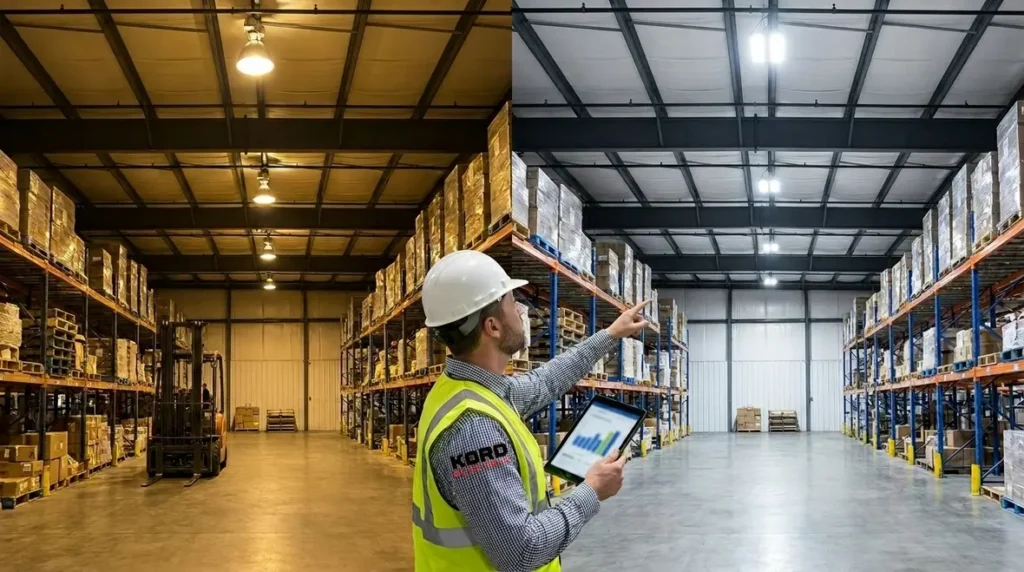
Commercial and industrial buildings lose energy in predictable ways. Lights stay on too long. Areas run at full output when only a fraction of the space needs it. Additionally, daylight pours in near windows, yet fixtures still burn like the sun pays rent. To fix this, advanced lighting controls do not simply “turn down.” Instead, they make lighting respond to real conditions.
Kord Electric typically focuses on sensor driven strategies, scheduled operation, and smart zoning. First, occupancy sensing detects whether people are present. Then, daylight sensing adjusts output near windows. After that, zoning limits control to the areas that need it, instead of treating an entire floor like one big room. As a result, lighting energy drops while comfort stays steady.
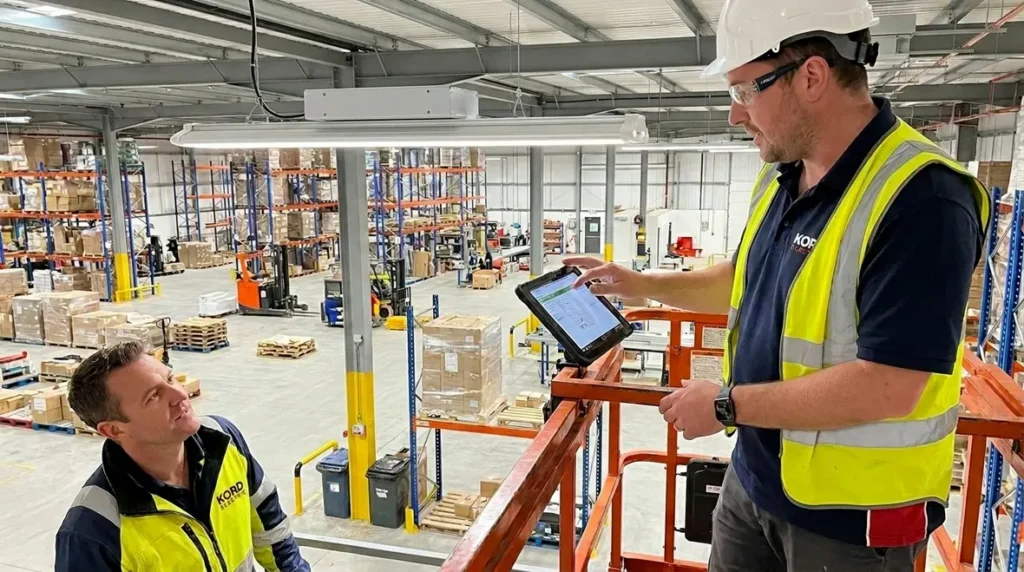
Our expert service staff also helps teams avoid a common mistake. Facilities sometimes add controls without mapping the lighting layout, so sensors cover the wrong area. However, when we align sensor placement with how crews move and how spaces are used, controls become reliable. And reliability matters because a control system that can not keep up becomes “management by annoyance.”
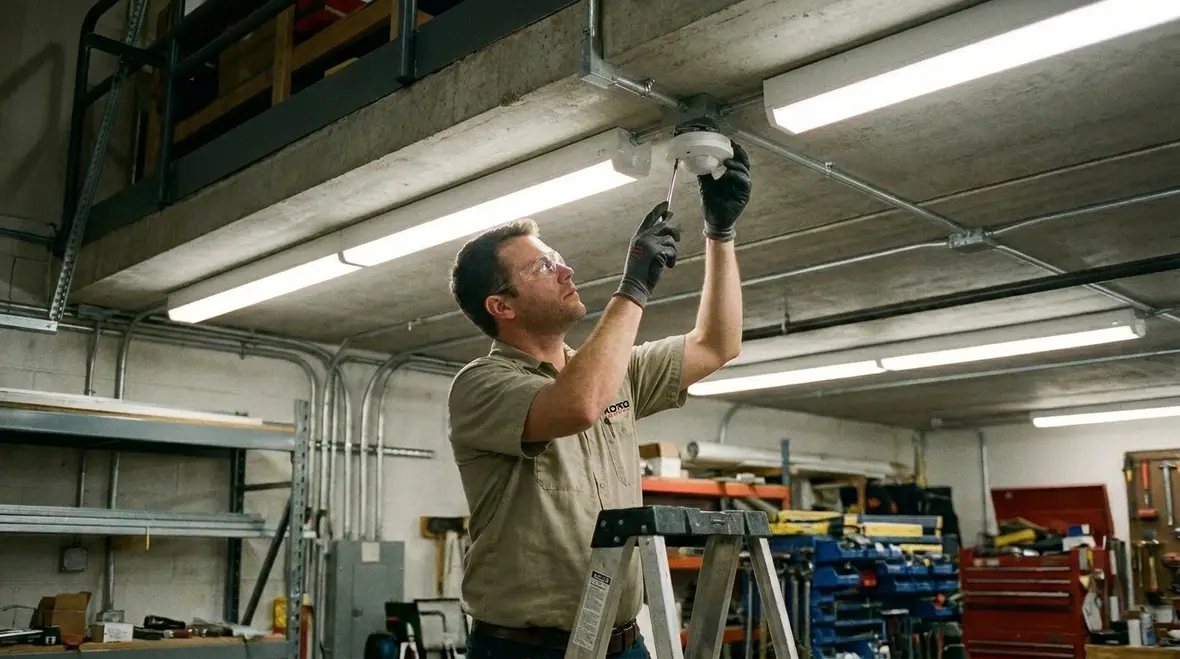
From “always on” to responsive lighting
The real shift with advanced controls is moving from static schedules and manual switches to responsive systems that track how spaces actually behave. Instead of relying on someone to remember to flip a switch, the system senses, learns, and adapts. When that responsiveness matches the way people use the building, savings show up quietly—on the utility bill, not in complaints at the front desk.
How businesses calculate savings, with fewer surprises
To estimate savings, Kord Electric takes a practical approach that looks at runtime and demand, not just fixture wattage. Lights consume energy based on how long they operate and how bright they run. Therefore, controls can reduce energy in two major ways: by reducing hours and by reducing output during partial needs.
We often start with a lighting baseline, using utility data where possible and reviewing current schedules. Next, we estimate how occupancy patterns shift with sensors and how daylight offsets artificial lighting. Then we compare expected before and after energy use.
For facilities planning upgrades, we also reference our rewiring cost guide for commercial electrical systems, because savings calculations should include installation realities. If rewiring is needed for control wiring, power distribution, or panel readiness, we help the owner understand the effort early. When cost and savings get discussed together, budgeting becomes clearer and fewer people hear the dreaded words, “We did not plan for that.”
Of course, not every project needs major electrical work. Still, when a building uses older wiring practices, controls may require conductor runs, device retrofits, or changes to circuit organization. Our technicians explain what is required and why, so stakeholders can plan without guessing.
Linking savings to real operations, not just spreadsheets
The most successful projects tie energy savings to how the facility actually operates. That means comparing baseline hours to new schedules, mapping zones to production areas, and confirming that savings assumptions match shift changes, tenant moves, and seasonal patterns. When those details line up, projected savings have a much better chance of showing up as actual savings.
Scheduling, zoning, and demand friendly control strategies
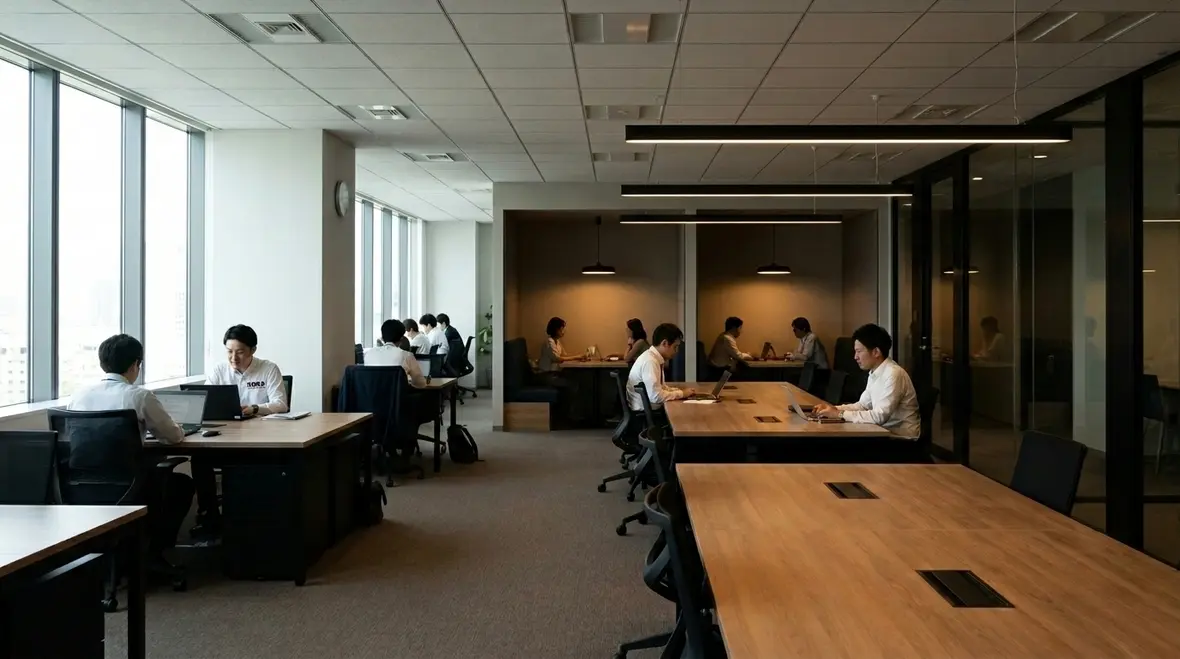
Most buildings do not use every space equally. Therefore, smart control strategies should match the building’s rhythm. Scheduling provides predictable behavior for rooms with fixed operating hours such as offices, lobbies, and production support areas. Occupancy based control handles rooms with variable usage like conference areas, storage, and restrooms.
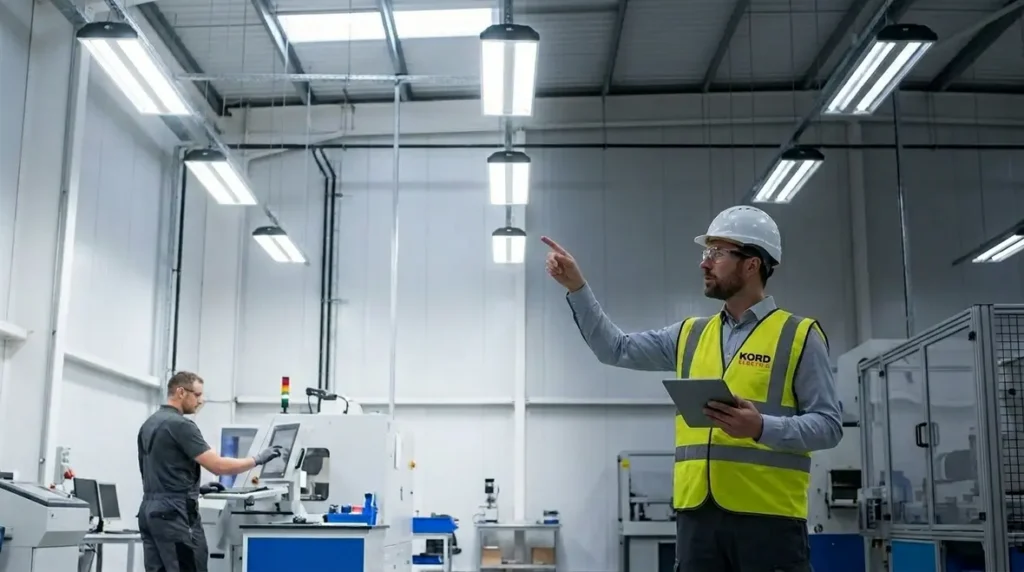
Zoning goes one step further by separating spaces into control areas. Rather than dimming an entire wing, zoning lets Kord Electric tune each zone to its load and use pattern. Additionally, we coordinate zones with lighting types, such as high bay fixtures in warehouses versus linear fixtures in offices. This prevents one area from “dragging down” another area’s performance.
To keep energy savings consistent, we also tune behavior during transitions. Lights need a smooth fade when occupancy appears. They must also respond appropriately after people leave. When controls lock into that rhythm, occupants experience stability, not distraction.
Also, we consider demand friendly approaches. Some facilities want to reduce peak demand during high load periods. When systems are set with proper limits, the building can lower electrical draw without causing dark spaces. In other words, the building saves energy and keeps operations moving, instead of turning the lights off like a light switch prank.

Designing zones that match how people actually work
Good zoning feels invisible. Conference rooms, open offices, storage aisles, loading docks, and corridors all behave the way users expect, but each responds to its own logic. When a late shift walks through production, they get the light they need without waking up the whole building. That is the quiet power of well designed control zones.
Daylight harvesting and continuous optimization
Daylight harvesting is where energy savings feel almost unfair to the utility company. In spaces near windows, daylight sensors can lower electric lighting output while maintaining target brightness. As daylight changes, the controls respond steadily.
However, daylight harvesting fails when calibration is rushed. Kord Electric ensures the system targets correct illumination levels, then we verify performance across time and seasons. That means we check sensor logic, adjust set points, and confirm that glare does not create complaints. Because nobody wants to work in a room that brightens and dims like a mood ring.
Continuous optimization also matters for commercial and industrial facilities. Occupancy patterns evolve. Tenant layouts change. Equipment gets moved. Therefore, we recommend periodic reviews to confirm that schedules, sensor behavior, and zoning still match the building. Our technicians can reprogram controls when needed, and our service staff can explain what changed and why.
As a result, the building keeps delivering savings instead of drifting back into wasted runtime. Controls do not need to be “set and forget.” They should be tuned, monitored, and improved.
Why “set and forget” leaves money on the table
The first year after a controls project is not the last word. As tenants shift, production lines move, and new equipment arrives, lighting patterns change. A quick tune up of schedules, sensor timeouts, and daylight response curves can recover savings that slowly slipped away. Treating controls as a living system, not a one time install, keeps performance on track.
What to expect during installation and rewiring planning
Facilities often worry about disruptions during lighting control projects. We understand that concern, and we plan around real site needs. First, Kord Electric assesses existing panels, circuits, and wiring paths. Then we map out control device locations, wiring routes, and integration points.
If the building already has conduit paths and compatible circuit organization, installation stays simpler. If not, our team discusses rewiring needs early. We do not hide behind vague estimates, and we reference our rewiring cost guide for commercial electrical systems to help leadership plan for the practical parts of the job. That guide explains how electrical work, labor, and system readiness tie into project cost.
Furthermore, we coordinate installation so the facility maintains uptime where possible. For example, we phase work zone by zone and sequence fixture changes with control commissioning. Our technicians also test each control scenario after installation, including occupancy responses, daylight adjustments, and scheduled behavior.
Because this is business, not theater. The goal is a system that works the way it should, from day one, and continues to perform after the first few weeks when people stop paying attention. That is when smart controls earn their keep.
Coordinating controls with broader upgrades
Lighting controls rarely live in isolation. Many facilities pair them with LED retrofit work or projects driven by Title 24 lighting compliance and broader code requirements. Aligning commercial led lighting control integration with these upgrades helps minimize disruption and ensures the entire lighting system—from fixtures to panels to controls—works as one coordinated platform.
Commissioning, training, and ongoing support for facility teams
Advanced controls earn savings only when they operate correctly. That is why Kord Electric focuses on commissioning, which means verifying the system logic in the real building. Our technicians validate sensor coverage, confirm zone boundaries, and ensure dimming behavior matches the lighting design targets.
Then we train the facility team. We explain menus, schedules, reporting, and how to adjust set points without breaking the system. Our expert service staff also clarifies common operational adjustments, such as holiday schedules, after hours events, and seasonal daylight shifts. In short, we help teams run the system, not just watch it.
Additionally, we support facilities that want visibility into performance. When building managers can see usage trends, they can identify issues early. If a sensor fails, they can fix it quickly. If an area gets remodeled, the controls can be updated. As a result, the system stays efficient over the long run.
And yes, we sometimes get asked for “just one more tweak.” We usually comply, as long as it keeps the system aligned with building needs. After all, nobody likes the lighting equivalent of a pop quiz at closing time.
Giving facility teams confidence, not complexity
The best control systems feel approachable. Clear labeling, simple interfaces, and short, focused training sessions help facility teams feel comfortable making everyday changes. When adjustments stay in their hands—and they know exactly when to call in support—controls remain an asset instead of a mystery box in the electrical room.
FAQ
Ready to reduce lighting costs across your facility?
If your commercial or industrial building runs lights longer than it needs to, Kord Electric can help you bring advanced lighting controls online with a plan built for real operations. We assess wiring and system readiness, design zoning for maximum impact, and commission the system so it behaves correctly from day one. Then we train your team to manage schedules, respond to seasonal changes, and keep performance steady.
For facilities that want a broader strategy around reliability and compliance, our electrical preventive maintenance services can complement commercial LED lighting control integration. That combination helps protect panels, feeders, and critical equipment while your lighting system quietly cuts waste in the background.
Contact Kord Electric now to schedule a site review and get a clear path to energy savings that matches the way your facility really runs.