Manufacturing Facility Lighting Controls Optimization
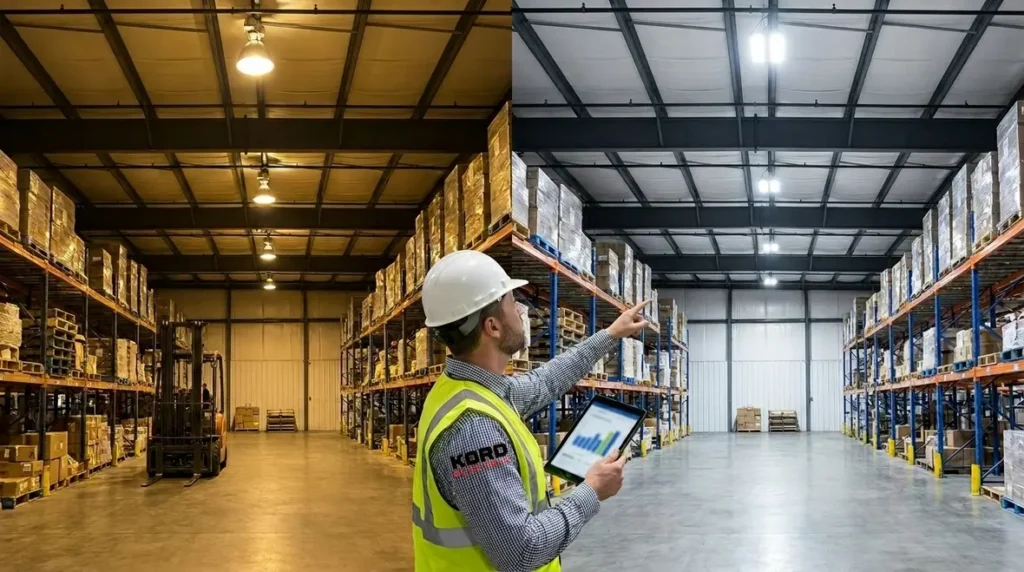
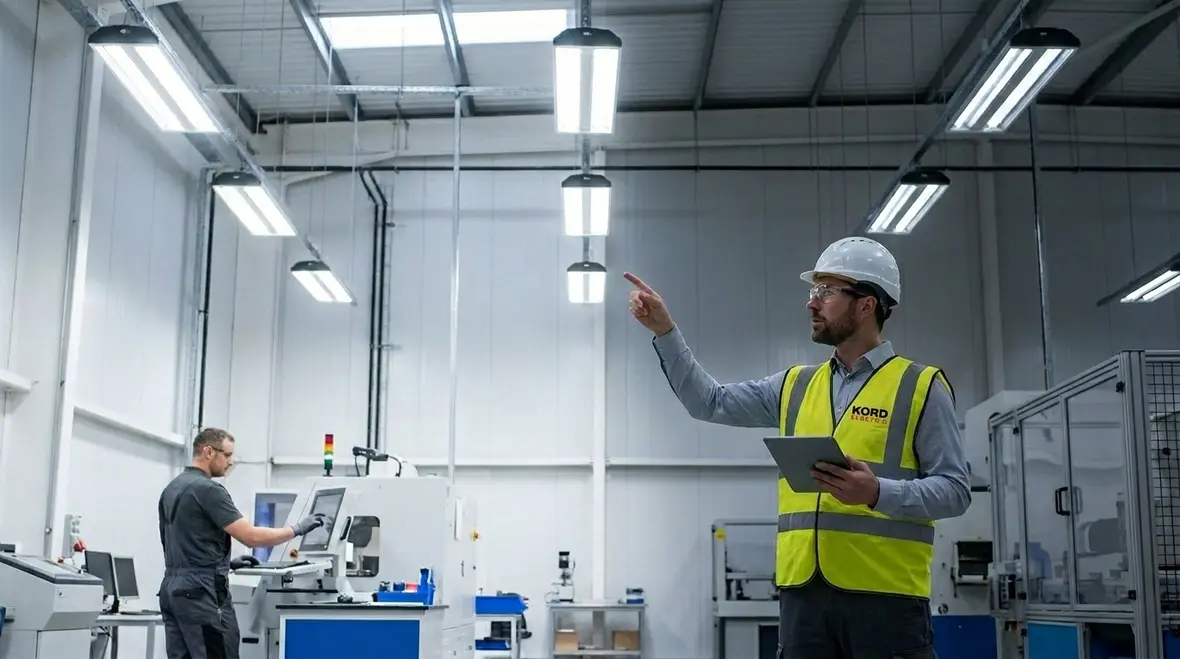
At Kord Electric, we focus on a practical win inside every plant: manufacturing facility lighting controls optimization that cuts wasted energy while keeping work areas bright, safe, and consistent. We see it most clearly in manufacturing facilities, where lights often run longer than they should, dim at the wrong times, and ignore how people and machines actually behave. And yes, sometimes that means the warehouse is lit like a Hollywood studio long after the shift ends. Our technicians and expert service staff walk through the plant, map the lighting zones, and then tune the control strategy so the system responds the way your operation really runs. Then we install, commission, and maintain the result.
How advanced controls reduce lighting spend without hurting productivity
Lighting costs can feel fixed, but in commercial and industrial buildings they are often controllable through smarter operation. First, advanced controls stop lights from running at full output when full output is not needed. Next, they match lighting levels to task needs and occupancy patterns. In manufacturing, workers need stable visibility during inspection, assembly, and packaging, while other areas can safely run at lower levels when activity drops.
We usually start by looking at how power flows through the lighting system and how people move through spaces. Then we align the controls with real schedules and real usage. For example, high bay areas and corridors often use the same time schedule, even though production flows vary by line, shift, and maintenance cycles. When the control logic tracks occupancy and daylight instead of a generic timer, energy waste drops quickly.
And here is the calming truth: people rarely complain about lighting that improves. They complain about glare, shadows, and sudden changes. So when a control plan includes proper dimming curves, minimum light levels, and smooth transitions, the plant stays comfortable while costs go down. It is like turning down the volume on a noise problem, but instead of your hearing it is your electric bill.
Where manufacturing facilities lose energy, and how we fix it
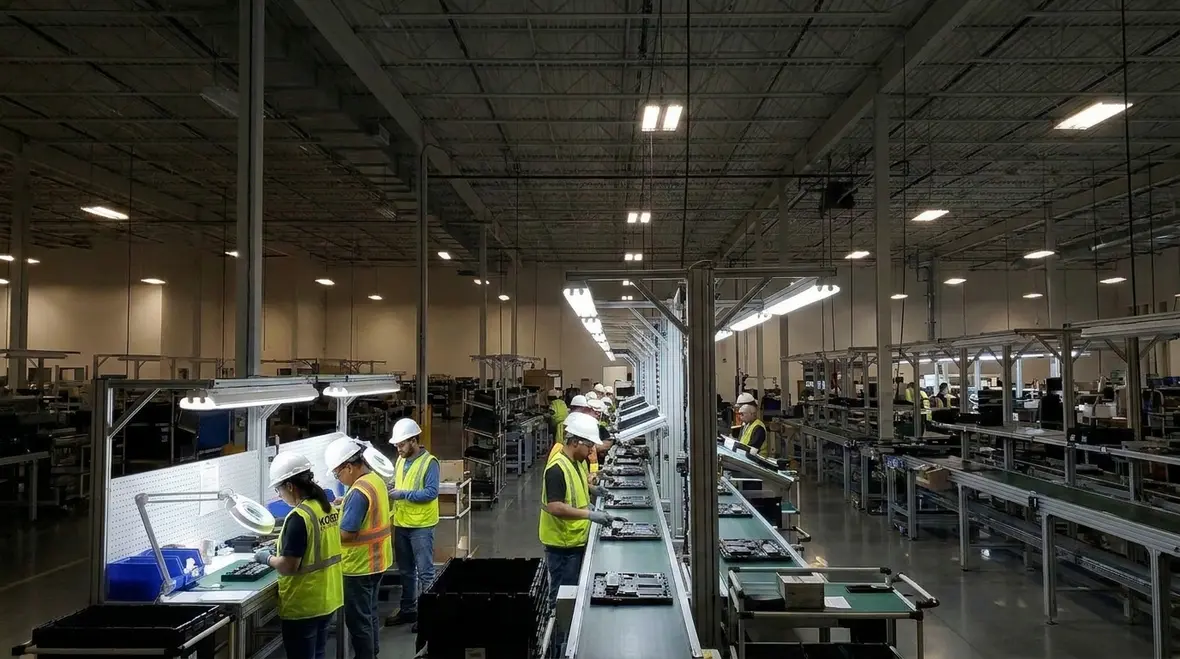
Most operational cost problems start small and then grow like a cable tray full of mystery wires. In plants, the common leaks include over-illumination, lights left on during low activity, poor zoning, and controls that do not account for daylight from skylights and dock doors. Meanwhile, maintenance teams can struggle with inconsistent performance because the system was never fully commissioned for the space.
We help industrial customers by addressing these gaps in a structured way. First, we break the lighting into zones that match the way work happens. Then we verify sensor placement so that motion detection does not miss key areas, and daylight sensors do not get fooled by reflective surfaces. After that, we tune setpoints and schedules. Finally, we confirm that the dimming behavior supports critical tasks.
When facilities fail to do this, the lights might dim too far, or they might stay bright even after occupancy ends. Yet most of these issues are not “hardware problems.” They are control strategy issues. Our teams reduce operational cost by making sure the system learns the right patterns from the start, not after everyone is already annoyed and the audit report is already written.
Which control features cut costs most in industrial buildings

Different plants need different combinations. However, several advanced lighting features consistently deliver results for commercial and industrial facilities.
- Occupancy sensing with smart time delays: Lights stay on when people or equipment need them, and then transition off smoothly after activity ends.
- Daylight harvesting: Sensors reduce output near windows, skylights, and large openings while keeping task areas stable.
- Multi-level dimming: Instead of on or off, the lights follow practical levels for normal work, cleaning, and maintenance.
- Scene scheduling: Production shifts, night modes, and safety modes run as designed.
- Zone control and local overrides: Supervisors can adjust areas without breaking the overall plan.
- Monitoring and alerts: Facilities can spot stuck sensors, failed drivers, or abnormal usage early.
As we implement manufacturing facility lighting controls optimization, we also protect reliability. We configure controls so that critical areas meet safety and code expectations even during network issues or sensor failure scenarios. In other words, the plant does not gamble with visibility. It manages energy.
For facilities planning deeper lighting projects, controls often pair naturally with structured installation work. Kord Electric’s lighting installation services for commercial and industrial facilities help ensure fixtures, wiring, and controls operate as one system rather than a patchwork of parts.
How our technicians tune systems during commissioning and service
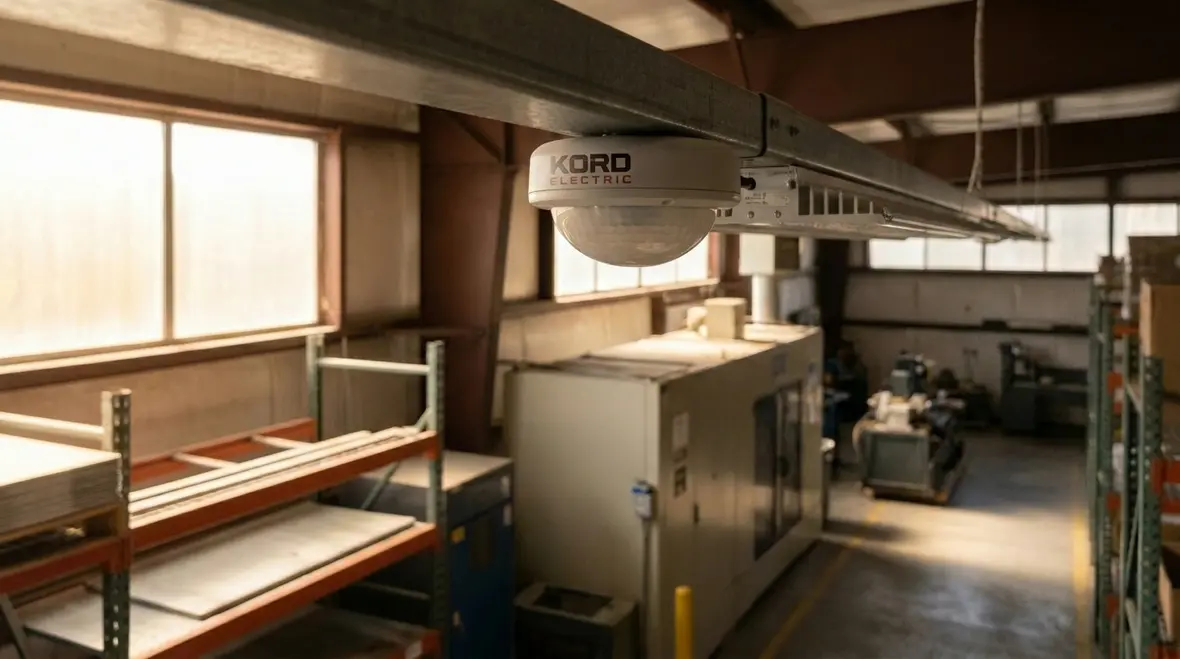
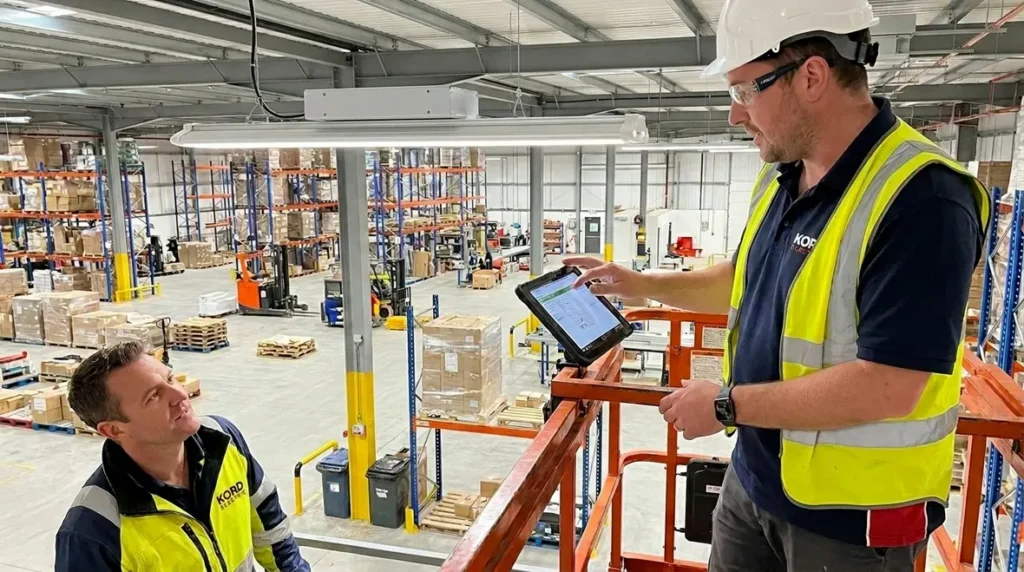
Install the hardware, then walk away, and you get a system that behaves like a remote that only works when it feels like it. We take the opposite approach. Our technicians and expert service staff stay involved through commissioning, calibration, and ongoing adjustment.
During commissioning, we verify that each control component responds correctly in the real environment. That means testing sensor coverage in the actual traffic paths, checking daylight behavior across the day, and confirming lighting levels in task zones. Then we set the logic so that dimming changes feel steady rather than distracting.
We also document the control strategy so the facility team can operate it with confidence. When you have multiple production managers, operations leads, and maintenance staff, clarity matters. A control system that everyone understands runs better. And when questions show up, our team explains the “why,” not just the “what.”
We even align the lighting approach with how the electrical system supports the plant. For example, when customers consider emergency power, we coordinate service planning and electrical needs so the whole site stays dependable. You can find relevant emergency electrical service details here: Kord Electric Emergency Electrical Services. Many facilities also pair long-term control optimization with electrical preventive maintenance programs to protect panels, feeders, and critical equipment behind the lighting system.
What maintenance teams should measure after controls go live

After the lighting controls are running, success should not rely on guessing. Therefore, we recommend a simple measurement routine that maintenance teams can support.
- Energy usage trends: Track monthly lighting energy and compare it to baseline periods.
- Runtime reduction by zone: Confirm that dimming and shutoff actually happen where activity drops.
- Task illumination consistency: Validate that critical work areas maintain proper lighting levels.
- Sensor health: Review alerts for stuck sensors, communication issues, or abnormal responses.
- Override behavior: Check whether overrides happen too often, which can indicate zoning or setpoint issues.
As data comes in, we adjust. If a loading dock stays bright all day, we revise schedule logic. If an aisle dims too quickly during slow-moving inspections, we fine tune occupancy delay and minimum levels. This keeps the system aligned with operations rather than forcing operations to fit the system.
And yes, sometimes the fix feels small, like moving one sensor a few inches or adjusting a setpoint. Yet those small changes can save real money over a year. That is the kind of ROI that makes even the most skeptical plant manager quietly nod.
Planning for upgrades without shutting down production
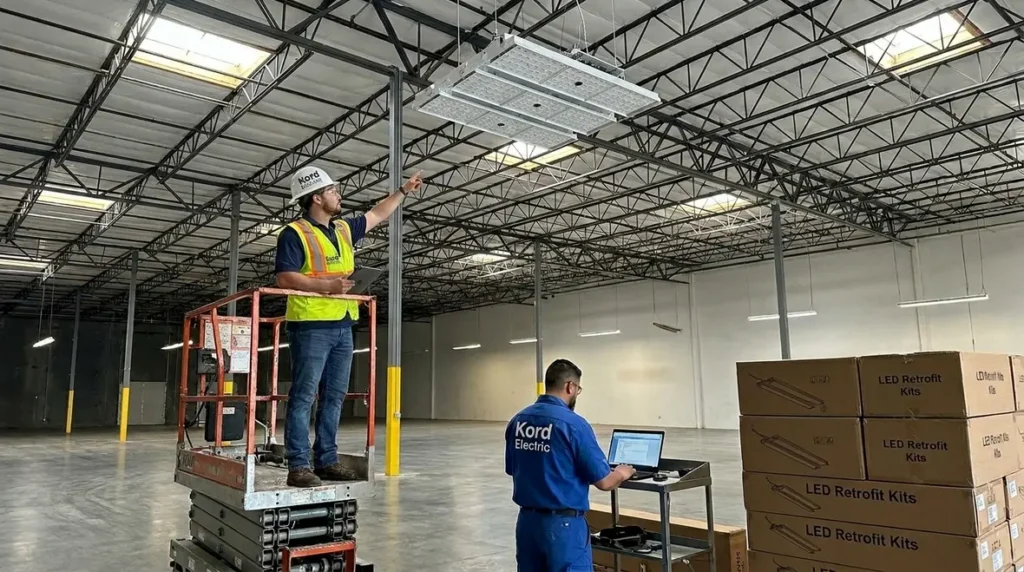
Upgrading lighting controls in a manufacturing facility can sound disruptive, but a well planned approach keeps downtime low. We coordinate with operations calendars and work with phased installation so production lines keep running. Then we test zones before full rollout, which reduces surprises.
We also prioritize compatibility. Many industrial sites already have lighting fixtures, wiring pathways, and controls. Therefore, we evaluate what can be reused and what needs upgrading. This keeps project costs reasonable and avoids “throw it all out” decisions that rarely feel good in budget meetings.
For larger property buildings, especially those with multiple tenants or complex schedules, we support structured commissioning and clear handoff training. In addition, our team offers service support so the site does not lose control performance after go live. If the system is tuned once and then neglected, savings fade. If it is maintained, savings stay.
When facilities want to connect lighting controls with broader infrastructure changes, Kord Electric’s rewiring cost guide for commercial electrical systems can help teams plan panel, feeder, and circuit upgrades that support smarter controls for the long term.
Feature snippet quick view
Feature snippet quick view
| What we optimize | What the plant gains |
| Occupancy schedules, daylight response, zone logic | Lower energy use with stable work lighting |
| Commissioning and tuning by real traffic and tasks | Fewer complaints, better comfort, reliable control |
| Monitoring and service adjustments | Long term savings, faster issue detection |
FAQ
Ready to cut lighting costs with smarter controls?
If a plant wants lower operational costs without sacrificing visibility, advanced lighting controls offer a clear path. Kord Electric works with commercial and industrial facilities to design, commission, and support control strategies that match real production schedules and task needs. Our technicians explain each step in plain language and then keep the system tuned through service. Contact us for a site assessment and a practical plan. Let us help you reduce wasted lighting power, improve consistency, and keep your facility running like it should.
For sites planning broader electrical improvements around controls, Kord Electric also delivers structured electrical preventive maintenance and lighting installation services so manufacturing facility lighting controls optimization is backed by a healthy, reliable electrical backbone.
If you are ready to take the next step beyond planning and put a real project on the calendar, our team can align lighting controls with rewiring, panel work, and targeted upgrades so your facility is prepared for the next decade of production.