
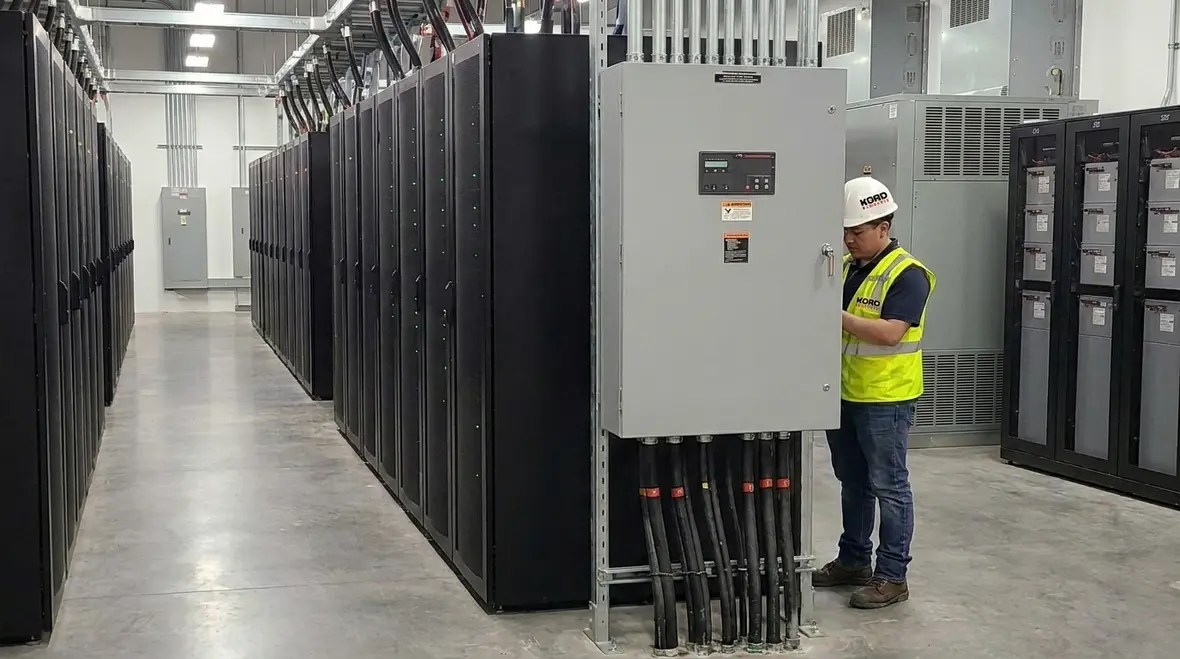
California Data Center Power Redundancy Systems
In a California data center, reliable power does not happen by luck. Kord Electric designs around data center power redundancy systems from the first planning conversation, because when equipment runs 24 hours a day, downtime gets expensive fast. Meanwhile, seismic risk, heat, and grid instability all push owners to build electrical systems that keep operating even when something fails. So, we focus on resilient design choices, practical field execution, and clear communication from our technicians and expert service staff who explain things without the vague hand waving. After all, no one wants a power plan that reads like a sci fi novel. Yet, many fail that way. Not here.
Resilient electrical design for California data centers starts with risk reality
First, Kord Electric approaches the site like it is already under stress. Then we map the risks that California facilities actually face, including utility disturbances, seasonal load swings, and seismic or storm impacts that can damage components. Because critical loads must stay fed, resilient design means more than “having a backup.” It means the system keeps performance during the bad moments and returns to normal in a controlled way.
To make this real, our team works with owners and engineers to review utility service details, transformer locations, grounding approach, and space constraints. In addition, our technicians spend time at the facility to understand how power is distributed across rooms, cages, and equipment rows. That on the ground understanding helps us avoid the classic problem: a design that looks perfect on paper but fights the real installation schedule like a sitcom plot twist.
At the core, we build resilience through layered protections and clear failure paths. If a component fails, the next component handles the job. If a bus section needs isolation, the system keeps feeding the right loads. And if an upstream event happens, the transfer sequence protects both the power and the people who rely on it.
How to plan N+1, 2N, and other redundancy schemes without creating new headaches
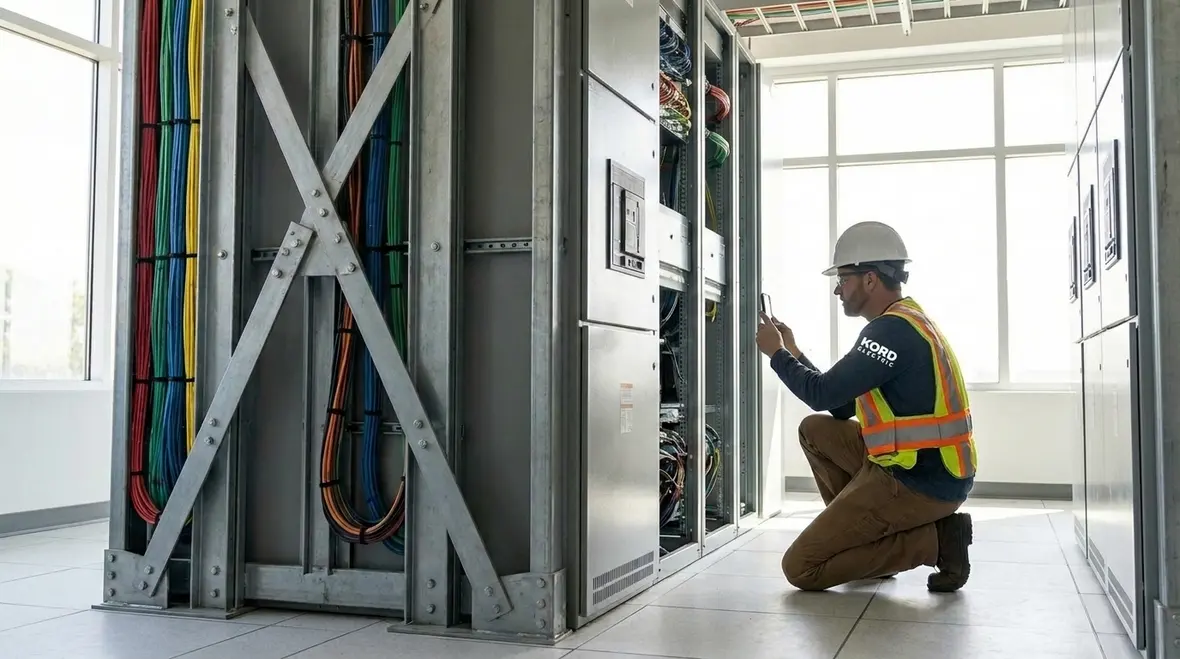
Next, teams often ask which redundancy model fits: N+1, 2N, or configurations that mix both. Kord Electric evaluates this using practical factors like critical load size, uptime targets, maintenance windows, and how the facility handles planned outages. Of course, more redundancy can mean more equipment, and more equipment can mean more maintenance. So we design redundancy that matches the business, not just the brochure.
For many commercial and industrial data halls, N+1 provides strong availability when engineered correctly. Then, for the highest criticality, 2N designs keep each power path independent, so a fault in one system does not drag the other down. In California, we also account for how seismic restraints, routing, and connectors influence real performance. So the “theory” of redundancy becomes the “field” of redundancy.
Our expert service staff also helps explain the operational side. They walk owners through what happens during transfer, how maintenance impacts each path, and which alarms matter most. Because if a facility staff cannot interpret the signals, the system might as well be a smoke alarm with the battery removed.
For readers looking to go deeper into how redundancy fits into the bigger picture of facility design, Kord Electric also walks through broader data center electrical infrastructure essentials, including how power paths, protection devices, and cooling systems all interact in modern properties.
Electrical one line design: protect the right things, in the right order
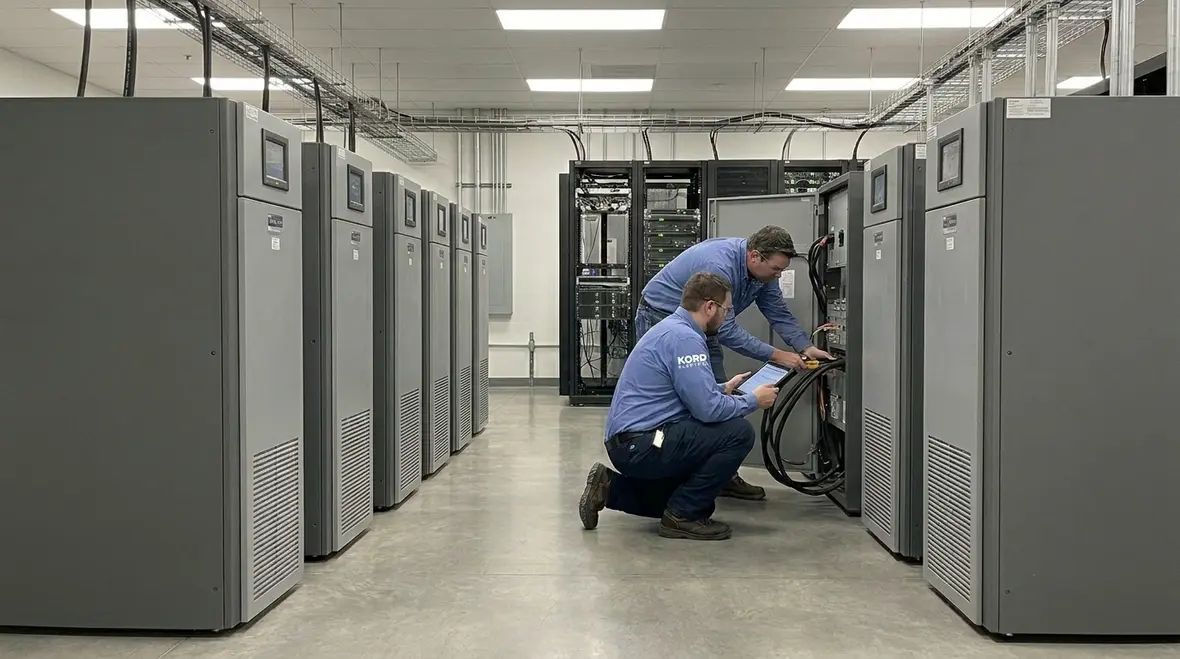
After the redundancy concept is chosen, Kord Electric engineers the electrical one line in a way that prevents cascading failures. That means we define selective coordination, set protection levels, and clarify the isolation boundaries between utility, standby generation, switchgear, and distribution. When faults happen, protective devices must clear the fault quickly while leaving the rest of the system stable.
To keep operations calm, we also design bus topology and transfer logic with clear labeling and consistent panel schedules. This may sound basic, but facilities often struggle when documentation is messy. Then technicians spend time chasing the “real” upstream feed instead of fixing the issue that actually matters.
We also pay attention to harmonics and power quality. Data equipment can create non linear loads, which increase heating and stress on conductors and transformers. By addressing these issues during design, we reduce nuisance trips, overheated connections, and long term performance drift. In other words, we avoid the electrical equivalent of hearing a creaky floorboard and pretending it is not there.
Because poor power quality and unstable voltage can quietly damage equipment over time, our recommendations often align with the same principles used in Kord Electric’s dedicated support for voltage fluctuations in commercial and industrial facilities, where small corrections today prevent expensive outages later.
Standby generation and transfer systems that behave during real events
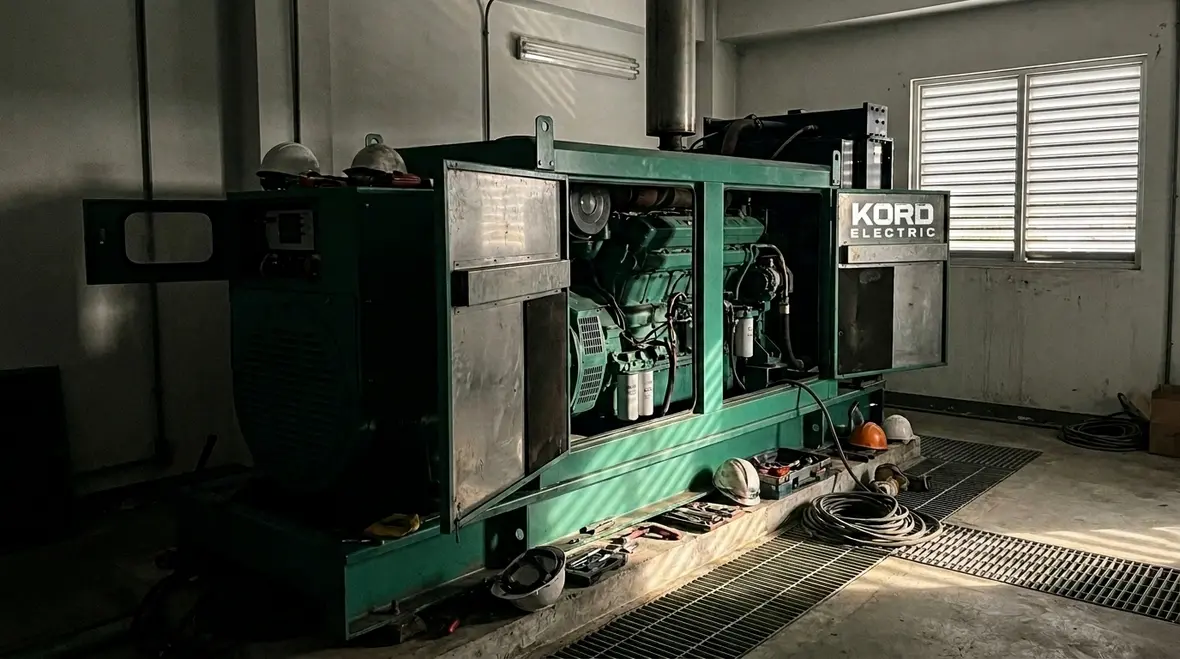
Standby power must start when it should, transfer when it should, and return to utility feed in a controlled sequence. Kord Electric builds the path from generator to load with engineered timing, proper synchronization where required, and transfer equipment that matches the facility’s risk profile. This matters because a transfer system that works “most of the time” still fails the moment a critical event hits.
California conditions add another layer. Heat affects engine performance, battery systems, and fuel handling. Therefore, we evaluate ventilation, enclosure ratings, and fuel storage needs based on the standby runtime goals and local code requirements. Additionally, we design controls and monitoring so operators can confirm status quickly and respond without guesswork.
Our technicians explain what owners should watch for during testing and commissioning. They guide teams through load bank testing, transfer behavior, and alarms in a way that is easy to repeat. And yes, we make it practical. Nobody needs a 90 page manual that looks like it was written during a meteor shower.
Grounding, bonding, and surge protection for calmer operations
Once the major power paths are defined, grounding, bonding, and surge protection become the quiet heroes. Kord Electric designs these systems to reduce shock risk, stabilize reference points for sensitive electronics, and manage transient energy. In a data center, one bad surge can stress components long after the event has ended, which means performance issues show up later like an invoice you forgot you had to pay.
We coordinate the grounding electrode system with the electrical distribution scheme and ensure the main bonding points align across systems. Then we design surge protective devices and protection coordination so they do not fight with upstream breakers or create unnecessary downtime. As a result, the facility can handle lightning induced surges and switching transients with less stress.
Because maintenance matters, we also plan inspection points and labeling for bonding jumpers, grounding conductors, and SPD components. Our expert service staff often helps operations teams create a practical test schedule. They explain what readings mean and when to escalate. That steady communication supports uptime, not confusion.
Power distribution inside the data hall: design for heat, access, and load growth
Next, Kord Electric focuses on distribution inside the facility where many problems show up. This includes transformer placement, feeder sizing, cable routing, and panel configurations that keep airflow in mind. Data rooms generate heat, and electrical components generate their own. So we design to prevent hot spots, reduce derating surprises, and keep connections within safe temperature rise limits.
Then we consider physical access. Cable trays, pathways, and breaker spaces must support future upgrades. If the facility plans for growth, we design spare capacity and clear pathways so additions do not require major rework. This saves money and keeps the uptime plan intact.
We also plan for metering and monitoring. Owners need actionable data, not just raw numbers. Therefore, we integrate measurement points that help operations spot imbalances, abnormal draw, and early signs of component aging. With better visibility, staff can schedule maintenance before a minor issue turns into a major outage.
Many of the same monitoring and inspection habits that keep data halls stable also appear in Kord Electric’s electrical preventive maintenance services, where structured inspections and reporting help facilities get ahead of failures instead of reacting to them at the worst possible moment.
Commissioning, testing, and documentation that teams can actually use
Even a well engineered design can stumble without disciplined commissioning. Kord Electric supports critical phases like pre functional checks, functional testing of transfer sequences, and verification of protection settings. We also verify load bank performance for standby systems where appropriate, and we confirm that control logic behaves under expected conditions.
To keep the facility team confident, our expert service staff provides training that turns the system into something understandable. They explain test results, describe what alarms indicate, and show how to confirm health states. Then, our technicians help make sure the documentation matches the installed equipment. Because when a one line diagram does not reflect reality, electrical troubleshooting becomes a scavenger hunt, and nobody wins that game.
In addition, we help owners plan ongoing maintenance that aligns with redundancy goals. Preventive work protects reliability. So we recommend schedules for switchgear inspections, generator checks, battery testing, and SPD verification. The aim remains simple: keep the power system predictable, even as the facility evolves.
FAQ: fast answers for California data center electrical resilience
Ready to build a power system that stays steady when events get loud
California data centers need resilience that holds up under real conditions, not just in design meetings. Kord Electric helps commercial and industrial facilities plan, engineer, and support electrical systems with engineered redundancy, clear protection strategies, and practical commissioning. Our technicians and expert service staff explain the details in a calm, usable way, so your team can operate with confidence. If your project needs a resilient power approach, call Kord Electric today and let us map the safest path to reliable uptime.
For facilities that want structured, ongoing support alongside their data center power redundancy systems, Kord Electric offers comprehensive electrical preventive maintenance services that keep critical infrastructure tested, documented, and ready for the next event.
If your organization is planning a new build, an upgrade, or a risk review of existing power systems, partnering with a team that already understands complex commercial and industrial environments makes the process smoother. Kord Electric’s preventive maintenance and voltage stability services give California data centers a practical path to higher reliability, from initial design through long term operation.
When you are ready to move from theory to implementation, Kord Electric’s dedicated electrical preventive maintenance team can support your transfer equipment, switchgear, grounding, and distribution systems with recurring inspections tailored to high criticality facilities.


