
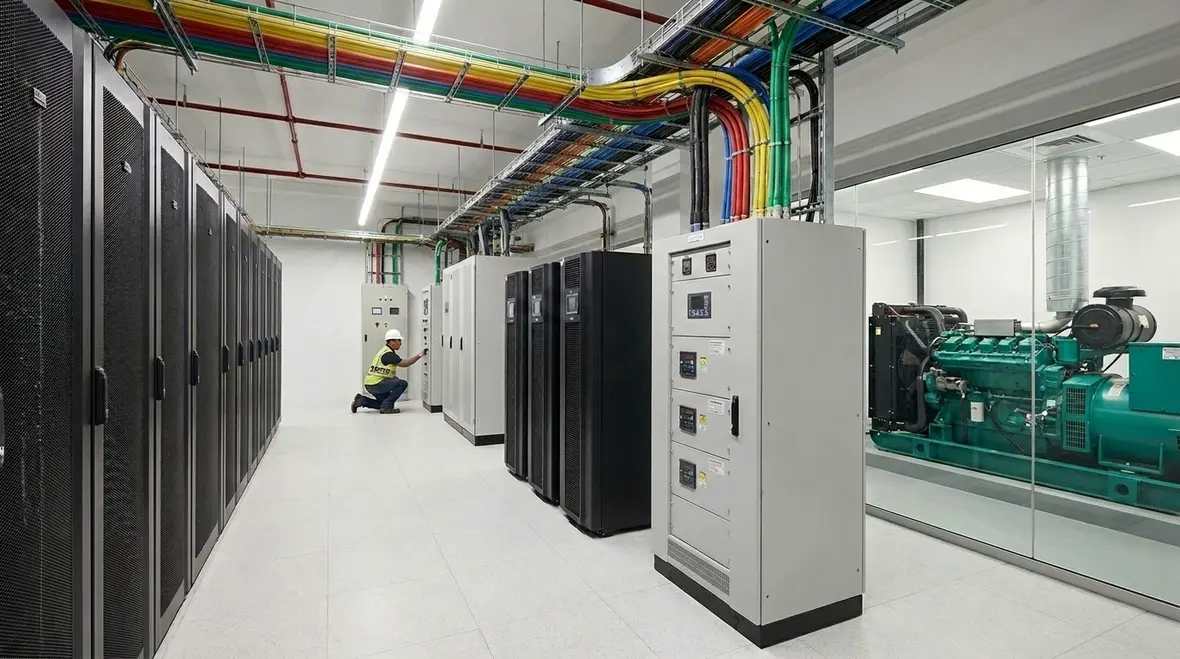
Commercial Data Center Power Redundancy Plan
Why Commercial Data Center Power Redundancy starts with the right plan
When a commercial data center loses power, the clock starts running on lost revenue, frustrated tenants, and the kind of downtime that turns meetings into confessionals. At Kord Electric, we focus on Commercial Data Center Power Redundancy for commercial and industrial facilities and major property buildings, where uptime is not a slogan, it is a requirement. In this guide, we walk through how redundant power systems keep critical loads alive, even when components fail. We also explain the practical steps our technicians and expert service staff follow, from design review to commissioning, so others can avoid the common trap of building a system that looks good on paper and panics in real life. And yes, we have seen “temporary” solutions that lived longer than some sitcoms.
Identify critical loads and build the uptime strategy
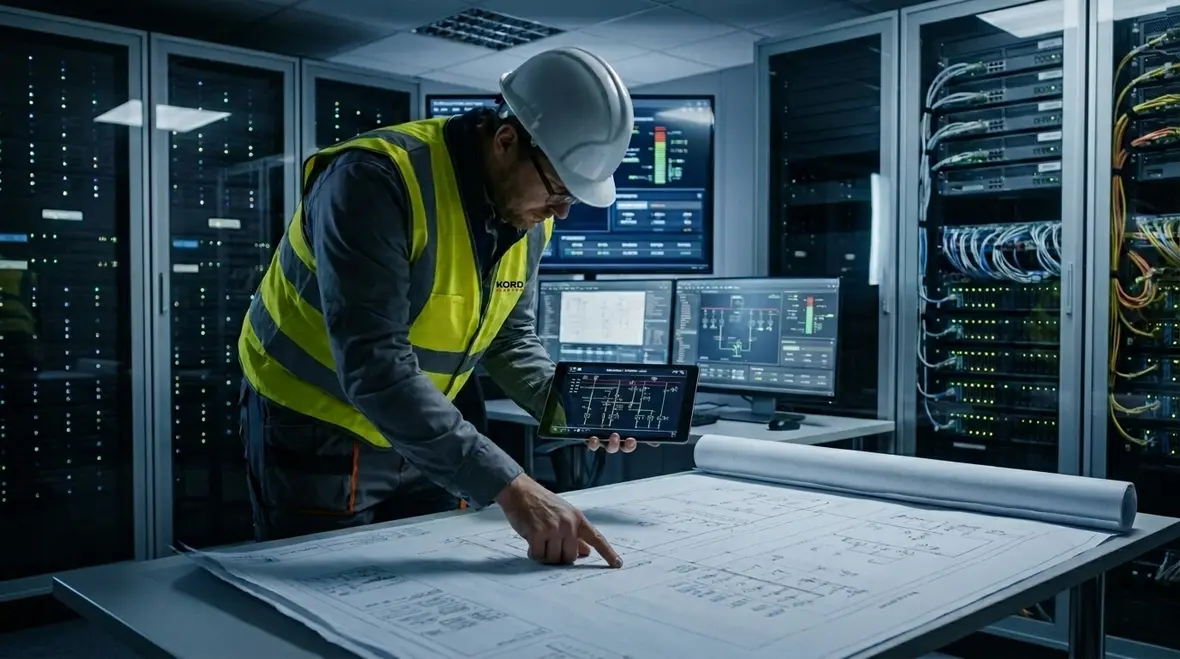
Before any generator, transfer switch, or battery cabinet shows up on site, our team helps others define what must stay running. We separate IT loads, cooling loads, security systems, and network gear because each group has different runtime needs and different tolerance for brief interruptions. Then we map the electrical path so redundant branches serve the right equipment, not just “everything that plugs in.”
Next, we align the design to the data center’s business goals. Some sites can tolerate a short transfer time; others cannot. Additionally, we consider maintenance windows. A good redundant power plan supports planned outages without causing unplanned ones. In other words, we aim for a system that fails gracefully, not dramatically.
Our expert service staff explains this clearly during reviews. They talk through the difference between standby support and true redundancy, and they show how load segmentation reduces the risk of one failure knocking out multiple systems. When you do this early, the rest becomes simpler, safer, and more predictable.
Design for N, plus something: paths that do not share the same problems
Redundancy works best when the power paths do not share the same weak link. So we encourage others to use multiple distribution paths with separate protection and controls. When a single component fails, the design routes power around it. This includes upstream switchgear coordination and downstream distribution panels feeding each critical zone.
Then we verify that the “redundant” systems still depend on an assumption. For example, two feeds may be labeled independent, but they might share a common switchgear bay, a common bus section, or a common control power source. Our technicians look for those hidden ties because they quietly erase redundancy.
Also, we check for what happens during a maintenance action. If technicians must take a section out of service, we want the remaining sections to carry the loads without creating overloads. Transition times matter. So we verify transfer logic, breaker sequencing, and the protective device settings so the system transitions quickly and safely.
Battery, UPS, and generator coordination for the first seconds
Most power failures do not give warning. Therefore, redundant power systems must cover the gap between utility loss and the moment generators can take over. That gap is where uninterruptible power supplies and energy storage earn their keep.
In our approach, we treat UPS systems as a bridge, not a permanent solution. We coordinate UPS output with generator start and transfer timing. Then we ensure the critical loads stay within voltage and frequency tolerances during the transition. After all, a bridge that drops you at the far end is not a bridge, it is a prank. (And some pranks should be illegal.)
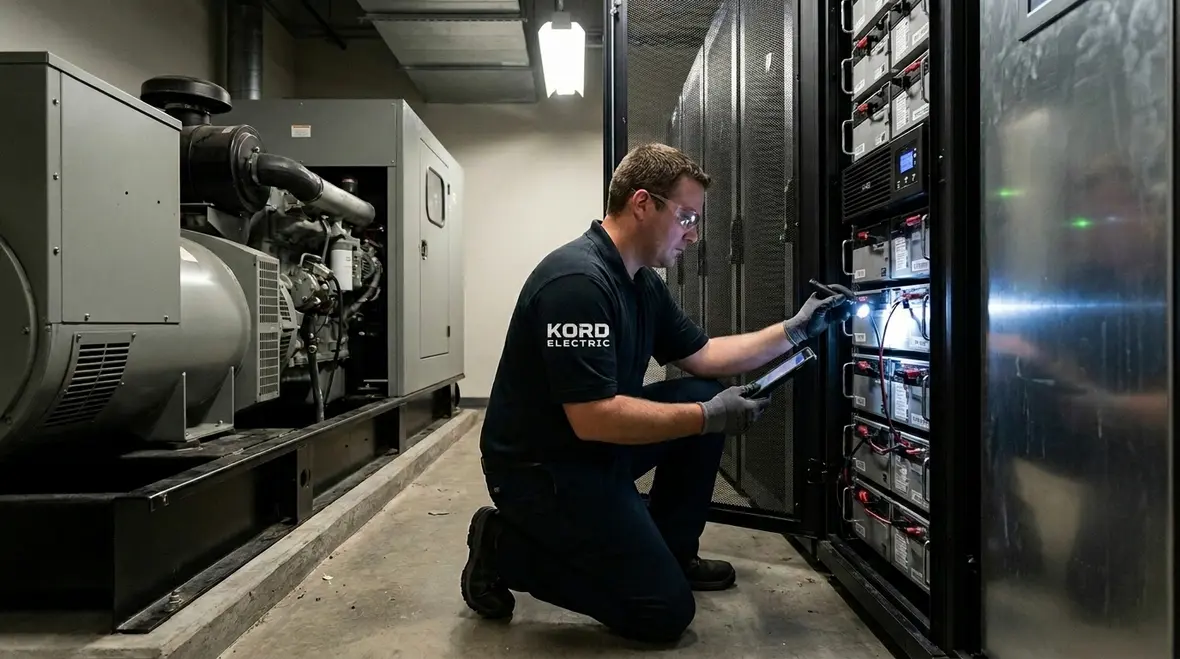
Our expert service staff also watches how batteries age. We plan for replacement schedules and we test systems to confirm they still meet runtime targets. Further, we ensure charger performance remains stable, because drift in charger operation can quietly reduce battery capacity. By monitoring alarms and analyzing trends, we help others avoid the “surprise failure” that happens when maintenance is treated like an optional hobby.
Transfer switches and switchgear: the calm operators behind the scenes
Switchgear and transfer switches decide whether redundancy behaves like a plan or a guess. We pay close attention to how the system transfers between sources: utility to UPS output to generator, and back again. We verify that interlocks prevent unsafe backfeed and that the control logic supports safe, repeatable operation.
In commercial and industrial facilities, we also focus on practicality. Operators need clear labeling, proper signage, and training that matches how the system works in the field. Our technicians explain switchgear sequences in plain language and they walk staff through normal and emergency actions. When people understand the system, the emergency is less scary and the response becomes faster.
Moreover, we make sure protection coordination aligns with the design. Protective devices must clear faults selectively, so one fault does not trip the entire critical area. This is where many “almost redundant” systems struggle. Therefore, we verify settings and we review coordination studies during commissioning, not after an outage reveals the truth.
Why commissioning, testing, and maintenance make redundancy real
A redundant system can still fail if it sits unused. So we build a maintenance plan that includes functional testing, load testing when applicable, and routine inspection of power components. Our expert service staff supports others with clear schedules for UPS batteries, generator readiness, switchgear inspections, and control checks.
Testing should not be a once-a-year ritual. Instead, we use a staged approach that matches the risk level of each component. For example, we verify that transfer logic behaves correctly under simulated conditions, and we confirm that indicators match actual state. We also check alarms, because an alarm that does not trigger is like a smoke detector with a sense of humor.
In addition, we review historical data. Temperature trends, battery capacity tests, and generator run-time logs help others predict issues before they escalate. When we combine testing with monitoring, Commercial Data Center Power Redundancy becomes less about hope and more about proof.
Plan for growth and avoid redesign during emergencies
Data centers change. Tenants add equipment. Cooling needs evolve. Storage and processing workloads expand. Therefore, we design redundancy with future expansion in mind so others can add capacity without disturbing existing critical loads.
We plan for spare breakers, additional feeder positions, and space for future UPS modules or distribution panels. We also consider how load increases affect generator sizing and battery runtime. If the system grows but redundancy does not, the site might pass a test today and fail during the next expansion.
Also, we coordinate with facility schedules. We help others plan phased upgrades so downtime stays limited to what is necessary. Our technicians coordinate cutovers carefully and we communicate with stakeholders so the project runs like a business initiative, not a science experiment. If the goal is uptime, then the process needs to support it too.
Common pitfalls that break redundant power plans
Even strong designs can stumble when teams overlook a few details. First, they underestimate control power. If control power fails, breakers may not operate as intended, and redundancy becomes a theory. Second, they skip protective coordination checks. If selective clearing fails, one fault can drop multiple areas at once. Third, they treat batteries like “set it and forget it” equipment. Batteries fatigue even when everything looks fine.
Another pitfall involves shared dependencies. Two “independent” paths can still share a common ATS controller, a common monitoring circuit, or a common cooling dependency for electrical rooms. While that seems minor, it can turn redundancy into a single point of failure.
Finally, people assume that commissioning equals paperwork. In reality, commissioning validates controls, tests transitions, and confirms that the system performs as described. Our expert service staff takes this seriously because we have seen what happens when teams rush the final checks. The electrical room does not care about deadlines, it cares about physics.
Connect power redundancy with broader data center infrastructure
Redundant power is one piece of a larger data center electrical infrastructure. When we review a site, we look beyond generators and UPS cabinets and examine how power distribution, grounding, cooling, and monitoring tie together. A strong Commercial Data Center Power Redundancy strategy fits inside a bigger picture that already accounts for load growth, safety, and operational workflows.
For teams who want to zoom out and understand the full electrical backbone behind their racks and cooling systems, we often point them to resources like our overview on data center electrical infrastructure essentials. When redundancy planning, infrastructure design, and day-to-day operations align, uptime stops being a guessing game and becomes a measurable outcome.
FAQ
Take the next step with Kord Electric
If your commercial data center needs dependable power, do not wait for the outage to teach the lesson. Kord Electric works with commercial and industrial facilities and major property buildings to plan, build, commission, and maintain redundant power systems that protect uptime. Reach out to our team for an assessment of your critical loads, electrical paths, and transition performance. We will explain the options clearly, test what matters, and help you move forward with confidence. Let us keep your lights on and your downtime off the calendar.
If you are planning a new facility or upgrading an existing one, our commercial electrical team can pair your redundancy strategy with broader service offerings for large buildings and campuses. From main service upgrades to emergency response planning, we support the full electrical lifecycle so your data center is never an afterthought in a larger project.
To explore how our commercial services fit your next project, connect with Kord Electric and learn how a well‑built redundancy plan can anchor a safer, more resilient electrical system across your entire property.


