
Smart Building Energy Management Systems Roadmap
Smart building energy management systems are no longer a luxury for major commercial and industrial properties. At Kord Electric, we work with owners and facility leaders to map a clear transition from “lights on, bills higher” to a controlled, measured approach that helps energy perform like it should. Our technicians and expert service staff explain the pathway in plain language, then guide the rollout with practical steps, not theory. In this roadmap, we show how owners can move methodically from current utility habits to data backed control. And yes, we will make it engaging, because energy management should not feel like watching paint dry. Even if some sites run close to that.
Why smart building energy management systems change the owner’s job
In older setups, the building behaves like a guess, not a system. People request comfort, systems react, and energy cost follows. Then someone says, “We should tighten it up,” and the facility team starts searching for issues across meters, panels, and schedules. However, when owners adopt a smart building energy management platform, the work shifts. The team moves from reactive patching to planned control.
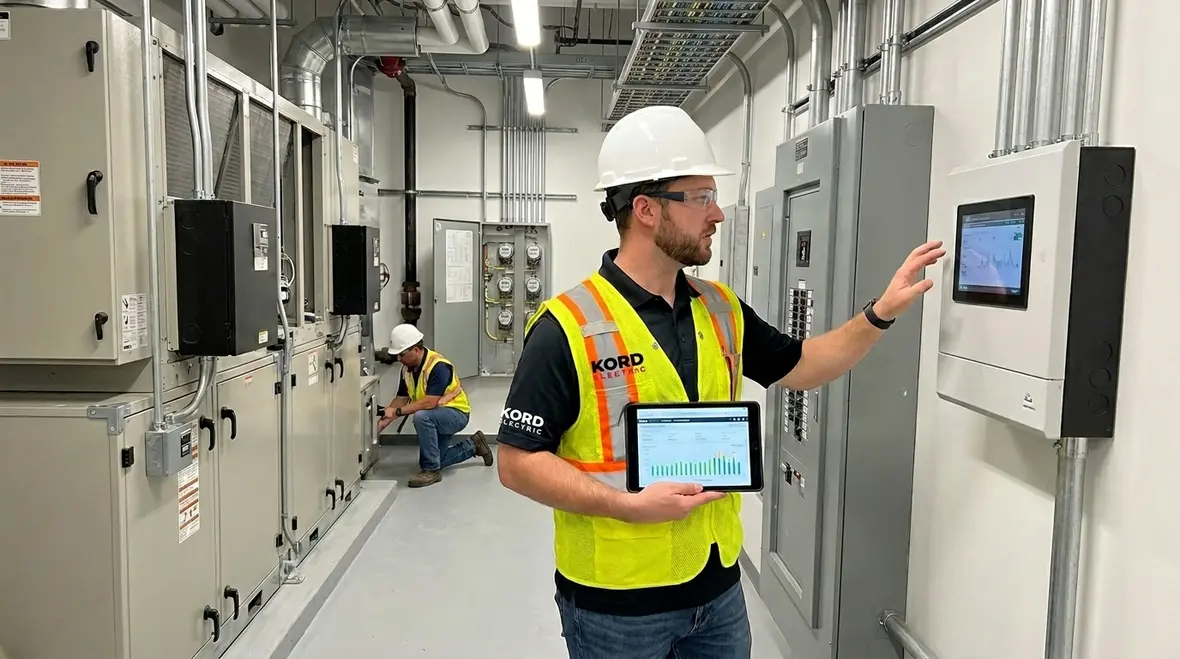
First, we consolidate signals from HVAC, lighting, motors, and submeters into a single view. Next, we set rules that match how the property actually operates. After that, the system checks results and adjusts over time. Meanwhile, Kord Electric technicians validate the logic during commissioning so the building performs the way the owner expects. So instead of “we think it’s fine,” others can say, “here is what happened, here is why, and here is what we changed.”
For large commercial and industrial facilities, that change matters. It helps protect budgets, stabilize demand, and support audits. It also helps keep operations steady because controls and alarms get tuned with intent, not panic. Energy becomes managed, not endured.
Building a roadmap that owners can actually follow

Smart change fails when it stays vague. That is why we recommend a phased roadmap that owners can approve, fund, and track. We start by clarifying goals in business terms, then we connect them to technical outcomes. For example, one owner might want lower peak demand. Another might want improved process reliability in a plant. A major property building might focus on tenant comfort and operating cost stability. Each goal leads to a different control plan.
From there, we follow four stages. First, we assess the current electrical and controls landscape. We look at panels, existing EMS or BMS components, sensor coverage, and how equipment cycles through real schedules. Then we define what “good” looks like, such as safe setpoints, verified schedules, and stable demand targets.
Next, we design a control architecture that supports growth. That means leaving room for additional data points, new assets, and future retrofits. After that, we implement in a way that minimizes disruption. Kord Electric typically installs and integrates equipment in sections so the facility stays operational.
Finally, we run a performance verification stage. We do not just flip a switch. We confirm energy outcomes, comfort results, and alarms. And yes, we also confirm that the system does not behave like a theater fog machine at full volume. Nobody needs that.
Step one: audit the electrical reality, not the spreadsheet
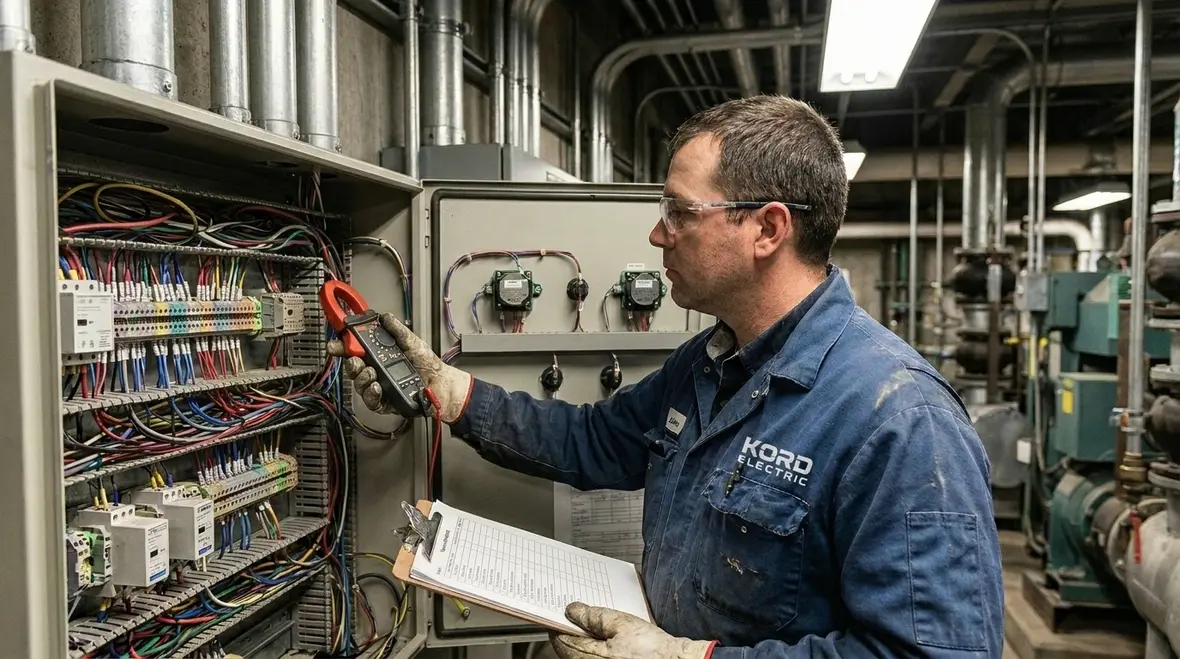
Owners often begin with utility bills and invoices. Bills tell a story, but they do not tell the full plot. Therefore, the first step must include an electrical and controls audit that focuses on what equipment actually does. Kord Electric technicians start with how loads are distributed, how power quality looks, and where sensors or submetering fall short. Then they map how HVAC, process loads, and lighting loads respond to controls today.
During this phase, we also identify baseline schedules and operating modes. Many facilities claim a schedule, yet the building runs differently. Weekdays versus weekends. Planned maintenance versus production surges. Seasonal HVAC shifts. To manage energy well, the system must know the truth, or it will optimize the wrong behavior.
Additionally, we check integration points. If the facility already uses a BMS, the goal is to connect smart building energy management systems with existing controls instead of replacing everything blindly. We prioritize interoperability so the owner avoids expensive “rip and replace” cycles. And when upgrades are needed, we explain the reasoning clearly.
By the end of the audit, owners receive a list of opportunities tied to risk and benefit. That list supports decisions: where to add sensing, what to tune, which loads to control first, and what to hold for later. This keeps the roadmap grounded in reality.

Step two: install the right sensing and control layers
Once owners understand their current state, we build the sensing and control layers that make smart systems useful. Good data prevents bad decisions. So Kord Electric focuses on instrumentation that supports actionable control. We look at temperature and humidity where they matter, current and power where loads vary, and operational signals that reflect actual equipment states.
Control layers typically include three levels. At the top, analytics and dashboards help staff monitor building performance. In the middle, control logic manages setpoints, schedules, and safe operating constraints. At the bottom, device level control handles equipment commands through reliable interfaces.
Here is the key: we match control depth to the facility risk level. For critical loads, we use conservative rules and ensure safe handoffs. For flexible loads, we use optimization more aggressively. Technicians and our expert service staff explain these choices so facility teams understand how the system acts. Nobody wants a black box making decisions during production hours.
As we install, we also plan commissioning. That includes verifying sensor calibration, validating communication reliability, and testing control sequences. Then we align the smart building energy management systems with operational routines. If the facility uses shift work, the system should understand shifts. If the facility has night purge needs, the system should respect them. Control should match the site, not the other way around.
Step three: set strategies that reduce cost without hurting operations
After sensing and controls come online, owners need strategies that deliver value while protecting comfort and production. Kord Electric typically recommends a staged strategy rollout. We do not ask the building to do everything at once. We start with the low risk, high clarity moves, then expand.
Common strategy categories include optimized scheduling, demand response readiness, and adaptive control. Optimized scheduling reduces unnecessary runtime by aligning equipment operation with real occupancy and production cycles. Demand response readiness helps manage peak load periods by coordinating equipment constraints with utility signals or internal limits.
Adaptive control uses live performance feedback. For example, it adjusts HVAC behavior based on measured conditions, not just a fixed schedule. Meanwhile, it respects safety limits, equipment minimum run times, and ventilation requirements. That is where our technicians’ experience matters. They tune controls so the system improves performance without creating instability.
In lighting, we help owners use controls that match actual usage patterns. In motors and other electrical loads, we support monitoring and control logic that helps avoid waste. Also, we coordinate with facility teams so alarms and notifications do not overwhelm staff. We aim for “actionable alerts,” not a daily fire drill. If someone wants real chaos, they can watch a superhero movie. The building already has enough plots.
Verification, training, and long term performance
Many energy projects stall after installation. That is why verification and training must be built into the plan. Kord Electric runs a performance verification process so owners can trust outcomes. We compare results to the baseline, then we measure how control changes impact energy and operating conditions.
Training comes next. Our technicians and expert service staff walk facility teams through the system in a practical way. They explain where to check status, how to interpret trends, and what to do when anomalies appear. For commercial and industrial properties, training should cover operational handoffs. Shift teams must know how to monitor the system and when to call for support.
Next, we establish a maintenance rhythm for the smart building energy management systems environment. That includes sensor checks, firmware updates where needed, and reviewing control performance as equipment ages. Buildings change over time: expansions, new tenants, process adjustments, and seasonal shifts. Therefore, the control strategy must evolve.
Finally, we set reporting that supports ownership decisions. Instead of flooding staff with data, we provide focused metrics tied to goals like reduced peak demand, stable comfort, and improved energy intensity. Owners and leadership can then make decisions with confidence.
Related planning for modern electrical systems
For many facilities, smart building energy management systems become part of a broader modernization plan. That plan often includes upgrades to commercial electrical systems, lighting, and distribution so smart controls have a solid foundation to work with. When owners coordinate smart controls with disciplined electrical upgrades, they reduce surprises and make every kilowatt work harder instead of simply adding more equipment and hoping for the best.
Kord Electric’s field experience with commercial electrical systems for modern buildings helps owners align their smart initiatives with the realities behind the walls. That means verifying that panels, feeders, and protective devices can support automated strategies without causing nuisance trips or unplanned downtime. It also means planning expansion capacity so future projects can plug into a system designed to grow rather than a patchwork that resists change.
As owners layer in modern controls, they also gain better visibility into where rewiring, panel consolidation, or targeted infrastructure improvements will create the biggest impact. That visibility turns what used to feel like a guess into a clear, staged roadmap that leadership can actually approve and fund.
The same thinking applies in specialized spaces like kitchens, labs, or coastal facilities. Smart building energy management systems become even more effective when they sit on top of wiring, grounding, and protective devices that were designed with today’s loads in mind, not yesterday’s assumptions.
FAQs for commercial and industrial facilities
Take the next step with Kord Electric
Kord Electric helps owners of major commercial and industrial properties move from guesswork to control. We map the path, audit the real electrical and controls conditions, install the right sensing, and verify performance so the building saves energy without disrupting operations. Our technicians and expert service staff train your teams to keep the system running smoothly long after go live. If you are ready to plan a transition, reach out to Kord Electric for an assessment and a phased roadmap built for your facility.
As you plan that roadmap, it can be helpful to review how your current electrical backbone supports your future goals. Resources like Kord Electric’s guides on commercial electrical systems for modern buildings and other modernization topics provide additional context for owners who want to align smart controls with strong, code compliant infrastructure that is built to grow.
When you are ready to move from high level ideas to a concrete plan, Kord Electric’s commercial and industrial electrical services team can help you connect smart building energy management systems with practical field work, from panel upgrades and targeted rewiring to lighting and controls that actually match how your property operates day to day.


