

Data Center Power Redundancy Strategies Explained
In every commercial and industrial facility, uptime does not happen by accident. It gets engineered. At Kord Electric, we build around Data center power redundancy strategies that keep critical loads alive when the grid misbehaves, a switch fails, or a component decides to retire early. We often start with one simple question: what happens if power vanishes for a moment and never comes back soon? Others may call it “worst case.” We call it “Tuesday.”
In this article, we explain how our expert service staff and technicians methodically design, test, and maintain dependable electrical infrastructure. And yes, we will keep it practical. Because when your uptime depends on electrons behaving, you cannot afford poetry. You need a plan that works, and we help you build that plan.
Why uptime failures cost more than downtime
For a data center, power loss does not only mean a dark room. It means halted workloads, failed transactions, delayed backups, and the kind of customer calls that no one wants to answer. Meanwhile, your team may still be working, just in the slow motion of recovery. To prevent this, others often chase speed. We chase stability.
Electrical downtime risks show up in several ways: the utility feed drops, a transfer switch stalls, a UPS battery ages out, or a generator fails under load. Even if the outage lasts minutes, the harm can last hours. Therefore, a solid design uses layered protection and planned paths for power flow, so the data center does not rely on one single device or one single moment in time.
Our technicians look at the facility like a system, not a collection of parts. If one link breaks, the rest should carry the load without drama. In short, we help you turn “surprise outage” into “managed event.”
Key redundancy layers: utility to load, no single point
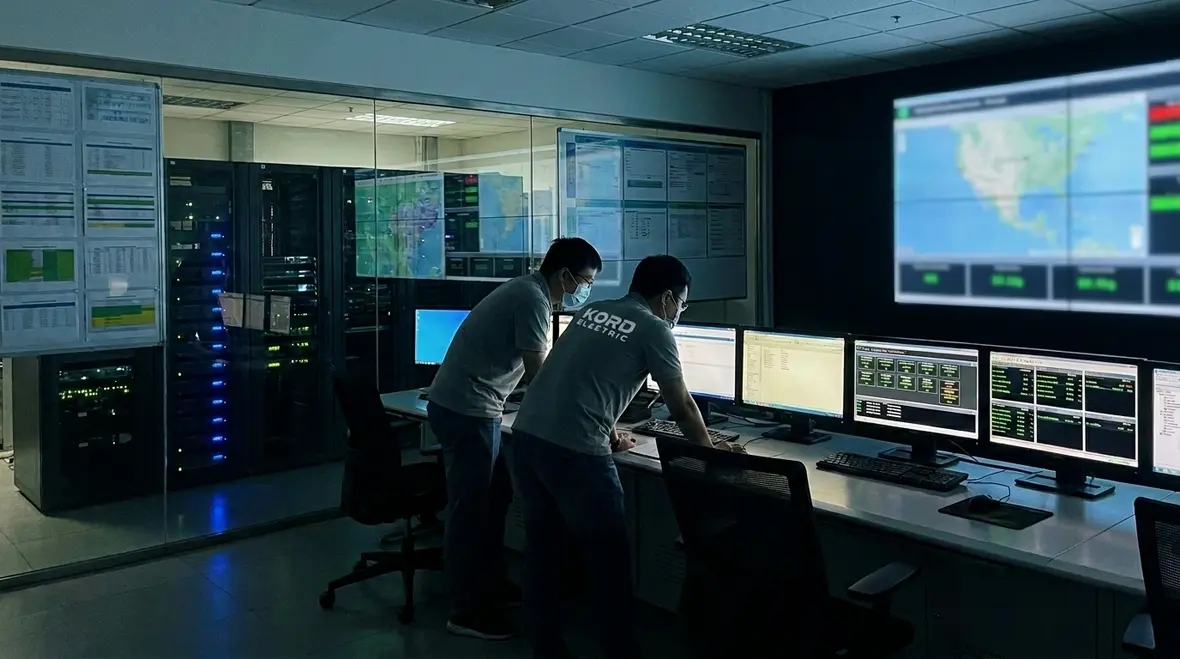
A data center’s electrical path usually starts at the utility interface and ends at critical loads like servers, storage, and network gear. However, the path must include redundancy at each step. That is where Data center power redundancy strategies become real instead of buzzwords.
Common layers include:
- Dual utility feeds where available, so one utility side does not decide your fate
- Redundant switchgear so maintenance and faults do not interrupt service
- Parallel UPS systems for continuous ride through and clean power
- Generator sets with proper transfer and sequencing
- Multiple power distribution paths so a fault stays localized
To make this approach work, we model power flow and fault behavior during design reviews. Then we specify interlocks, breaker logic, transfer schemes, and configuration rules. In other words, we remove the guesswork. Because guesswork is fine for sports predictions, not for critical power.
Design for fast transfer with UPS and switchgear coordination
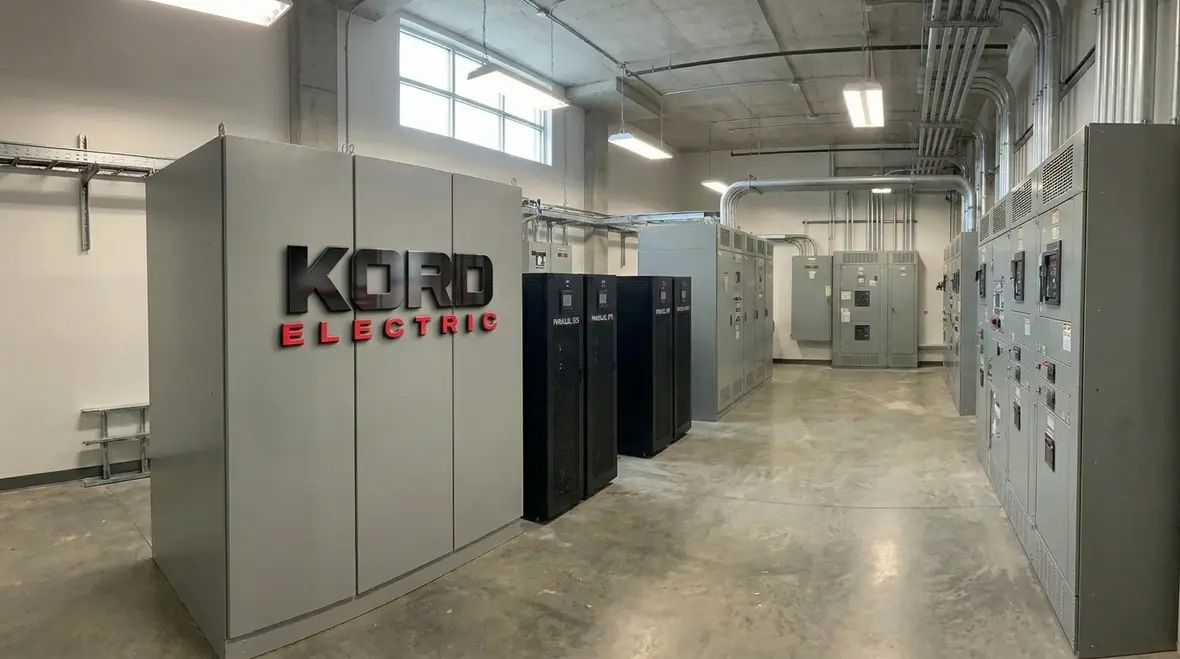
When a utility power event happens, the timeline matters. The UPS buys time, while switch gear and transfer equipment move power sources with the right sequence. If coordination fails, you can create a brief power gap even though every device “worked.”
Our team focuses on coordination details: UPS runtime, static switch behavior, bypass paths, and how the system transitions during maintenance. We also align the switching plan with the generator start time, so the UPS does not become the only safety net holding the entire building together.
And yes, sometimes the myth shows up that “UPS means the grid can fall apart.” That is not how it works. UPS helps you ride through and smooth power quality. It does not fix bad planning. Therefore, the design must include proper redundancy in bypass and transfer modes, plus clear operating procedures so your operations team can act confidently.
When our expert service staff explains these systems to client teams, we do it in plain language. We show what transfers do, what they do not do, and what alarms mean. That way, when an event occurs, people do not panic. They execute.
Generator redundancy that actually starts under load
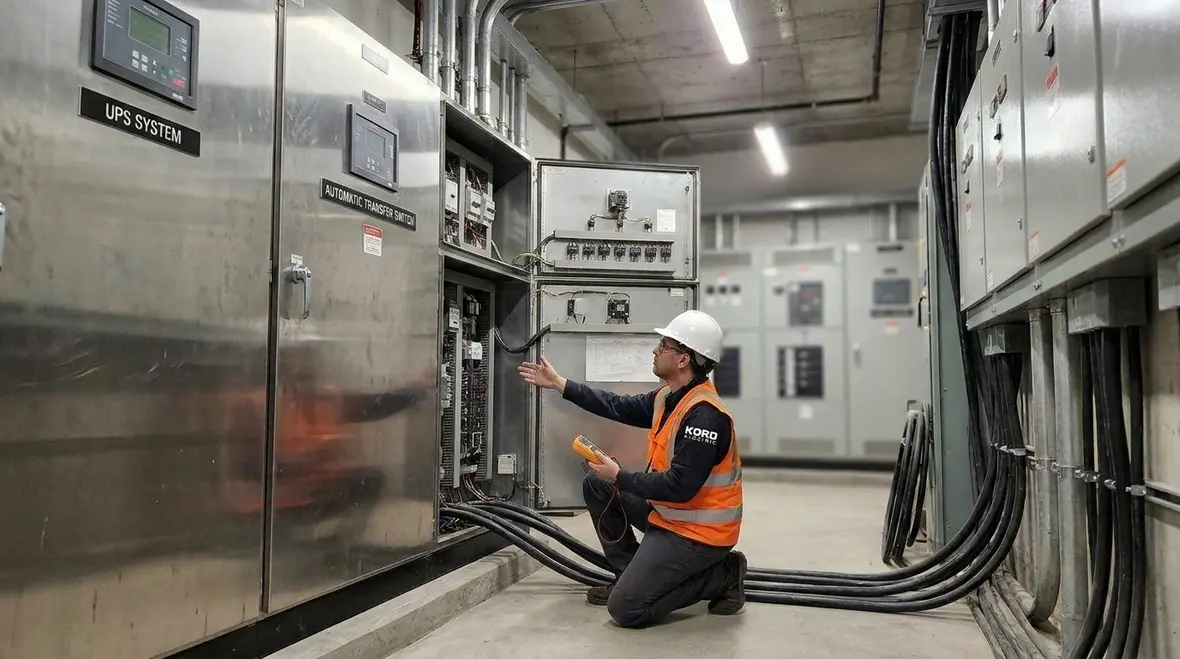
Generators often look impressive on paper, and then they stumble when real conditions show up. The biggest causes include poor load transfer timing, insufficient fuel capacity, weak maintenance schedules, and lack of real testing. So Kord Electric emphasizes generator redundancy as an operational capability, not a checkbox.
We help clients plan for:
- Multiple generator sets so one unit’s failure does not halt the facility
- Correct sizing with real load profiles, including surge behavior
- Proper fuel strategy with run time targets based on risk tolerance
- Load bank testing so performance matches expectation
- Transfer switch logic that matches UPS behavior and reduces stress
Moreover, we ensure that the facility can start generators in the right order and avoid unnecessary downtime. That involves reviewing electrical interlocks, voltage sensing, frequency thresholds, and sequencing rules. As a result, the system transitions in a way that protects both the equipment and the uptime goals.
In practice, this means we coordinate with your operations team and document procedures. After all, a generator that starts perfectly during a factory demo can still disappoint during a real event if the setup differs. We close that gap.
Distribution and load bank reality: keep faults contained

Even with redundant sources, distribution faults can damage more than one area if design does not contain the problem. Therefore, we build redundancy into distribution paths. This includes how power travels from switchgear and UPS output into critical distribution panels and ultimately to IT loads.
Our technicians also pay attention to heat, labeling, routing, and protective device coordination. Because if protection does not isolate properly, you can lose more load than necessary. Meanwhile, selective coordination reduces the “domino effect” when a fault happens.
When we support major property buildings and data center clients, we often recommend clear segmentation of critical circuits and careful labeling standards. That helps your staff respond faster during alarms. And if you think labeling is boring, imagine troubleshooting a live electrical panel at 2 a.m. That boredom turns into a comedy show, and nobody wants the punchline.
| Redundancy element | How it protects uptime |
| Dual input paths | Keeps operations running if one utility or upstream path fails |
| Parallel UPS logic | Maintains clean power and rides through transfers |
| Generator sequencing | Supports smooth transition during longer events |
| Selective distribution protection | Limits faults to smaller zones |
To go even deeper on how these layers fit into a bigger electrical picture, many facility teams also review our companion article Data Center Electrical Infrastructure Essentials when mapping out upgrades and long term plans.
Testing, maintenance, and training for dependable outcomes
Redundancy means little if the system never gets tested in real conditions. That is why we push for maintenance plans that reflect how the equipment ages and how components behave over time. Batteries lose capacity. Firmware changes. Breakers wear. And if testing stays theoretical, the first “real” test might be your worst day.
Our expert service staff helps clients build a routine that covers:
- UPS health checks and battery management
- Switchgear inspection and functional tests
- Generator exercise with load profiles
- Infrared and thermal scans for early warnings
- Alarm review and response drills
Just as important, we train your teams on operating states and event flow. We explain how to identify the difference between a nuisance alarm and an event that threatens load continuity. When people understand the system, response becomes calm and methodical. That is the kind of calm you want when the facility’s future feels like it is tied to a single relay.
For facilities that want a structured program, many of these same practices tie directly into broader commercial and industrial electrical maintenance plans, which formalize inspections, testing intervals, and reporting for major properties.
How to choose a redundancy plan for a commercial facility
Every major property building needs a tailored approach. However, the decision process should follow clear steps. First, your team defines what loads must stay online and for how long. Then it sets an event tolerance based on utility reliability, local risks, and business needs.
Next, we evaluate the existing electrical infrastructure. If the facility already has UPS and switchgear, the plan must account for retrofit constraints. If it is new construction, we can design the redundancy from the ground up and optimize routing, space, and maintenance access.
Finally, we align the plan with operations. A redundancy design that looks great but requires complex actions during an event may create delays. Therefore, we focus on clear operating modes and procedures that your facility staff can follow quickly.
Through this approach, we support commercial and industrial facilities and major property buildings that need dependable power, not just impressive equipment schedules.
FAQ
Call Kord Electric for a redundancy plan that holds
When uptime matters, you need redundancy that functions in the real world, under real conditions. Kord Electric designs, supports, and maintains electrical systems for commercial and industrial facilities and major property buildings, with a focus on coordination, testing, and clear training. If you want a power plan that turns outages into manageable events, contact us. Our technicians and expert service staff will review your current setup and map the most dependable path forward. Let us help your facility stay powered, calmly and consistently.
As you plan upgrades or new builds, it can also help to review how broader commercial electrical rewiring strategies and structured maintenance tie into the redundancy choices you make today, so your facility is ready for tomorrow’s load and compliance demands.
For teams that want hands-on support turning strategy into reality, Kord Electric’s dedicated commercial and industrial electrical maintenance plans and turnkey commercial electrical services help keep critical infrastructure reliable long after the initial project is complete.


