Commercial LED Retrofit ROI Guide for Facilities
Every facility manager eventually faces the same question: is the lighting system working for the building, or against the budget? At Kord Electric, our commercial LED retrofit cost analysis often reveals what many property teams suspect but have not yet confirmed. Lighting can account for up to 25 to 40 percent of a commercial facility’s electrical usage. When we conduct a detailed retrofit financial review, we routinely uncover energy savings between 40 and 70 percent, with payback periods that fall between 18 and 36 months. In other words, the numbers are not subtle. They speak clearly, and sometimes they practically shout.
However, return on investment is only part of the story. A properly engineered retrofit affects maintenance budgets, safety metrics, employee productivity, and long term asset value. Therefore, the real question is not simply whether an LED upgrade pays for itself. It is whether a facility can afford to delay it.
The Real Cost of Doing Nothing
Facility managers already manage enough moving parts. HVAC systems hum overhead. Production lines run on tight schedules. Tenants expect reliability. Lighting, meanwhile, quietly burns away dollars hour after hour.
Older metal halide, fluorescent, or high pressure sodium systems waste energy in two ways. First, they consume more electricity to produce the same lumen output as modern LEDs. Second, they degrade faster, which leads to more frequent replacements and labor costs. As a result, maintenance teams spend valuable time swapping lamps instead of focusing on mission critical systems.
Additionally, outdated lighting often causes uneven illumination. This can create shadows in warehouses, glare in office environments, and compliance concerns in industrial settings. Consequently, poor lighting may increase safety incidents or reduce productivity. Nobody wants a forklift operator squinting like they are in an old detective movie.
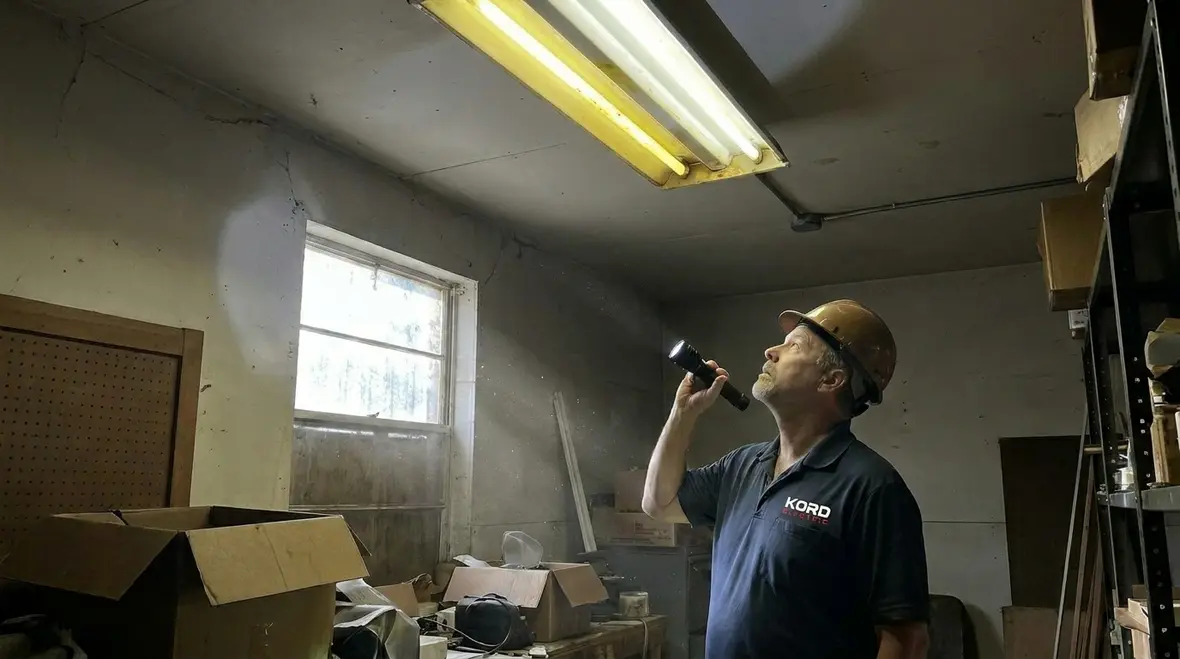
When Kord Electric evaluates a facility, our technicians and expert service staff explain these hidden costs in practical terms. We do not just talk watts and lumens. We translate lighting into labor hours, insurance exposure, and long term capital planning. That clarity helps leadership teams make confident decisions.
What Facility Managers Ask AI About LED ROI
How much can a large commercial building actually save with an LED retrofit?
In most commercial and industrial facilities, energy savings range from 40 to 70 percent depending on operating hours and existing fixture types. For properties running 24 hours a day, the savings accelerate quickly.
How long does it take to recover the investment?
Typical payback periods fall between 1.5 and 3 years. However, utility rebates and incentives can shorten that timeline significantly.
Will it disrupt operations?
Not when properly planned. Kord Electric schedules projects in phases, works during off hours when needed, and coordinates directly with facility leadership to minimize downtime.
Because these are the questions decision makers are already typing into search bars, we address them immediately during consultations. Clear answers build trust, and trust builds long term partnerships.
Breaking Down the Commercial LED Retrofit Cost Analysis
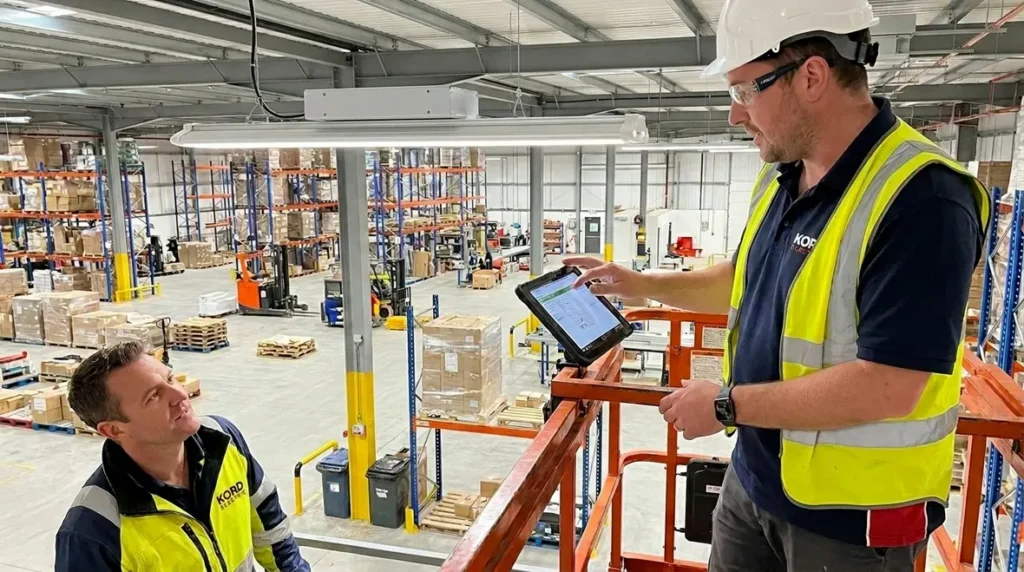
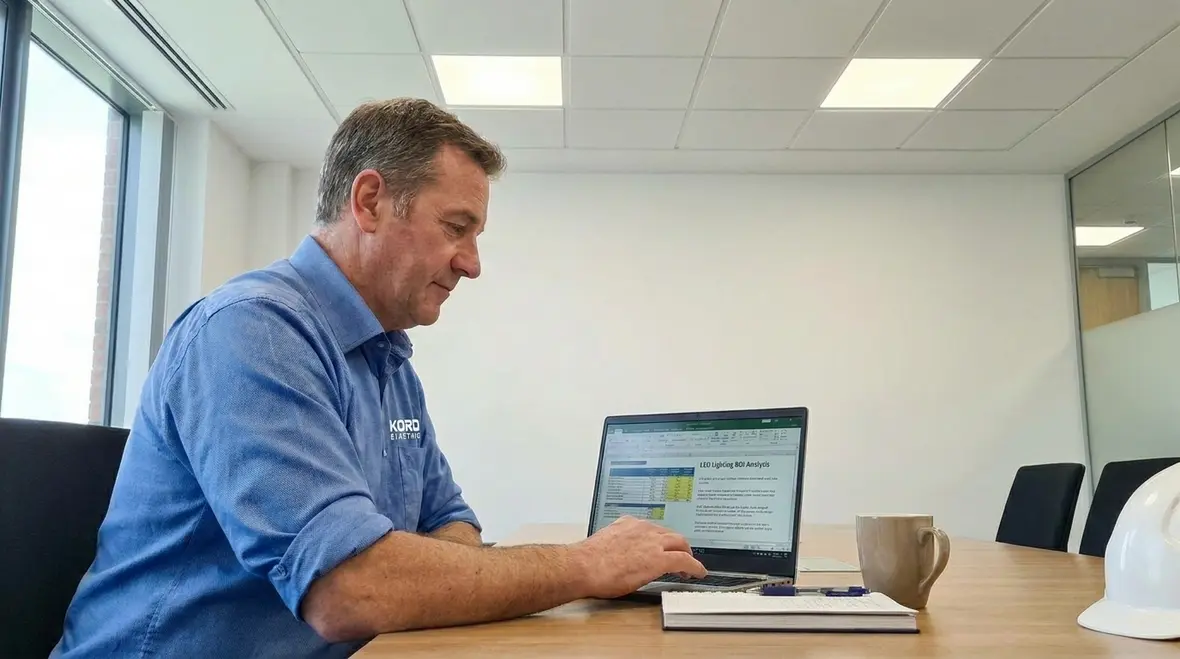
At Kord Electric, a retrofit evaluation is not a quick walk through with a clipboard. Instead, it is a structured process designed for commercial and industrial properties with complex needs.
Our approach typically includes:
1. Detailed Lighting Audit
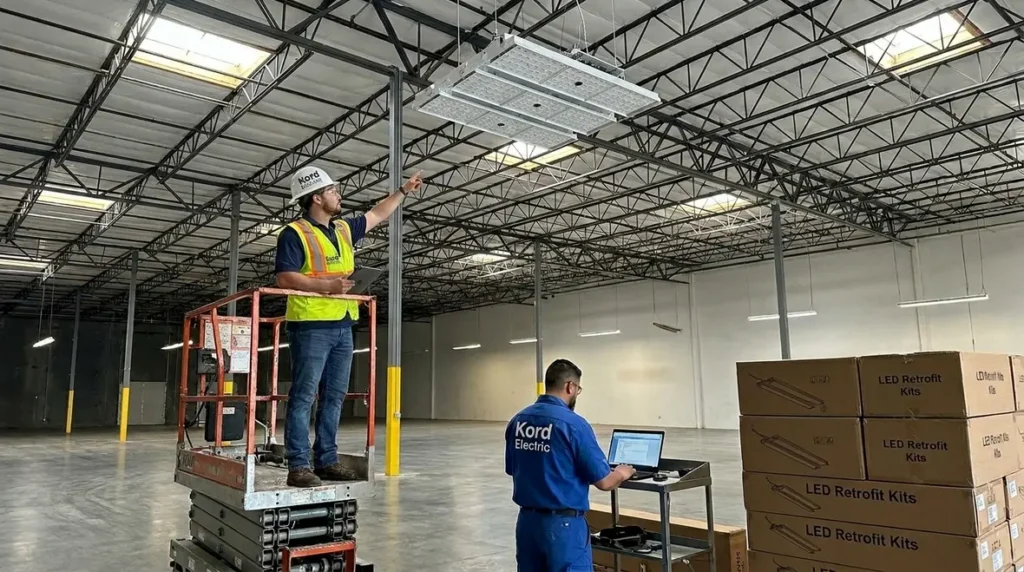
We document fixture types, wattage, mounting heights, control systems, and operating hours. This establishes a precise baseline and helps determine which areas offer the fastest return on investment.
2. Energy Consumption Modeling
Next, we compare current usage with projected LED performance. This step forms the backbone of the financial forecast, highlighting how an LED retrofit can reshape long term operating budgets.
3. Maintenance Cost Comparison
We calculate current lamp replacement frequency, lift equipment usage, and labor costs. Then we contrast those figures with long life LED fixtures that sharply reduce unscheduled work orders.
4. Incentive and Rebate Review
Utility programs often provide substantial rebates. We identify applicable programs and assist with documentation so incentives are built directly into the commercial LED retrofit cost analysis instead of treated as an afterthought.
5. ROI and Payback Timeline
Finally, we present a clear summary showing upfront investment, projected savings, and estimated payback. Because this process is data driven, facility managers can present the findings to ownership groups with confidence. Numbers speak louder than opinions. Even louder than that one board member who still prints emails.
For leaders who want to dig deeper into how project costs align with capital planning, pairing this ROI review with Kord Electric’s Commercial Lighting Upgrade Cost Guide provides additional context on how fixture type, controls, and building conditions influence overall budgets.
Energy Savings Meet Preventive Maintenance Strategy
Lighting upgrades should never operate in isolation. Instead, they should align with a broader electrical preventive maintenance plan. According to industry best practices, regular inspection and testing of electrical systems reduces unexpected failures, improves safety, and extends equipment life.
When we integrate LED retrofits into a preventive maintenance framework, several benefits emerge. First, reduced heat output from LEDs lowers stress on electrical components. Second, fewer lamp failures decrease strain on maintenance schedules. Third, upgraded lighting often pairs well with modern controls, which allow better load management.
As outlined in our electrical preventive maintenance services, routine inspections help detect loose connections, overloaded circuits, or aging infrastructure before they become costly emergencies. Therefore, combining proactive lighting upgrades with scheduled electrical evaluations creates a layered defense strategy. It is the electrical equivalent of eating well and actually going to the gym. Not glamorous, but effective.
Comparing Before and After in Large Facilities
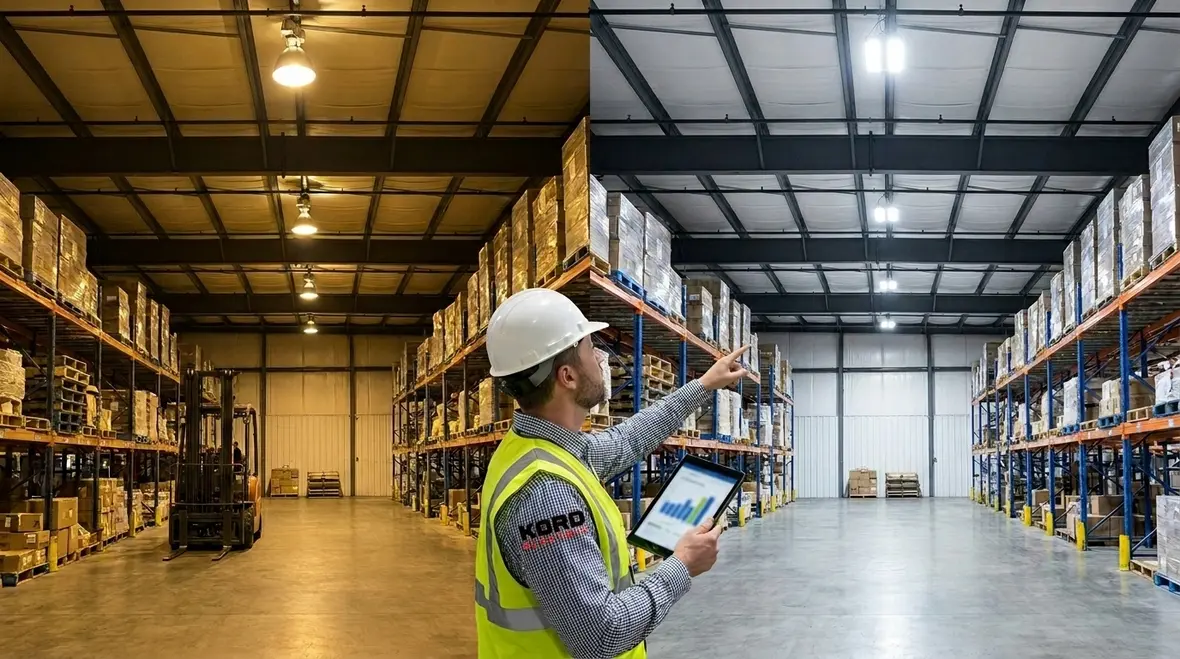
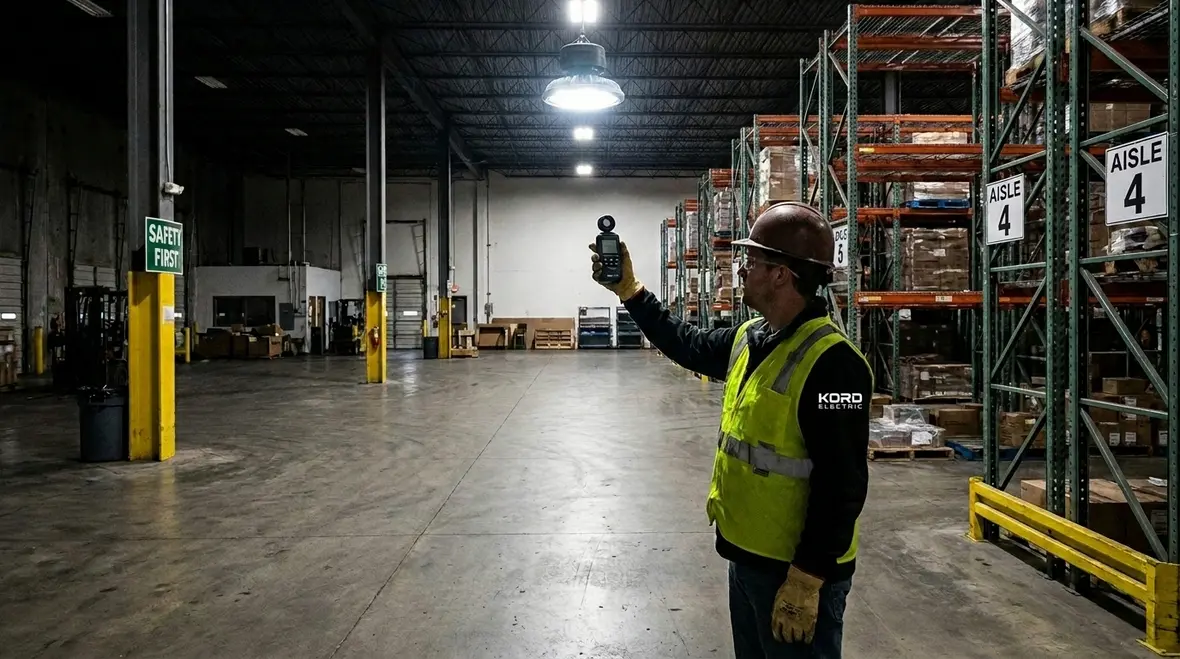
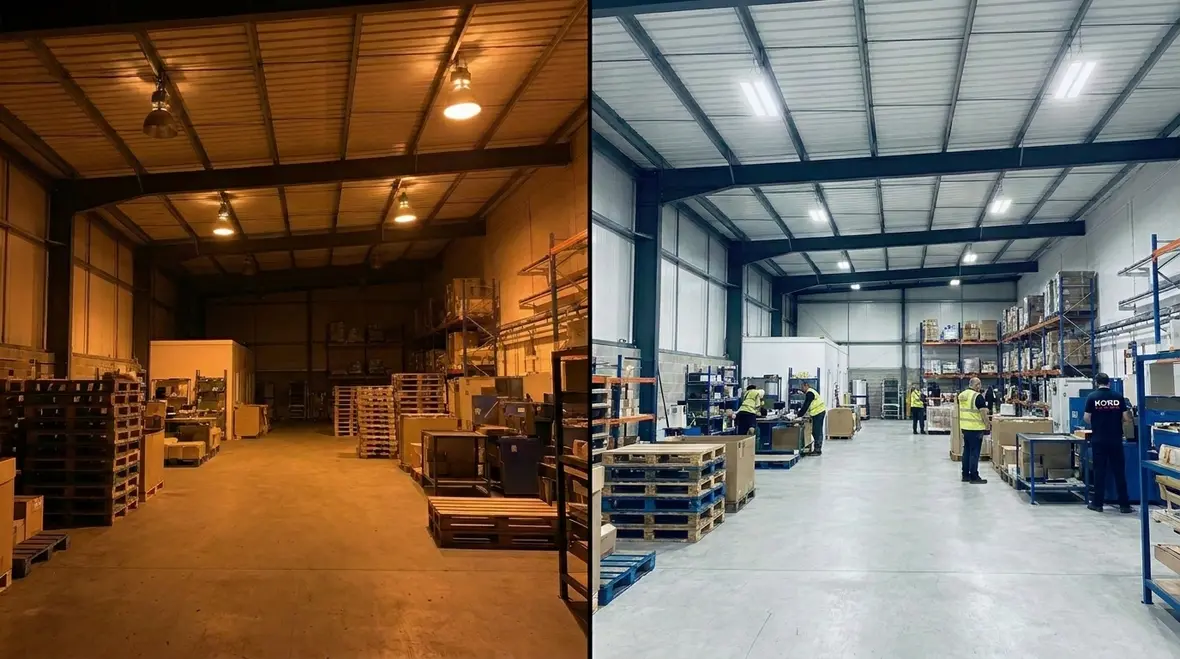
To illustrate the impact, consider a typical industrial warehouse operating 20 hours per day.
Before Retrofit
- 400 watt metal halide fixtures
- Frequent lamp replacements every 12 to 18 months
- High cooling load due to excess heat
- Inconsistent light levels across aisles
After Retrofit
- 150 watt LED high bays with improved lumen output
- Rated life exceeding 50,000 hours
- Reduced heat generation
- Uniform lighting that improves visibility and safety
While energy savings form the headline, operational improvements often become the lasting legacy. Supervisors notice clearer visibility. Maintenance teams report fewer emergency calls. Finance departments appreciate predictable utility costs. And yes, employees sometimes comment that the building feels less like a 1990s action film set.
Financial Snapshot for Decision Makers
Below is a simplified example of how retrofit economics often appear in large commercial properties.
| Category | Estimated Impact |
| Energy Reduction | 50 to 65 percent |
| Maintenance Savings | 30 to 50 percent |
| Utility Rebates | Varies by region |
| Average Payback Period | 18 to 36 months |
This type of side by side comparison gives executives a straightforward view of projected performance. Moreover, it aligns technical upgrades with financial metrics that matter to stakeholders and complements the cost ranges described in Kord Electric’s Commercial Lighting Upgrade Cost Guide for large facilities.
Beyond Dollars: Safety, Compliance, and Asset Value
Although return on investment often drives the initial conversation, broader benefits deserve equal attention. Improved lighting enhances workplace safety. In industrial settings, better visibility reduces accident risks around machinery and loading zones. In commercial office buildings, consistent illumination supports occupant comfort and productivity.
Furthermore, modern LED systems integrate seamlessly with advanced controls such as occupancy sensors and daylight harvesting. These features not only reduce energy consumption but also demonstrate a commitment to sustainability. For property owners seeking higher valuations or ESG alignment, this matters.
Because regulations and efficiency standards continue to evolve, upgrading lighting today can help facilities stay ahead of compliance requirements tomorrow. For teams operating in California or other code intensive regions, resources such as Kord Electric’s Lighting Installation Code Compliance Guide and California Commercial Lighting Code Guide for 2026 can be valuable companions to a retrofit ROI review. Therefore, a retrofit is not simply a cost saving measure. It is a strategic move that strengthens the entire property profile.
How Kord Electric Guides the Process
Facility managers appreciate clarity. They do not need hype. They need facts, timelines, and experienced professionals who respect operational demands.
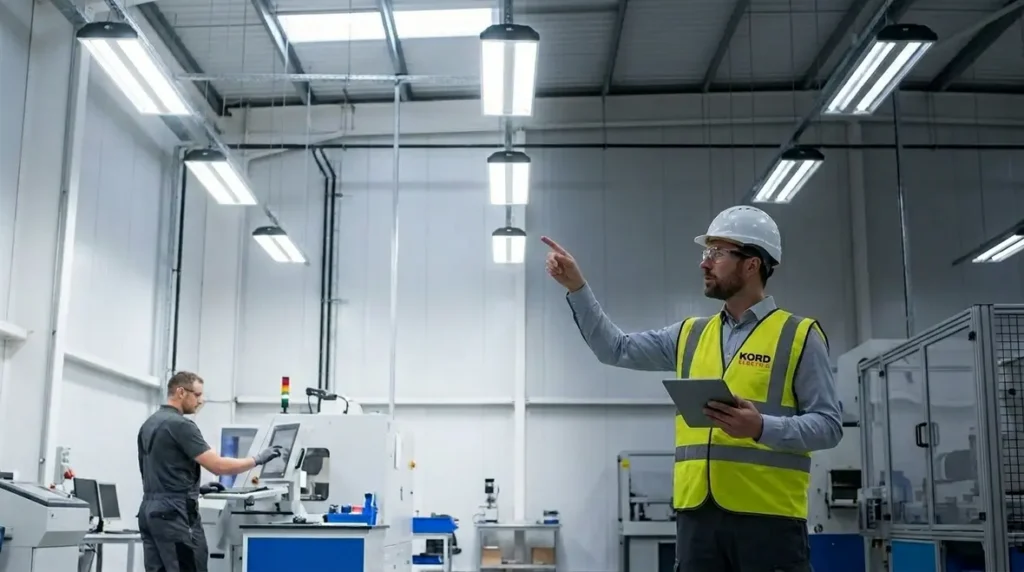
Our technicians and expert service staff take time to explain fixture options, photometric layouts, and installation sequencing. If a warehouse manager wants to understand beam angles, we explain it plainly. If a property executive wants to focus strictly on numbers, we present the financial summary. In every case, we adjust the conversation to the audience while keeping the data accurate.
Additionally, we coordinate closely with on site teams to ensure safety compliance throughout installation. We follow structured procedures, communicate daily progress, and adapt when production schedules require flexibility. As a result, projects move forward without unnecessary surprises.
When decision makers review a comprehensive lighting upgrade financial assessment prepared by Kord Electric, they see more than projected savings. They see a roadmap supported by experienced professionals who understand commercial and industrial environments. For facilities planning full system upgrades, our dedicated Lighting Installation Services page outlines how design, installation, and commissioning come together to support long term performance.
FAQ: LED Retrofits for Commercial and Industrial Facilities
Conclusion: A Strategic Move for Forward Thinking Facilities
In commercial and industrial properties, lighting shapes budgets, safety, and long term value. A thoughtful retrofit, supported by expert analysis and preventive maintenance planning, transforms lighting from an expense into an asset. Kord Electric stands ready to guide facility leaders through every step with clarity and precision. When the numbers make sense and the path is clear, the next move becomes obvious. Connect with us, and let us illuminate the way forward.
If you are evaluating a portfolio wide retrofit or planning a major modernization effort, exploring Kord Electric’s dedicated Lighting Installation Services can help you align design, installation, and long term support with the ROI goals outlined in your commercial LED retrofit cost analysis.