Lighting Installation Code Compliance Guide
Lighting Installation code compliance is not just a box to check. It is the quiet guardian of every commercial and industrial facility that wants to stay open, safe, and profitable. At Kord Electric, we see it as the difference between a smooth inspection and a long, expensive afternoon explaining things to an inspector who has already made up his mind. In the world of commercial properties and major building portfolios, lighting is more than brightness. It is safety, efficiency, and proof that the building respects the rules. And inspectors? They notice everything. Fortunately, so do we.
Lighting Installation Code Compliance: What Inspectors Actually Look For

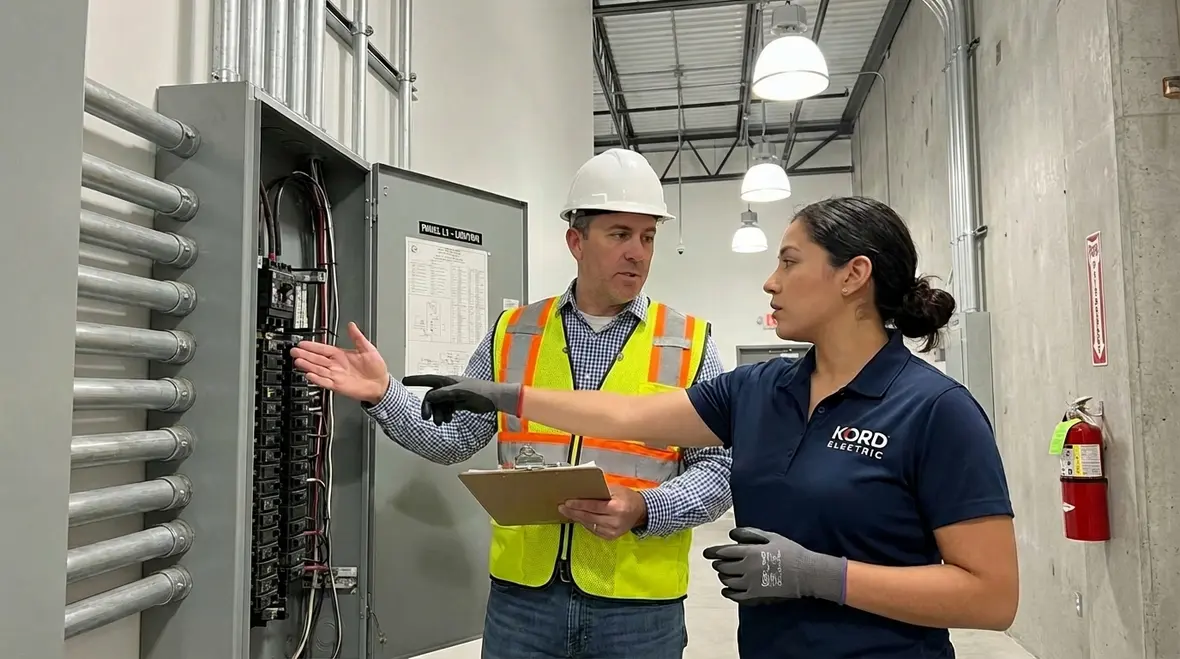
When inspectors walk into a commercial or industrial facility, they do not arrive hoping to fail a project. However, they are trained to look for risks. Therefore, every lighting installation must meet current electrical codes, local amendments, and energy regulations. In states like California, that often means aligning with Title 24 energy standards as well as national electrical requirements, especially for large commercial and industrial properties that operate around the clock.
First, they check proper circuit sizing. If lighting loads exceed breaker ratings or wiring capacity, that is an immediate red flag. Overloaded circuits are not just violations. They are fire hazards waiting for a bad day, and in facilities with heavy machinery or storage racking, that bad day escalates quickly.
Next, inspectors examine wiring methods. Are conductors secured correctly? Are junction boxes accessible? Are connectors listed and approved? In large commercial properties, messy wiring is like leaving fingerprints at a crime scene. It tells a story, and not a good one. Neat, well-supported raceways and clearly organized junction boxes show that the Lighting Installation code compliance was baked in from day one, not slapped together at the end.
Grounding and bonding follow closely behind. In industrial settings with heavy machinery, proper grounding protects both equipment and people. Without it, stray voltage becomes a silent threat. Inspectors will trace grounding paths, confirm bond jumpers, and look for any “creative” solutions that do not match code-approved methods.
Then there is fixture support. High bay lights, suspended troffers, and exterior wall packs must be mounted securely. Inspectors tug gently. If something wiggles, so does their confidence. Heavy fixtures need independently rated supports, not just ceiling tiles doing their best impression of structural steel.
Finally, they review energy code compliance. Commercial lighting systems must meet efficiency standards, include controls like occupancy sensors or daylight harvesting, and follow local energy regulations. Inspectors do not just look at brightness. They look at performance, power density, and whether the controls actually do what the prints say they do.
At Kord Electric, our expert service staff walks facility managers through each requirement before the inspector ever steps on site. Because surprises are great for birthday parties, not inspections.
We also help clients align general Lighting Installation code compliance with specific regional requirements, such as California’s commercial lighting code updates for 2026, so you are not caught between conflicting rules at the worst possible time.
How Commercial Facilities Can Prepare for a Smooth Inspection
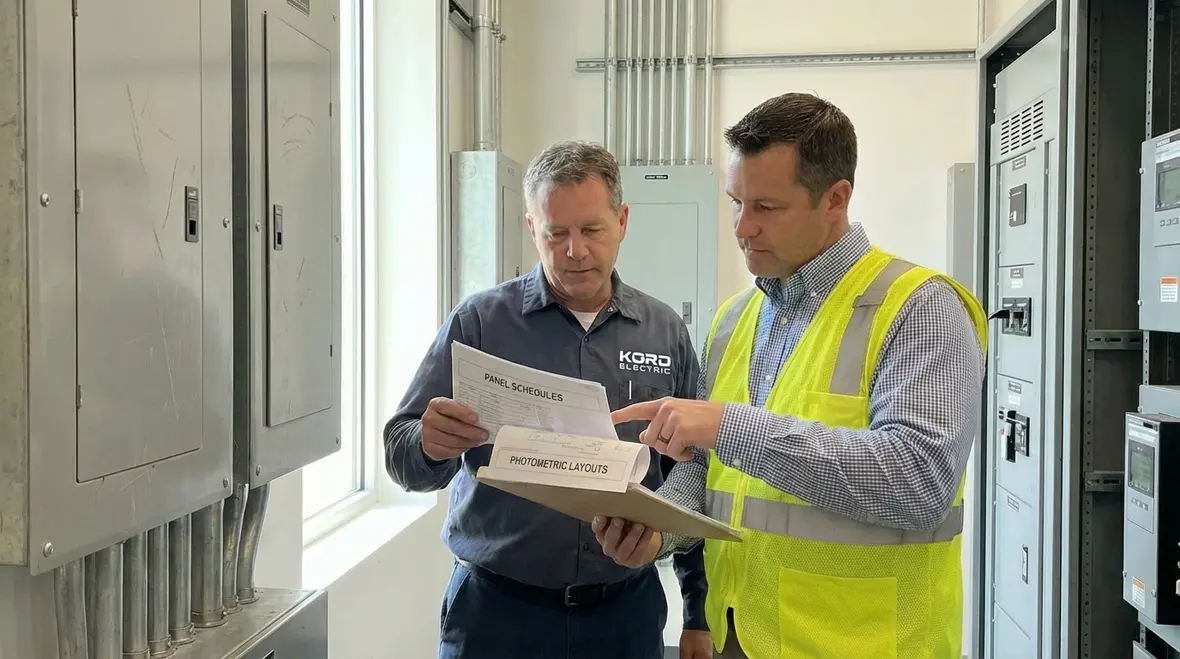
Preparation starts long before the first fixture goes up. In fact, planning determines whether lighting installation code compliance becomes simple or stressful. When commercial projects treat lighting as an afterthought, inspectors can tell immediately.
First, accurate load calculations must support the design. Commercial buildings often expand lighting systems during renovations. However, without verifying panel capacity, those upgrades can push systems beyond safe limits. Proper Lighting Installation code compliance means double-checking that spare breakers are truly spare, not reserved for future equipment.
Second, documentation matters. Inspectors frequently request panel schedules, photometric layouts, and specification sheets. When these documents are organized and available, the process moves faster. Conversely, when paperwork is missing, questions multiply. A clear one-line diagram and updated as-builts are just as important as the fixtures themselves.
Additionally, labeling must be clear. Panels should identify lighting circuits properly. Emergency lighting circuits must stand apart. Clear labeling shows professionalism and reduces confusion during maintenance or emergencies. In a crisis, no one wants to guess which breaker feeds the exit signs.
Moreover, emergency egress lighting receives close attention. Exit signs must remain illuminated. Battery backups must function. In large properties, this becomes even more critical. During a power loss, lighting guides occupants safely out. That is not just code. That is responsibility.
Our technicians explain each step in plain language. They review site conditions with property managers and maintenance teams. As a result, everyone understands what inspectors expect and why it matters. That clarity keeps inspections from turning into guessing games.
For properties in California and similar jurisdictions, we also help align inspection prep with energy-focused rules, drawing from resources like the California Commercial Lighting Code Guide for 2026 to make sure nothing falls through the cracks.
Common Lighting Mistakes That Trigger Red Flags
Even experienced contractors can overlook details. However, inspectors rarely miss them. In complex commercial lighting systems, small shortcuts have a way of becoming very obvious under inspection lights.
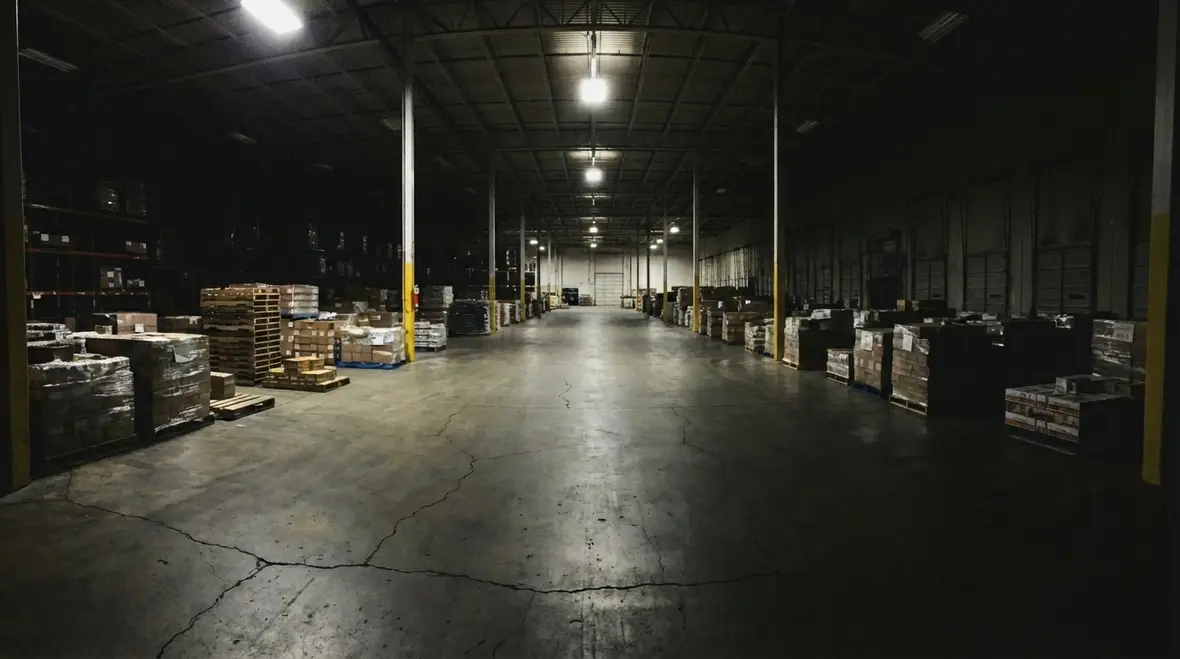
One common issue involves improper fixture spacing. In warehouses and industrial plants, uneven spacing creates dark zones. While that may seem minor, it can violate illumination standards for safety and productivity. Poorly lit aisles increase trip hazards, forklift incidents, and quality control mistakes.
Another frequent mistake is ignoring environmental ratings. Fixtures in damp or hazardous locations must meet specific requirements. Installing a standard fixture in a corrosive environment is like wearing flip flops in a snowstorm. It will not end well. Code-compliant lighting in these areas usually calls for sealed, listed fixtures that can actually survive the environment they are lighting.
Improper use of flexible conduit also draws attention. While flexible connections are allowed in certain situations, overuse can signal poor planning. Inspectors prefer clean, secure installations that demonstrate intention, not improvisation. Flexible whips hanging everywhere send the opposite message.
Additionally, missing arc fault or ground fault protection in required areas can stop an inspection immediately. These protective devices exist to prevent fires and shocks. Skipping them saves little and risks much, especially when Lighting Installation code compliance explicitly calls for them in specific occupancies or circuits.
Finally, failing to integrate lighting controls correctly often causes compliance issues. Occupancy sensors must be positioned properly. Time controls must function as programmed. Energy codes require performance, not just installation. If an inspector has to wave their arms for 30 seconds before a sensor wakes up, you can assume a correction notice is coming.
At Kord Electric, we approach every project assuming an inspector will examine it with a magnifying glass. Because eventually, someone will.
Inside a Commercial Lighting Inspection From Start to Finish

Understanding the inspection flow helps property managers feel confident rather than anxious. When you know the sequence, you can prepare the space, the documents, and your team with less guesswork.
Typically, inspectors begin at the service panel. They verify breaker sizing, conductor types, and labeling. Then, they move outward toward branch circuits feeding lighting systems. They compare what they see in the field with what is shown on the drawings.
After that, they inspect fixture installations. They check mounting hardware, support chains, seismic bracing where required, and proper clearances. In industrial facilities, they also verify protection against physical damage, especially near loading docks, production lines, and mezzanines.
Next, control systems receive attention. Inspectors may test occupancy sensors, dimming systems, and emergency transfer functions. If systems fail to respond correctly, corrections must occur before approval. It is not enough that the switch is on the wall. It has to do the right thing, at the right time, every time.
Furthermore, inspectors often confirm that lighting levels meet design expectations in critical areas such as stairwells, corridors, loading docks, and production floors. Dark corners in these zones are fast tickets to rework.
Throughout the process, our experienced technicians remain present. They answer questions directly. They provide documentation immediately. They explain technical details clearly. This cooperative approach builds trust and keeps inspections efficient.
It is a bit like having a translator during a high stakes meeting. We speak inspector fluently.
Lighting Installation Code Compliance and Energy Regulations
Modern commercial lighting must balance safety with efficiency. Therefore, lighting installation code compliance now overlaps heavily with energy regulations. Building owners care about passing inspections, but they also care about utility bills and long-term operating costs.
Energy codes require reduced power density. This means facilities must use efficient fixtures, typically LED systems, designed to deliver more light with less energy. In many cases, older fluorescent or HID fixtures will not clear the bar without a retrofit.
Moreover, automatic controls play a central role. Occupancy sensors reduce waste in low traffic areas. Daylight harvesting systems adjust artificial lighting based on natural light. Time scheduling ensures lights do not operate unnecessarily. These pieces work together to satisfy both Lighting Installation code compliance and modern energy performance standards.
However, proper programming matters just as much as installation. Inspectors may request functional testing to confirm systems respond as required. If controls fail to operate correctly, the installation may not pass. A beautifully wired sensor that never turns lights off still fails the test.
Additionally, exterior lighting must meet cutoff and light pollution standards. Large properties often install parking lot lighting. Inspectors verify proper aiming and shielding to prevent glare and excessive spill. Over-lighting is not just wasteful; in many jurisdictions, it is non-compliant.
Our team at Kord Electric integrates compliance from design through commissioning. We do not treat energy rules as obstacles. Instead, we see them as opportunities to reduce operational costs while maintaining safety. For a deeper dive into energy-focused rules and regional standards, many clients pair this guide with our dedicated resources on commercial lighting codes and workplace lighting safety.
What Commercial Property Managers Often Ask Us
Facility managers and building owners frequently approach us with practical concerns. Below is a simplified overview of common focus areas during projects and how Kord Electric addresses them in the field.
Inspection Focus
Load calculations and panel capacity
Emergency lighting reliability
Energy code documentation
Fixture mounting security
Control system programming
How Kord Electric Addresses It
We perform detailed assessments before adding fixtures to ensure safe distribution and Lighting Installation code compliance at the panel level.
We test battery backups and transfer systems under real conditions so that egress paths stay illuminated when power takes a break.
We provide organized reports, specification sheets, and control narratives that help inspectors verify energy performance quickly.
We install supports rated for commercial and industrial demands, ensuring high bays, troffers, and site lighting stay exactly where they belong.
We commission and verify performance before inspection day, adjusting sensors, time schedules, and dimming profiles until everything works as intended.
This proactive approach reduces delays. It also reassures stakeholders that the facility operates within code and beyond minimum expectations. Many of our commercial and industrial clients also bundle lighting inspections with broader electrical preventive maintenance programs to keep systems reliable year after year.
Why Experience Matters in Large Scale Commercial Projects
Commercial and industrial lighting systems differ greatly from small scale work. They involve higher voltages, larger loads, complex controls, and stricter oversight. When hundreds or thousands of fixtures are tied into one coordinated control system, experience is not a luxury. It is a requirement.
Therefore, experience becomes critical. An oversight in a warehouse or manufacturing plant affects more than one room. It can impact operations, worker safety, and insurance requirements. Failed inspections delay occupancy, derail production schedules, and frustrate tenants.
Our expert service staff brings years of field knowledge to every project. They understand how inspectors think because they have navigated countless inspections. Moreover, they stay current with evolving codes and standards so your Lighting Installation code compliance is not frozen in last year’s rulebook.
In addition, we coordinate with engineers, general contractors, and facility directors. This teamwork ensures that lighting installation code compliance integrates smoothly into the larger construction schedule. When everyone is aligned early, change orders shrink and inspection day becomes another milestone, not a gamble.
While others may treat inspections as hurdles, we treat them as checkpoints. And checkpoints keep projects moving in the right direction.
FAQ About Commercial Lighting Inspections
Work With Kord Electric for Confidence and Clarity
At Kord Electric, we bring steady hands and clear thinking to every commercial and industrial project. We guide clients through lighting installation code compliance with precision, patience, and a touch of humor that keeps the process human. If your facility demands reliable lighting and smooth inspections, let our experienced team lead the way.
Whether you are planning a new system or correcting an existing one, our Lighting Installation Services are built specifically for commercial and industrial environments that cannot afford guesswork. From high-bay warehouses to multi-story offices, we design, install, and commission lighting that satisfies both safety codes and energy regulations.
Many property managers also pair Lighting Installation code compliance projects with structured Electrical Preventive Maintenance programs, ensuring that panels, breakers, emergency systems, and lighting controls stay healthy long after the final inspection sticker goes up.
If your facility is ready for an upgrade, a retrofit, or a fresh set of eyes on existing systems, contact us today, and together we will build a lighting system that passes inspection and performs for years to come.