California Commercial Industrial Lighting Requirements
Lighting Requirements for Commercial and Industrial Facilities in California
In California, commercial industrial lighting is not just about bright bulbs and lower power bills. It is about safety, compliance, productivity, and long term value. At Kord Electric, we work exclusively with commercial and industrial facilities, and we see firsthand how the right lighting system shapes everything from employee performance to inspection results. Our technicians and expert service staff explain it in simple terms, because clear light and clear answers go hand in hand.
Throughout this guide, we will walk through what California requires, what property managers often overlook, and how modern industrial lighting systems can transform major buildings. Think of this as a calm conversation in a well lit room. No buzzwords. No flickering confusion. Just clarity.
Understanding California Energy Codes and Title 24 Compliance
California does not play around when it comes to energy efficiency. Title 24 sets strict standards for lighting power density, controls, and performance in commercial and industrial properties. Therefore, every lighting design must meet defined wattage limits per square foot, while also incorporating advanced control systems.
At Kord Electric, we explain Title 24 like this. It is not a hurdle. It is a blueprint. When followed correctly, it lowers energy costs and improves building performance. However, ignoring it can result in failed inspections, costly retrofits, and delays that no facility manager wants to explain at a Monday morning meeting.
Our expert service staff evaluates existing systems, measures load, and reviews occupancy patterns. Then we design compliant solutions that include:
- Automated lighting controls
- Daylight harvesting systems
- Occupancy and vacancy sensors
- Scheduled shut off programming
Because regulations evolve, we stay updated on code changes. As a result, our clients remain ahead of inspections instead of scrambling after them. And frankly, passing inspection the first time feels a lot better than explaining why the lights are still stuck in 1998.
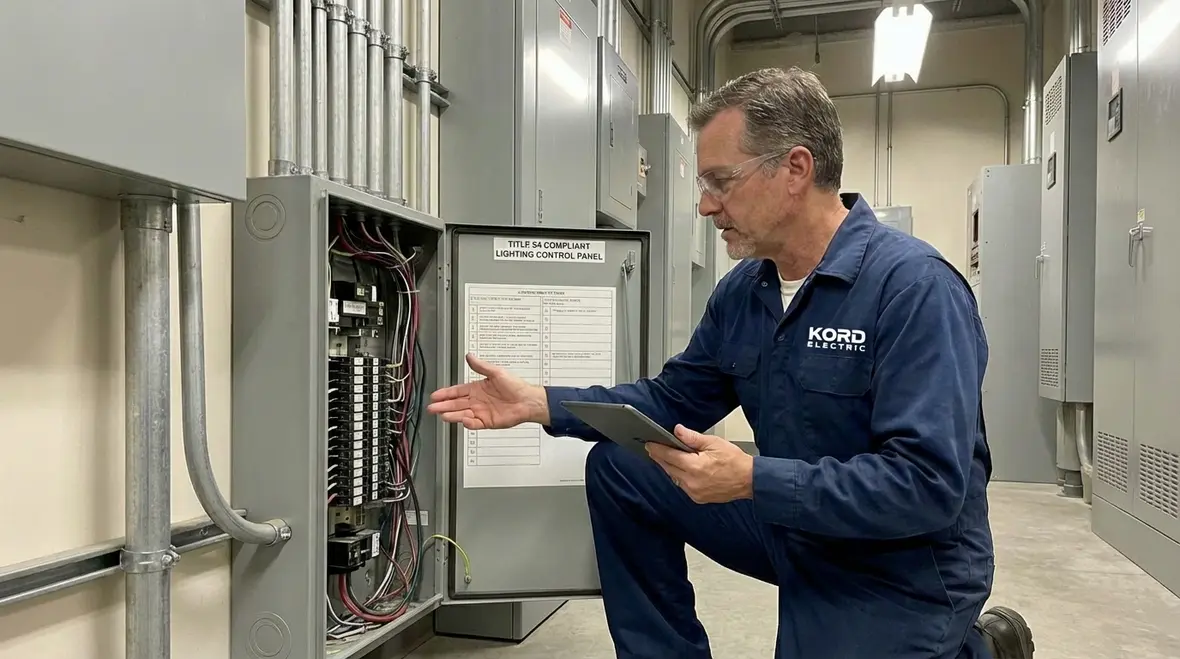
For facility teams that want to go deeper on how lighting ties into energy code strategy, our preventive maintenance programs include Title 24 lighting compliance reviews and documentation as part of a broader electrical health plan for large properties.
How Much Light Does a Commercial or Industrial Facility Actually Need?
This is the question we hear often, and it is a fair one. After all, too little light creates hazards. Too much wastes energy and money. So what is the balance?
California guidelines and industry standards recommend specific foot candle levels based on task type. For example, warehouse aisles require different illumination than assembly lines or inspection stations. In addition, high rack storage areas demand vertical lighting uniformity to reduce shadows and improve visibility for equipment operators.
Our technicians perform detailed photometric studies before installation. That means we map light levels across the space to ensure consistency. Consequently, employees experience fewer dark zones, fewer eye strain complaints, and fewer accidents.
Moreover, uniform lighting improves camera clarity for security systems. It also enhances workflow. In a production facility, visibility impacts speed and precision. And in large properties, proper light placement reduces glare, which keeps teams focused instead of squinting like they are staring into a desert sunrise.

Task-Specific Lighting for Real-World Workflows
In the real world, no two work areas are identical. Inspection benches, packing stations, loading docks, quality control labs, and machine shops each demand different light levels and beam patterns. That is why we combine photometrics with on-site walk-throughs to understand how people actually move, read, stack, and operate in your building instead of treating it like a generic floor plan.
For teams struggling with low visibility and safety complaints, it often helps to pair new lighting with a broader look at workplace hazards. Our insights from workplace lighting safety hazards that hurt productivity show just how closely illumination, morale, and accuracy are connected on busy shifts.
Safety Standards and OSHA Considerations
Safety is not optional. It is foundational. California commercial and industrial buildings must meet OSHA illumination standards to protect workers. Therefore, emergency egress lighting, exit signage, and backup systems are critical components of any compliant setup.
At Kord Electric, we approach safety lighting with seriousness and care. Our expert service staff inspects:
- Emergency battery backups
- Generator connected circuits
- Clearly marked exit pathways
- High hazard task lighting
Additionally, we test systems under simulated outage conditions. Because when the power goes out, that is not the moment for surprises. It is not a movie scene. No dramatic soundtrack. Just people needing safe passage.
Industrial lighting systems must also minimize glare and flicker. Flicker may seem minor, yet over time it contributes to fatigue and reduced concentration. Therefore, we specify high quality LED fixtures with stable drivers. This attention to detail protects both people and productivity.
Emergency paths, exit signs, stairwells, and backup lighting circuits also intersect with your overall life safety strategy. While Kord Electric focuses on the electrical and lighting side, our sister company Kord Fire delivers full fire protection services for sprinklers, alarms, and extinguishers, so you can coordinate both light and life safety with a unified plan.
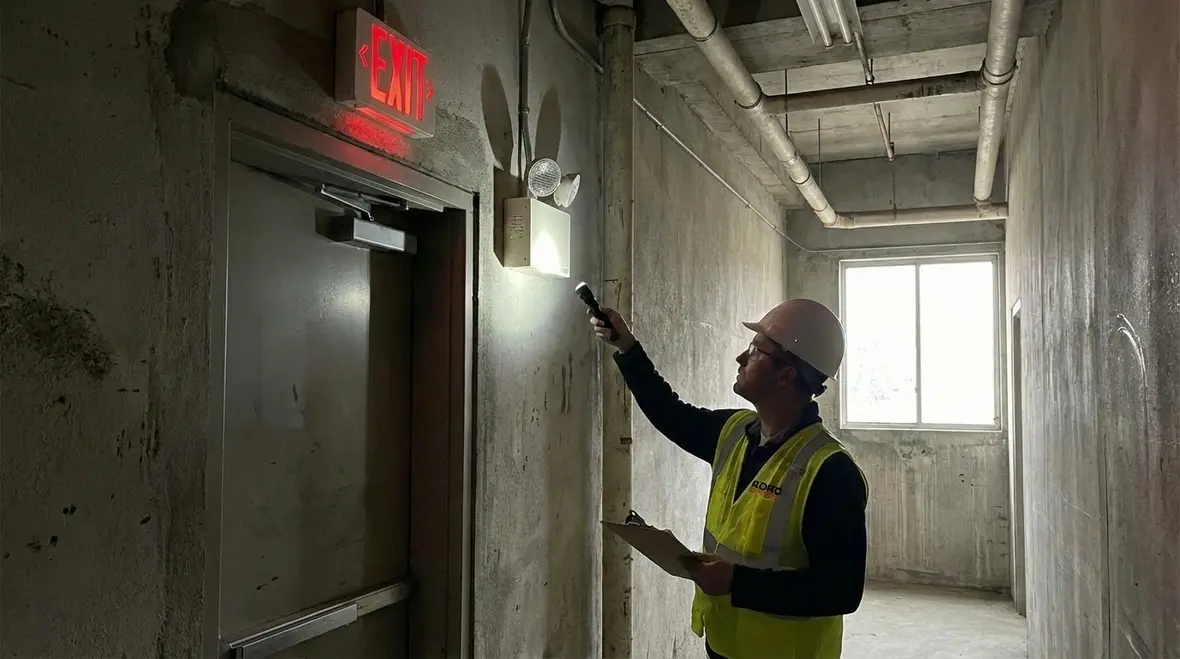
Integrating Emergency Lighting into Preventive Maintenance
Emergency and egress lighting cannot be “set it and forget it.” Batteries age, circuits corrode, and fixture lenses yellow over time. That is why many facility managers roll these systems into a structured electrical preventive maintenance program. Routine testing, monthly checks, and documented annual inspections keep OSHA concerns down and confidence up, especially in multi-building campuses and 24/7 operations.
LED Upgrades and Long Term Cost Efficiency
California energy rates can make anyone blink twice. Consequently, upgrading to LED based commercial industrial lighting often delivers rapid returns. However, it is not simply about swapping bulbs. True upgrades require full system evaluation.
We analyze load capacity, fixture placement, and operational hours. Then we calculate projected savings. In many facilities, LED conversions reduce energy consumption by 40 to 70 percent. Furthermore, maintenance costs drop because LEDs last significantly longer than legacy systems.
Our technicians explain the math clearly. We show facility managers the payback period, rebate eligibility, and maintenance savings. That way, decisions feel grounded in facts, not guesswork.
Consider this simplified comparison:
Traditional HID Systems Modern LED Systems
Higher wattage consumption Lower energy usage
Frequent lamp replacement Extended lifespan
Long warm up times Instant full brightness
Higher heat output Reduced thermal load
As a result, facilities experience not only savings but improved environmental control. Less heat means HVAC systems work less. And when equipment works less, it tends to last longer. Even machines appreciate a break now and then.
LED retrofits also create an opportunity to standardize fixtures, update controls, and resolve long-standing nuisance issues like dark corners and buzzing ballasts. Many properties pair upgrades with ongoing electrical preventive maintenance so the new system is protected by routine testing, infrared scans, and documented servicing.
Lighting Controls and Smart Integration for Large Properties
Modern commercial industrial lighting goes beyond fixtures. It integrates with smart building systems. Therefore, lighting now communicates with occupancy data, scheduling software, and energy management platforms.
We design control systems that allow facility managers to adjust zones, monitor usage, and receive maintenance alerts. In addition, daylight sensors automatically dim fixtures near windows, which maintains compliance and reduces consumption.
Our expert service staff walks clients through these systems step by step. No technical overload. No confusing dashboards. Just clear explanations and practical demonstrations.
Because large properties operate around the clock, automation ensures lights activate only when needed. Consequently, energy waste drops significantly. Over time, those small adjustments add up to substantial savings.
And yes, smart controls may sound futuristic. However, they are less science fiction and more practical strategy. Think less spaceship, more well organized control room.
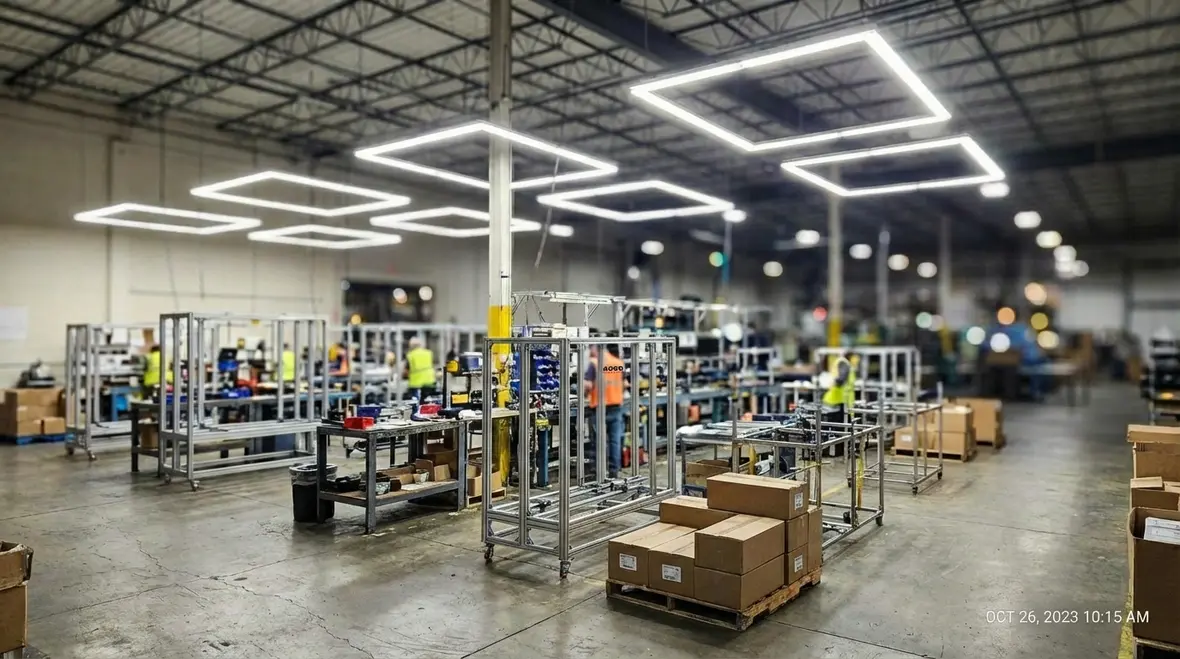
From Manual Switches to Smart Zoning
Many California facilities are still operating with patchwork controls: random switches in inconvenient places, motion sensors that never quite work right, and time clocks nobody fully trusts. Smart zoning replaces that chaos with clear, software-driven logic. You get scheduled on/off times, occupancy-based dimming, demand-response actions, and after-hours overrides without running around the building flipping switches like it is 1985.
When paired with professional lighting installation services for commercial and industrial facilities, these control strategies are designed, wired, commissioned, and documented from day one, so future teams are not left guessing how anything works.
Warehouse and Manufacturing Specific Requirements
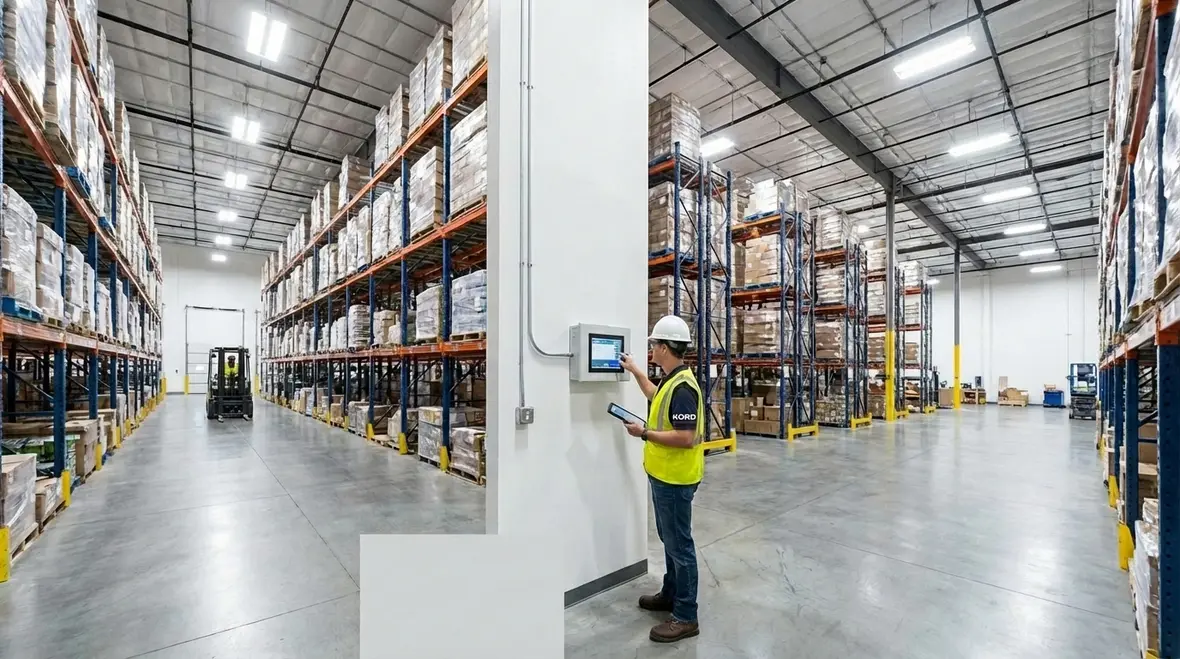
Warehouses and manufacturing facilities face unique demands. High ceilings require high bay fixtures with precise beam angles. Meanwhile, machinery areas need targeted task lighting. Therefore, one size does not fit all.
At Kord Electric, we tailor lighting layouts based on ceiling height, rack configuration, and workflow patterns. Additionally, we account for forklift traffic lanes and loading docks, where visibility directly impacts safety.
Industrial environments also present dust, vibration, and temperature challenges. For that reason, we specify fixtures with appropriate ingress protection ratings and durable housings. Because a fragile fixture in a busy warehouse will not survive long.
Furthermore, proper lighting improves inventory accuracy. Clear visibility reduces picking errors and speeds up audits. Over time, that efficiency strengthens the entire operation.
Designing Lighting Around Equipment, Not the Other Way Around
In heavy industrial and manufacturing spaces, the machines, conveyors, storage systems, and safety zones dictate where light needs to be, not the grid on a blueprint. We coordinate fixture placement with equipment layouts, guarding, and signage so operators, mechanics, and supervisors can see clearly wherever critical decisions are made.
From tight picking aisles to wide staging bays, the goal is the same: no blind spots, no surprise shadows, and no guesswork when operators move product, read labels, or respond to alarms.
Retrofits Versus New Construction Lighting Design
Lighting strategy differs between retrofit projects and new builds. In retrofits, we work within existing infrastructure. Therefore, careful load analysis and panel capacity review become critical. Our technicians assess wiring conditions and structural mounting points before recommending upgrades.
In new construction, however, we collaborate with project managers and engineers early in the design phase. This proactive approach ensures electrical systems support modern commercial industrial lighting demands from day one.
Additionally, early planning allows integration of advanced controls and energy strategies. As a result, facilities open with compliant, efficient systems already in place.
Whether upgrading a decades old warehouse or equipping a new industrial complex, our expert service staff provides clear roadmaps. Because uncertainty costs time, and time costs money.
For owners and construction teams that want a turnkey partner, our commercial and industrial lighting installation services cover system design, fixture selection, Title 24 documentation, control setup, and final testing so the building is inspection-ready and move-in ready at the same time.
Frequently Asked Questions
Conclusion
California sets high standards for commercial and industrial facilities, and lighting plays a central role in meeting them. At Kord Electric, we design, upgrade, and maintain compliant systems built for performance and longevity. Our technicians and expert service staff guide every step with clarity and confidence.
If your facility demands reliable, efficient lighting, we are ready to deliver solutions that work as hard as you do. From Title 24 reviews and LED retrofits to full system installations and ongoing maintenance, our team designs commercial industrial lighting that supports safety, inspections, and day-to-day productivity across demanding properties.
For organizations that also need coordinated life safety coverage, Kord Fire can support you with inspection, testing, and upgrades for fire sprinklers, alarms, and extinguishers, working in parallel with your lighting and power strategy so every system pulls in the same direction.
When you are ready to modernize your lighting or plan a new project, explore our dedicated lighting installation services for commercial and industrial facilities, then connect with our team to map out the next steps for your building.