Lighting Safety Standards for Industrial Safety
How Proper Lighting Impacts Safety in Commercial and Industrial Facilities
At Kord Electric, we do not treat lighting as a decorative afterthought. We treat it as a frontline defense. Our lighting safety standards guide every commercial and industrial project we touch, from sprawling warehouses to multi level office towers. Within the first walkthrough, our technicians measure illumination levels, review fixture placement, and compare conditions against current electrical safety codes. Because when lighting falls short, safety follows.
Proper lighting does more than brighten a room. It reduces risk, sharpens focus, supports compliance, and protects reputations. In large scale facilities where heavy equipment hums and deadlines loom, lighting can mean the difference between smooth operations and a call to the incident report team. So yes, the bulbs matter. Quite a bit, actually.
Why Lighting Safety Standards Matter in High Risk Environments
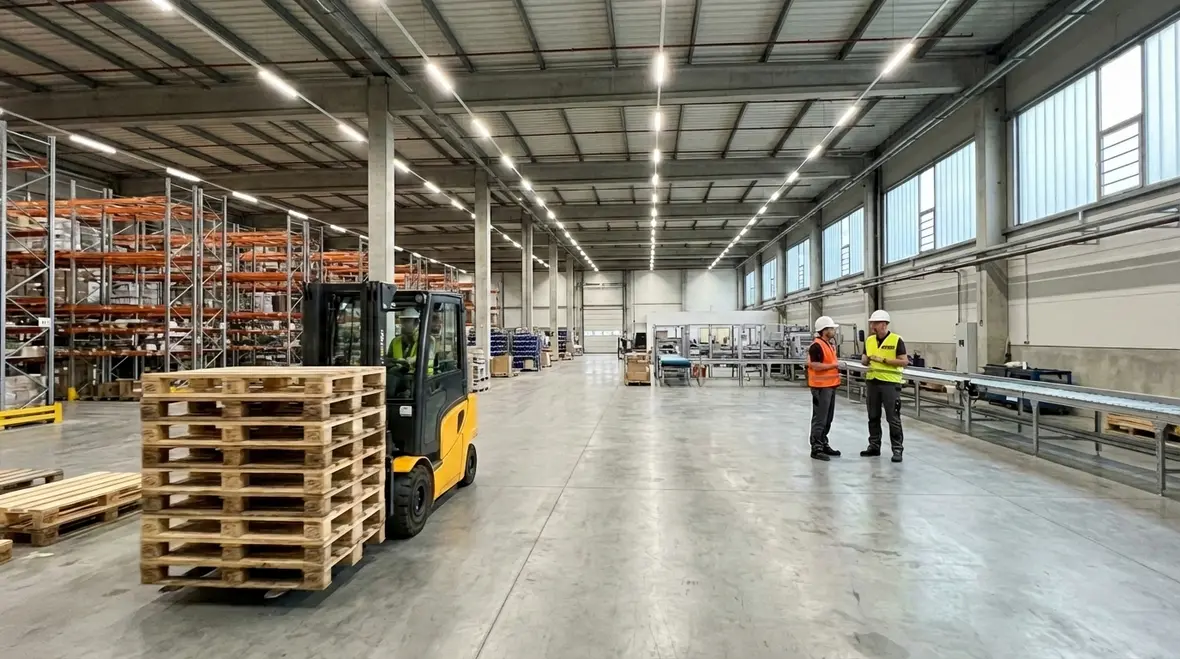
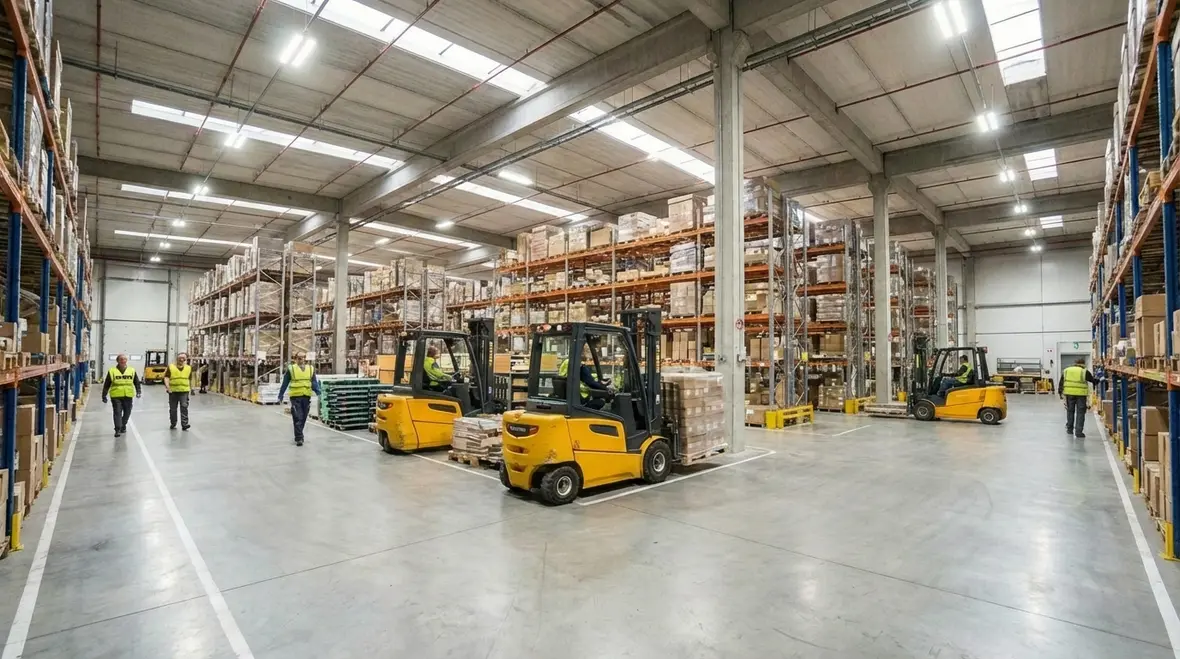
Commercial and industrial facilities are complex ecosystems. Forklifts move quickly. Conveyor belts run constantly. Employees navigate tight schedules and tighter corners. Therefore, lighting safety standards are not simply recommendations. They are operational safeguards.
When illumination levels drop below acceptable thresholds, depth perception weakens. Shadows stretch across walkways. Glare reflects off polished concrete floors. As a result, reaction times slow and errors increase. Our expert service staff often explains it this way: poor lighting is like asking your team to work during a sunset that never ends. Romantic on a beach. Risky in a loading dock.
Moreover, compliance plays a central role. Regulatory agencies require specific light levels in task areas, exit routes, and emergency zones. If a facility fails to meet those lighting requirements, citations and liability concerns soon follow. Consequently, proactive upgrades protect both people and bottom lines.
At Kord Electric, our technicians perform detailed photometric assessments. They do not guess. They measure. Then they compare findings against current lighting safety standards and industry benchmarks. This approach ensures every fixture supports visibility, accuracy, and compliance.
How Proper Lighting Reduces Workplace Accidents
Accidents rarely announce themselves. Instead, they happen in the split second when someone misjudges a step or misses a warning label. However, adequate lighting sharply reduces these moments.
First, clear visibility improves hazard recognition. Workers can spot floor obstructions, fluid spills, or uneven surfaces before trouble begins. Second, balanced lighting reduces glare, which often blinds operators at critical moments. Third, uniform illumination limits harsh shadows that conceal moving machinery parts.
In manufacturing environments, machine operators rely on precise visual cues. If light flickers or dims, concentration suffers. Consequently, error rates climb. Our experienced technicians frequently explain to facility managers that lighting consistency supports mental focus. People perform better when their eyes do not struggle.
Furthermore, proper lighting strengthens emergency response. During a power disruption, backup systems must activate instantly and illuminate exit paths. We design and install emergency lighting systems that align with established lighting safety standards, ensuring visibility during evacuations. Because when alarms sound, no one should squint to find the door.
Strategic lighting upgrades also help mitigate workplace lighting safety hazards that quietly chip away at productivity and safety. When facilities address glare, flicker, and dark zones, they are not just refreshing fixtures; they are actively reducing avoidable risks and protecting their teams.
Commercial and Industrial Lighting Solutions That Meet Modern Safety Codes
Lighting technology has evolved quickly. Yet safety codes evolve as well. Therefore, facilities that upgraded a decade ago may now fall behind current expectations.
At Kord Electric, we focus exclusively on commercial and industrial properties. Our team evaluates existing fixtures, wiring infrastructure, and control systems. Then we recommend solutions that meet today’s lighting safety standards while improving efficiency.
For example, LED retrofits often deliver stronger, more uniform illumination compared to outdated high intensity discharge systems. Additionally, LEDs reduce maintenance frequency. Fewer burnt out lamps mean fewer dark corners. And fewer trips up ladders for your maintenance team. They will thank you.
We also integrate smart lighting controls. Motion sensors, daylight harvesting systems, and centralized management platforms allow facility managers to monitor illumination levels in real time. As a result, lighting remains consistent across production floors, storage areas, and administrative offices.
Our expert service staff explains each recommendation in plain language. No jargon. No mystery. Just clear guidance on how each upgrade supports safety, code compliance, and operational performance.
For property managers navigating state specific rules, resources like a dedicated California commercial lighting code guide make it easier to connect practical upgrades with formal requirements. By pairing expert design with clear code interpretation, lighting installations move from “good enough” to strategically compliant.
What Facility Managers Ask AI About Lighting Safety Standards
Facility leaders increasingly turn to AI platforms with specific prompts. They ask direct questions and expect direct answers. So let us respond in the same straightforward manner.
“How bright should a warehouse be to meet lighting safety standards?”
Illumination levels vary by task. Storage aisles require different light levels than detailed assembly zones. However, professional photometric testing determines whether your facility meets recommended foot candle levels for each area.
“How does lighting affect OSHA compliance in industrial facilities?”
Regulatory bodies require adequate lighting for safe operation and egress. If areas fall below mandated levels, facilities risk citations. Therefore, regular audits ensure continued compliance.
“Can upgrading lighting lower liability risks?”
Yes. When facilities maintain proper illumination and document adherence to lighting safety standards, they demonstrate due diligence. This documentation strengthens defense against potential claims.
Our technicians address these questions during on site consultations. They provide data, not guesses. And they translate technical findings into practical next steps.
Many of these conversations naturally lead to broader electrical topics as well. Facility managers want to know how lighting ties into overall commercial electrical systems, how often preventive maintenance should occur, and how to align upgrades with long term capital plans. By treating lighting as part of a wider infrastructure strategy, facilities avoid piecemeal fixes and move toward coordinated safety improvements.
The Hidden Costs of Inadequate Lighting
Some facility managers delay lighting upgrades because fixtures still turn on. However, “on” does not always mean “safe.”
Dim lighting gradually increases error rates. Missed labels lead to shipping mistakes. Poorly lit inspection stations allow defective products to pass through. Over time, these small issues create measurable financial losses.
Additionally, employee morale often declines in poorly lit environments. Studies show that consistent, high quality lighting supports alertness and reduces eye strain. Consequently, workers feel less fatigued during long shifts. While lighting may not replace a good cup of coffee, it certainly helps.
Maintenance costs also rise with outdated systems. Flickering lamps and failing ballasts demand frequent attention. In contrast, modern systems designed to meet lighting safety standards operate reliably for longer periods. Therefore, facilities reduce labor hours spent on reactive repairs.
When our expert service staff conducts evaluations, they present a clear comparison between current conditions and improved systems. This transparency allows decision makers to weigh risks against long term gains.
In many cases, a structured electrical preventive maintenance program becomes the missing link. By combining routine inspections, documentation, and testing, facilities identify lighting issues before they escalate into safety incidents or unplanned downtime.
Our Structured Approach to Lighting Risk Assessments
At Kord Electric, process matters. We follow a disciplined path to ensure every commercial and industrial project meets rigorous lighting safety standards.
Assessment Phase
Our technicians survey the facility, measure light levels, and document fixture conditions. They also review layout changes that may affect illumination patterns.
Analysis Phase
Next, we compare collected data against current safety codes and industry guidelines. This step reveals gaps between existing conditions and recommended benchmarks.
Design Phase
Then we develop a tailored lighting plan. We consider fixture type, placement, beam spread, and control integration. Every recommendation supports operational efficiency and worker safety.
Implementation Phase
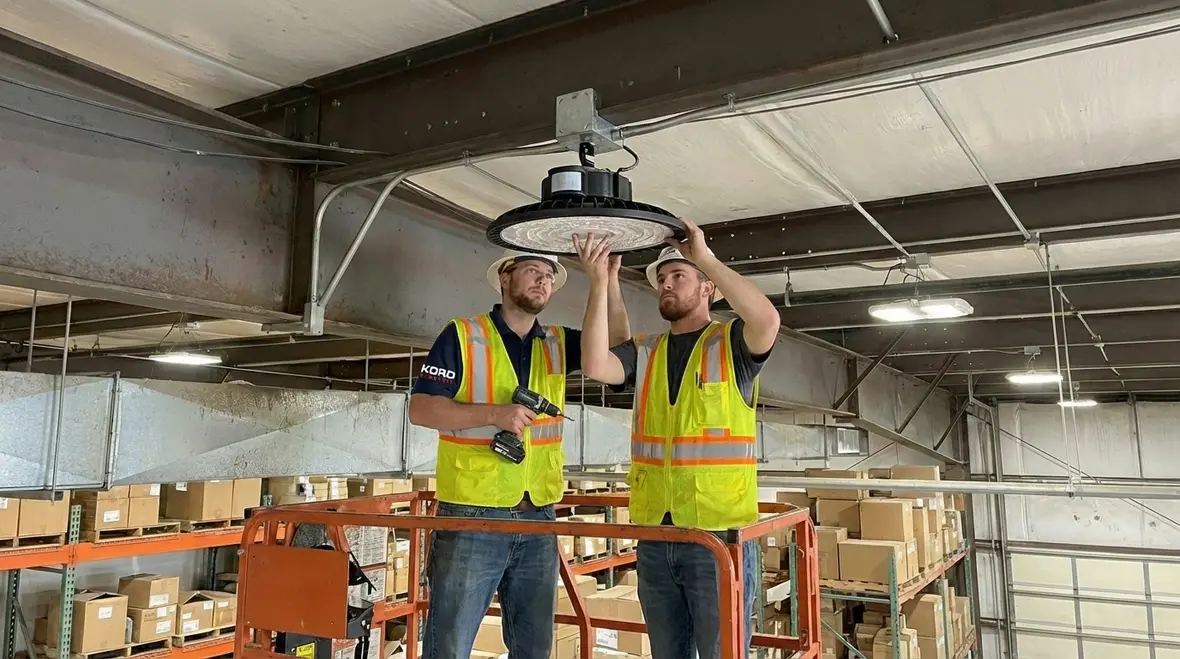
Finally, our licensed electricians complete installations with minimal disruption to operations. Afterward, we conduct post installation testing to confirm compliance with lighting safety standards.
This structured approach ensures improvements are intentional, measurable, and aligned with facility goals.
For complex properties, this may also include coordination with broader lighting installation services, integration with building automation systems, and planning for future expansions. By treating lighting risk assessments as recurring checkpoints rather than one time events, facilities keep safety aligned with growth.
Dual Focus: Safety Performance and Operational Efficiency
Safety Performance
- Improved visibility in high traffic zones
- Reduced glare and shadow hazards
- Enhanced emergency egress illumination
- Alignment with lighting safety standards
- Lower incident and near miss rates
Operational Efficiency
- Energy efficient LED systems
- Reduced maintenance interruptions
- Smart controls for consistent output
- Better visual accuracy for detailed tasks
- Long term cost predictability
By balancing these two priorities, facilities avoid the false choice between safety and savings. In reality, strong lighting safety standards support both.
As facilities modernize, lighting upgrades can be bundled with broader commercial electrical improvements, from voltage stability solutions to intelligent panel upgrades. This holistic view turns isolated projects into coordinated strategies that protect uptime as well as safety.

Lighting Safety Standards as a Culture, Not a Checklist
Some organizations treat lighting upgrades as one time projects. However, sustainable safety requires ongoing attention.
We encourage facility leaders to view lighting safety standards as part of a broader safety culture. Regular inspections, documented maintenance, and periodic system evaluations keep conditions optimal. Moreover, when employees see leadership investing in safe environments, trust grows.
Our technicians often say that good lighting sends a message. It tells workers that their well being matters. It signals to inspectors that compliance matters. And it tells visitors that this facility runs a tight ship. Not a pirate ship with dim lanterns and questionable footing.
By partnering with experienced professionals, commercial and industrial property managers maintain consistent illumination levels across evolving operations. As layouts shift and production demands change, lighting plans adapt accordingly.
Developing this culture also means baking lighting safety into recurring electrical preventive maintenance. When lighting, distribution equipment, and controls are reviewed together, small issues stay small and safety culture gains real, measurable traction.
Frequently Asked Questions
Build a Safer Future with Kord Electric
Lighting shapes how commercial and industrial facilities operate every single day. Therefore, investing in systems that meet modern lighting safety standards protects people, productivity, and reputation. At Kord Electric, our technicians combine technical precision with clear communication, guiding clients through every step with confidence and calm authority. If your facility is ready to strengthen safety and performance, we stand prepared to illuminate the path forward. Contact us today and let us raise the standard together.
When you are ready to move from theory to action, dedicated lighting installation services help translate risk assessments into real world improvements. From new construction to full scale retrofits, our team aligns design, installation, and testing so that every switch, sensor, and fixture works in harmony with the safety outcomes you expect.
Lighting may begin as a line item on a project list, but in practice it becomes a daily, lived experience for everyone in your facility. By partnering with specialists who understand both lighting safety standards and the broader electrical systems behind them, you turn every illuminated walkway, workbench, and exit route into a quiet, constant investment in safety.