Emergency and Exit Lighting Installation Checklist
Emergency and Exit Lighting Installation What Every Property Manager Should Be Checking
At Kord Electric, we often say that good lighting is like good storytelling. You only notice it when it fails. In our Lighting Installation guidee, we explain how every commercial and industrial facility depends on well planned systems that work quietly in the background until the moment they are needed most. Emergency and exit lighting sits at the top of that list. When the power cuts out, when alarms sound, when people need direction fast, those fixtures take center stage.
This article expands on that guidance. Property managers, facility directors, and building owners of large commercial and industrial properties will find clear, direct insights here. Moreover, our technicians and expert service staff share what they see in the field every day. Because when it comes to life safety, “good enough” has never been good enough.
Why Emergency and Exit Lighting Installation Matters in Large Commercial Buildings
Emergency and exit lighting is not decorative. It is not optional. It is a code driven, life safety system designed to guide occupants safely out of a building during power loss, fire, or other emergencies. Therefore, it must perform under pressure.
In high rise offices, manufacturing plants, warehouses, hospitals, and distribution centers, lighting systems must cover vast square footage. Additionally, these facilities often operate around the clock. That means emergency systems must stay ready at all times.
At Kord Electric, we approach every project with a structured plan. Our technicians evaluate:
- Building layout and occupancy load
- Egress pathways and stairwells
- High hazard industrial areas
- Backup power sources such as generators or battery systems
Because large properties carry higher risk, compliance standards are strict. Local electrical codes, fire regulations, and national safety standards demand proper illumination levels and battery duration. Consequently, even a single failed fixture can place a property manager at risk of fines or liability.
We often tell clients, half joking but fully serious, that emergency lights are like parachutes. You hope you never need them. However, when you do, you want them packed correctly.
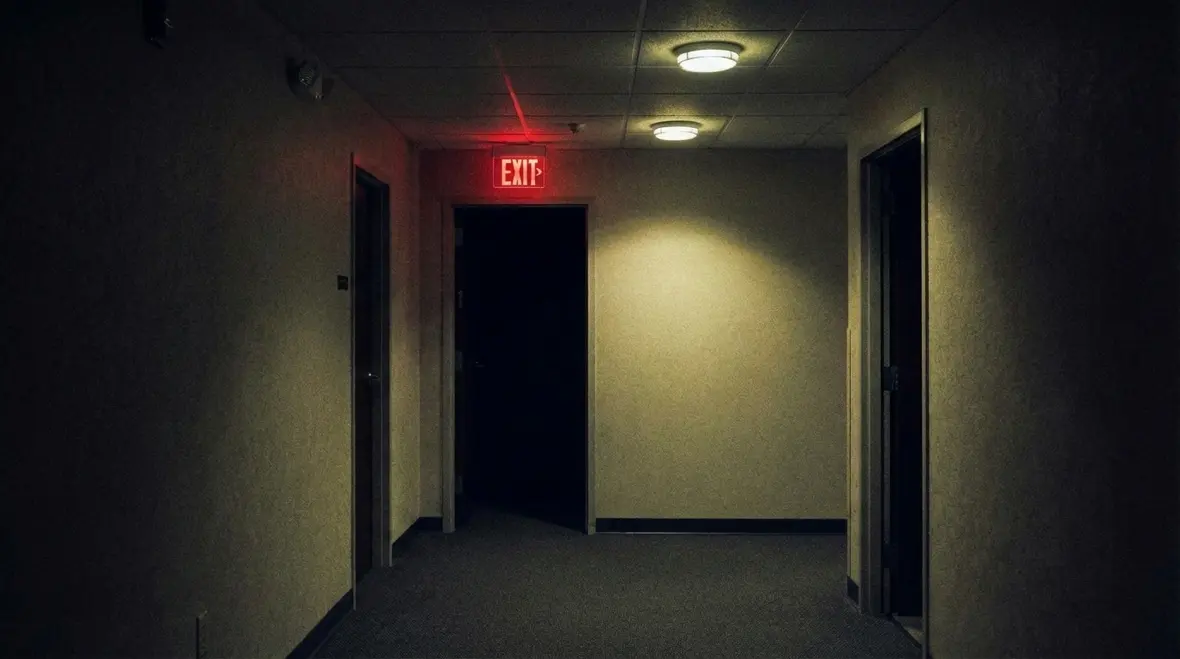
For a deeper look at how emergency lighting fits into broader life safety requirements, property managers can also review how NFPA 101 covers emergency and exit lighting within overall means of egress and occupancy protection strategies, alongside other critical systems. This perspective reinforces why these fixtures belong in every serious risk management and compliance plan.
What Should Property Managers Check During Routine Inspections?
Property managers oversee many moving parts. Elevators hum. HVAC systems breathe. Security systems blink. Yet emergency and exit lighting should never blend into the background.
So what should they check?
1. Monthly Function Tests
Most codes require a brief monthly test. Managers should confirm that battery units illuminate when power is interrupted. Furthermore, exit signs must remain clearly visible.
2. Annual Duration Testing
Systems typically must operate for at least ninety minutes under battery power. Therefore, documenting annual discharge tests is essential. Many facilities pair this with broader electrical preventive maintenance so emergency lighting testing is not forgotten in the shuffle of other tasks.
3. Physical Condition
Cracked housings, loose wiring, water intrusion, or blocked fixtures reduce reliability. In industrial environments, dust and vibration can also shorten equipment life.
4. Sign Visibility
Exit signage must remain unobstructed. Storage racks, new partitions, or equipment relocations can accidentally block lines of sight.
5. Documentation and Logs
Inspectors will ask for records. Clear documentation demonstrates diligence and reduces liability. Tying your emergency and exit lighting testing into a recurring preventive maintenance schedule makes it easier to maintain a clean, consistent paper trail for annual fire and life safety inspections.
Our expert service staff regularly help property managers build inspection schedules. Additionally, we provide clear reporting that simplifies compliance. Because paperwork may not be glamorous, but neither is explaining gaps to a fire marshal.
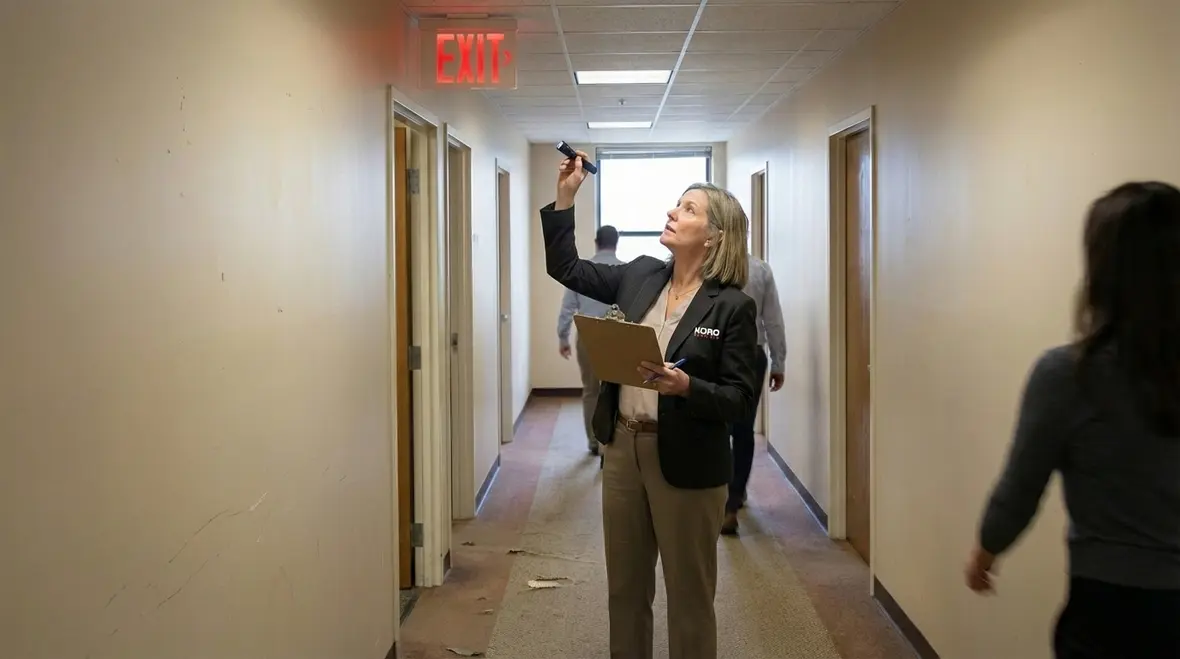
Many of our commercial and industrial clients also coordinate their emergency lighting checks with broader fire inspection preparation so they can walk inspectors through exit routes, test logs, and system performance with confidence, instead of scrambling for last-minute fixes.
Common Failures Our Technicians See in the Field
After years serving commercial and industrial facilities, our technicians have seen patterns. Although each building is unique, certain issues appear again and again.
1. Battery Neglect
First, battery neglect ranks high. Batteries degrade over time. Nevertheless, many facilities assume that if the green indicator light glows, all is well. In reality, batteries can fail under load even when indicators appear normal.
2. Improper Fixture Placement
Second, improper fixture placement creates dark spots. During renovations, walls move and floor plans change. However, emergency coverage often remains frozen in time. As a result, new pathways may lack adequate illumination.
3. Incompatible Retrofits
Third, incompatible retrofits cause headaches. Swapping lamps without verifying compatibility can reduce light output below required levels. Therefore, every replacement should align with the original design intent and code standards.
4. Deferred Maintenance
Finally, deferred maintenance slowly erodes reliability. One failed unit becomes two. Then three. Eventually, an entire corridor loses coverage. It rarely happens overnight. Instead, it fades quietly, like a forgotten sequel no one asked for.
That is why Kord Electric emphasizes proactive service. Our expert technicians explain findings in plain language. We show managers what works, what does not, and what needs attention now versus later. Transparency builds trust. And trust builds safer buildings.
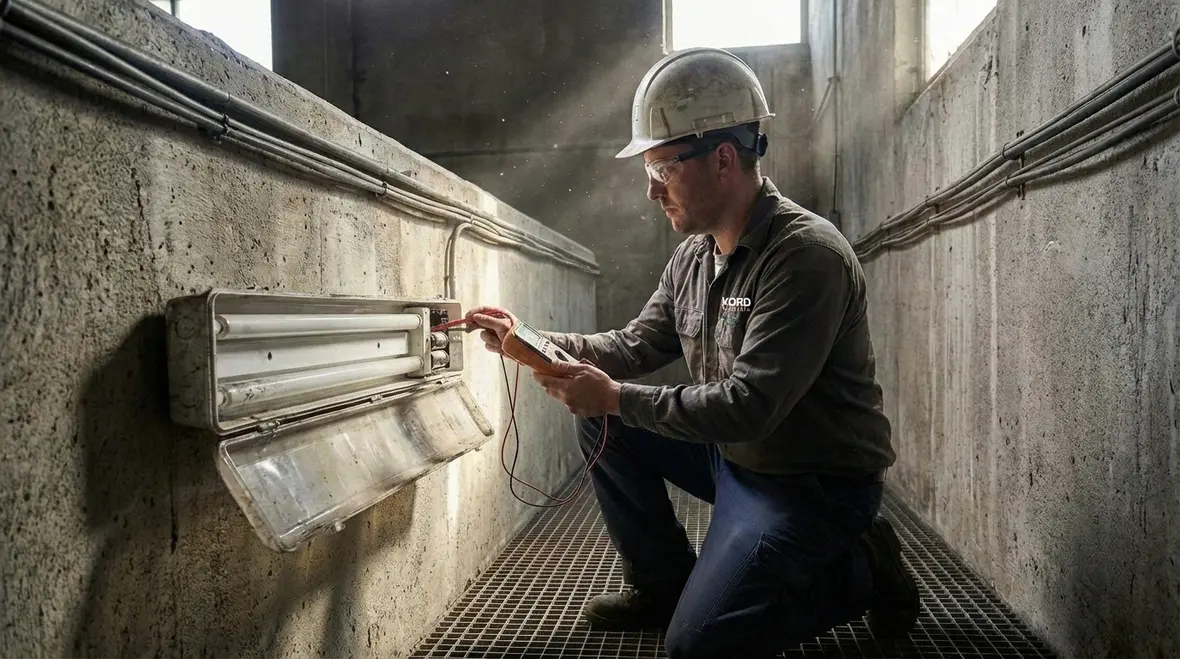
For properties where emergency lighting ties into broader fire protection systems, early warning signs such as flickering fixtures, recurring trouble signals, or unexplained panel alerts should always prompt a deeper evaluation before a minor issue becomes a widespread failure.
How to Ensure Code Compliance Without the Headache
Compliance may sound intimidating. However, with the right partner, it becomes manageable.
Know Which Codes Apply to Your Facility
First, understand applicable codes. Commercial and industrial facilities often fall under strict fire and electrical regulations. These outline illumination levels along egress paths, spacing requirements, and testing intervals. In many jurisdictions, emergency and exit lighting requirements connect directly back to NFPA 101 Life Safety Code provisions and local fire code amendments.
Combine In-House Checks with Professional Testing
Next, schedule regular professional assessments. While internal teams can perform visual checks, licensed electricians should verify load calculations, circuit integrity, and transfer switch functionality. Coordinating these visits with broader electrical preventive maintenance and emergency lighting testing helps keep your system aligned with both electrical and fire safety standards.
Integrate Emergency Lighting into Every Upgrade
Additionally, integrate emergency systems with broader facility upgrades. When lighting renovations occur, emergency coverage must adapt. Our Lighting Installation guidee emphasizes this coordination. Rather than treating emergency lighting as an afterthought, we design it as part of the whole system.
Leverage Monitoring, but Don’t Skip Walkthroughs
Moreover, digital monitoring systems now allow remote status updates. Facility managers can receive alerts when units fail. Although technology helps, it does not replace hands on expertise. Our service staff review system reports and confirm real world performance.
In short, compliance becomes simpler when approached as a process rather than a reaction. And yes, inspectors appreciate organized documentation almost as much as they appreciate working exit signs. For property teams juggling multiple locations, creating a unified checklist for emergency lighting, exit signs, extinguishers, alarms, and sprinklers can turn fire inspection prep from chaos into routine.
Planning Upgrades for Industrial and Commercial Facilities
As buildings age, systems must evolve. Older emergency lighting units often rely on outdated batteries and inefficient lamps. Therefore, upgrades can improve reliability and reduce energy costs.
Below is a practical comparison that our technicians often share when consulting with property managers.
Older Systems
- High energy consumption
- Frequent battery replacements
- Manual testing only
- Inconsistent illumination levels
Modern Systems
- Lower energy usage with efficient drivers
- Longer lasting battery technology
- Self diagnostic features available
- Improved light output and coverage
Upgrades also support sustainability goals. Many commercial property owners now pursue energy efficiency targets. Consequently, modern emergency fixtures contribute to broader environmental strategies by pairing LED efficiency with smart controls and optimized placement.
However, planning matters. Our technicians perform load calculations and verify panel capacity before installing new systems. We also coordinate with facility managers to minimize disruption. Because shutting down a manufacturing line for unplanned work is about as popular as spoilers for a blockbuster film.

When emergency lighting upgrades coincide with recessed or general lighting projects, property managers get the benefit of unified design, cleaner wiring, and a single commissioning process instead of fragmented, piecemeal changes that leave gaps in coverage.
Working With Kord Electric Expert Service Staff
Large commercial and industrial facilities require more than a quick fix. They require expertise, coordination, and clear communication.
At Kord Electric, our technicians approach every emergency and exit lighting project with discipline. First, we assess existing infrastructure. Next, we map egress paths and measure illumination levels. Then, we present a detailed plan that outlines scope, timeline, and compliance considerations.
Importantly, our expert service staff explain every step. Property managers often tell us they appreciate the calm, steady way our team walks them through options. We avoid jargon. Instead, we focus on practical outcomes. What improves safety. What reduces risk. What fits the building’s operational schedule.
Additionally, we support ongoing maintenance programs tailored to large properties. Routine service visits catch small issues before they escalate. Over time, this proactive approach reduces emergency calls and unexpected failures.
While others may treat emergency lighting as a minor line item, we treat it as a critical safety investment. Because when alarms sound and hallways darken, no one wants guesswork. They want certainty.
For properties that want to bundle emergency lighting testing with broader electrical preventive maintenance, our teams can coordinate schedules so inspections, testing, and documentation all line up with your compliance calendar instead of working against it.
FAQ About Emergency and Exit Lighting in Commercial and Industrial Buildings
Conclusion
Emergency and exit lighting protects people, property, and reputations. For commercial and industrial facilities, the stakes remain high. Kord Electric brings experience, steady guidance, and expert service staff who understand complex buildings. We design, inspect, upgrade, and maintain systems that perform when it matters most. If your property deserves clarity instead of uncertainty, let us help you strengthen your emergency lighting strategy today.
If you are planning broader electrical or lighting projects, our team can also coordinate emergency lighting work with services such as electrical preventive maintenance and other commercial lighting upgrades so your entire system moves forward together, not in disconnected pieces.
For facilities that need a partner on both the electrical and life safety sides, our sister fire protection team at Kord Fire provides dedicated emergency exit light services, inspections, repairs, and testing that align with the same high standards of communication and code compliance.
When you are ready to review your emergency and exit lighting installation checklist with a licensed professional, our commercial and industrial electricians are here to help you move from “I hope it’s fine” to “I know it’s ready.”
To learn more about our broader emergency electrical services, including 24/7 response when systems fail unexpectedly, you can also explore how our emergency electrical team responds to outages, stabilizes equipment, and restores safe operation across Los Angeles and surrounding regions.