Commercial Lighting Upgrade Cost Guide
How Much Does an LED Retrofit Cost for Commercial Buildings?
When property managers and facility directors ask about commercial lighting upgrade cost, they are usually bracing themselves. The good news is this. For most commercial and industrial facilities, an LED retrofit typically ranges from $3 to $12 per square foot, depending on building size, fixture type, ceiling height, and control systems. However, the real story is not just about the price tag. It is about energy savings, operational efficiency, and long term asset value. At Kord Electric, we guide large property owners through every step, and our expert service staff explain each detail in plain language, so no one feels like they need an engineering degree to understand their own lighting.
Now, let us walk through what really shapes that investment and why the numbers can vary so much from one building to the next.
Understanding Commercial Lighting Upgrade Cost for Large Facilities
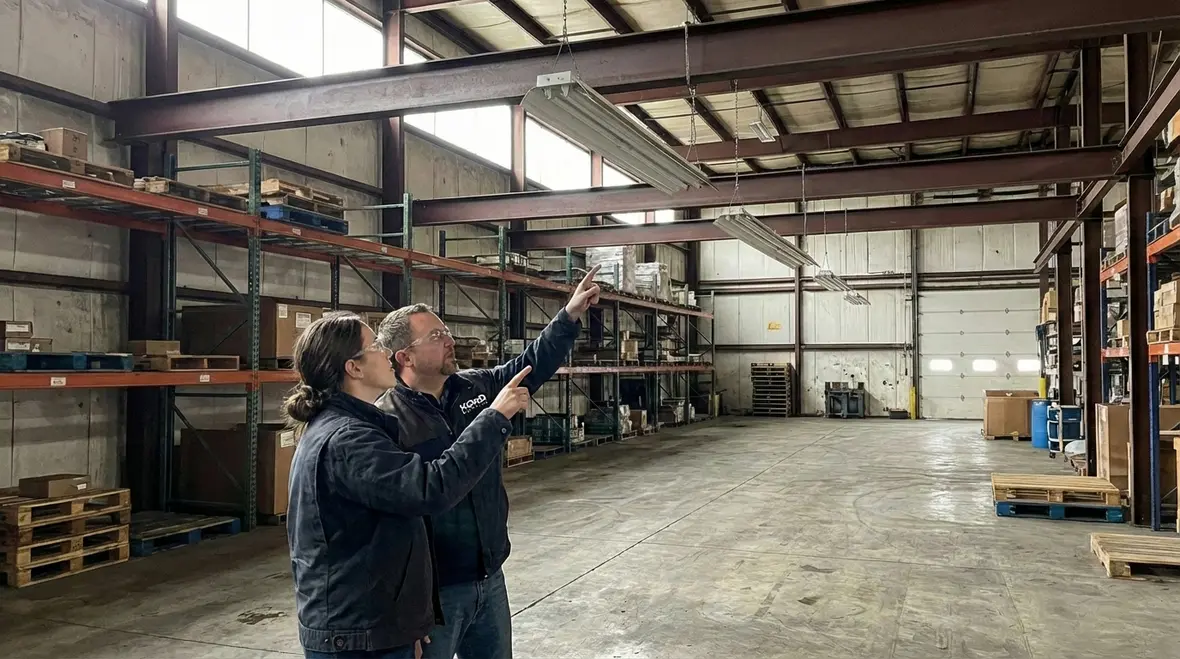
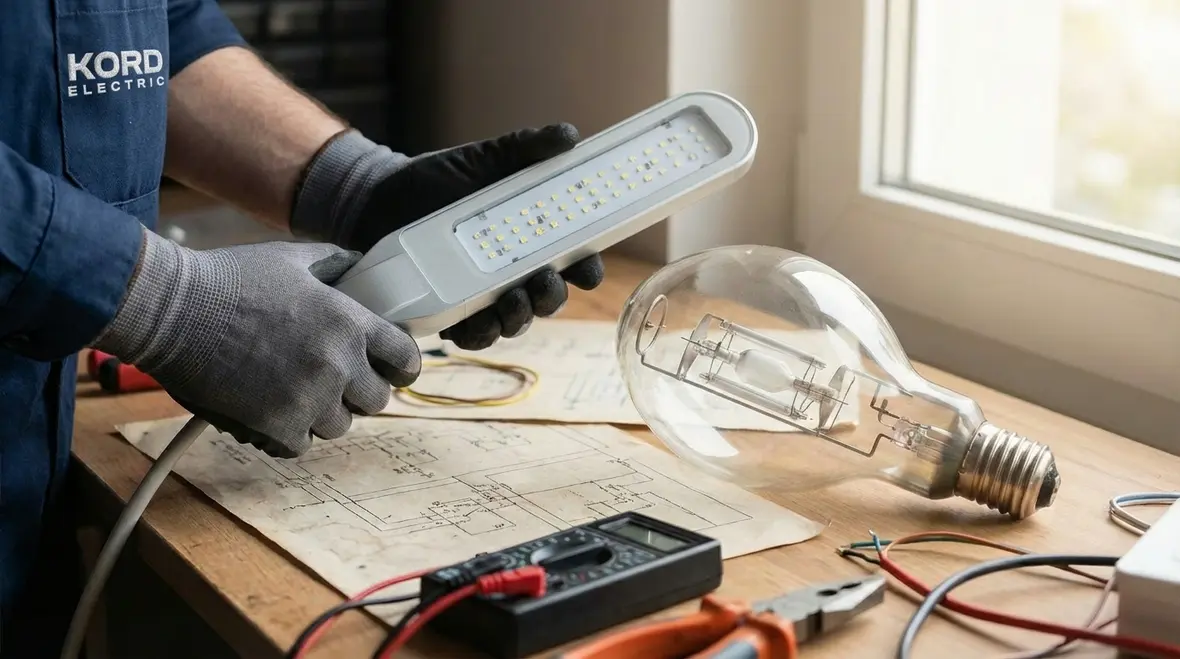
Every building tells a different story. A 500,000 square foot distribution center does not behave like a multi tenant office tower. Therefore, when evaluating a commercial lighting upgrade cost, our technicians first assess the type of fixtures currently installed. Are they high pressure sodium high bays in a warehouse? Fluorescent troffers in office spaces? Metal halide fixtures in a manufacturing plant?
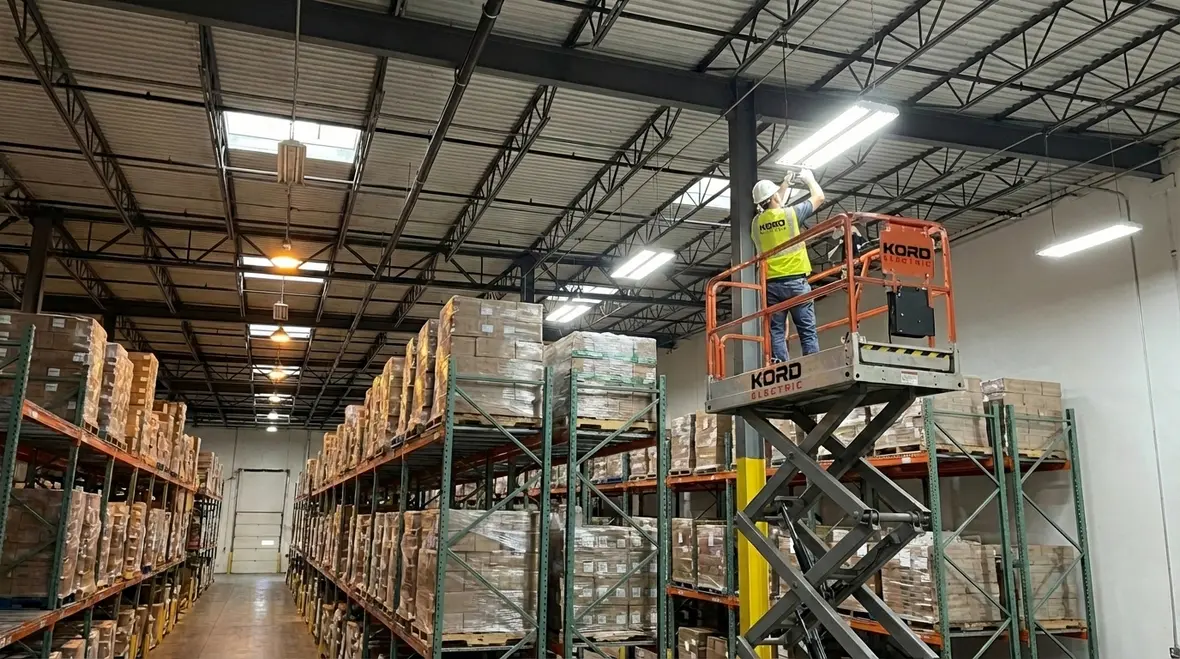
Each of these scenarios requires a different retrofit approach. For example, replacing outdated high intensity discharge fixtures often delivers dramatic energy savings, yet it may require lift equipment and specialized mounting hardware. On the other hand, upgrading troffers in a drop ceiling can move more quickly, which reduces labor hours.
In addition, ceiling height plays a major role. The higher the ceiling, the more complex the installation. Consequently, labor and equipment costs increase. However, higher ceilings also benefit greatly from LED technology because improved light distribution reduces the number of fixtures needed.
At Kord Electric, we believe clarity builds trust. Our experienced service team walks facility managers through fixture counts, wattage comparisons, and projected utility savings. We do not simply hand over a quote. We explain it. Slowly. Clearly. Like a narrator guiding you through the plot of a very practical documentary.
For property teams looking to align upgrades with current code requirements, pairing a retrofit plan with guidance from resources like the California Commercial Lighting Code Guide for 2026 can help avoid surprises during inspections and permitting while keeping long term efficiency goals on track. Current lighting code insights also give owners a clearer picture of how design choices today will hold up under future standards.
What Drives the Investment in an LED Retrofit?
Several core factors influence the overall lighting modernization budget for commercial and industrial buildings. While energy savings often steal the spotlight, the upfront investment depends on technical details behind the scenes.
1. Fixture Type and Quantity
The number of fixtures and their configuration directly impact material and labor expenses. A facility with thousands of high bays will require a larger capital outlay than a smaller office complex. However, bulk purchasing often reduces per unit cost.
2. Controls and Automation
Adding occupancy sensors, daylight harvesting, and smart lighting controls increases the initial project cost. Yet, these systems significantly improve efficiency. Therefore, many large properties see faster returns when integrating advanced controls.
3. Electrical Infrastructure
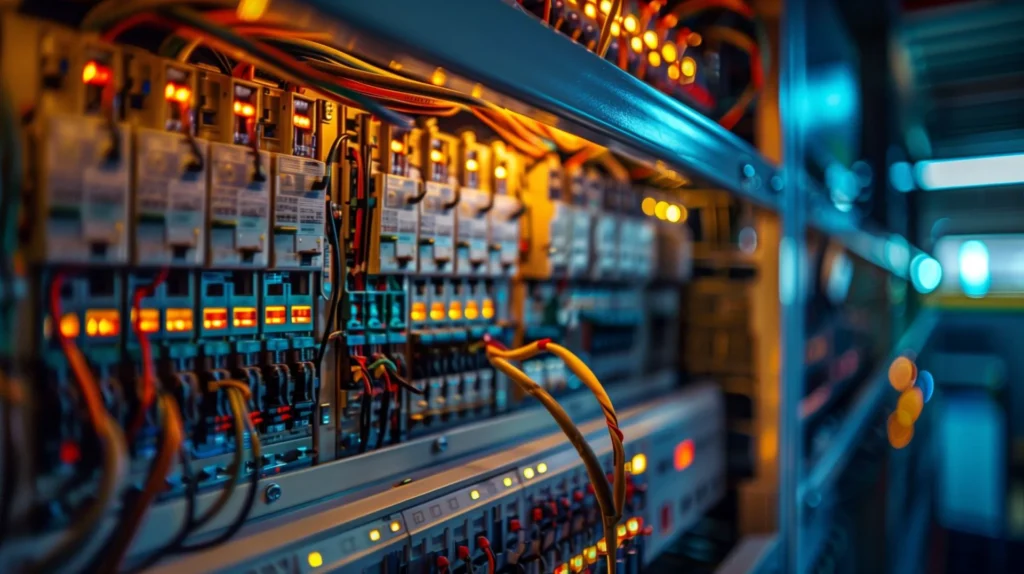
Some older industrial buildings require wiring upgrades or panel adjustments to support modern LED systems. While this adds complexity, it also improves safety and reliability. Owners who combine a retrofit with a structured electrical preventive maintenance program often uncover hidden issues before they become costly outages, which helps protect both their upgrade budget and day to day operations.
4. Rebates and Incentives
Utility incentives can offset a substantial portion of the project. In some cases, rebates cover 20 to 40 percent of material costs. Our team handles rebate documentation because paperwork should never stand between a building and better lighting.
Altogether, these elements shape the commercial lighting upgrade cost, yet they also define the long term value of the project.
For safety focused owners, pairing a lighting retrofit with a review of workplace lighting safety hazards that hurt productivity helps ensure that energy savings never come at the expense of visibility or compliance. Strong lighting design and safe working conditions go hand in hand in every modern facility.
Cost Breakdown Snapshot for Commercial and Industrial Properties
Below is a simplified comparison illustrating typical ranges. Actual figures vary based on site conditions, but this provides a grounded perspective.
Typical Investment Range
Warehouse High Bay Retrofit
Material: $150 to $350 per fixture
Installation: $75 to $200 per fixture
Energy Reduction: 50 to 70 percent
Office Troffer Upgrade
Material: $80 to $200 per fixture
Installation: $50 to $120 per fixture
Energy Reduction: 40 to 60 percent
Industrial Manufacturing Facility
Material: $200 to $500 per fixture
Installation: $100 to $300 per fixture
Energy Reduction: 50 to 75 percent
While these numbers provide context, the true value becomes clear when calculating operational savings over five to ten years. In many portfolios, the most compelling budget discussions happen when annual savings are stacked next to capital costs and compared against other upgrades competing for the same dollars.
Return on Investment and Long Term Savings
Here is where things become interesting. Although the commercial lighting upgrade cost may appear significant at first glance, LED retrofits often deliver payback periods between 1.5 and 4 years for large facilities. After that, the savings continue year after year.
LED systems consume far less electricity. Moreover, they produce less heat, which reduces HVAC strain in climate controlled environments. Over time, that lower heat output can translate into meaningful mechanical savings.
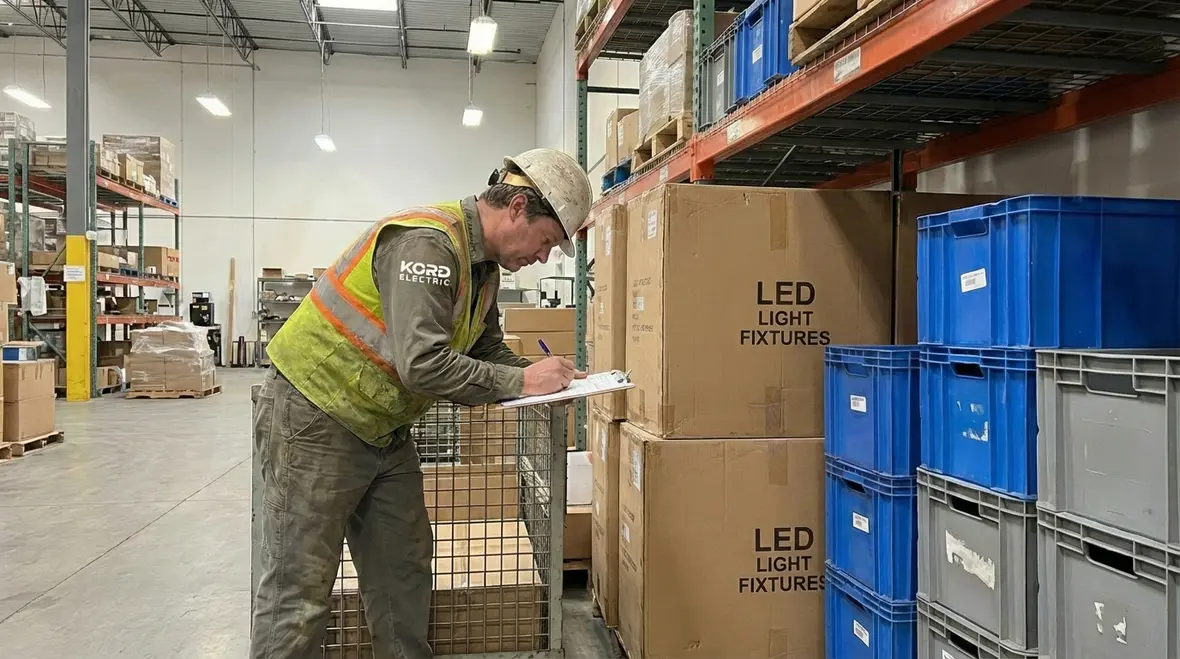
Maintenance costs also decline sharply. Traditional high intensity discharge lamps burn out frequently and require lifts or scaffolding for replacement. LEDs, however, can operate for 50,000 to 100,000 hours. That means fewer disruptions, fewer service calls, and fewer moments when someone says, “Why is aisle seven in the dark again?”
Furthermore, improved lighting quality enhances worker productivity and safety. Brighter, more consistent illumination reduces eye strain and improves visibility around machinery and storage racks. While productivity gains can be difficult to quantify, facility managers often report measurable improvements after a retrofit.
Some owners pair these upgrades with broader safety and code initiatives so that the same project planning window supports better illumination, safer egress paths, and more reliable emergency lighting. This holistic approach aligns energy savings with life safety requirements and broader risk reduction.
“What Would My Building Pay for an LED Retrofit?”
For large commercial or industrial properties, the answer depends on square footage and usage patterns. As a general guide:
500,000 square foot warehouse: $1.5 million to $3 million before incentives
250,000 square foot office building: $750,000 to $1.8 million before incentives
Heavy industrial plant: highly variable based on specialized fixtures and controls
However, these numbers should never be viewed in isolation. When utility rebates apply, and when annual energy savings are calculated, the net project cost decreases significantly. Therefore, our expert technicians conduct detailed energy audits before presenting a final proposal.
They review demand charges, peak usage patterns, and operational hours. Then, they translate those technical findings into straightforward financial projections. No smoke. No mirrors. Just data presented in a calm, steady voice.
Why Professional Installation Matters for Major Properties
Large facilities cannot afford downtime or electrical missteps. Consequently, professional installation becomes just as important as fixture selection. Our licensed electricians coordinate with facility managers to schedule work in phases, minimizing disruption to operations.
Additionally, safety compliance remains a top priority. Industrial environments require adherence to strict electrical codes and safety standards. Our team ensures every fixture, control system, and wiring upgrade meets regulatory requirements.
Moreover, experienced technicians understand structural challenges unique to commercial buildings. From high ceilings to specialized mounting surfaces, we anticipate issues before they slow progress. That foresight protects project timelines and budgets.
And yes, while lighting might not inspire the same excitement as a blockbuster film premiere, a well executed retrofit can feel just as satisfying. The lights come on, energy bills drop, and suddenly the building looks ten years younger. It is the makeover episode no one knew they needed.
Strategic Planning for Industrial and Commercial Retrofits
Timing plays a critical role in managing a lighting modernization budget. Many property owners coordinate retrofits with lease renewals, equipment upgrades, or sustainability initiatives. By aligning projects strategically, they maximize capital efficiency.
In addition, financing options often make large scale upgrades more accessible. Energy performance contracts and phased installations spread costs over time. Therefore, instead of delaying improvements due to budget cycles, facilities can begin capturing savings immediately.
At Kord Electric, we approach each project as a partnership. We analyze load calculations, evaluate control integration, and forecast long term maintenance reduction. Our service staff take the time to answer questions thoroughly because informed clients make confident decisions.
Ultimately, the commercial lighting upgrade cost represents an investment in infrastructure. And infrastructure, when improved wisely, supports every operation inside the building.
For portfolios that also need ongoing testing and documentation support, connecting a retrofit plan with broader electrical preventive maintenance services can streamline inspections, keep emergency lighting reliable, and ensure long term system performance well beyond the initial construction phase.
Frequently Asked Questions
Conclusion
Lighting shapes how every commercial and industrial facility performs. When leaders understand their commercial lighting upgrade cost, they gain the power to plan wisely and invest confidently. At Kord Electric, we combine technical precision with clear communication, guiding major property owners through every step. If your building is ready for smarter, more efficient lighting, our team stands prepared to illuminate the path forward. Let us help you turn energy savings into lasting value.
If you would like to align your lighting project with a broader electrical reliability strategy, explore how a structured electrical preventive maintenance program can support long term performance, code compliance, and safety across your entire facility portfolio while your new lighting works hard overhead.