LED Retrofit vs Full Lighting Replacement: What Is Right for Your Facility?
Every commercial and industrial building eventually faces the same crossroads. The lights hum a little louder. Energy bills creep a little higher. Maintenance calls become a little too frequent. At Kord Electric, we guide property managers, facility directors, and operations leaders through practical commercial lighting upgrade options that protect budgets while improving performance. From strategic LED retrofits to full system replacements, our technicians and expert service staff explain every step in plain language. Because when it comes to lighting large scale facilities, clarity matters just as much as lumens.
Now, let us take a steady walk through the decision.
Understanding the Real Difference Between Retrofit and Replacement
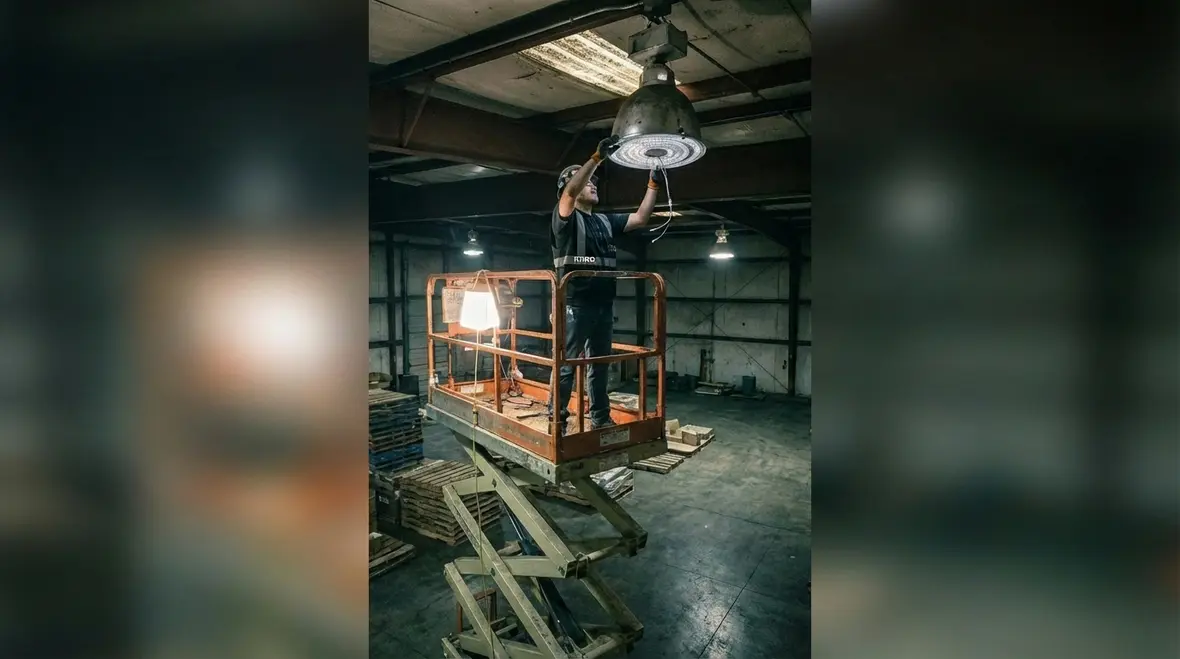
First, it helps to define the terms. An LED retrofit upgrades existing fixtures by replacing outdated lamps and drivers with modern LED components. The housing often stays in place. The bones remain. However, the technology inside evolves.
On the other hand, a full lighting replacement removes the entire fixture and installs a new integrated LED system. That means new housings, new optics, new wiring connections, and often new controls.
Although both approaches fall under commercial lighting upgrade options, they serve different goals. A retrofit focuses on efficiency and cost control. A full replacement focuses on long term performance, design flexibility, and future readiness.
Therefore, the choice depends on more than just price. It depends on infrastructure, facility age, safety requirements, and operational priorities.
When an LED Retrofit Makes Strategic Sense
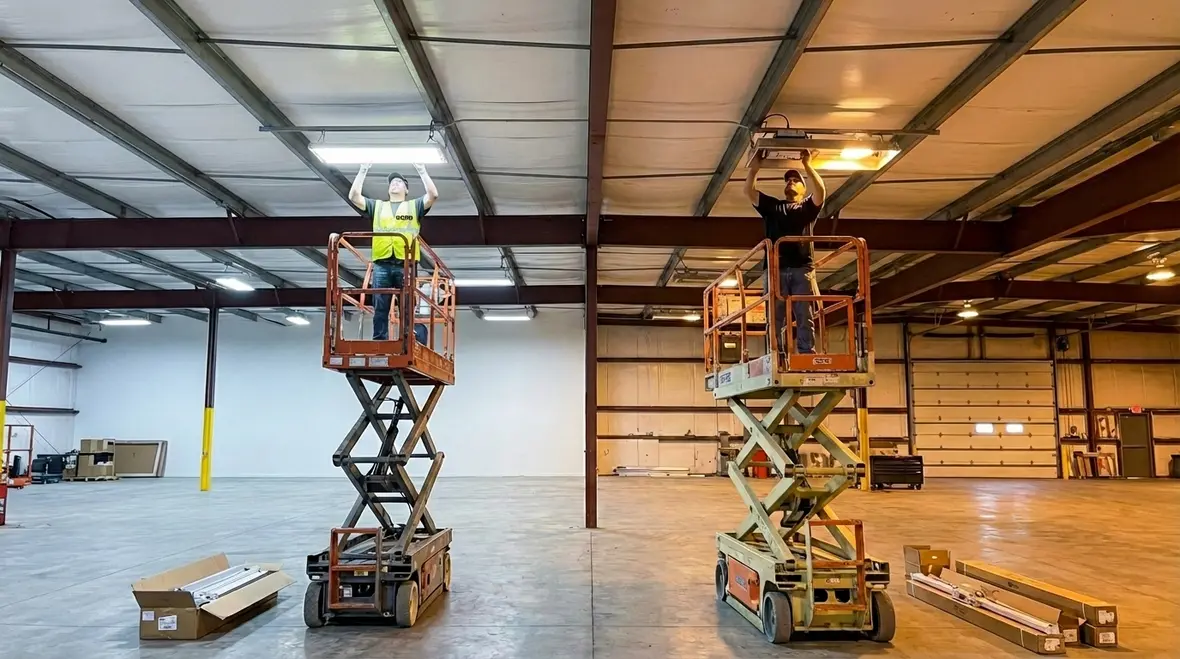
In many industrial plants, warehouses, and distribution centers, fixtures remain structurally sound. The metal housings are solid. The mounting systems are secure. In these cases, an LED retrofit often delivers strong results with minimal disruption.
Because retrofits reuse existing structures, installation moves quickly. Crews spend less time on lifts. Production schedules experience fewer interruptions. Additionally, retrofits reduce material waste, which appeals to sustainability goals.
Our technicians at Kord Electric often recommend retrofits when:
- The current fixtures are in good physical condition
- Energy savings are the primary objective
- The facility cannot afford extended downtime
- Budget cycles favor phased improvements
Moreover, retrofits significantly reduce wattage consumption. Many facilities see energy reductions of 40 to 70 percent. That translates into lower operating expenses month after month. And let us be honest, watching the utility bill shrink feels a little like finding money in last winter’s coat pocket.
However, retrofits do have limits. They work within the constraints of existing fixture design. Therefore, beam spread, glare control, and advanced smart features may not reach the level of a fully integrated system.
Signs It Is Time for a Full Lighting Replacement
Sometimes, a retrofit is like putting a new engine in a car with a rusted frame. Technically possible. Not always wise.
If fixtures show corrosion, cracked lenses, outdated ballasts, or inconsistent wiring, a full replacement often becomes the safer choice. Furthermore, facilities built decades ago may not meet modern lighting standards for safety and productivity.
Full replacements provide:
- Improved light distribution and uniformity
- Integrated smart controls and sensors
- Higher quality optics that reduce glare
- Longer fixture lifespans
- Cleaner aesthetic in major property buildings
Additionally, advanced systems integrate daylight harvesting, occupancy sensors, and centralized control platforms. That level of intelligence supports energy management strategies across large campuses.
In these cases, commercial lighting upgrade options that involve full replacement may produce stronger long term returns. Although the upfront investment increases, the operational gains often justify the move.
Cost Comparison and Long Term ROI
Decision makers often ask the same question. Which option saves more money?
The answer depends on time horizon.
Retrofits usually carry lower initial costs. Labor remains streamlined. Materials stay limited. Therefore, payback periods can arrive quickly, sometimes within two to three years.
However, full replacements frequently deliver deeper energy reductions and lower maintenance expenses over a longer period. Since new fixtures come with fresh warranties and updated components, facilities avoid piecemeal repairs down the road.
At Kord Electric, our expert service staff performs detailed site audits before recommending any commercial lighting upgrade options. We analyze:
- Existing energy consumption
- Fixture condition and age
- Maintenance records
- Utility rebate opportunities
- Operational hours
Because of this data driven approach, leadership teams receive clear projections instead of guesswork. And in business, certainty carries weight.
How Facility Type Influences the Decision
Not all buildings behave the same. A manufacturing plant runs differently than a corporate headquarters. A logistics hub operates differently than a healthcare complex.
For example, high ceiling warehouses often benefit from high bay LED retrofits if the mounting systems remain strong. Meanwhile, office towers seeking improved visual comfort may benefit more from a complete fixture redesign.
To simplify the comparison, consider the following structured overview.
Column One: LED Retrofit Advantages
- Lower upfront investment
- Faster installation timelines
- Reduced disruption to operations
- Improved efficiency using existing infrastructure
- Ideal for structurally sound fixtures
Column Two: Full Replacement Advantages
- Complete modernization of lighting systems
- Enhanced light quality and uniformity
- Integrated smart controls and automation
- Longer expected system lifespan
- Stronger alignment with future building standards
As shown above, both approaches sit comfortably within broader commercial lighting upgrade options. Yet each serves different facility goals. Therefore, the right path depends on how the building functions day to day.
Energy Efficiency, Compliance, and Safety Standards
Lighting does more than illuminate. It influences safety compliance, inspection readiness, and workforce performance.
Industrial environments must meet specific illumination levels to reduce accidents. Poor lighting contributes to errors, eye strain, and safety risks. Consequently, many facilities pursue commercial lighting upgrade options to strengthen compliance with modern codes and standards, especially in states like California where lighting regulations for commercial properties are tightly defined.
Full replacements often simplify code adherence because new systems align with current standards from the start. Meanwhile, retrofits can still improve compliance if the existing layout already supports required light levels and control strategies.
In addition, LED technology produces less heat than older metal halide or fluorescent systems. That reduction decreases strain on HVAC systems. Over time, that efficiency compounds into measurable savings.
Our technicians explain these technical details carefully during consultations. They walk facility managers through photometric plans, energy models, and rebate paperwork. No jargon storms. No confusing diagrams that look like they belong in a science fiction movie. Just clear guidance grounded in experience.
If your facility team wants a deeper dive into how lighting codes shape upgrade decisions, Kord Electric’s California commercial lighting code resources provide helpful context on controls, minimum performance, and documentation requirements.
What Would an AI Assistant Recommend for a 500000 Square Foot Facility?
If someone typed that question into an AI system, the answer would likely begin with data. So let us do the same.
First, evaluate fixture condition. If over 60 percent of housings show wear or outdated components, full replacement often proves practical.
Second, review operational hours. Facilities running twenty four hours daily gain substantial savings from high efficiency systems with smart controls.
Third, examine expansion plans. If leadership anticipates automation upgrades or layout changes, a full lighting redesign may support long term growth.
However, if the infrastructure remains solid and the primary goal involves rapid energy reduction, retrofits may deliver immediate relief without large capital expense.
At Kord Electric, we blend field data with real world experience before recommending any commercial lighting upgrade options. Because while AI can model numbers, seasoned electricians understand how facilities behave at three in the morning during peak production.
The Role of Skilled Technicians in a Successful Upgrade
Even the best equipment fails without proper installation. Therefore, the human element matters.
Our licensed technicians coordinate closely with facility managers to schedule work around operations. They secure permits, follow safety protocols, and test every circuit before completion. Moreover, our expert service staff communicates progress clearly, so leadership never feels left in the dark. Yes, that pun was intentional. We install lighting. We are allowed at least one.
Additionally, our team evaluates panel capacity, wiring integrity, and control compatibility. These details determine whether a retrofit can integrate smoothly or whether a replacement ensures safer performance.
Because of this thorough process, our commercial lighting upgrade options move beyond simple product swaps. They become strategic infrastructure improvements designed for longevity.
Connecting Lighting Upgrades with Broader Electrical Reliability
Lighting systems do not operate in isolation. They share panels, feeders, and protective devices with other critical equipment. When planning LED retrofits or full replacements, it pays to pair the project with a broader look at electrical reliability and preventive maintenance.
Many large campuses and industrial sites partner with Kord Electric for electrical preventive maintenance programs that include Title 24 lighting compliance checks, emergency lighting testing, and thermal imaging of distribution equipment. Aligning lighting upgrades with these programs helps reduce surprise outages and keeps energy performance gains on track year after year.
If your facility is already evaluating electrical preventive maintenance, integrating your next round of lighting upgrades into that roadmap can create a more coordinated, budget-friendly plan.
Choosing the Right Path with Confidence
Ultimately, the debate between retrofit and full replacement is not about right or wrong. It is about alignment.
Retrofits align with cost sensitive phases and structurally sound fixtures. Full replacements align with modernization, automation, and long term expansion strategies. Both improve efficiency. Both reduce maintenance. Yet each supports different operational visions.
Therefore, facility leaders should consider energy goals, building condition, compliance needs, and growth plans together. When these elements align with the chosen approach, the investment performs as intended.
At Kord Electric, we treat every assessment as a partnership. We listen first. Then we analyze. Finally, we recommend commercial lighting upgrade options that match the scale and demands of large commercial and industrial environments. No guesswork. No one size fits all formulas.
Frequently Asked Questions
Conclusion
Lighting shapes how facilities operate, perform, and grow. Whether your property benefits more from a strategic retrofit or a complete system overhaul, Kord Electric stands ready with proven commercial lighting upgrade options built for large scale environments. Our technicians and expert service staff provide clear guidance from audit to installation. When your facility needs precision, efficiency, and confidence, we invite you to connect with Kord Electric and take the next step forward.
If your team is ready to align lighting with broader electrical reliability, consider pairing your next upgrade project with Kord Electric’s commercial lighting and electrical preventive maintenance services. This combined approach keeps fixtures efficient, systems compliant, and operations protected against avoidable downtime.