When to Upgrade Lighting LED Retrofit Guide
How to Know If Your Building Needs an LED Retrofit
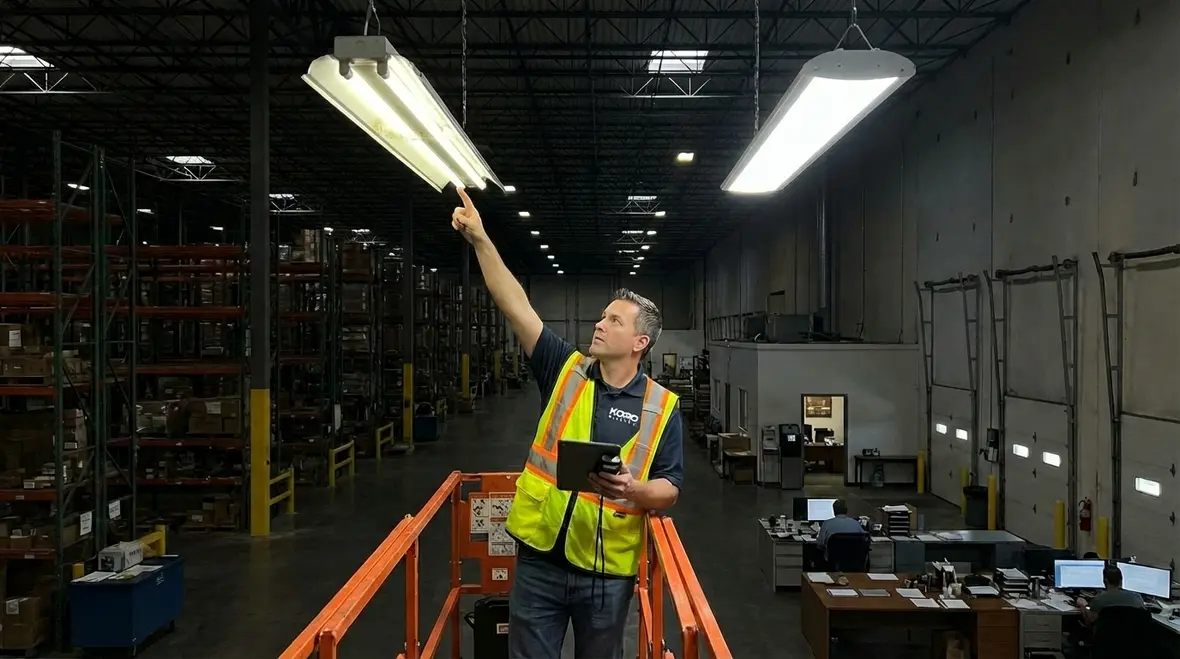
There comes a moment in every commercial or industrial facility when the question quietly hums in the background like an old ballast about to give up. When to upgrade lighting? At Kord Electric, we hear it often. Property managers, plant supervisors, and operations directors all reach that point where lighting becomes less of a fixture and more of a financial decision. Within the first walkthrough, our technicians begin to see the signs. Flicker. Hum. Shadow. Rising utility bills. And that is usually where the conversation begins.
We approach lighting the way a seasoned architect approaches structure. Calmly. Carefully. With a sense of purpose. Because lighting is not just about visibility. It shapes productivity, safety, tenant satisfaction, and operating costs. So let us walk through how to know if your building is ready for an LED retrofit, and what that decision really means for large commercial and industrial properties.
Section 1: What Are the Early Signs Your Facility Is Due for an Upgrade?
Lighting rarely fails all at once. Instead, it whispers before it shouts. For commercial and industrial buildings, those whispers show up in patterns.
First, energy bills begin to climb without any operational expansion. Meanwhile, maintenance teams find themselves replacing lamps and ballasts more often. In older warehouses and office towers, inconsistent light levels become the norm. Employees may not complain directly, but productivity shifts. Eyes strain. Mistakes increase. Safety managers raise an eyebrow.
Additionally, fluorescent and metal halide systems lose brightness over time. They do not burn out dramatically like a movie scene. Instead, they fade slowly. That gradual decline makes it harder to recognize when to upgrade lighting because the change feels subtle.
Our expert service staff often point to three measurable indicators:
- Energy usage trends
- Maintenance frequency
- Lighting uniformity and output
If two of those metrics move in the wrong direction, it is no coincidence. It is a signal.
Section 2: Energy Efficiency and Operational Cost Reality
In large facilities, lighting can account for a significant share of total electricity use. Therefore, inefficient fixtures do more than waste light. They waste capital.
Older technologies convert a surprising amount of electricity into heat rather than illumination. That heat then increases cooling loads, especially in manufacturing environments. As a result, HVAC systems work harder. And yes, they send you the bill.
LED systems operate differently. They use less power, produce minimal excess heat, and deliver higher lumens per watt. Consequently, property managers often see immediate reductions in energy demand once a retrofit is complete.
However, deciding when to upgrade lighting should not rely on guesswork. At Kord Electric, our technicians perform detailed load calculations and lighting audits. We evaluate usage patterns, peak demand charges, and fixture performance. In many cases, the savings projection speaks clearly and confidently. Even the most skeptical CFO tends to nod in approval when the numbers align.
If you want to dig deeper into how upgraded fixtures tie into codes and efficiency requirements, pairing an LED retrofit with current standards from resources like our California Commercial Lighting Code Guide for 2026 helps ensure your facility saves energy while staying compliant.
And let us be honest. Few things bring people together like lowering operating expenses. It is almost as satisfying as finding out the meeting could have been an email.
Section 3: How Lighting Impacts Productivity and Safety in Industrial Spaces
Industrial and commercial facilities demand consistency. Production floors require precise visibility. Distribution centers rely on accurate picking. Office towers need balanced, comfortable light.
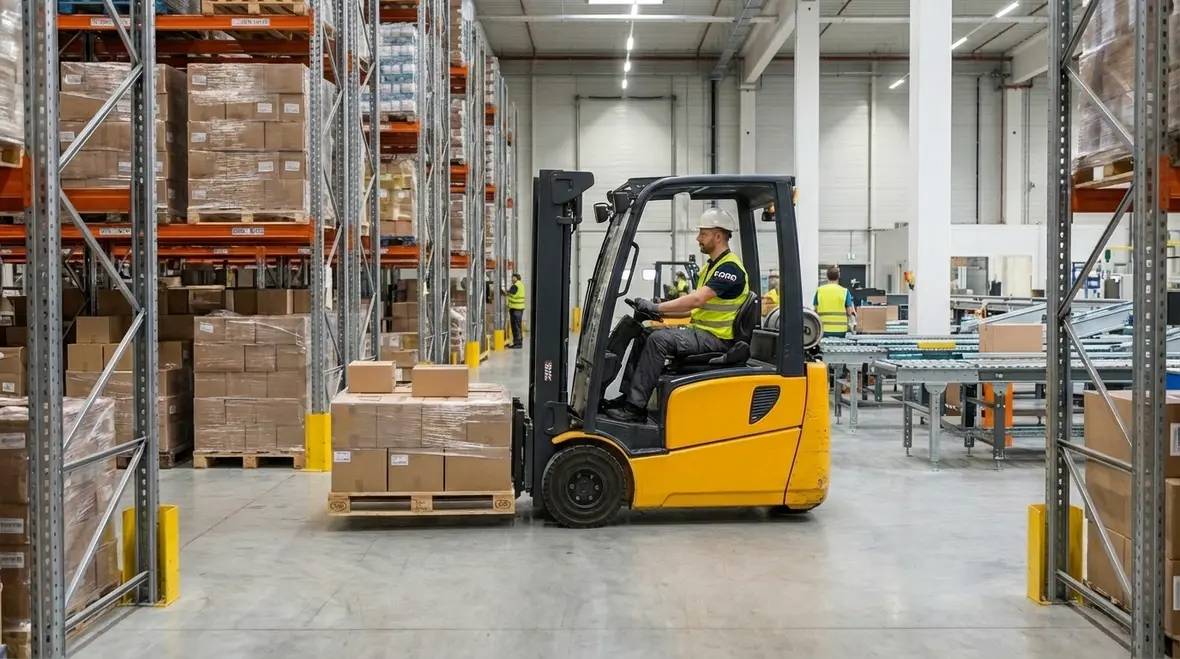
Poor lighting introduces shadows and glare. Consequently, workers strain their vision, and fatigue sets in earlier. In industrial environments, insufficient lighting increases the risk of accidents. Forklift operators depend on clear sightlines. Maintenance staff require accurate color rendering to detect equipment wear. Even minor visual distortions can lead to major disruptions.
Moreover, outdated systems often flicker. While subtle, flicker can cause headaches and reduce focus. Over time, these small irritations compound.
Our technicians do more than swap fixtures. They assess task requirements, mounting heights, and beam angles. They explain each step in clear terms, ensuring facility managers understand why certain fixtures fit specific zones. Because lighting should serve the workflow, not fight it.
In short, if teams complain about glare, dim areas, or uneven brightness, that is not merely preference. It may be the building telling you it is time to consider an upgrade. For a deeper look at how workplace illumination affects performance and safety, you can also explore our breakdown of workplace lighting safety hazards that hurt productivity.
Section 4: Maintenance Costs and System Reliability
Maintenance budgets tell a story. If lamp replacements feel routine and ballast failures seem frequent, that narrative becomes expensive.
Traditional lighting systems require ongoing intervention. Lifts must be rented. Crews must schedule downtime. Inventory must be stocked. Over time, these indirect costs add up quietly but persistently.
LED retrofits shift that equation. With longer operational lifespans, facilities reduce maintenance cycles dramatically. Consequently, teams can redirect labor toward more strategic priorities.
Our service staff frequently review maintenance logs during site visits. They identify patterns that signal when to upgrade lighting rather than continuing to patch aging infrastructure. While some managers attempt incremental replacements, mixed systems often create inconsistent light quality and control challenges.
It is a bit like replacing one tire on a vehicle with three worn ones. Technically functional. Practically questionable.
Reliability matters in commercial and industrial buildings. Tenants expect uninterrupted performance. Production schedules demand predictability. Therefore, lighting should not be the weakest link.
Section 5: Compliance, Incentives, and Modern Standards
Energy codes evolve. Efficiency standards tighten. Utility incentive programs change. Keeping pace with these shifts can feel like tracking plot twists in a long running television series.
However, LED retrofits often align facilities with current regulations. In many regions, upgraded systems support compliance with modern energy codes. Additionally, utility rebates can offset initial costs significantly.
At Kord Electric, we guide clients through available incentive programs. Our team evaluates eligibility and prepares documentation. Because while paperwork may not inspire excitement, financial incentives certainly do.
Furthermore, upgraded lighting systems can integrate with advanced controls. Occupancy sensors, daylight harvesting, and centralized management platforms increase efficiency even further. Therefore, knowing when to upgrade lighting also involves recognizing when your building can benefit from smarter control strategies.
Commercial and industrial properties that adopt modern systems position themselves competitively. Prospective tenants and partners notice efficient infrastructure. It signals foresight and operational excellence.
If your facility is in California or follows similar standards, reviewing current guidance like the California Commercial Lighting Code Guide for 2026 alongside your retrofit plan helps align compliance, incentives, and long term performance.
Section 6: LED Retrofit vs Full Replacement
Property managers often ask whether a retrofit suffices or a complete replacement is necessary. The answer depends on existing infrastructure and long term goals.
Below is a simplified comparison our technicians often review with clients:
LED Retrofit
- Lower upfront cost
- Utilizes existing housings
- Faster installation
- Improved efficiency
Full Fixture Replacement
- Higher initial investment
- Brand new fixture systems
- Maximum design flexibility
- Highest potential performance
In many commercial and industrial facilities, retrofitting offers a strong balance between cost and performance. However, if housings are outdated or damaged, full replacement may prove more strategic.
Our expert service staff evaluate structural conditions, wiring integrity, and mounting systems before making recommendations. They speak plainly. No jargon. No pressure. Just practical insight rooted in experience.
Section 7: Financial Planning and Return on Investment
Large property decisions demand clear financial modeling. LED retrofits typically deliver measurable payback periods, often within a few years depending on usage intensity and utility rates.
Moreover, reduced maintenance expenses contribute to total savings. When combined with energy reductions and potential rebates, the financial case becomes compelling.
Still, timing matters. Knowing when to upgrade lighting requires examining capital planning cycles. Coordinating upgrades with lease renewals, production expansions, or scheduled renovations can optimize disruption and cost management.
At Kord Electric, we provide detailed ROI projections tailored to each facility. Our technicians and project managers collaborate with finance teams to ensure clarity. Because while lighting may seem straightforward, investment decisions deserve careful thought.
After all, commercial and industrial buildings operate on margins, metrics, and measurable outcomes. Lighting should support those goals, not complicate them.
Section 8: A Practical Evaluation Process for Commercial and Industrial Buildings
So how does a building owner or facility director move from suspicion to certainty?
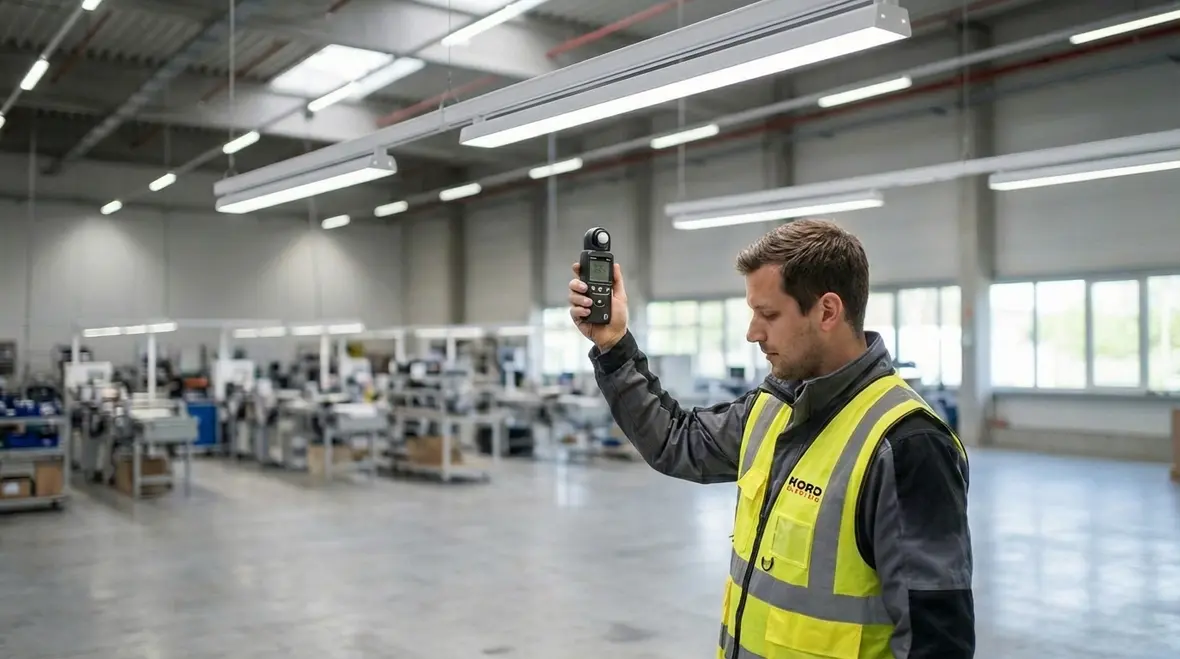
First, schedule a professional lighting audit. During this assessment, our team measures light levels, analyzes fixture types, and reviews energy data. Next, we compare current performance against operational requirements. Then, we present clear findings and options.
Throughout the process, we explain each recommendation. Our technicians take the time to answer questions thoroughly. They understand that trust builds through transparency.
If the data confirms declining efficiency, rising maintenance, and performance gaps, the answer becomes evident. That is when to upgrade lighting. Not based on impulse. Not based on trend. But based on evidence.
And yes, sometimes the building practically says it out loud. When fixtures hum louder than office chatter, that is not ambiance. That is a plea for retirement.
When you are ready to turn that evidence into action, partnering with a team that already delivers large scale lighting installation services for commercial and industrial facilities ensures that your retrofit is engineered, installed, and commissioned with long term performance in mind.
FAQ Section
Conclusion
Every commercial and industrial building eventually faces the same quiet question. When is the right moment to act? At Kord Electric, we replace uncertainty with clarity. Our technicians assess, explain, and deliver solutions built for performance and longevity. If your facility shows the signs, let us guide the transition with confidence and care. Reach out today, and allow us to illuminate the path forward with a lighting strategy that respects your budget, your operations, and your long term goals.
Whether you are planning a focused LED retrofit or a broader upgrade to your facility illumination, our dedicated lighting installation services team is ready to design, install, and support a system that makes the most of every watt and every square foot in your building.