Commercial EV Charging Station Installation Guide
Planning a commercial EV charging station installation starts with understanding the commercial EV charging station installation requirements that govern power, safety, access, and code compliance. For major property buildings and commercial or industrial facilities, we at Kord Electric help teams plan for real-world use, not just a glossy ribbon-cutting moment. We guide facility managers through site readiness, electrical load planning, and equipment placement so chargers work reliably from day one. And because people love to ask “Will it pass inspection?” we answer that early, with documentation and best practices built around commercial needs.
When our experts step in, they explain the process in plain business language, like a calm instructor who also knows how to wire a panel. Then the rest of the team can move forward with fewer surprises and more clarity, which is the closest thing to peace we can offer in a construction schedule.
1) Facility readiness: the checklist that saves you from chaos
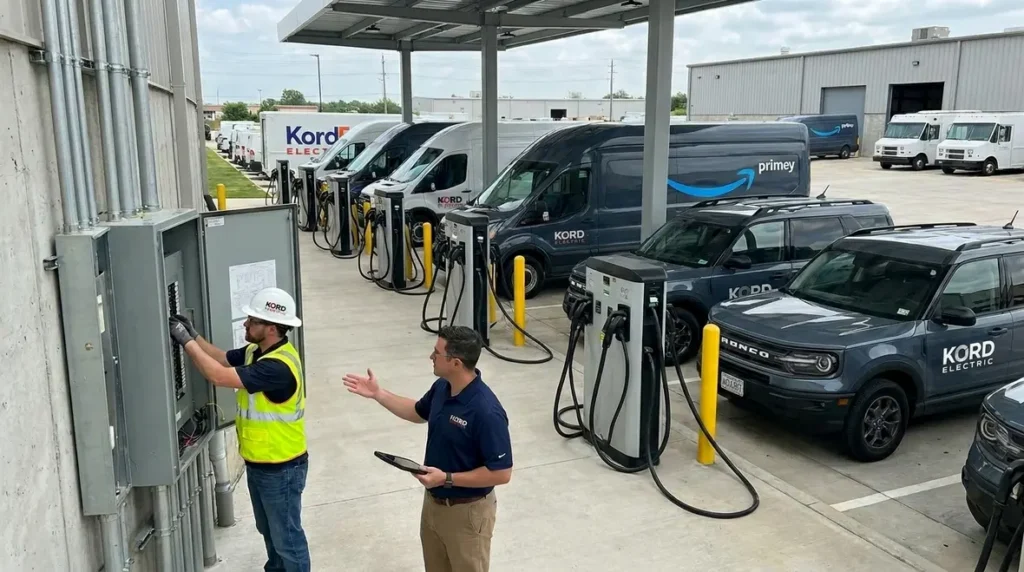
Before a single conduit trench gets planned, our service team asks facility managers to review readiness details that usually get skipped. First, we assess where vehicles will stage, how drivers will approach, and how access lanes work during peak hours. Then we verify the electrical room size, available capacity, and whether the existing service can handle added load. If it cannot, we map upgrades early so your timeline does not get hijacked later by “minor” electrical work that turns into a major project.
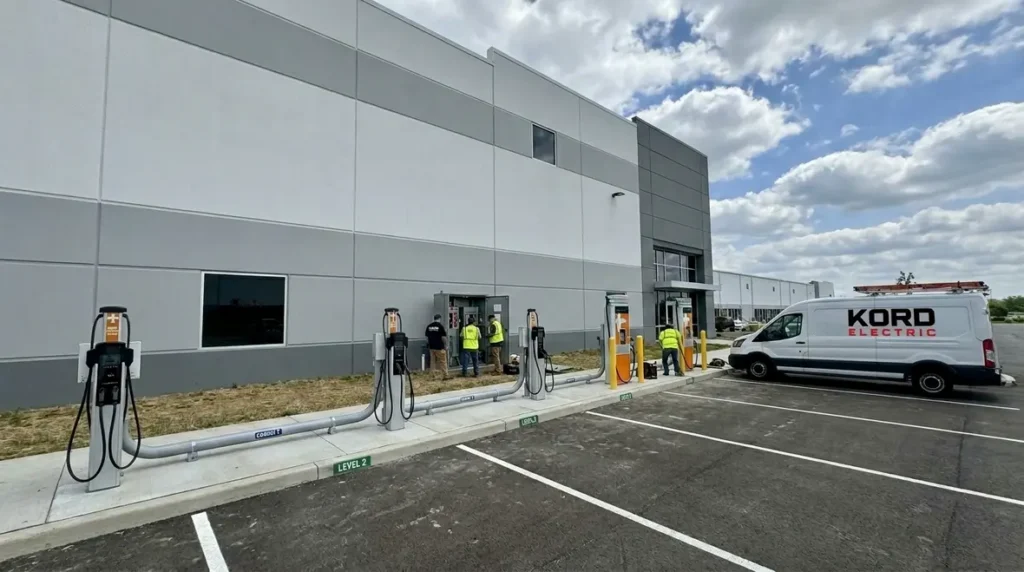
Next, we confirm site constraints that affect placement. For example, bollards, guard rails, stormwater drainage, and parking layout can influence charger location and cable routing. Also, we evaluate whether the charger footprint must match ADA and accessibility needs for your property type. Finally, we align all stakeholders, including property management, operations, and maintenance, so the installation process and ongoing uptime expectations stay clear.
If the checklist sounds like a lot, good. It is supposed to be. In our experience, the fastest way to slow down a deployment is to “figure it out later.” Later is expensive, and it never has the decency to show up on the schedule.

For commercial facilities planning larger infrastructure updates alongside EV charging, our team often connects these readiness checks with broader system upgrades and lifecycle planning, similar to the strategic approach we recommend in our Rewiring Cost Guide for Commercial Electrical Systems.
2) Electrical load planning for commercial sites and industrial facilities
Commercial and industrial locations require electrical planning that goes beyond simple add-on thinking. Our technicians start with load calculations based on current usage, demand factors, and charging behavior patterns for your fleet or public access. This matters because chargers do not all pull power at the same time, and you want to avoid a system that trips breakers the moment the busiest hour arrives.
Then we consider how chargers will share capacity. Many facilities choose managed charging, which can balance demand across multiple units. As a result, the site can support more chargers without oversized utility upgrades. We explain tradeoffs clearly, and our technicians show facility staff what the plan means for monthly costs, uptime, and user experience.
Additionally, we address power quality and protection needs. We review grounding, surge protection, and conductor sizing, and we confirm that the electrical design supports safe operation. After that, we document everything in a way that helps your team understand the “why” behind the design decisions. This also helps during inspection and future expansion planning.
In other words, we do not just install equipment. We build a charging system that behaves like a professional, not like a daytime talk show guest who never reads the script.
We also tie electrical load planning for EV infrastructure into broader reliability strategies. For many facilities, it runs alongside structured preventive programs like those outlined in our Electrical Preventive Maintenance services, helping protect both new chargers and existing equipment from overloads and nuisance downtime.
3) Code compliance and permitting without the guessing game
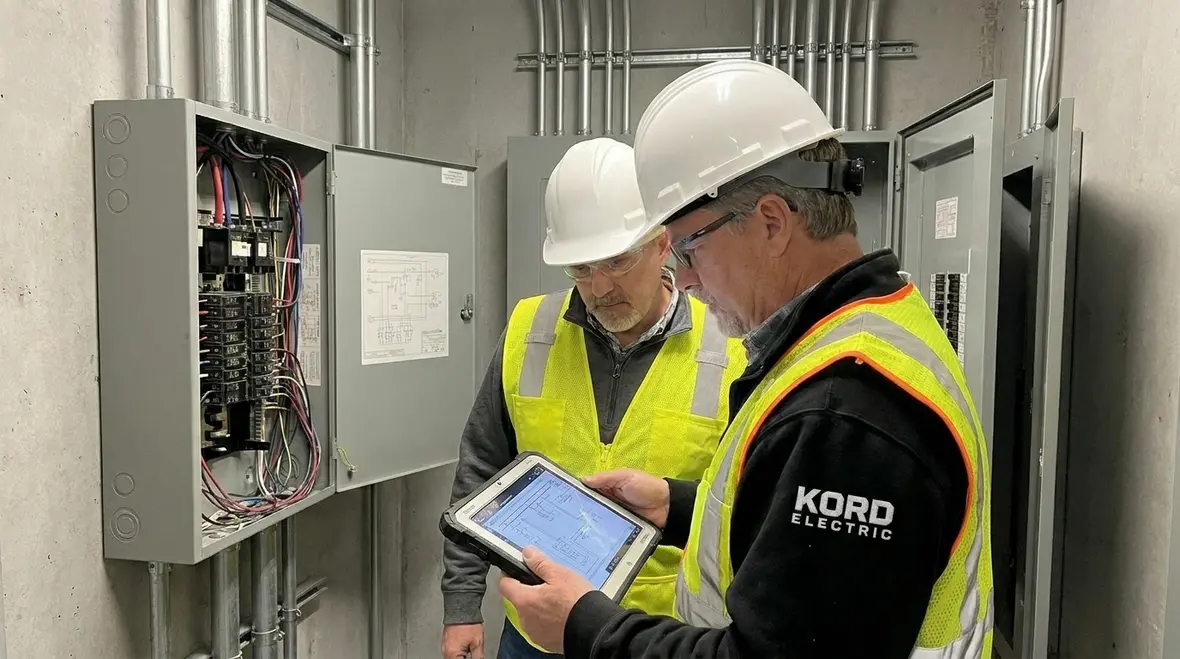
At Kord Electric, we handle commercial projects with the understanding that permitting and code compliance can make or break timelines. Our approach focuses on early clarity: we identify the jurisdiction requirements for electrical work, site safety, and equipment installation. Then we coordinate the documentation needed for approvals, including drawings, single-line diagrams, and electrical calculations.
While rules vary by area, facility managers typically face the same pain points. Inspectors want consistency between plans and field conditions. Utility approvals may require evidence of capacity. And the final inspection often hinges on details like labeling, wiring methods, and grounding. So we tighten the process upfront by aligning design intent with what the crew can build.
Importantly, we keep your team informed at decision points. We do not hide behind jargon, and our expert staff explains what changes mean for safety and compliance. That way, your operations leaders do not feel like they are watching a magic trick where the rabbit is buried in a permit folder.
For properties undergoing broader lighting or system upgrades alongside EV work, our compliance mindset mirrors the detail in our Lighting Installation Code Compliance Guide, where we focus on making code requirements visible, understandable, and manageable for facility teams.

4) Site layout and cable routing that protects uptime
Charging stations live or die by placement and routing choices. For commercial and industrial sites, the layout must support vehicle flow, minimize cable strain, and keep charging equipment safe from physical damage. Therefore, our technicians evaluate where vehicles park during charging, how they pull in, and where the charging cable naturally reaches. We also plan for weather exposure, heat, and potential impacts from forklifts or carts.
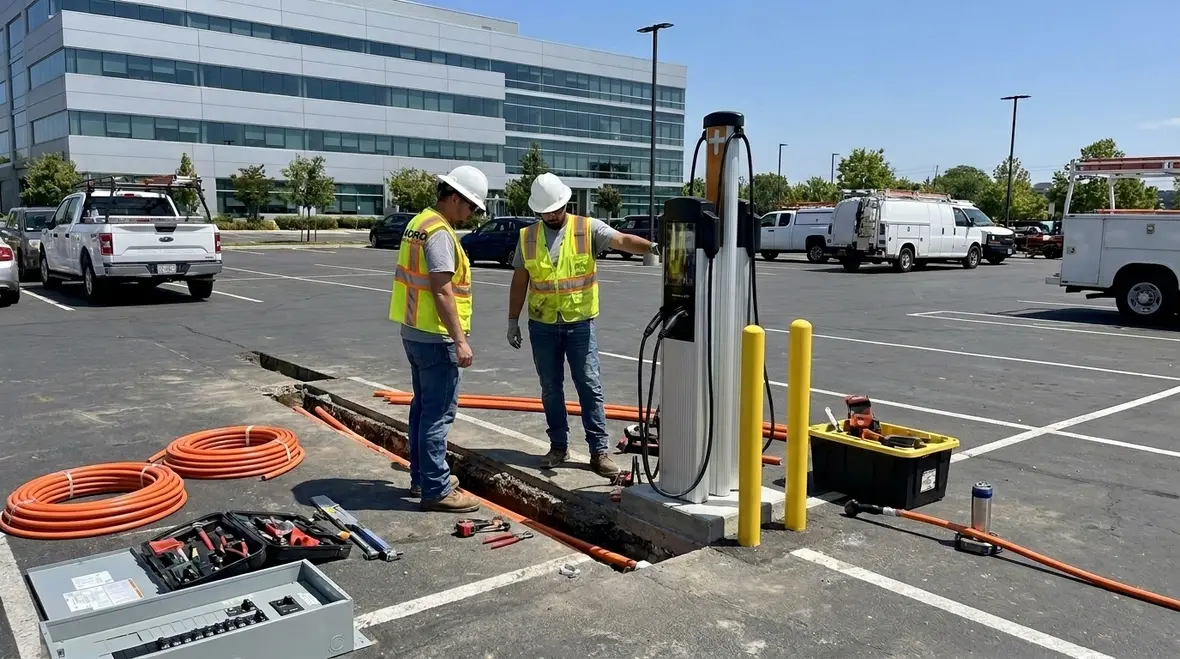
Once placement is confirmed, we plan cable routing with a focus on protection and serviceability. Conduits, handholes, and cable management need to support long-term maintenance. If something fails months later, your team should not need demolition to reach a cable run. We prioritize clean pathways and clear access, because a charging station is not a one-time project. It is a utility on your site.
We also address signage and wayfinding. Drivers should understand where to park and how to start charging. For facility managers, this reduces support tickets and reduces the “people are guessing” scenario. Also, we ensure the installation supports your existing site operations, such as security lighting, access control, and parking enforcement procedures.
Think of it like plumbing. If you route it poorly, you do not just lose water. You lose sleep. And nobody wants to explain that to leadership.
In many large facilities, EV charging layout decisions are coordinated alongside broader lighting and power distribution work. Our experience with complex sites, as outlined in our Lighting Installation Services, helps ensure cable routing, pole bases, and equipment pads all work together, rather than fighting for the same real estate.

5) Hardware selection: matching chargers to your use case
Choosing hardware is not just about power output. For commercial and industrial facilities, we match charger types to the use case, driver behavior, and your long-term expansion goals. For example, a fleet site with predictable shifts needs a different setup than a property building with mixed traffic patterns.
Our technicians help facility managers consider key factors such as charging speed, connector type, installation footprint, and whether the equipment supports load management. We also review software and network options, since many commercial systems need reporting for billing, utilization tracking, and maintenance scheduling.
Then we discuss durability and service needs. Commercial environments can be rough, and equipment must handle frequent use. We also ensure the hardware selection aligns with the electrical design so the system runs efficiently, without overloading components or causing frequent faults.
Throughout the selection process, our expert staff explains what matters and what does not. That way, your organization avoids paying for features you will never use, while still meeting real operational needs. It is like buying a toolbox. You do not buy ten hammers if you only need one.
Because commercial EV charging station installation requirements touch everything from utility coordination to software, we often reference real-world lessons from our EV Charger Installation projects, where we deploy Level 2 and DC fast chargers for offices, public sites, and industrial fleets across Southern California.
6) Installation workflow: how Kord Electric keeps projects on track
A smooth installation workflow reduces disruption and protects your day-to-day operations. First, we coordinate scheduling with facility teams to minimize downtime, especially in active commercial buildings and industrial spaces. Then we stage materials and confirm laydown areas, access routes, and safety measures for the job site.
After that, our technicians follow an orderly process that supports quality. We complete electrical rough-in work first, verify key components, then install chargers and finalize connections. We also verify labeling, protection devices, and grounding before energizing equipment. Finally, we test the system end to end, including communication and charging behavior.
During commissioning, our expert service staff explains the system to facility personnel. We show how to operate chargers, what maintenance checks to run, and how to respond if a user reports an issue. This matters because the best installation does not help if operations teams cannot support it.
We also plan a path for future upgrades. Many commercial managers want expansion without tearing up parking lots again. So, we build the infrastructure in a way that supports additional chargers when demand grows, rather than forcing a redesign later.
For critical operations that cannot afford extended outages, our EV installation workflow often pairs with contingency planning and rapid-response support similar to what we offer through our Emergency Electrical Services, so your teams know who to call if something unexpected appears during or after the project.
7) Smart operations: monitoring, maintenance, and expansion planning
After installation, commercial EV charging station performance depends on smart operations. We recommend monitoring that highlights availability, faults, and utilization trends so your team can act before small issues become downtime. When data shows an error pattern, maintenance becomes proactive instead of reactive. That saves time, and it protects the charging experience for drivers.
We also plan maintenance in a way that suits commercial schedules. Our team can support routine inspections, firmware updates, and component checks based on usage and site conditions. Because in a real facility, life does not stop for a broken charger. Your charging system must keep pace.
For expansion, we help facility managers think ahead about capacity and layout. We evaluate whether additional chargers will fit within the designed electrical plan and whether load management can scale. By planning carefully, your organization avoids the “we added chargers, now we have a power problem” situation. That problem always arrives like a pop quiz: unexpected and somehow personal.
And if someone says they will “just manage it manually,” we smile politely and prepare for a long support call. Our approach stays structured and supported by documentation.
Often, EV charging operations are folded into broader facility programs, much like the structured strategies described in our Commercial and Industrial Electrical Maintenance Plans. This alignment keeps chargers from becoming a separate, forgotten system and instead makes them part of your core infrastructure roadmap.
FAQ for commercial and industrial EV charging
Final thoughts from Kord Electric
Planning a commercial EV charging build should feel steady, not chaotic. Kord Electric supports commercial and industrial facilities with real electrical planning, code-aligned design, and installation workflows that protect uptime. Our technicians explain each decision clearly, and our expert service staff helps your team operate chargers with confidence. If you want a deployment that fits your site today and scales for tomorrow, reach out. We will review your goals, assess your power and layout, and give you a practical path forward.
To explore how these commercial EV charging station installation requirements connect with our broader commercial services, you can also review our dedicated EV Charger Installation service page, which outlines how we support businesses, campuses, and industrial sites with end-to-end charging solutions.