Commercial EV Charging Infrastructure Planning
At Kord Electric, we lead commercial EV charging infrastructure planning for data centers, warehouses, office campuses, and other major property buildings where the stakes are real and the uptime matters. We start by mapping power, space, and schedules before anyone pours concrete or orders chargers that later turn out to be the wrong fit. Then we bring our technicians and expert service staff into the process, so decisions feel clear, not like a mystery novel. After all, nobody wants to find out at commissioning that the site cannot actually support the load. So we plan early, verify often, and build for growth, because future charging demand should not arrive like a surprise pop quiz.
What scalable commercial EV charging needs from day one
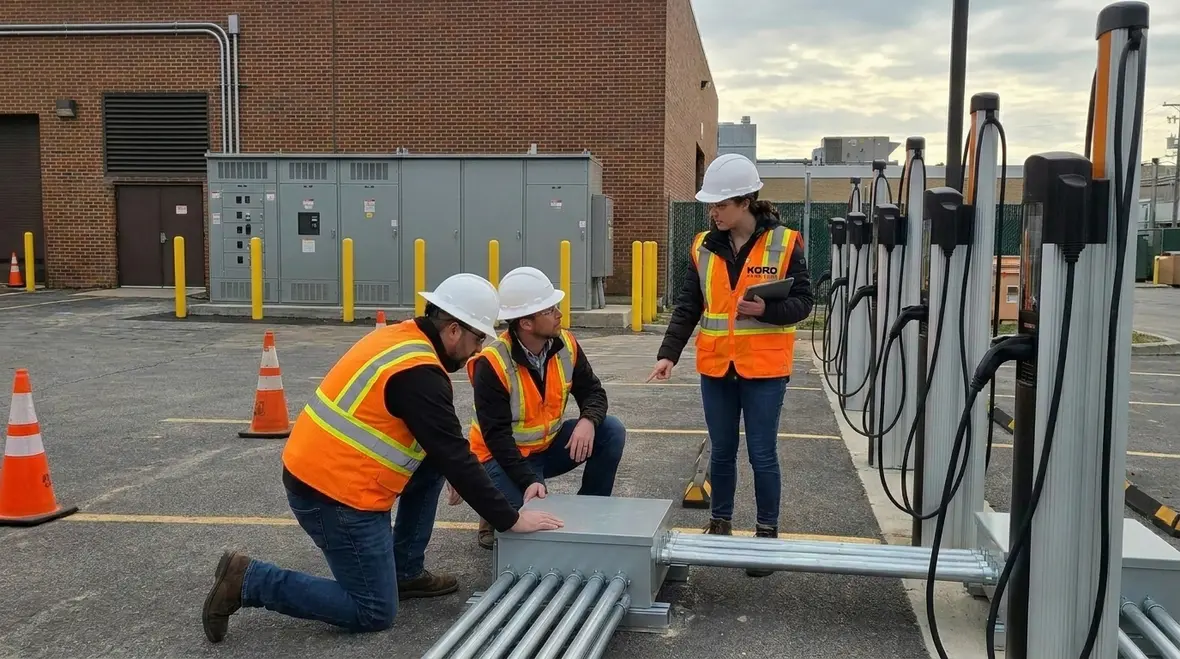
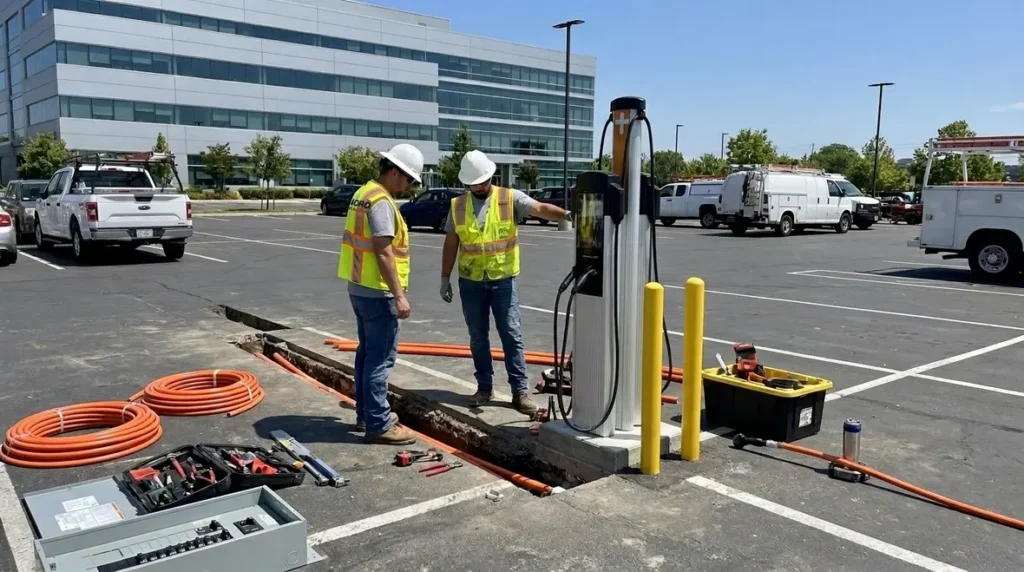
In major commercial and industrial facilities, scalability is not a buzzword. It is a practical system design goal. First, we look at the building’s electrical foundation, including main switchgear capacity, transformer sizing, feeder routes, and available panel space. Next, we evaluate parking layout and vehicle flow, because charging is not just equipment, it is also traffic control and safety.
Then we ask how the site will evolve. Some clients add fleets in phases. Others support tenant growth or shift from employee charging to customer charging. Either way, we plan so upgrades can happen without major rework. For example, we favor electrical paths and conduit runs that leave room for additional circuits. In simple terms, we do not design a system that needs surgery every time the business changes its mind. Speaking of minds, charging programs can change as fast as streaming seasons, but electrical planning should not.
When we plan scalable systems for high-value facilities, we lean on the same discipline we use in our data center work, where power paths and redundancy must be mapped clearly from day one. For readers interested in how we think about long-term resilience and growth, our data center electrical infrastructure essentials guide shows how reliability, maintainability, and structured expansion play together across critical environments.
Power availability and load forecasting that does not guess

Commercial EV demand grows in bursts, and the grid does not always respond with enthusiasm. Therefore, we use structured load forecasting instead of guesswork. We review site utility data, historical peak loads, HVAC schedules, and process loads for industrial buildings. After that, we model charging power based on charger level, number of ports, and expected usage patterns by shift and day.
Importantly, we plan for power sharing and smart charging where appropriate. This approach reduces the risk of blowing past available capacity. It also helps sites avoid costly upgrades that arrive later like an uninvited guest. Our expert service staff explains these choices in plain language, so stakeholders understand what changes now and what benefits later.
Additionally, we consider future electrification. Many large facilities also add equipment such as forklifts, yard trucks, and other EV assets. When a site plans for these timelines, the charging plan stays stable and scalable. In other words, we build the charging system as part of the campus electrical story, not as a one off chapter.
For some properties, power quality and stability also become part of the story. Facilities already wrestling with voltage swings or sensitive equipment benefit from pairing charging plans with diagnostics and corrections that keep the whole system steady. In those cases, our planning connects naturally with broader efforts to keep electrical performance reliable across the site.
How electrical architecture should support future expansion
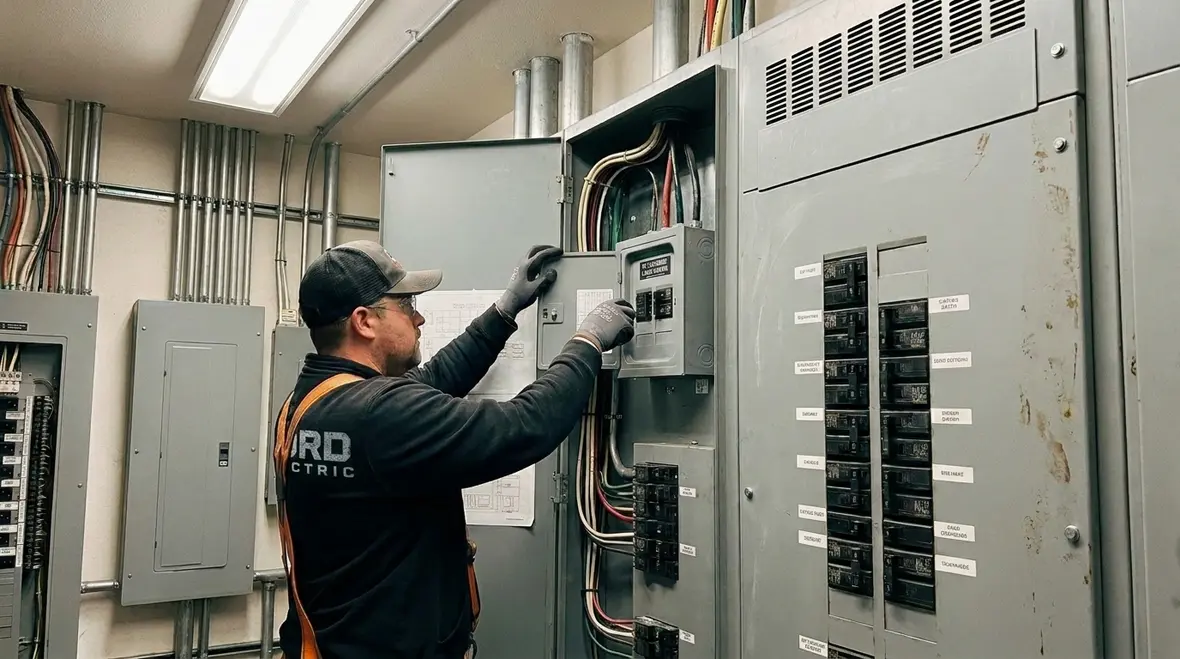
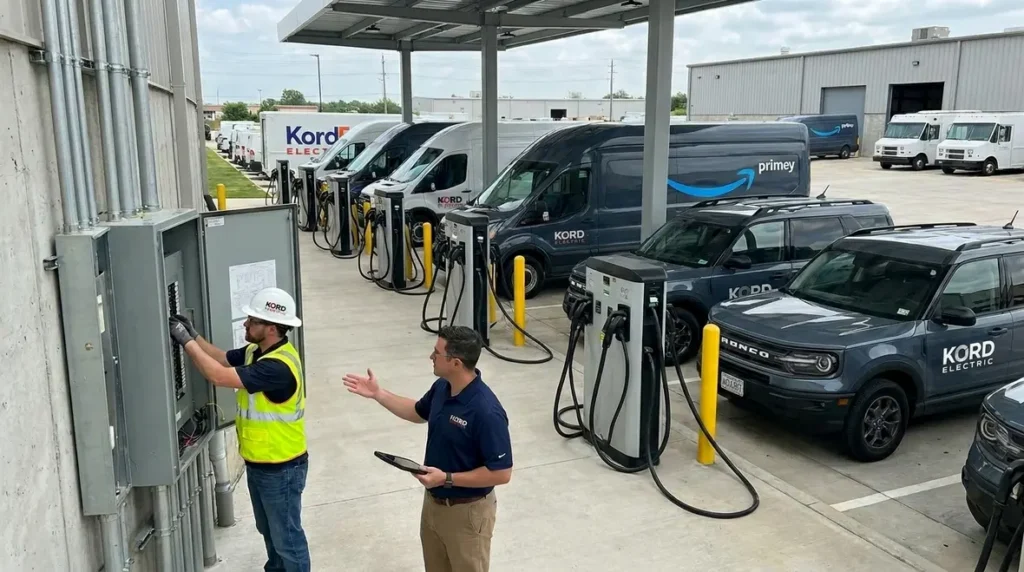
Scalable systems rely on smart architecture. We start with where power enters the site and where it can be distributed. Then we plan the switchgear integration strategy, including whether we add dedicated EV load centers, use spare breaker capacity, or expand with modular equipment.
Next, we focus on distribution design. We size conductors for expected demand and future additions. We also plan conductor routing to reduce congestion and keep installation efficient. After that, we coordinate cable management, grounding, and bonding so each charger connection stays reliable as the system grows.
We often reference principles from our electrical infrastructure approach for critical facilities. For example, when we discuss electrical infrastructure essentials for data centers, the mindset is similar: reliability, maintainability, and clear pathways for growth. That same discipline carries into major property buildings where downtime costs money. Our technicians keep the build process orderly so later phases can attach smoothly.
Finally, we design with commissioning in mind. We document labeling, as built routing, and load settings. Therefore, the expansion phase does not become a guessing game for the next crew. Nobody enjoys chasing wires like it is a video game side quest, especially when the system must meet business uptime needs.
Site layout, safety, and compliance for high traffic properties

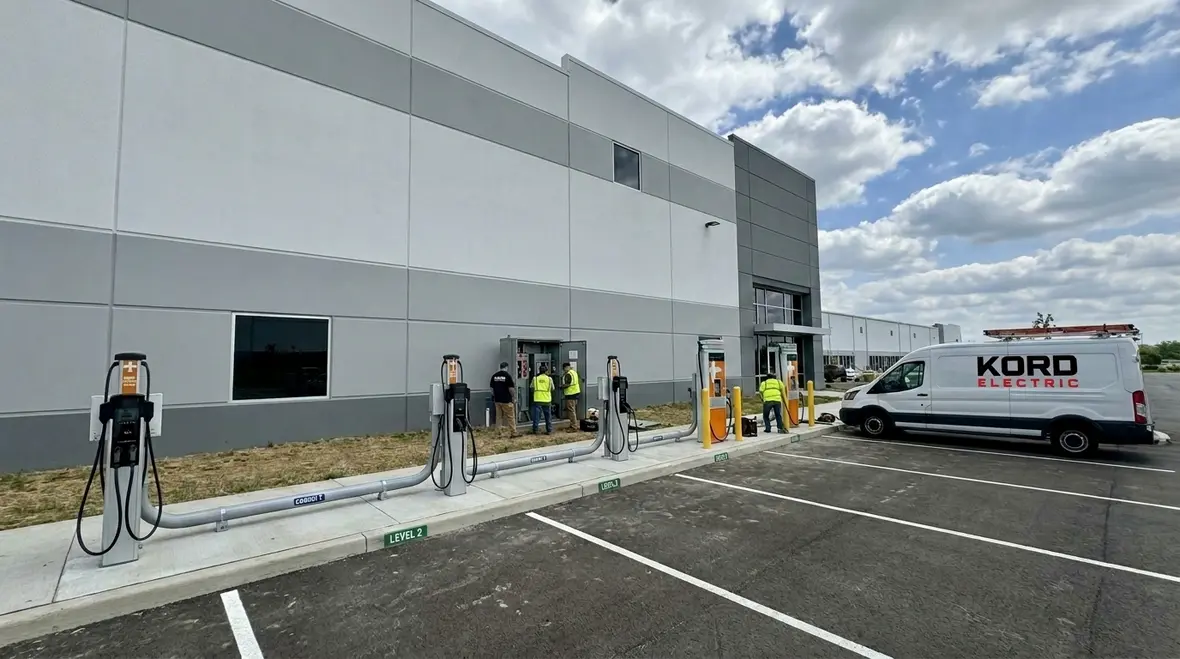
EV charging in commercial and industrial sites must handle real movement. That means we plan for safe placement, clear markings, and barrier strategies where needed. We also consider how vehicles enter, stop, and leave charging bays without blocking emergency access or disrupting regular operations.
Then we coordinate electrical safety elements such as weatherproofing, conduit sealing, protective devices, and fault protection. In large facilities, the environment can be harsh, so we select components that fit indoor or outdoor conditions and expected wear. We also plan for future maintenance access around each charger, because blocked access turns routine service into a slow, expensive detour.
Our team also addresses wayfinding and operational rules. For example, we help clients define which users have priority, how long vehicles can stay connected, and how the site manages peak events. When the operational model and the electrical plan align, the system performs better and avoids frustration.
And yes, safety paperwork matters. We prepare for inspections and documentation so compliance stays straightforward. That includes proper signage, grounding verification, and commissioning records that support ongoing service. Our expert service staff walks clients through what is installed and why, so compliance does not feel like a pile of unread emails.
Smart features, energy management, and service readiness
Today’s chargers often include network capabilities, usage reporting, and energy management controls. However, smart features should support the facility’s goals, not create extra complexity. So we evaluate whether the site needs charge session reporting for fleet or billing, and whether it needs load management for demand control.
Next, we plan for integration readiness. Many clients ask about connecting charging to existing building systems or energy management platforms. We assess network pathways, communication requirements, and device management processes. Then we specify configurations that reduce the chance of software surprises at the wrong time.
Just as important, we plan for service readiness. We design access routes for technicians, ensure labeling supports quick troubleshooting, and set up maintenance workflows that match the site’s schedules. Our technicians and expert service staff explain how to maintain uptime, how to handle component failures, and how to manage firmware or configuration updates without turning the parking lot into a tech support hotline.
Finally, we plan for future feature upgrades. As utility programs evolve, clients may want new capabilities such as time of use optimization or incentives tracking. When the system supports change without tearing up the electrical layout, the charging program stays stable. That is scalability done right, not scalability done “we will fix it later.”
Budget planning that avoids surprise upgrades
Commercial budgets need clarity. Therefore, we build cost models around real site conditions and realistic growth. We identify what is required today and what can wait, then we align scope with phased commissioning. In many cases, we can phase installation so the client activates charging in phases while reserving capacity for later.
Next, we discuss the most common cost drivers. Electrical upgrades, trenching and conduit length, equipment procurement lead times, permitting timelines, and network setup can all shift project cost. So we plan early, verify constraints, and coordinate with site operations.
We also help clients compare options without hand waving. For example, a site might consider adding more chargers with lower individual power, or fewer chargers with higher power. Smart charging and power sharing can also change the math. Our expert service staff explains the tradeoffs clearly, so the decision matches the facility’s operational reality.
And since large property buildings often run on tight schedules, we plan installation windows to reduce downtime. If a site needs work during low traffic hours, we schedule accordingly. This keeps the project smooth and avoids the classic “we need one more week” conversation that everybody fears.
For owners and operators who want to move from planning into execution, our dedicated EV charger installation services turn these designs into finished, commissioned systems that are ready for real-world use.
FAQ
Conclusion: let’s build charging that grows with your site
Kord Electric helps commercial and industrial facilities plan EV charging systems that scale, stay safe, and protect uptime. We guide commercial EV charging infrastructure planning from power capacity and architecture to layout, compliance, smart features, and service readiness. Our technicians and expert service staff explain the plan in business friendly terms, so you can move with confidence, not guesswork. If your property is ready to add EV charging for fleets, tenants, or customers, contact us for a site assessment and a phased roadmap that makes sense.
When you are ready to turn planning into a live project, our commercial and industrial EV charger installation services bring the design to life with code-compliant construction, commissioning, and long-term support tailored to high-demand facilities.