Commercial HVAC Electrical Troubleshooting Protocols
At Kord Electric, we support commercial and industrial facilities and major property buildings, and we treat HVAC electrical problems like they are serious, because they are. When a rooftop unit cycles wrong, a control board gets erratic, or a variable speed drive acts like it has stage fright, our electrical troubleshooting protocols for commercial HVAC go to work fast. First, our technicians confirm the complaint, then we verify power quality, ladder logic signals, sensor inputs, and motor health in a planned sequence. Next, we narrow the fault to the panel, the distribution path, the field device, or the control wiring. Finally, we document what we found and what we fixed so the system stays stable tomorrow, not just tonight. And yes, we keep it calm, even when the building manager calls it “the gremlin again.”
Commercial HVAC electrical troubleshooting begins with a calm plan
Most failures do not announce themselves with dramatic fireworks. Instead, they show up as intermittent faults, nuisance trips, slow starts, or comfort complaints that seem random. Therefore, we start with structured steps, because guessing wastes time and it costs money. Our expert service staff asks precise questions, then we inspect the electrical path and the control path as one system, not as separate worlds that never meet.
Then we build a timeline from the site history. For example, we confirm whether the issue started after a minor service, a power event, weather shift, or tenant remodel. After that, we verify the latest alarms in the BAS or local controller. We also observe the unit during a controlled call for heating or cooling, since the behavior during startup often reveals the real root cause.
In many cases, our technicians find that the issue is not “the HVAC is broken,” but “the electrical story does not match the control story.” That mismatch is where we focus.

How we test power, ground, and controls without damaging the system
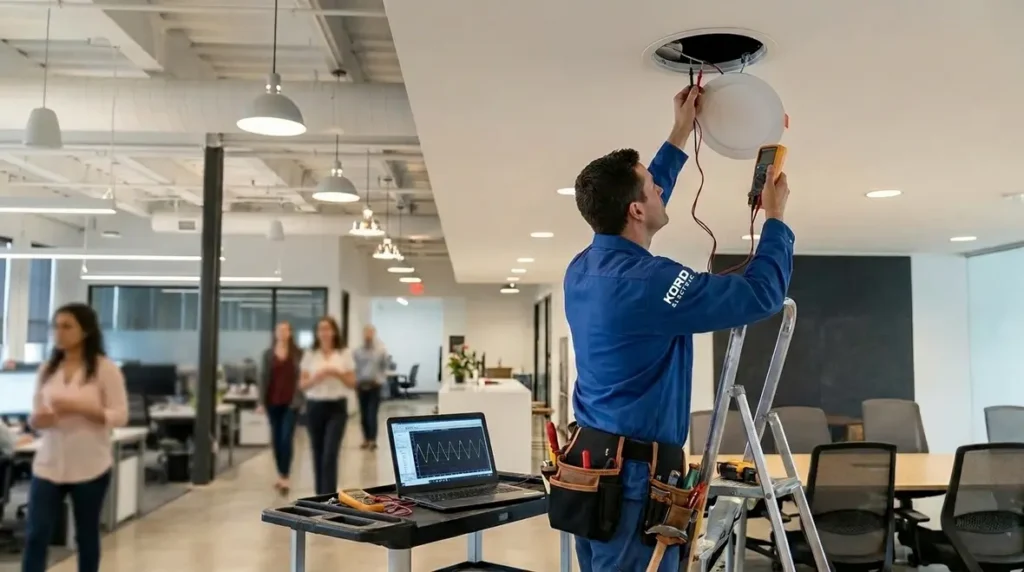
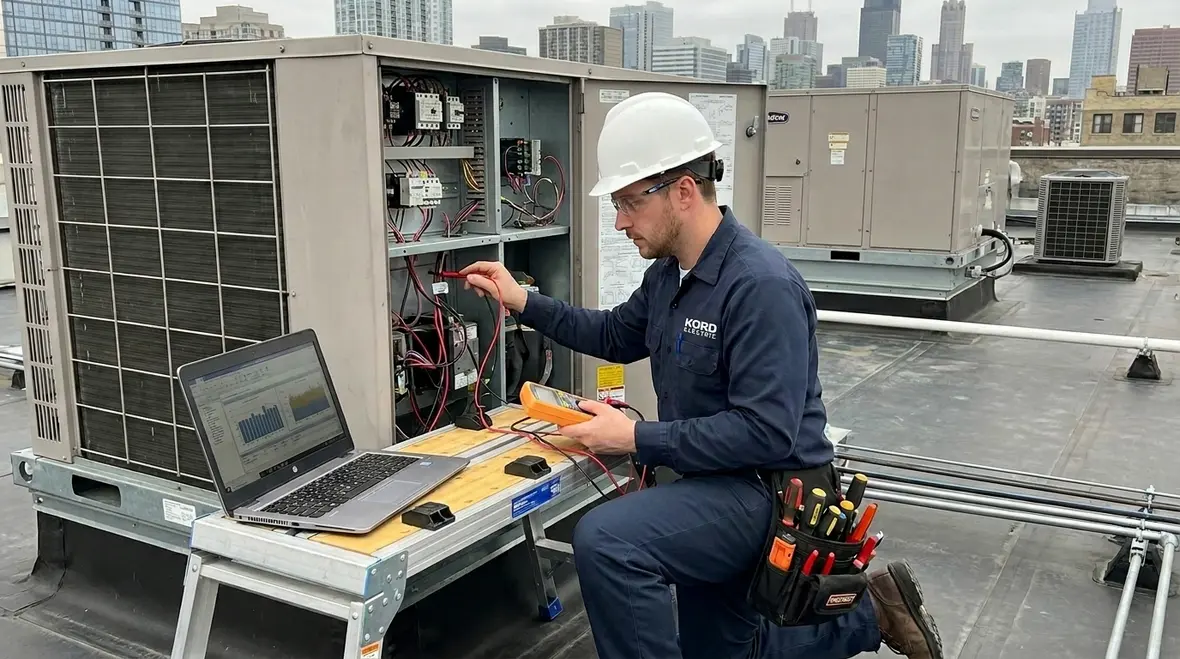
Power testing must be deliberate, because commercial HVAC electrical systems include sensitive electronics, long conductor runs, and multiple protection devices. We verify incoming voltage and phase balance, check voltage drop across contactors and disconnects, and confirm grounding continuity. Meanwhile, we look for signs of overheating at terminations and through-bolted connections.
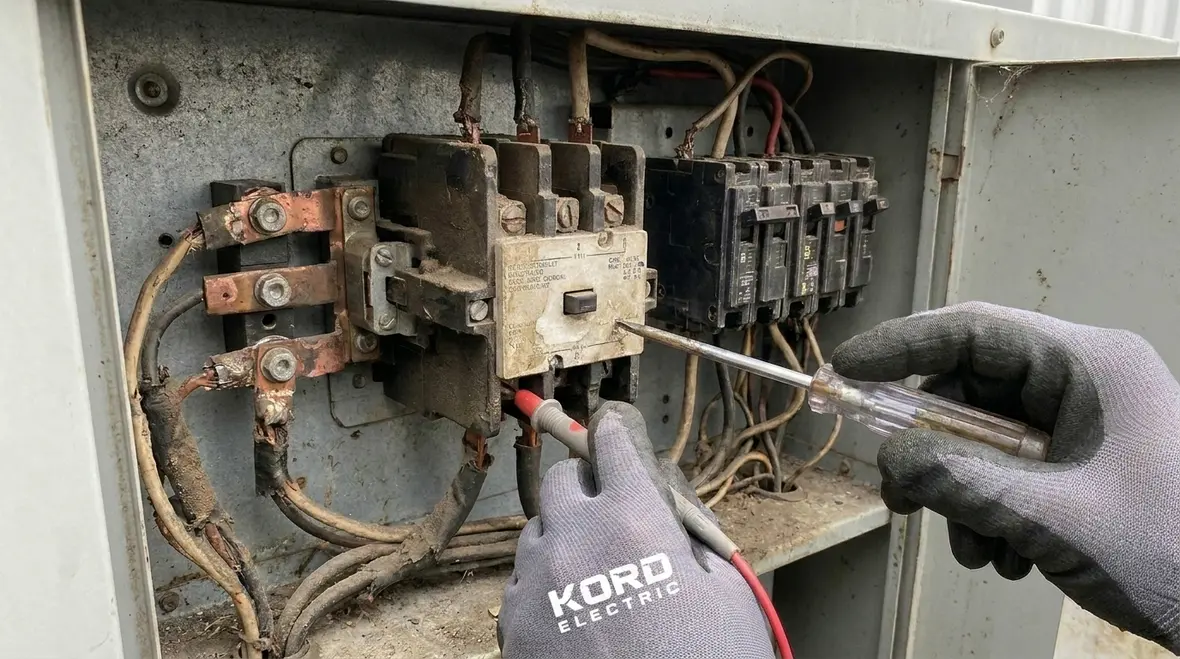
Next, we validate control voltage and signal integrity. We test transformer outputs, relay contacts, and any 24 volt control wiring that feeds safeties and start permissives. Then we inspect for loose wire, corroded terminals, and damaged insulation where vibration or moisture makes problems grow quietly.
At this stage, our technicians follow a clear rule: measure before you replace. So, when we hear “change the control board,” we still confirm the inputs and outputs first. Otherwise, we just buy parts and hope, which is a fun hobby but not a service strategy.
Finally, we verify the operation of relays, contactors, and overload protections under real load conditions. If a contactor chatters or a relay fails to fully pull in, the HVAC can behave like a bad band performance, tight one moment and off the rails the next.

Using troubleshooting protocols to pinpoint faults in the field
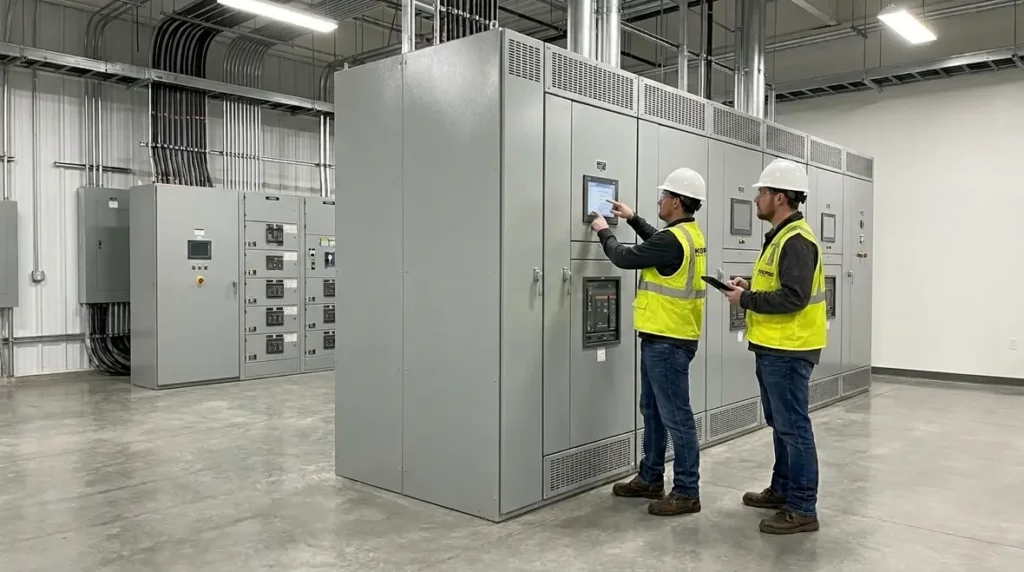
Once we confirm the electrical health of the system, we shift into fault isolation. We start at the panel and move outward, because the easiest access is usually near the source. Then we trace the path to the rooftop unit components, the economizer controls, and the motor drives that run fans and compressors.
Our electrical troubleshooting protocols for commercial HVAC emphasize three layers of verification: electrical delivery, protective device behavior, and control command logic. As a result, if a motor fails to start, we can quickly tell whether the issue sits in the disconnect and wiring, the starter mechanism, the overload circuit, the drive parameters, or the permissive chain.
For variable speed drives, we confirm power input and check alarm codes with context. We also verify that motor current draw matches expected ramp and load behavior. If the drive trips, we look for patterns such as repeated undervoltage, output faults, or ground fault indicators.
When troubleshooting takes place in occupied buildings, we keep disruption low. We coordinate shutdown timing, test in controlled sequences, and restore operation with documented settings. In other words, we fix the problem and we do not turn the building into a science project.
Common commercial HVAC failure points we locate fastest
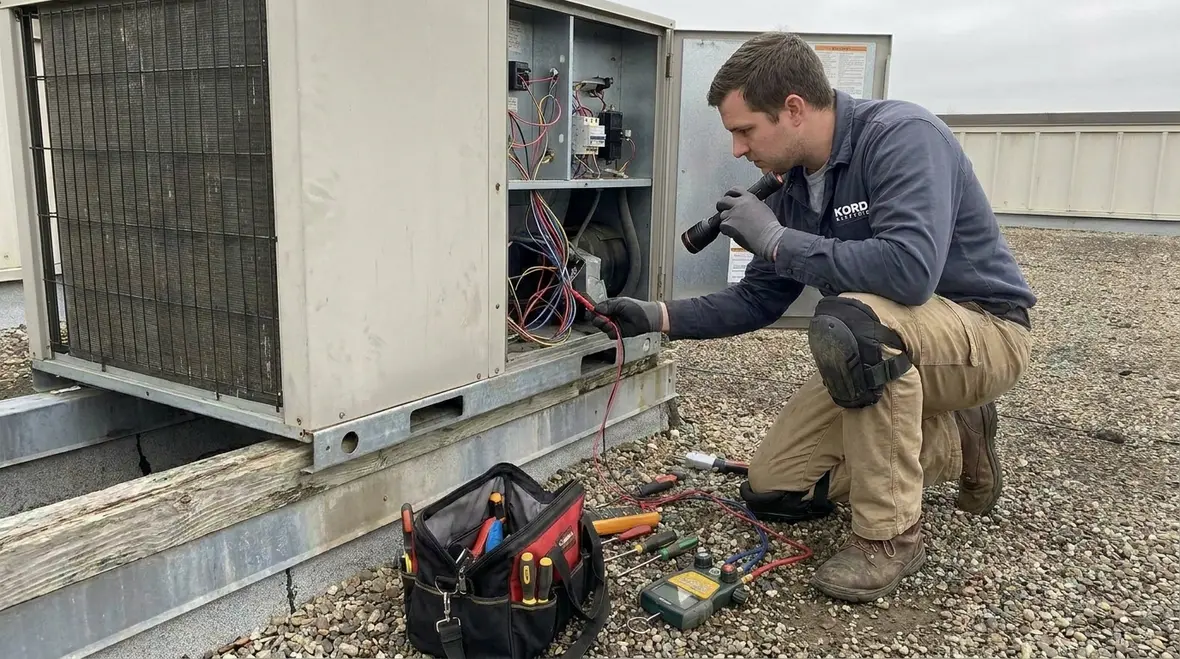
Every facility has its own quirks, but certain failure points show up again and again in commercial and industrial buildings. Therefore, we focus on the high-probability areas first, while still staying methodical.
Contactors and starters: We check coil voltage, contact wear, and arc damage. A failing contactor can cause voltage drop that leads to nuisance trips.
Breakers and fuses: We inspect for loose lugs, signs of heat, and correct coordination behavior. If a breaker trips, the “why” matters more than the “what.”
Motor and fan control circuits: We evaluate current draw, insulation condition, and terminal integrity in junction boxes.
Safeties and permissives: We test switches that prove airflow, temperature limits, and pressure states. A safety that stuck open can lock out the unit, and the BAS may report vague errors.
Sensor wiring: We verify correct signal types, polarity, and shielding where needed. When a sensor drifts, controls chase the wrong values and everything feels unstable.
To keep the process sharp, our expert service staff explains what we find in plain language. So the maintenance manager does not just get a report, they get a clear story they can act on.
How preventive maintenance reduces repeat electrical faults
Troubleshooting solves the current problem, but preventive maintenance helps you avoid the next one. Kord Electric supports commercial and industrial systems with a disciplined approach. When we visit for preventive work, we inspect and test components that tend to drift out of spec over time.
Based on our preventive maintenance practices, we align our inspection focus with what failure usually looks like before it becomes a full outage. If you review our electrical preventive maintenance process, you will see the same logic we use during troubleshooting: we examine connections, verify protective devices, and confirm control and power stability so the equipment stays dependable.
Here, we also reduce “mystery calls.” Instead of waiting for a unit to fail during peak demand, we look at early warning signs like minor overheating at terminations, gradual sensor drift, and worn mechanical components that stress electrical parts.
And yes, we have seen it: a loose terminal can cause a problem that looks like a control board failure. That is why we keep the foundation strong before we chase the symptoms.
Preventive work we emphasize
- Inspect terminations and verify tight, clean connections
- Check protection devices and verify correct trip behavior
- Confirm control voltage and signal stability
- Verify visual signs of overheating and arcing
Troubleshooting work we match to it
- Measure voltage drop and contactor performance under load
- Test permissive circuits and safeties in sequence
- Validate drive input and interpret alarm context
- Trace sensor signals back to wiring integrity
Best practices for safe, repeatable fixes on major property buildings
Major property buildings have real constraints. People need hot water, elevators need power stability, and tenants expect uptime. So, our technicians plan repair steps with safety and business impact in mind. We verify lockout and tagout conditions, test for absence of voltage when required, and keep documentation updated so future service stays fast.
Then we apply repeatable fixes, not one-off heroics. For example, if we find degraded wiring, we replace sections properly and route them to reduce vibration stress. If we adjust drive settings, we confirm correct motor data and test ramp performance under load. If we replace a control device, we verify input and output logic and confirm the BAS points match real operation.
Most important, we do not stop at the first restored cycle. We test longer run behavior, because many electrical faults only show up after heat soak or after cycling several times. In short, we make sure the system works tomorrow, not just during the first minute after repair.
And if a manager wants a quick explanation, our team delivers one. Our expert service staff takes the time to walk through the fault location, what caused it, and how we prevented a repeat. That way, the next issue does not start with confusion and ends with blame.
FAQ about electrical troubleshooting for commercial HVAC systems
Ready for tighter uptime and fewer electrical surprises?
When commercial HVAC electrical problems show up, we can help you catch them early, isolate them fast, and restore safe operation with proof, not guesswork. Kord Electric serves commercial and industrial facilities and major property buildings with structured electrical troubleshooting protocols for commercial HVAC, plus preventive care that reduces repeat failures. If you want expert service staff who explain what is happening in clear terms, contact us today. We will review your symptoms, plan the response, and keep your building running like it should, quietly and consistently.
If you are also planning upgrades or new work in your facility, our commercial and industrial lighting installation services support safe, efficient power usage alongside your HVAC systems, giving your building a stronger electrical foundation overall.