
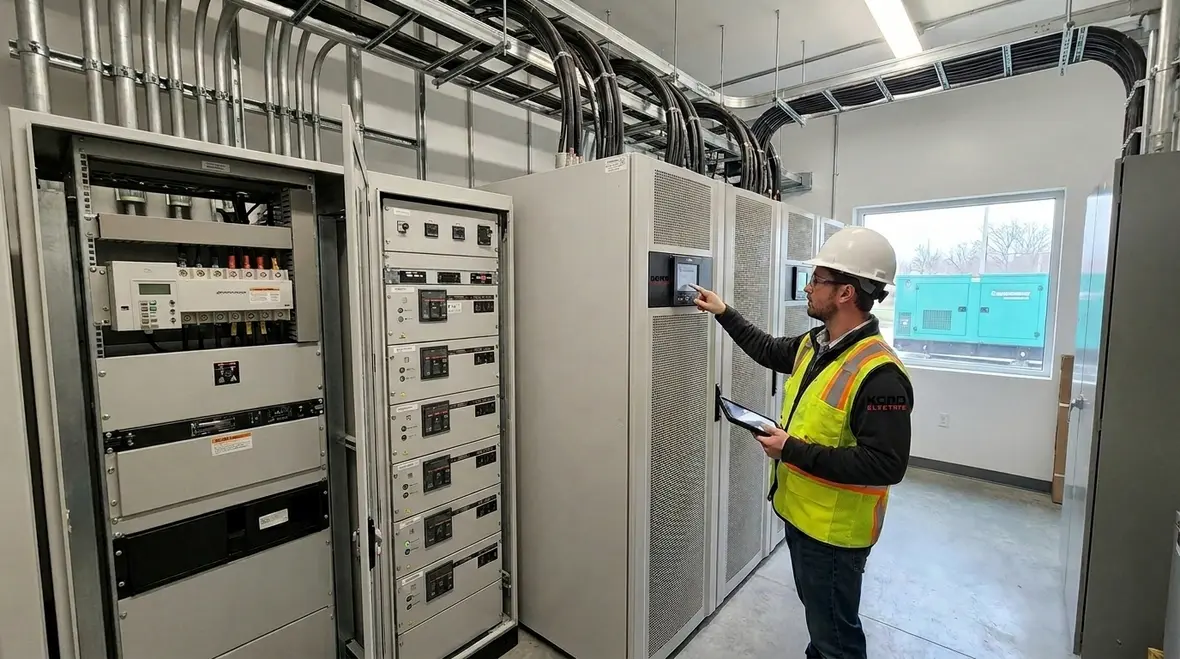
Critical Power Redundancy Architecture Guide
Critical power redundancy architecture for mission critical uptime
In commercial and industrial facilities, the lights do not just turn on, they signal readiness. At Kord Electric, we start with a critical power redundancy architecture that keeps essential loads alive when normal power fails. Then we build it in layers, so one problem does not become a full outage. In the real world, a power interruption rarely arrives politely. It shows up like a surprise plot twist on your favorite TV show, except nobody paid for the season finale.
Facility managers often ask for a guide that reads like a plan, not a textbook. That is exactly how we help. Our technicians, along with our expert service staff, explain what they find and what they recommend, in plain language. And from there, we align design, maintenance, and testing so critical systems stay stable.
Define what must stay running, before you pick the backup
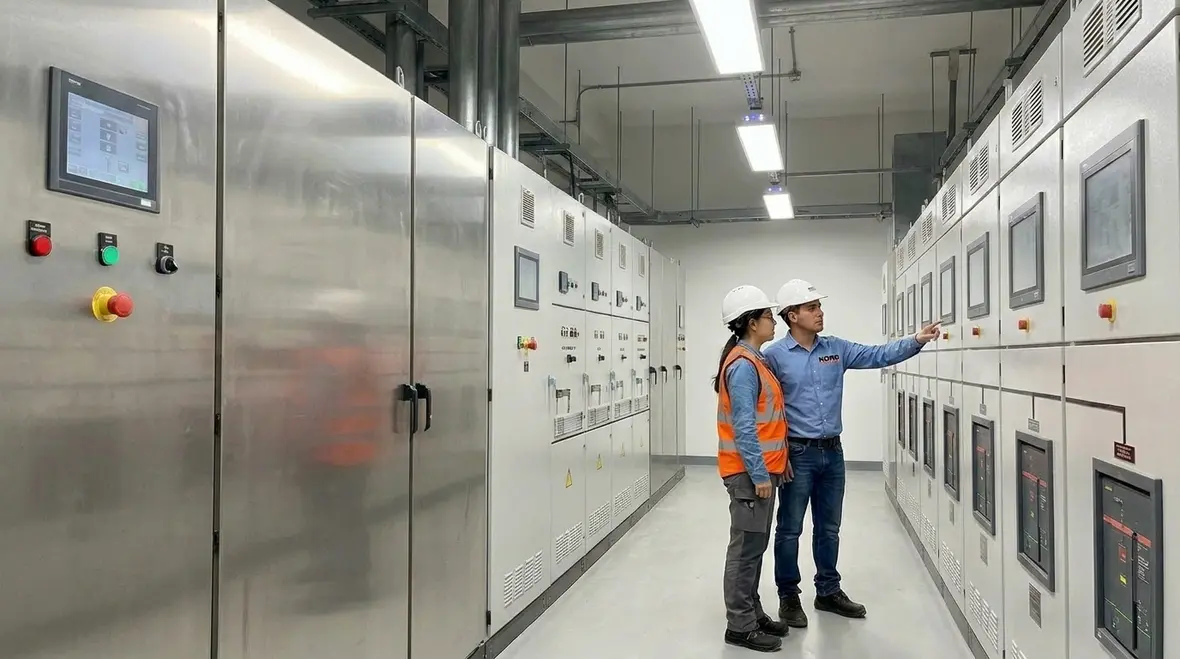
Others may start with generators, UPS systems, or switchgear. We recommend starting with a clear load map. First, facility managers identify critical equipment that must ride through disturbances. Next, they separate loads by how long power must remain available. For example, controls and safety systems usually need shorter ride through than process equipment, which may need longer operation to reach a safe shutdown.
Then we confirm the actual power behavior. Some loads draw steady power. Others create inrush current, harmonic distortion, or motor starting surges. If you treat a motor starter like a simple lighting circuit, the redundancy design will feel great on paper and fail in the field. So we review nameplate data, submeter history, and waveform concerns when possible.
At Kord Electric, our team documents priorities and response goals. After that, we design redundancy to match the risk, not the wish list. And yes, we do tell people when they want the “perfect” setup that their budget cannot support. Like a good therapist, we are honest, not dramatic.
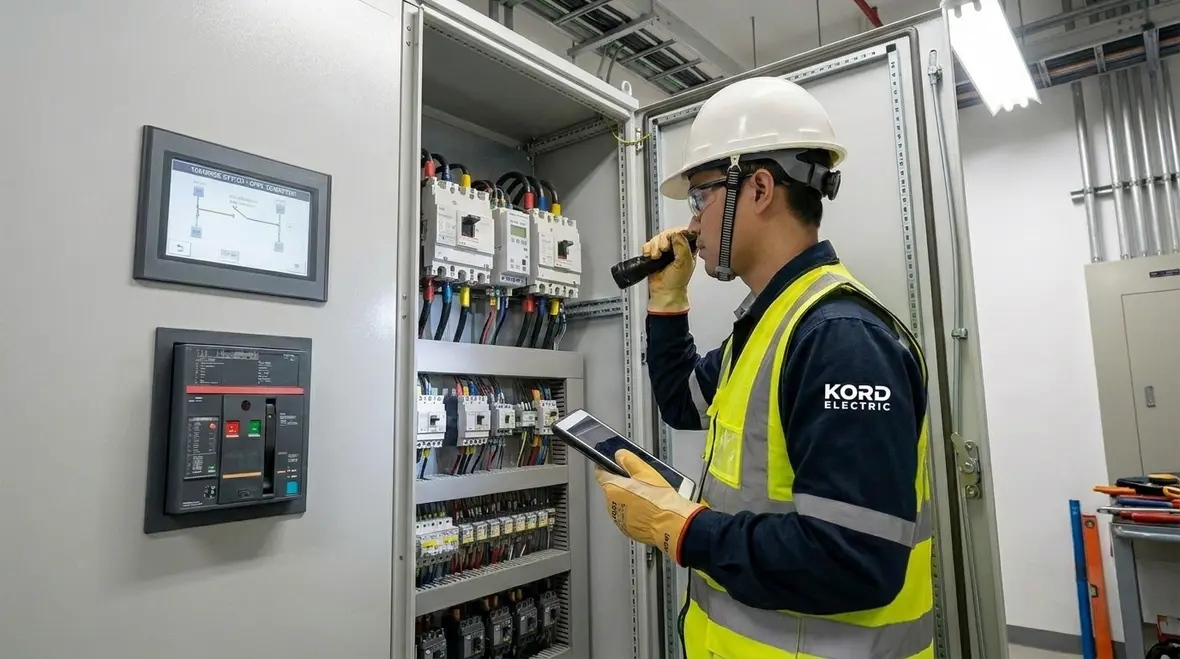
When we build that load map, we also look at where redundancy already exists and where it is just assumed. A motor with a soft starter, a VFD with sensitive electronics, or a control system sharing circuits with nonessential loads can all become weak links. By documenting what must stay online, what can ride through a short disturbance, and what must shut down in a controlled way, we give your team a reality based picture instead of a wishful thinking diagram.
This is also where we link design work to long term care. A solid load map becomes a reference document for upgrades, for electrical preventive maintenance, and for future troubleshooting. When something changes, we update the map instead of trusting memory or an old panel schedule tucked behind a door.
Design redundancy with layered switching and disciplined protection coordination
Redundancy does not only mean “another source.” It also means how power transfers and how protection responds. A well designed system keeps the transfer stable and prevents nuisance trips. Meanwhile, it isolates faults so the rest of the facility stays online.
Typically, designers use transfer schemes such as open transition or closed transition switching, depending on the load sensitivity. Open transition breaks then makes. Closed transition overlaps sources briefly, reducing interruption but requiring strict synchronization. In either case, we verify timing, breaker ratings, and interlocks so the system cannot “help” by switching at the wrong moment.
Protection coordination matters just as much. If a protective device trips early, it can strand loads during a failure. If it trips late, it can allow faults to grow. Therefore, our process includes coordination studies, fault current review, and relay settings verification. We also confirm that the system design supports proper selectivity across upstream and downstream devices.
Once the switching and protection are aligned, redundancy becomes predictable. And predictable is comforting, even when the unexpected tries to crash the party.
We also consider practical realities like arc flash boundaries, available clearing times, and what happens when equipment ages. A breaker that technically coordinated ten years ago may not behave the same way after wear, dust, and cycle counts add up. That is why we design for coordination and then revisit it periodically as part of broader reliability programs.
Specify UPS, generator, and transfer paths by ride through duration
Many facilities pick equipment based on capacity alone. We push for a different angle. First, determine the ride through requirement. A UPS can cover the instant gap, giving sensitive loads clean power while another source takes over. Then generators can provide longer duration power, assuming fuel availability and ventilation design meet the site needs.
However, each component must fit the next one. For instance, the transfer mechanism needs to match the UPS output behavior and the generator startup sequence. If the generator takes longer than the UPS ride through provides, critical loads may drop. Conversely, if the UPS is oversized in an inefficient way, it can lead to unnecessary losses and maintenance overhead.
At Kord Electric, our technicians help translate duration goals into practical design choices. We also address distribution strategy so the UPS output serves the right panels and circuits. In major property buildings and industrial plants, that detail can make the difference between “we have redundancy” and “we can actually use it.”
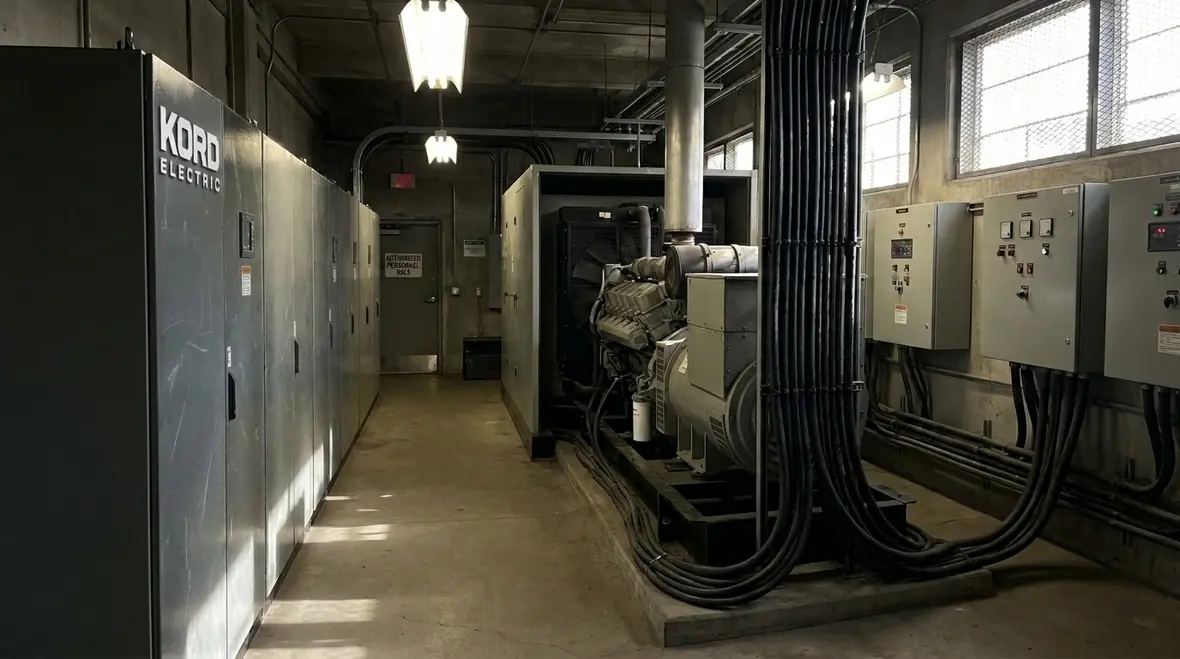
And because reality has a sense of humor, we always account for cranky power electronics, aging switchgear components, and the kind of startup timing that only shows up when the test happens. We plan for it before it happens.
In some facilities, that means separating ride through tiers: a fast acting UPS layer for controls and IT, a robust generator layer for process loads, and a final tier where nonessential loads simply wait for normal power to return. The point is not to back up everything; it is to back up the right things long enough to protect people, equipment, and operations.
When needed, we also design around future goals like on site energy storage, solar integration, or expanded process lines. Critical power redundancy architecture should not trap you in today’s layout. It should give you a framework that can adapt as your facility grows.
Use preventive maintenance to protect the redundancy you already built
Even the best design can underperform if you never verify it in the real world. That is why we connect design strategy with preventive maintenance. Kord Electric supports this with our approach to electrical preventive maintenance, and we treat redundancy assets as systems that must stay healthy, not museum pieces.
Preventive maintenance should include inspections and functional checks for switchgear, transfer devices, UPS modules, battery systems, breakers, and generator controls. Batteries age, relays drift, and connections loosen over time. Meanwhile, power quality can change due to new loads or process updates. If you do not keep up, the redundancy may still exist, but it may not behave when called upon.
Our expert service staff documents findings, tracks trends, and provides clear recommendations. So facility managers can plan budgets and schedule work without guesswork. We also verify that labeling and drawings match what is installed. In commercial and industrial facilities, outdated documentation causes delays during emergencies, and delays cost money.
In short, preventive maintenance converts redundancy from a concept into a capability you can trust. It also supports other reliability efforts, from voltage stability improvements to targeted repairs when equipment shows early signs of distress.
If your facility is building a formal plan, Kord Electric’s dedicated electrical preventive maintenance programs give you a structured way to keep critical power infrastructure tested, documented, and ready for the next surprise power event.
Test redundancy under realistic conditions, not just “it turns on”
Testing determines whether redundancy works under load, under time pressure, and under the conditions your building actually faces. A common mistake is to run a generator with light load and call it a day. Then, during a real event, the voltage response, frequency stability, and load sharing tell a different story.
We recommend staged testing. First, verify controls and alarms. Next, test transfer sequence timing. Then apply representative loads. For UPS systems, verify the runtime and output stability under expected load profiles. For switchgear and protective devices, confirm that fault detection and isolation operate as intended.
Our technicians also watch for practical failure points like failing auxiliary power supplies, intermittent sensor behavior, and breaker mechanism issues. These are the quiet problems that rarely appear until the system is asked to perform.
Transitioning between power sources should feel clean and repeatable. And when it does, facility managers gain something priceless: confidence. Not the “hope and pray” kind, the real kind you can build a schedule around.
Over time, we use test records as a feedback loop. If transfer times slide, if breaker operations slow down, or if load profiles change, we update settings, procedures, or even the underlying design. Critical power redundancy architecture is not a one time drawing; it is a living strategy that matures with every test you run.
Plan ongoing reliability: documentation, training, and emergency roles
After hardware, the next layer is people and process. When we help facility managers, we support the human side of reliability. First, we review emergency operating procedures for the redundancy equipment. Then we align roles so operators know who does what, and when.
Training matters because the system is only as good as the response. Facility staff need to understand typical transfer behavior, alarm meanings, and what actions should wait until the system reaches stable operation. They should also know how to avoid unsafe manual steps during an event.
Documentation must be clear and current. One outdated single line diagram can waste hours. That is why we emphasize consistent labeling and confirm that control wiring and interlocks match the drawings. And we encourage a maintenance record that shows testing results over time, so trends are obvious.
Finally, we coordinate with your operations team so redundancy work does not disrupt critical production schedules. Because nobody wants a maintenance day that performs like an off brand action movie.
For facilities planning more extensive upgrades, our team can also connect redundancy planning with projects such as panel replacements, lighting upgrades, or lighting installation services that affect overall load profiles. The more your projects talk to each other, the more reliable your critical power strategy becomes.
FAQ: Power redundancy for commercial and industrial facilities
Conclusion: let Kord Electric design, maintain, and test your uptime plan
Facility managers deserve redundancy that behaves, not redundancy that exists. Kord Electric helps commercial and industrial sites build a critical power redundancy architecture, then protect it through electrical preventive maintenance, testing, and clear technician led guidance. Others can sell equipment. We support performance over time. If you want critical systems to stay stable during real events, contact Kord Electric and we will map your loads, review your switching and protection, and set a maintenance plan you can trust.
Whether you are modernizing aging infrastructure, planning new capacity, or addressing issues like voltage instability and nuisance trips, our team connects design, installation, and long term care. From voltage fluctuation diagnostics to structured preventive maintenance, we help you turn redundancy from a drawing into a dependable, everyday reality.
If you are ready to take the next step, explore how our commercial and industrial services keep large facilities powered, safe, and prepared for the unexpected.
Learn more about Kord Electric’s Electrical Preventive Maintenance services to see how a disciplined maintenance program can protect your critical power redundancy architecture and reduce unplanned downtime across your facilities.


