Commercial Electric Subpanel Installation Guide
At Kord Electric, we treat commercial electric subpanel installation as a safety project first and a capacity project second. Our commercial electrical teams plan the bus sizing, confirm the breaker coordination, and check grounding and bonding before any panel lands in place. Then we verify labeling, torque specs, and circuit testing, so the system holds up under real load, not best case load. Because in the field, the laws of physics do not care about your schedule. They also do not care about your favorite TV show, even if it feels like time is running. To support our approach, our technicians and expert service staff explain what they see, why they recommend it, and what it means for operations.
How we plan a safe subpanel before we install it
In commercial and industrial facilities, safety starts long before the first cover screw comes off. First, our technicians review the one line diagram and the building load pattern. Then, we confirm the available service capacity, the upstream breaker rating, and the physical space for the enclosure. Next, we check conductor routing, conduit fill, and bend limits. Even if the numbers look close, we still verify, because a “close enough” decision becomes a service call later. And yes, sometimes that service call happens on a day when everyone is certain they can make it work. That is when we calmly remind them that electricity has no sense of humor.
Next, we focus on protection and fault behavior. We confirm breaker types and settings, verify coordination with upstream devices, and ensure the subpanel arrangement supports selective tripping when the job demands it. We also inspect grounding and bonding paths, since a clean reference point reduces nuisance faults and supports system stability. Additionally, we check clearances around energized parts and confirm that the panel’s physical environment suits the duty. Dust, moisture, vibration, and temperature swings all change what “safe” means in practice.
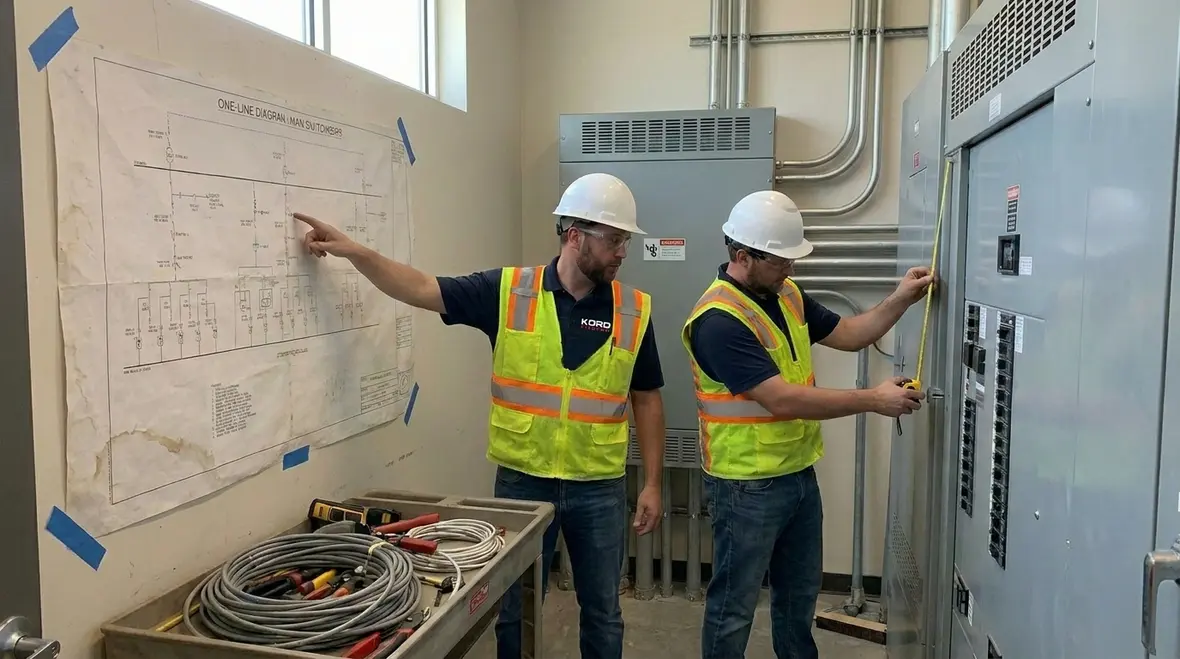
When property teams bring us in early, we also look at how the new subpanel will interact with other systems on site. That includes nearby distribution equipment, local disconnects, and any specialty systems that share the same space. By sorting those details up front, we turn the subpanel into a clean, predictable part of the building’s electrical story instead of a surprise plot twist later.
If your facility includes high value equipment or production lines, we document any constraints and walk through them with your operations staff. This keeps safety decisions visible instead of hidden in a spec sheet and gives everyone a shared picture of what “good” looks like for the new gear.
Capacity planning for real loads, not “nameplate math”
Many sites ask for subpanels as if the building will only run at full load once, like a movie premiere. In reality, loads fluctuate and diversify. Therefore, we use load diversity rules tied to how the property actually operates. We look at lighting schedules, HVAC staging, motors and starting surges, refrigeration cycles, and any intermittent process loads typical to the facility.
Then we translate those loads into current, conductor size, and allowable voltage drop. Even when code allows a certain approach, we consider long runs and sensitive equipment. For example, a control system or network closet may not like low voltage under heavy motor start conditions. So, we plan the circuit grouping to keep sensitive loads from riding the same wave as the largest starting currents.
After that, we confirm spare breaker capacity for future tenants, expansions, or equipment upgrades. Major property buildings often grow in steps, not all at once. Thus, we design for the next expansion so the site does not need a full rebuild later.
We also align capacity planning with the broader electrical strategy of the property. For facilities evaluating future projects like data centers or specialty process lines, we coordinate subpanel design with higher level planning. If you are already mapping long term infrastructure moves, resources like our Data Center Electrical Infrastructure Essentials guide can help leadership connect the dots between subpanels, distribution architecture, and critical uptime expectations.

All of this work folds into commercial electric subpanel installation best practices that emphasize repeatable results. Instead of treating each project like a one off puzzle, we follow a structured process that allows different teams, shifts, and future contractors to understand how and why the subpanel was built the way it was.
When facilities lean on this approach, they tend to see fewer surprises during peak seasons and fewer emergency calls when equipment upgrades come online. In short, good capacity planning gives your operations team room to breathe rather than constantly react.
What factors control subpanel sizing for commercial electrical systems
When others size a subpanel, they may only look at total amps and move on. We take a broader view because safety and uptime depend on details. First, we check the panelboard rating, the bus rating, and the intended breaker footprint. Then, we confirm the service voltage and phase, and we verify that the subpanel supports the site’s distribution plan.
Next, we plan for load growth and operational change. We ask property managers about upcoming tenant improvements, new equipment, or planned upgrades. Then we include a reserve margin that fits the building schedule. Additionally, we consider harmonics and non linear loads common in commercial spaces, like variable frequency drives, LED drivers, and certain IT loads. If those loads exist, we recommend approaches that reduce heat and nuisance trips.
Finally, we look at the installation path. That includes cable ampacity, insulation type, ambient temperature, and conduit layout. If the site uses feeder runs over long distances, our team accounts for voltage drop limits and the impact on performance.
Our technicians also explain these factors in plain language. We do not just drop a spec sheet in their hands like it is a self help book for breakers. We walk them through what changes, what stays the same, and what they can expect during commissioning.
Subpanel sizing also connects to the larger maintenance and reliability strategy of a property. Facilities that invest in structured programs, such as comprehensive Electrical Preventive Maintenance, tend to spot loading issues and upgrade needs earlier. That makes it easier to right size new subpanels instead of reacting under pressure after a trip or outage.
When commercial leaders align subpanel decisions with maintenance plans and risk tolerance, they get systems that feel deliberate instead of improvised. That is the difference between a building that quietly supports production and one that constantly interrupts it.
Breaker coordination, labeling, and testing that keep operations calm
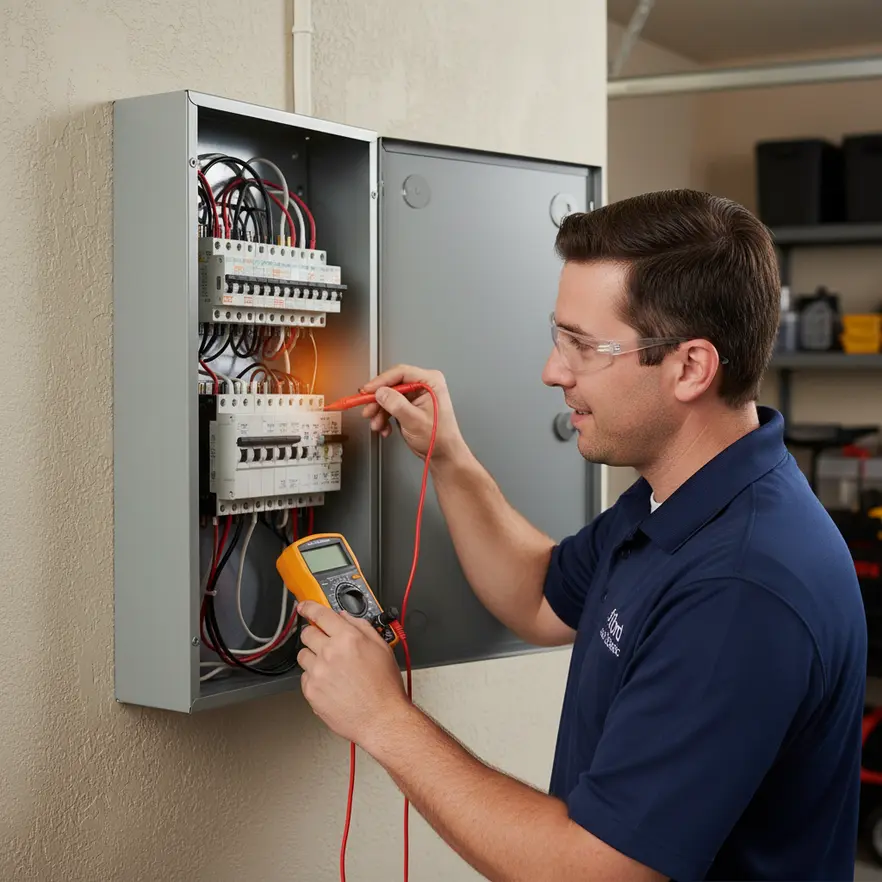
After the equipment selection, the job moves into execution details that many people underestimate. To keep operations stable, we follow commercial electrical subpanel installation best practices for wiring integrity, connection methods, and mechanical security. That means we follow torque requirements, ensure conductor terminations sit correctly, and verify each phase and neutral connection matches the design intent.
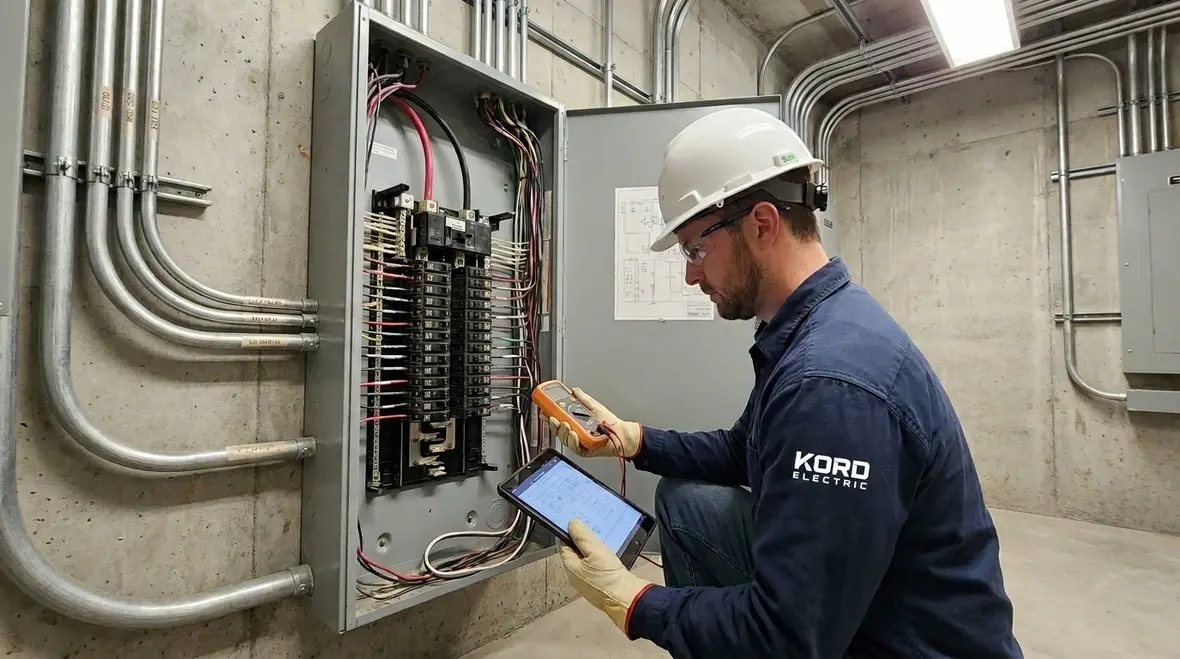
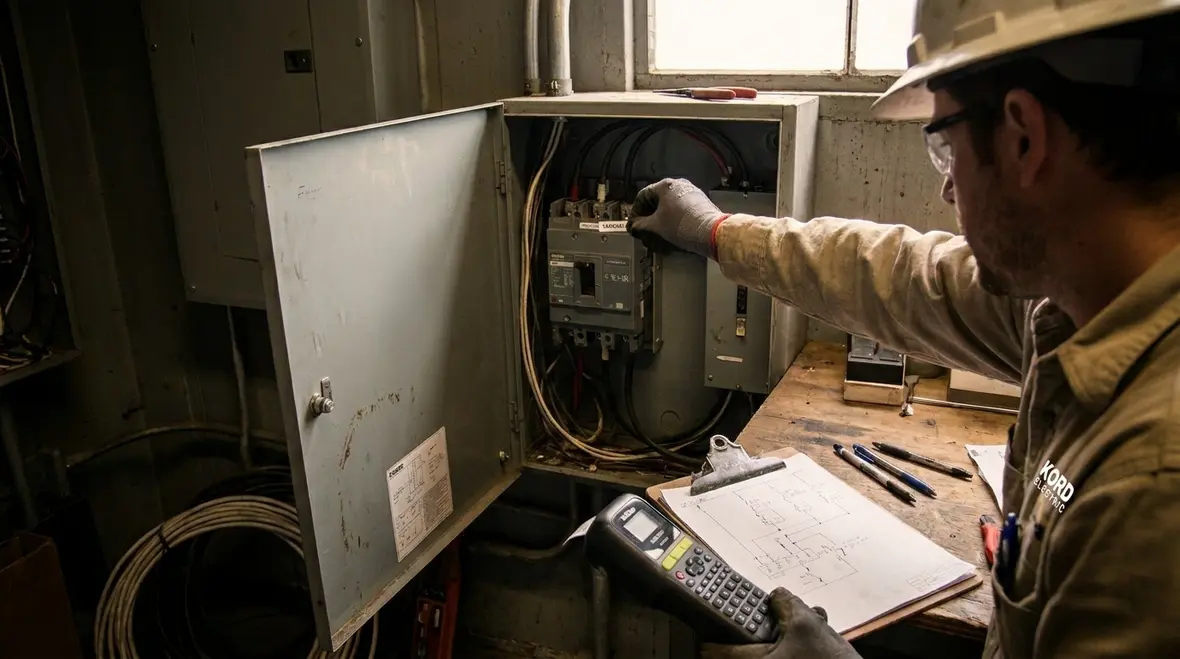
Next comes labeling and documentation. In major property buildings, multiple teams may work in and around the system. Therefore, we label breakers and circuits in a way that matches the one line diagram and the facility map. We also update as built notes after changes, because “we will remember” is not a maintenance strategy. It is a wish.
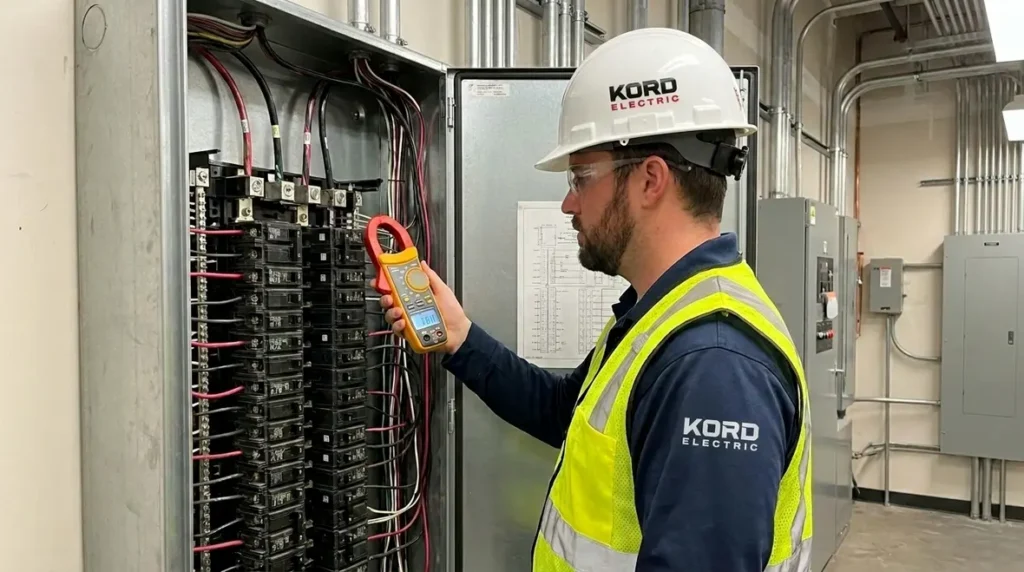
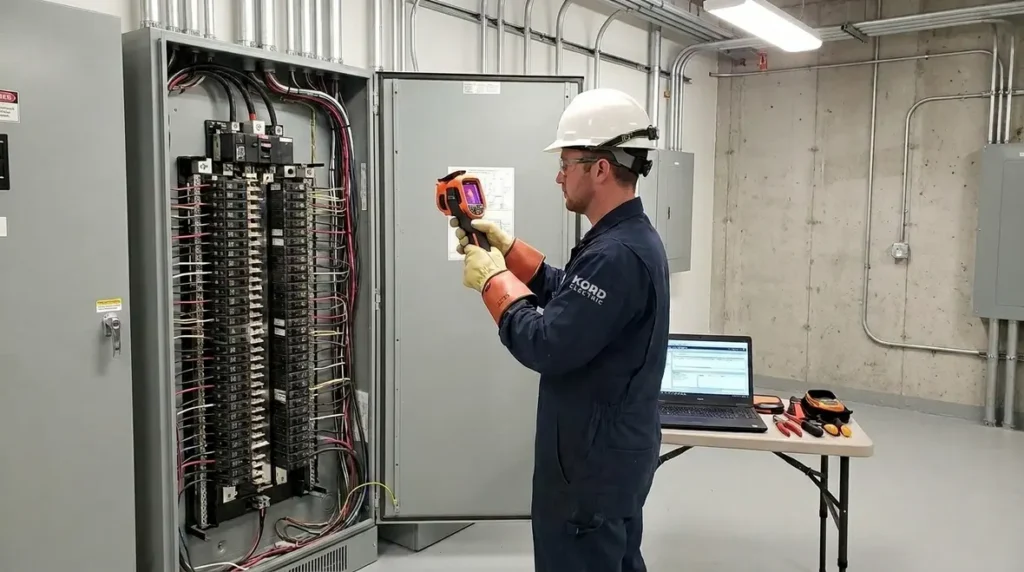
Then we test. We verify polarity, check insulation resistance where appropriate, and run functional tests under controlled conditions. We also confirm that breakers behave as expected. When coordination works, downstream faults clear without taking out unrelated loads. When it does not, the property pays for it with downtime, calls, and troubleshooting. We would rather avoid the whole “why did the whole wing go dark” conversation before it starts.
Kord Electric’s teams also connect breaker coordination to real site priorities. If your facility hosts critical environments such as data rooms or process sensitive equipment, we highlight which circuits deserve extra attention. That perspective comes from designing and maintaining systems across commercial campuses where uptime and selective tripping are not luxuries, they are table stakes.
When documentation, breaker settings, and labeling all line up, your in house staff and any future contractors can work faster and safer. That reduces the stress level every time someone has to touch the panel and cuts down on the kind of “mystery breakers” that no one wants to experiment with during busy hours.
Common installation mistakes in industrial and commercial buildings
We see a few patterns again and again, especially when facilities hire across multiple contractors or inherit older designs. One common mistake involves undersized feeders or incorrect conductor sizing due to incomplete load data. Another issue is sloppy grounding and bonding paths, which can lead to nuisance tripping and unsafe conditions.
We also notice poor breaker coordination, where upstream protection does not clear faults efficiently. As a result, operators experience extended outages and slower restoration. Additionally, some projects skip proper torque verification and terminal checks. That can create heat at connections, and heat is never the friend of a building’s lifespan.
Then there is the labeling problem. When labels do not match reality, maintenance teams waste time tracing circuits. And if your team has to do that during peak production hours, they will feel it like a bad joke that keeps getting told. We prefer setups where anyone can find the right circuit quickly and safely.
Our expert service staff helps teams avoid these errors by reviewing the design, observing the installation, and explaining each test result. We also document what we find so your facility has a clear record for future audits and upgrades.
For property leaders who have already seen some of these issues surface in their buildings, it can be useful to step back and review the bigger picture. Resources like our Commercial Electrical Systems for Modern Buildings guide walk through how panels, feeders, and protection tie into overall system behavior across the facility.
Panel placement, code space, and work around active operations
In active facilities, the physical placement of a subpanel is not just about convenience. It affects safety clearances, service access, and the ease of future maintenance. We consider the working height, door swing, and the pathway for conduit and cables. We also plan for ventilation and temperature conditions. For commercial and industrial sites, that matters because enclosures can run hotter than expected when the environment is tight or when airflow changes over time.
Another practical factor is installation sequencing. We coordinate with facility leadership to schedule shut downs carefully and limit disruption. Then we plan cable pulls, terminations, and breaker installation in logical steps. That reduces rework and helps crews stay efficient. Meanwhile, our team communicates with building staff so everyone understands the timeline, the temporary impacts, and the return to service steps.
We also verify access for inspections and compliance checks. If a panel needs to move later, the building loses time and money. So we place it right in the first pass and confirm that routing and access meet the job’s long term needs.
Because many of our projects unfold in 24/7 environments, we bring the same discipline used on larger distribution work into subpanel installs. That includes clear staging, barricades, and communication with occupants so construction feels orderly, not chaotic.
For properties planning broader upgrades, pairing thoughtful panel placement with lighting or equipment improvements can shrink disruption into a single, well managed window. Our teams often bundle this work with projects such as Lighting Installation Services so the building gets a coordinated electrical refresh instead of piecemeal change.
Two column view: what we verify during commercial subpanel commissioning
Safety checks
- Grounding and bonding continuity
- Clearances and enclosure integrity
- Correct phase and neutral connections
- Breaker and bus connection verification
Performance checks
- Insulation resistance and polarity tests
- Voltage and voltage drop review
- Functional verification under load
- Circuit labeling and documentation updates
These checks give property teams confidence that the subpanel is not just wired, but wired for how the building truly runs. When combined with ongoing inspection and maintenance, they turn commissioning into the start of a stable operating life instead of a quick box to check.
Our technicians share results in clear language, including any recommendations for adjustments, tuning, or follow up work. That way, no one is left guessing whether the system is merely passing tests or genuinely ready for daily operations.
FAQ: commercial electric subpanel installation
Conclusion: bring Kord Electric in early for a smoother install
If your facility needs new distribution, tenant improvements, or a planned upgrade, you do not want to treat the subpanel like an afterthought. Bring Kord Electric in early so we can handle safety, capacity planning, breaker coordination, and commissioning the right way from the start. Our technicians will review the loads, verify the details, and explain the results so your operations stay steady. Contact us today to schedule a site assessment and get a clear path to a reliable commercial electrical subpanel installation.
For properties planning broader upgrades, our team can integrate subpanel work into larger initiatives such as commercial lighting improvements, rewiring projects, or dedicated maintenance programs, giving you a unified electrical roadmap instead of disconnected projects.
Whether you are managing a single major property or a portfolio of sites, Kord Electric’s commercial electrical experience helps turn complex subpanel decisions into straightforward next steps that support safety, uptime, and long term value.
If you are ready to align your subpanel installation with a broader commercial electrical strategy, our team can also advise on how distribution changes, maintenance planning, and future infrastructure moves should fit together for your facility.
When you want the commercial electric subpanel installation best practices baked into every step of your project, partnering with a commercial and industrial specialist makes a measurable difference in day to day performance and long term reliability.
From the first load review to the final commissioning report, our team is focused on protecting people, equipment, and operations across your entire facility, not just filling spaces on a panel schedule.